Universities
Kyrgyz Russian Slavic University MBBS: Fees and FMGE
23 Sept 2026
15 min read
Kyrgyz Russian Slavic University in Bishkek: 2026 to 2027 fees, five-year programme, NMC rules and NBEMS FMGE pass rates from 2023 to 2025 for Indian students.

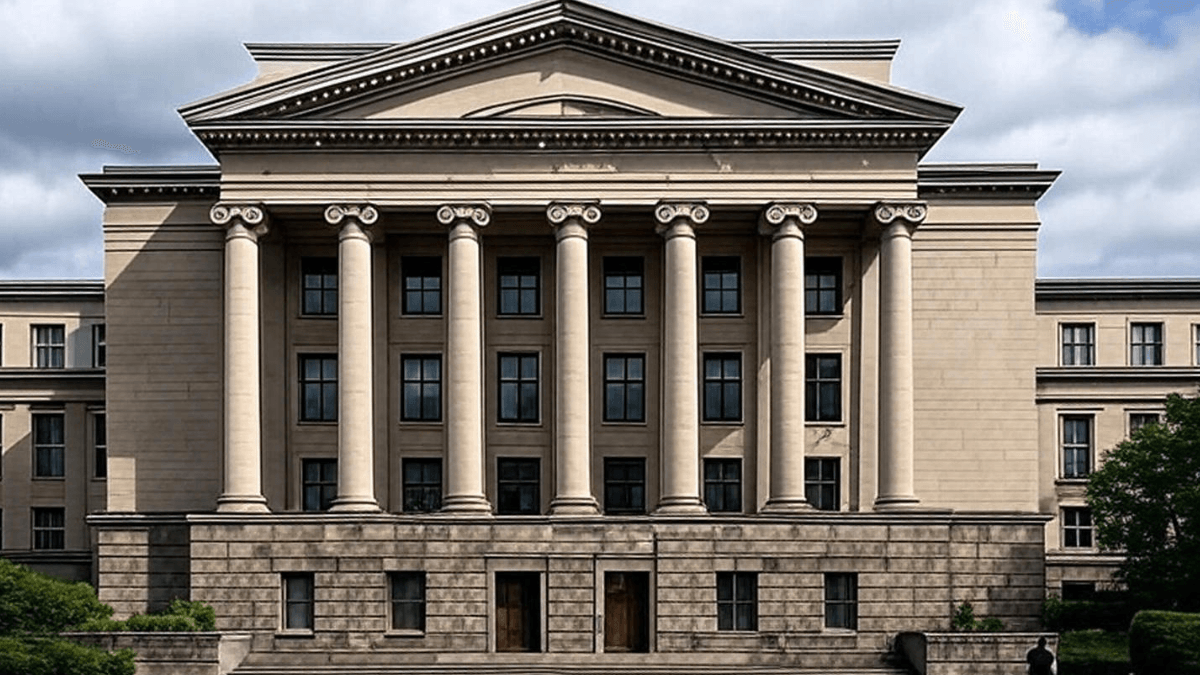
Kyrgyz Russian Slavic University (KRSU) is a public university in Bishkek, set up in 1993 by Kyrgyzstan and Russia together. Its English-track General Medicine programme for foreign students costs 290,000 som a year for 2026 to 2027. In the December 2025 FMGE, the screening exam for foreign medical graduates, 28.95% of KRSU graduates passed.
Updated on 30 September 2026.
Key Takeaways
A joint Kyrgyz and Russian university. KRSU opened in 1993 under the Treaty of Friendship, Cooperation and Mutual Assistance between the two countries. It is named after Boris Yeltsin, the first President of Russia (KRSU about page).
Fees for 2026 to 2027. General Medicine in English costs 290,000 som a year for students from outside the CIS, about Rs. 3.2 lakh (September 2026). The Russian-medium track costs 180,000 som (KRSU fees page).
Five-year programme. The 2026 study plan for foreign students runs five years, or ten semesters, and awards the qualification of doctor (KRSU 2026 study plan, PDF).
FMGE results above the Kyrgyzstan average. KRSU graduates passed at 30.00% in 2023, 39.66% in 2024, 19.35% in June 2025 and 28.95% in December 2025. Kyrgyzstan as a whole scored 20.21% in December 2025 (NBEMS FMGE Performance Report 2025).
Not a futureMBBS partner. futureMBBS works with 23 partner universities in 9 European countries. Kyrgyzstan is not one of them (futureMBBS partner universities).
What is Kyrgyz Russian Slavic University?
Kyrgyz Russian Slavic University is the short name most Indian families know. The full name is the Kyrgyz-Russian Slavic University named after the first President of the Russian Federation B.N. Yeltsin. It is an interstate university, which means two governments run it together. The main building is at 44 Kievskaya Street, Bishkek (KRSU about page).
KRSU teaches far more than medicine. It has faculties of law, economics, international relations, architecture and engineering, plus a college and a school. Medicine sits in the Institute of Clinical Medicine and Biomedical Technologies, the new name of the old Medical Faculty (KRSU Institute of Clinical Medicine page). For the wider picture of the country, read our MBBS in Kyrgyzstan country guide.
Kyrgyz Russian Slavic University at a glance
Item | Detail |
|---|---|
Official name | Kyrgyz-Russian Slavic University named after B.N. Yeltsin (KRSU) |
City | Bishkek, capital of Kyrgyzstan |
Founded | 1993, under a treaty between Kyrgyzstan and Russia |
Type | Interstate public university |
Medical faculty | Institute of Clinical Medicine and Biomedical Technologies (Medical Faculty opened 15 June 1994) |
Programme for Indian students | General Medicine (for foreign students), code 560001 |
Length | Five years (2025 and 2026 study plans) |
Tuition, 2026 to 2027 | 290,000 som a year, English track |
Students in the medical institute | 3,126, of whom 669 are foreign |
FMGE pass rate, December 2025 | 28.95% (33 of 114 passed) |
History of Kyrgyz Russian Slavic University
The dates below come from the university's own pages (KRSU about page, KRSU Institute of Clinical Medicine page).
Year | What happened |
|---|---|
1993 | KRSU opens under the Treaty of Friendship, Cooperation and Mutual Assistance between Kyrgyzstan and Russia |
1994 | The Medical Faculty opens by rector's order No. 79-p of 15 June 1994, agreed with the education and health ministries |
1995 | Boris Yeltsin becomes the first honorary doctor of KRSU |
2000 | The Medical Faculty opens a branch of the Russian Medical Association in Kyrgyzstan |
2004 | The university is named after Boris Yeltsin |
2015 | KRSU joins the Russian Council of Rectors of Medical and Pharmaceutical Universities |
So the medical school has taught for more than 30 years. That is longer than most private medical institutes in Kyrgyzstan.
Kyrgyz Russian Slavic University MBBS programme
Kyrgyz Russian Slavic University fees for 2026 to 2027
KRSU publishes one price list for all students. The rows below are for students from outside the CIS, the group of former Soviet states. India falls in this group (KRSU fees page, 2026 to 2027).
Programme | Fee per year | Approximate INR (September 2026) |
|---|---|---|
General Medicine, English | 290,000 som | Rs. 3.2 lakh |
General Medicine, Russian | 180,000 som | Rs. 2 lakh |
Paediatrics, Russian | 180,000 som | Rs. 2 lakh |
Dentistry, Russian | 220,000 som | Rs. 2.4 lakh |
At 290,000 som a year, five years of English-track tuition comes to about 14.5 lakh som, or around Rs. 15.9 lakh at September 2026 exchange rates. Hostel, food, visa, insurance and travel are extra. The som moves against the rupee, so the rupee figure will shift from year to year.
Students and teachers at Kyrgyz Russian Slavic University
The Institute of Clinical Medicine and Biomedical Technologies has 3,126 students, of whom 669 are foreign. Teaching is done by 432 staff. Of these, 307 are full-time, and 53.7% of full-time staff hold a scientific degree or title. The staff include 25 Doctors of Science and 80 Candidates of Science (KRSU Institute of Clinical Medicine page). The acting dean is Saamai Sagymbaevna Abilova, a Candidate of Medical Sciences.
The office for foreign students counts foreign learners at the Medical Faculty year by year (KRSU foreign students office page). The two university pages count in different ways, so the numbers do not match exactly.
Academic year | Foreign students, Medical Faculty |
|---|---|
2021 to 2022 | 1,069 |
2022 to 2023 | 1,108 |
2023 to 2024 | 1,102 |
2024 to 2025 | 1,103 |
2025 to 2026 | 1,029 |
The count has stayed close to 1,100 for five years. That is a steady intake, not a fast-growing one.
Hospitals and clinical training at Kyrgyz Russian Slavic University
KRSU trains students in city and regional hospitals under practice agreements. The General Medicine programme page lists these partners (KRSU General Medicine for foreign students page):
City Clinical Hospital No. 1, Bishkek. Agreement dated 2026, used for general clinical training.
Clinical Hospital of Emergency Medical Care (KBSMP). Emergency and acute care, agreement dated 2025.
Centre of Emergency Medicine, Bishkek. Emergency care and surgery.
Clinical Maternity Hospital No. 2 (KRD 2). Obstetrics and gynaecology, agreement dated 2025.
Chui Regional United Hospital (ChOOB). Regional hospital care outside the city.
Asymbekova clinic. A further clinical base named in the university's practice agreements.
Kyrgyz Russian Slavic University FMGE pass rate, 2023 to 2025
FMGE is the Foreign Medical Graduate Examination, run by NBEMS, the National Board of Examinations in Medical Sciences. An Indian who studies medicine abroad must pass it to work in India. NBEMS publishes results for every foreign university (NBEMS FMGE page). Our guide on what the FMGE exam is explains the exam itself.
FMGE sitting | Appeared | Passed | Pass rate | Source |
|---|---|---|---|---|
2023 (both sittings) | 120 | 36 | 30.00% | |
2024 (both sittings) | 174 | 69 | 39.66% | |
June 2025 | 62 | 12 | 19.35% | |
December 2025 | 114 | 33 | 28.95% |
Put simply, close to three in ten KRSU graduates passed in December 2025. In 2024 it was about four in ten. Across all four sittings, 150 of 470 candidates passed, about one in three.
How Kyrgyz Russian Slavic University compares with Kyrgyzstan and India
KRSU scored above the Kyrgyzstan average in both 2025 sittings. In December 2025 it also scored above the national average for all candidates (NBEMS FMGE Performance Report 2025).
Group | June 2025 | December 2025 |
|---|---|---|
Kyrgyz Russian Slavic University | 19.35% (12 of 62) | 28.95% (33 of 114) |
All Kyrgyzstan graduates | 15.51% (976 of 6,293) | 20.21% (1,503 of 7,437) |
All FMGE candidates, every country | 18.62% (6,709 of 36,037) | 23.94% (10,264 of 42,868) |
Kyrgyz Russian Slavic University against other Kyrgyz universities, December 2025
The spread inside Kyrgyzstan is wide. The table shows the larger Kyrgyz medical schools in the December 2025 sitting (NBEMS FMGE Performance Report 2025).
University | Appeared | Passed | Pass rate |
|---|---|---|---|
Kyrgyz Russian Slavic University | 114 | 33 | 28.95% |
588 | 150 | 25.51% | |
1,529 | 358 | 23.41% | |
International Higher School of Medicine | 2,088 | 465 | 22.27% |
Jalal-Abad State University Medical Faculty | 1,045 | 220 | 21.05% |
1,086 | 159 | 14.64% | |
International Medical University | 442 | 54 | 12.22% |
KRSU had the highest pass rate of these seven. It also sent far fewer candidates than the large private institutes. For every country side by side, see our FMGE pass rates for MBBS abroad or the short web story on country-wise FMGE pass rates.
Is a Kyrgyz Russian Slavic University degree valid in India under NMC rules?
The NMC sets the rules in the Foreign Medical Graduate Licentiate Regulations, 2021 (NMC FMGL Regulations 2021, PDF). They apply to students who joined a foreign course after 18 November 2021. Each rule applies to the student, not to the country.
NMC rule | What KRSU's documents say |
|---|---|
Course of at least 54 months | The 2026 plan for foreign students runs five years, which is 60 months |
12-month internship in the same foreign institution | The five-year plan does not include it. KRSU runs internship (internatura) as a separate programme with its own admission |
Whole course taught in English | An English track exists; the student must stay on it in every year |
Licence to practise in the country of study, at par with local citizens | Applies to every student; read clause 4(b) against the KRSU qualification |
Course finished within 10 years of joining | Applies to every student |
After returning: FMGE, then a 12-month supervised internship in India | Applies to every student |
The internship rule is the one to read closely. NMC wants 12 months of internship at the same foreign university, on top of the 54-month course. A student joining KRSU's five-year programme needs that internship year at KRSU as well. Our explainer on which NMC rules apply to you sets out each clause, and our guide to Kyrgyzstan accreditation rules for 2026 covers the country side. NMC keeps all its rules on its NMC rules and regulations page.
Accreditation of Kyrgyz Russian Slavic University
Because KRSU is also a Russian university, it holds Russian state accreditation. Rosobrnadzor, Russia's education regulator, issued certificate No. 3628 on 20 July 2021. It is permanent and covers Clinical Medicine at specialist level (KRSU state accreditation page). Our guide on how to check NMC and WDOMS recognition explains the separate directory listing that India looks at.
How to apply to Kyrgyz Russian Slavic University
Registration for 2026 specialist programmes opened on 20 June 2026, through the university's portal study.krsu.kg (KRSU admissions page). Foreign applicants hand their papers to the international relations office. The office lists these documents (KRSU foreign students office page):
School leaving certificate. The Class 12 certificate, original and two copies.
Passport translation. A certified Russian translation of the passport.
School certificate translation. Certified by the embassy of your country, a notary or a certified translation firm.
Ministry confirmation. A letter from the Kyrgyz Ministry of Education and Science that your school certificate meets Kyrgyz rules, original and two copies.
HIV test certificate. Issued by the AIDS Centre in Bishkek.
Passport and visa copies. Two copies of the passport and the page with the latest visa.
Photographs. Eight photographs, 3x4 cm.
Application to the rector. Filled in in person when you hand in the documents.
After admission, the same office arranges the student visa and the residence registration in Bishkek. For the Indian side of eligibility, including NEET UG and Class 12 subjects, read our guide to eligibility for MBBS abroad.
What to weigh before choosing Kyrgyz Russian Slavic University
FMGE record. Between 19.35% and 39.66% across four sittings, and the best of the large Kyrgyz schools in December 2025.
Internship year. The five-year plan has no internship built in. NMC needs 12 months at the same university.
Language. The English track costs more than the Russian one. NMC accepts only an English-medium degree.
Cost. 290,000 som a year in tuition, about Rs. 3.2 lakh, before living costs.
Size. About 1,000 foreign students in medicine, far fewer than the big private institutes.
Conclusion
Kyrgyz Russian Slavic University is a 1993 interstate university with a medical school that has taught since 1994. Its FMGE record is the strongest point for an Indian family. KRSU beat the Kyrgyzstan average in both 2025 sittings, with 28.95% in December 2025. Tuition is 290,000 som a year on the English track. The five-year length and the internship rule need the closest reading before a family decides.
Frequently asked questions about Kyrgyz Russian Slavic University
Is Kyrgyz Russian Slavic University good for MBBS for Indian students?
Kyrgyz Russian Slavic University has the best recent FMGE record among the large Kyrgyz medical schools. In December 2025, 28.95% of its graduates passed, against 20.21% for Kyrgyzstan and 23.94% nationally. It is a state university run by Kyrgyzstan and Russia together. Families should weigh the five-year length and the NMC internship rule.
What is the fee for MBBS at Kyrgyz Russian Slavic University?
For 2026 to 2027, General Medicine in English costs 290,000 som a year for students from outside the CIS, about Rs. 3.2 lakh at September 2026 rates. The Russian-medium track costs 180,000 som. Five years of English-track tuition comes to about Rs. 15.9 lakh. Hostel, food, visa and travel are extra.
What is the FMGE pass rate of Kyrgyz Russian Slavic University?
According to NBEMS, 33 of 114 Kyrgyz Russian Slavic University graduates passed FMGE in December 2025, a pass rate of 28.95%. In June 2025 it was 19.35%, or 12 of 62. In 2024 it was 39.66%, or 69 of 174, and in 2023 it was 30.00%, or 36 of 120.
How many years is MBBS at Kyrgyz Russian Slavic University?
The 2025 and 2026 study plans for foreign students run five years, or ten semesters, and award the qualification of doctor. NMC asks for a course of at least 54 months plus a 12-month internship at the same foreign university. The five-year plan does not include that internship year.
Is Kyrgyz Russian Slavic University taught in English?
Yes. Kyrgyz Russian Slavic University offers General Medicine in English and in Russian as separate tracks for foreign students, at 290,000 and 180,000 som a year. NMC accepts only a degree taught in English throughout, so an Indian student must stay on the English track in every year of the course.
When was Kyrgyz Russian Slavic University founded?
Kyrgyz Russian Slavic University opened in 1993 under the Treaty of Friendship, Cooperation and Mutual Assistance between Kyrgyzstan and Russia. Its Medical Faculty opened by rector's order on 15 June 1994. The university was named after Boris Yeltsin, the first President of Russia, in 2004.
How many foreign students study medicine at Kyrgyz Russian Slavic University?
The KRSU foreign students office counts 1,029 foreign students in the Medical Faculty for 2025 to 2026, down from 1,103 a year earlier. The medical institute page lists 3,126 students in total, of whom 669 are foreign. The two pages count in different ways, so the figures differ.
Is Kyrgyz Russian Slavic University accredited?
Yes, in Russia. Rosobrnadzor, the Russian education regulator, issued KRSU state accreditation certificate No. 3628 on 20 July 2021. It is permanent and covers Clinical Medicine at specialist level. Russian accreditation is separate from India's NMC rules, which look at each student's course, language and internship.
Sources
Related Topics
- Kyrgyz Russian Slavic University
- MBBS in Kyrgyzstan
- NMC recognition
- FMGE
- futureMBBS
Related Articles
 Universities23 Sept 202617 min read
Kyrgyzstan State Medical Academy MBBS 2026: Fees, FMGE
Kyrgyzstan State Medical Academy MBBS in Bishkek: 2026/27 fees of KGS 306,100 a year, FMGE pass rates 2023 to 2025, WDOMS listing and the NMC internship rule.
 Universities23 Sept 202613 min read
Osh State University MBBS 2026: Fees, FMGE, NMC Rules
Osh State University MBBS in Kyrgyzstan: 2026/27 fees of KGS 325,000 in year one, FMGE pass rates from 2023 to 2025, WDOMS listing and the NMC internship rule.
 Universities23 Sept 20266 min read
College of Medical Science in Nepal: Fees & FMGE Rate
College of Medical Science in Nepal (CMS Bharatpur): founded 1993, WDOMS-listed, 100 MBBS seats, NEET rules, real fees and its actual 2025 FMGE pass rate.