
Study MBBS in Croatia
Three Croatian medical faculties teach the full six-year medical degree in English, and the qualification they award is named in EU law. Around 180 seats open each year.


5000+ Students trust us
Croatian + English
Spoken Language
Zagreb
Capital
1 EUR = 110 INR
Currency Value
23 rank
Global Peace Index
Top Universities
Medical Universities in Croatia
Exactly three Croatian medical faculties teach the six-year medical degree in English: Zagreb, Split and Rijeka. All three charge €12,000 per academic year, and between them they admit about 180 international students annually.



Introduction
Studying Medicine in Croatia
- Popular course:General Medicine, doktor medicine (dr. med.), MBBS equivalent
- Language of study:English
- Course duration:6 Years (360 ECTS)
- Intake:October (winter semester only)
- Approx. tuition/year:₹13,20,000 (€12,000)
- No. of medical universities:3 teaching in English (5 award a medical degree)
- NEET requirement:Mandatory before admission (NMC, since May 2018)
- Living cost/month:₹66,000 – ₹1,21,000 (approx.)
Two facts deserve equal weight before a family commits. Croatia is a small and very new destination for Indian medical aspirants: the last official count, published by the Agency for Science and Higher Education for 2022/23, records 16 Indian students in the whole of Croatian higher education. There is also no scholarship route open to Indian nationals, because the Scholarships of the Republic of Croatia programme lists 18 eligible countries and India is not among them, and CEEPUS is a Central European scheme that India does not belong to. Croatia is therefore a full-fee pathway chosen for the quality and portability of the degree, not a way to reduce the cost of studying medicine.
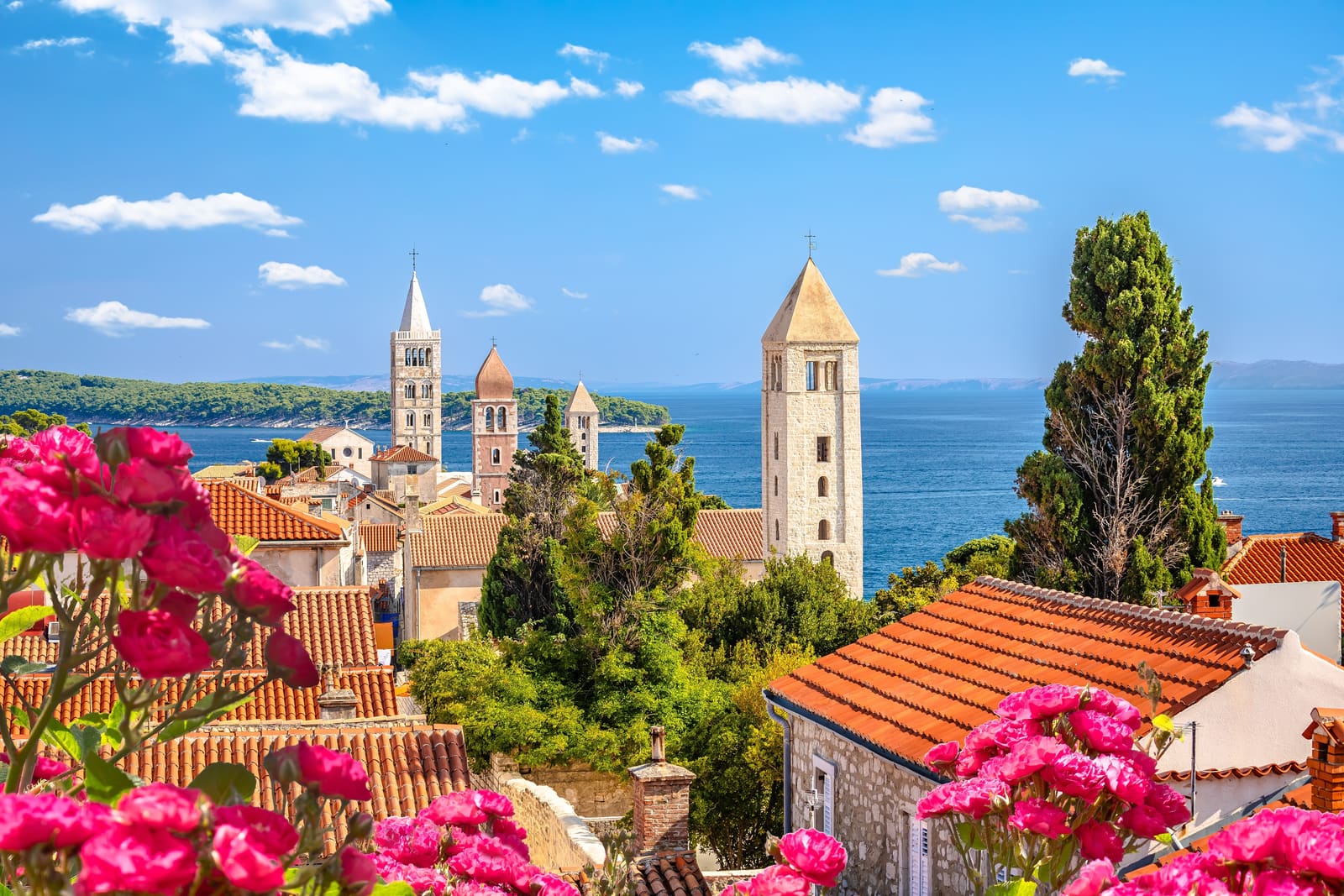
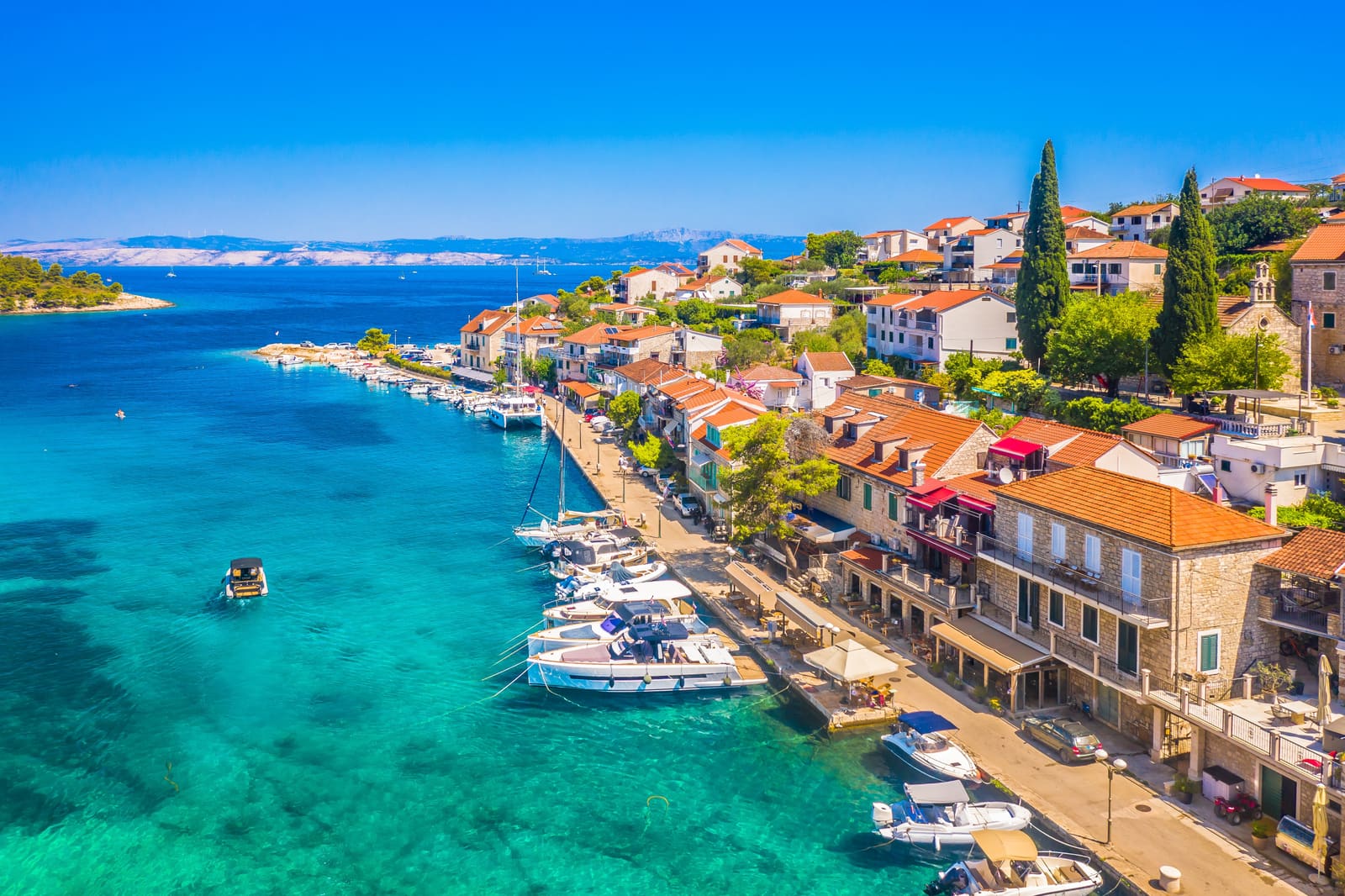


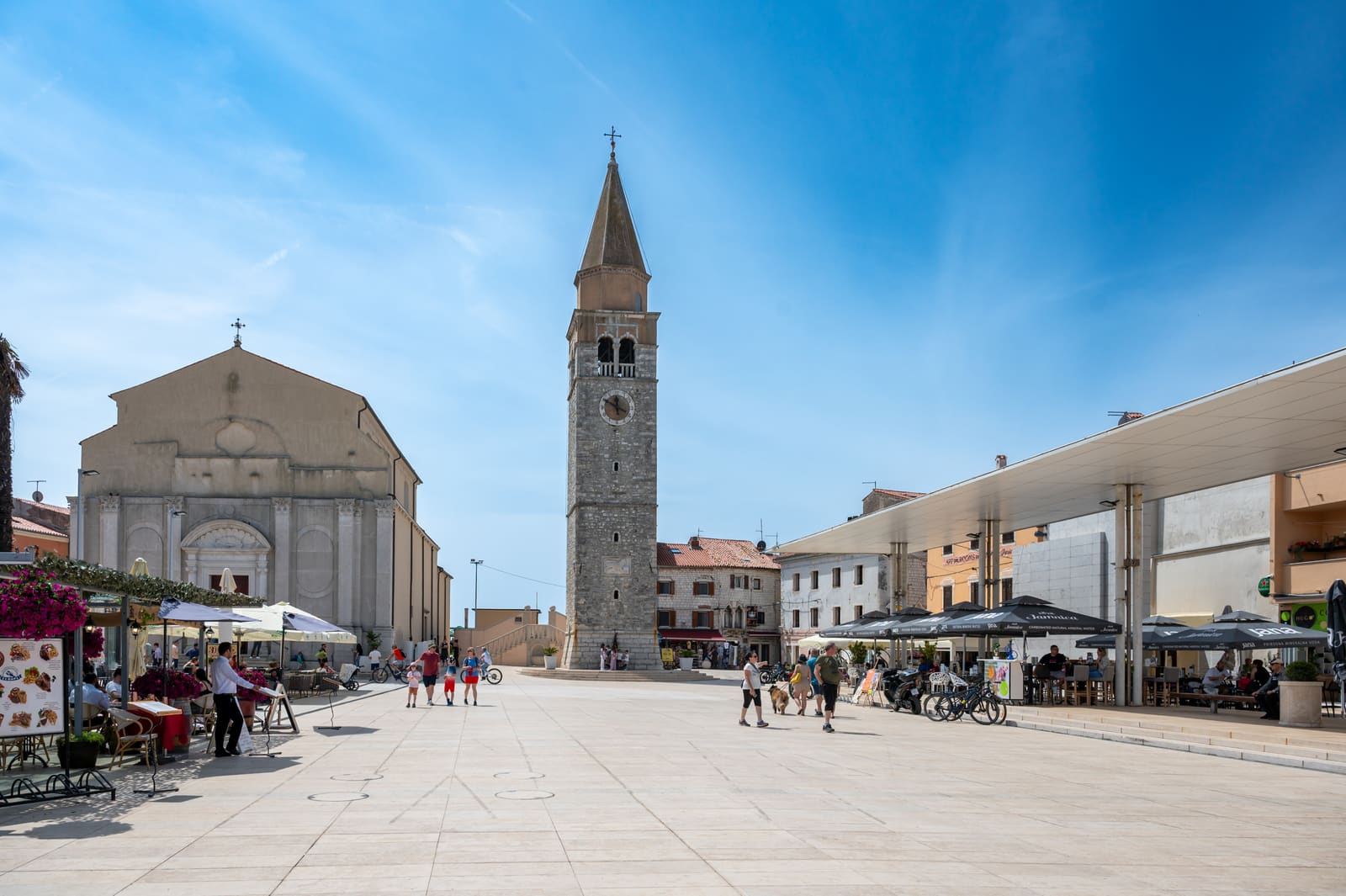
Bell towers of Rab old town above red rooftops and the Adriatic
Get all information about MBBS in Croatia
Download our free brochure for tuition, living costs, eligibility and the complete application process.
Academic Excellence
Why Study MBBS in Croatia?
An English-taught medical degree written into EU law, delivered in three low-crime coastal and capital cities, with clinical training in the largest hospitals in the country.
Three Faculties, About 180 Seats
A Degree Named in EU Law
English Is Genuinely Spoken
Low Crime, Safe Student Cities
Clinical Training in Major Hospitals
A Small Indian Community, Stated Plainly
Get all information about MBBS abroad
Read on to find out how you can fulfil your dream of studying medicine in Croatia.
Programme Structure
MBBS Curriculum in Croatia
Croatian medical faculties deliver a six-year integrated undergraduate and graduate programme worth 360 ECTS credits, taught entirely in English, structured from natural sciences through basic medical sciences to clinical medicine, and concluding in supervised clinical rotations and a graduation examination that leads to the doktor medicine (dr. med.) degree.
General Medicine Course
Total Duration:
6 Years, 360 ECTS (366 ECTS at Split)
Degree:
doktor medicine (dr. med.), equivalent to MBBS
Entrance Exam:
University-specific (written exam at Zagreb and Rijeka, interview at Split)
Structure of the Medical Programme
Years 1–2
Pre-Clinical Foundations
Natural sciences and basic medical sciences covering the structure and function of the healthy human body, alongside compulsory Croatian language classes that later matter for patient communication:
AnatomyMedical BiologyMedical Chemistry & BiochemistryMedical Physics & BiophysicsHistology & EmbryologyPhysiologyImmunologyNeuroanatomy & NeurophysiologyIntroduction to MedicineSocial MedicineMedical EthicsClinical SkillsCroatian LanguageYears 3–4
Paraclinical and Clinical Transition
Paraclinical sciences and the first structured patient contact, bridging laboratory medicine and bedside practice as clinical rotations begin:
PathologyPathophysiologyPharmacologyMedical Microbiology & ParasitologyClinical PropedeuticsInternal MedicineNeurologyPsychiatryInfectious DiseasesDermatovenerologyRadiology & Nuclear MedicineClinical BiochemistryEmergency Medical ConditionsYears 5–6
Clinical Rotations and Graduation
Full clinical rotations across the specialties in university hospital centres under supervision, closing with the graduation thesis and final examination:
SurgeryPaediatricsGynaecology & ObstetricsAnaesthesiology & Intensive MedicineOphthalmologyOtorhinolaryngologyOrthopaedicsUrologyNeurosurgeryFamily MedicineClinical OncologyForensic MedicineEpidemiologyPublic HealthClinical RotationsGraduation Thesis
Important: Subject names and credit weights vary between Zagreb, Split and Rijeka. Split's accredited programme carries 366 ECTS across 6,030 teaching hours and is delivered in subject blocks rather than conventional semesters, while Zagreb and Rijeka carry 360 ECTS.
Get the full curriculum
Download a free brochure to see detailed subjects, the course structure and everything you need to plan your studies.
Recognition & Prestige
Recognition of Croatian Medical Universities
The universities we work with in Croatia are NMC compliant and listed in WDOMS. All four Croatian medical schools are listed in the World Directory of Medical Schools, the Croatian medical qualification is named in EU law, and graduates can qualify to practise in India through the NMC route.
Accreditations and Recognition
NMC compliant
Follows NMC rules for Indian students: a course of at least 54 months, a 12-month internship at the university and teaching in English. Graduates sit the FMGE to practise in India.
WDOMS
All four Croatian medical schools listed in the World Directory of Medical Schools as currently operational
WFME
Aligned with World Federation for Medical Education standards. Croatia's accrediting agency, ASHE, is currently applying for WFME Recognition Status.
EU
doktor medicine listed in Annex V 5.1.1 of Directive 2005/36/EC, within the European Higher Education Area
Is a Croatian medical degree right for you?
Get complete recognition, licensing and career details for Indian students from our experts.
Admissions
Eligibility Criteria
Indian students can apply for medicine in Croatia directly after Class 12, subject to a qualified NEET result, the university's own entrance procedure and an English-language requirement.
Academic Qualification
The student must have passed Class 12 or equivalent with Physics, Chemistry and Biology. Rijeka additionally requires that Biology, Chemistry and Physics were studied for at least two years, and Zagreb requires a secondary education lasting at least four years with certified report cards for the final four grades.
Subjects:
Minimum Grades (PCB)
Minimum aggregate percentage required in Physics, Chemistry and Biology.
| Category | Min. % |
|---|---|
| General / EWS | 50% |
| OBC / SC / ST | 40% |
| PwBD | 45% |
Age Requirement
Candidates must be at least 17 years old by 31 December of the admission year.
- Minimum 17 yearsRequired age at the time of admission
Entrance & English Requirements
Applicants must clear the university's own selection procedure and meet its English-language requirement. Croatian faculties also require recognition of the foreign school-leaving qualification through the national Postani student portal.
Entrance Examination
Zagreb and Rijeka set a written examination in Biology, Chemistry and Physics of 120 multiple-choice questions, 40 per subject. Zagreb requires at least 15 correct answers in each subject and 61 in total and runs the exam fully online. Rijeka requires 60 correct answers and runs it in hybrid mode, on site and simultaneously abroad. Split sets no written examination and selects through an online interview.
English Proficiency
Zagreb publishes explicit minimums of IELTS 6, TOEFL iBT 60, TOEFL paper 500, Duolingo 105 or a C1 certificate. Rijeka accepts certificates at B2 level, including one issued by the applicant's secondary school. Split requires TOEFL, IELTS or CAE but publishes no minimum score. The requirement is waived where previous education was in English.
Important: A qualified NEET result is mandatory before admission, not merely for licensing later. Under clause 8(iv) of the Eligibility Requirement Regulations 2002, inserted by the notification published on 1 March 2018, every Indian citizen or Overseas Citizen of India taking a primary medical qualification abroad on or after May 2018 must have qualified NEET, and the NEET result itself serves as the eligibility certificate. The result is valid for three years from the date of declaration.
Check your eligibility for free
Share your marks and we'll tell you exactly which Croatian universities you qualify for.
Affordable Education
Cost of Living in Croatia
The University of Zagreb's own international office budgets about €600 per month for a student living in a dormitory and about €1,100 per month for a student renting privately. The table below converts those components to rupees at the European Central Bank reference rate of 3 August 2026, where 1 euro equals 109.97 rupees.
Monthly Living Cost
| Cost Component | Approximate Amount |
|---|---|
| Accommodation (dormitory to private room) | ₹6,000 – ₹66,000 |
| Groceries / meals | ₹17,000 – ₹27,500 |
| Utilities / internet | ₹4,000 – ₹10,000 |
| Public transport | ₹1,500 – ₹2,500 |
| Miscellaneous (books, etc.) | ₹11,000 – ₹22,000 |
Average monthly living cost
₹66,000 – ₹1,21,000
How to Apply
Admission Process for MBBS in Croatia
Admission to medicine in Croatia is through each faculty's own procedure, not NEET, although a qualified NEET result is a separate legal precondition for Indian students. Applicants register on the national Postani student portal in parallel with the faculty application, sit the faculty's examination or interview, and enrol for an October start. All three faculties admit into the winter semester only, so there is one intake a year.
Choose your faculty and submit its application with certified copies of your school report cards for all years, your final certificate, passport, birth certificate, Europass CV, English-proficiency proof, a medical fitness certificate less than one month old and a notarised statement of financial means. You must also register separately on the national Postani student portal and request recognition of your foreign qualification. Non-EU documents must be translated into Croatian or English by a certified court interpreter, and Zagreb accepts applications by post only. Application fees are €300 at Zagreb and €200 at Split and Rijeka.
At Zagreb, sit the online written examination in Biology, Chemistry and Physics, with a rehearsal session held a few days beforehand, and note that applicants holding MCAT scores of at least 125 in each section or a natural-sciences degree may be exempted. At Rijeka, sit the same 120-question format in hybrid mode, on site in Rijeka or simultaneously abroad, with an optional paid preparatory course the week before. At Split, attend the online interview before the Selection Committee after pre-selection.
On receiving the offer, pay the tuition instalment within the stated deadline, which is a €2,500 first instalment at Zagreb and the full first-year fee within one week at Split. Then apply for a temporary-stay permit for study, showing €362.25 per month in funds, health insurance and a police clearance certificate issued within the last six months. Register your residence within three days of arriving in Croatia, arrange accommodation early because subsidised dormitory places are not available to self-financing international students, and begin classes at the start of October.
Admission Guidance & Document Checklist
Get the complete document checklist or step-by-step admission guidance from our experts.
Scholarships
Scholarships for International Students in Croatia
Government Scholarships
The Scholarships of the Republic of Croatia are funded by the Ministry of Science, Education and Youth and administered by the Agency for Mobility and EU Programmes. The 2026/27 call lists 18 eligible countries: Belgium (Flanders), Bulgaria, China, Czech Republic, Germany (Bavaria), Greece, Hungary, Israel, Italy, Kosovo, Montenegro, North Macedonia, Poland, Portugal, Romania, Slovak Republic, Türkiye and Ukraine. India is not among them, because there is no India to Croatia bilateral education-cooperation programme underpinning a quota. Indian applicants are therefore not eligible for this scheme. The Indian Council for Cultural Relations scholarships run in the opposite direction, funding Croatian students to study in India.
University-Specific Scholarships
None of the three English-medium medical faculties publishes a scholarship, bursary or tuition waiver for its international medical students. Zagreb, Split and Rijeka all publish a flat €12,000 per year with no discount line. The University of Rijeka runs a Student Excellence Scholarship of €250 per month for enrolled full-time students, but its published terms do not say whether fee-paying international students in the English programme are eligible. Croatia's official Study in Croatia portal states only that individual institutions may offer partial waivers and directs applicants to ask them directly.
Exchange & Mobility Programmes
Erasmus+ funds mobility, not full degrees. An Indian student cannot use Erasmus+ to pay for a six-year medical degree in Croatia; it supports either a semester of credit mobility for a student already enrolled at a partner university, or Erasmus Mundus Joint Masters, which are master's programmes rather than integrated medical degrees. CEEPUS, the Central European Exchange Programme for University Studies, is limited to its sixteen member countries and India is not one of them. Exchange students also pay the non-subsidised dormitory rate. The realistic planning assumption is that the family funds the full €12,000 per year for six years.
Get all information in our free brochure
Discover how you can fulfil your dream of studying medicine in Croatia.
Accommodation
Accommodation
On-Campus Accommodation
Each Croatian university city has a state-linked Student Centre that runs the dormitories. Rijeka is the cheapest in the country, with rooms at the Ivan Goran Kovačić and Podmurvice residences at €51.10 to €53.09 per month and Trsat at €73.99, prices unchanged for more than a decade as of August 2026. Zagreb's Studentski centar charges €99 for a double and €120 for a single at Stjepan Radić and €62 in its pavilions, while the University of Zagreb's own international budget quotes €135 per month. Split's official price list effective 1 October 2025 gives a subsidised double at €110 and a single at €118, with non-subsidised rates of €141.85 and €149.85 and a €100 deposit. The critical caveat is that subsidised places are allocated by the Ministry's public competition to students on state-funded places, so a self-financing international student should plan on the non-subsidised rate or the private market. Rooms are typically shared, furnished, heated and connected, with communal kitchens and laundry.
Off-Campus Accommodation
Students who prefer privacy or who cannot secure a dormitory place rent privately, either a shared flat or a studio. Numbeo's 2026 crowd-sourced data puts a one-bedroom flat outside the city centre at €477 in Rijeka, €579 in Zagreb and €643 in Split, and inside the centre at €621, €769 and €897 respectively. Split is the most expensive of the three because coastal tourism pushes rents above the capital, and summer demand can make July and August arrivals difficult. Subsidised student restaurants run on the X-ica card are a real lever on the food budget: Osijek's official menu shows a roast chicken meal at €3.22 subsidised against €11.20 at full price, so a student who eats mainly in the student restaurant can hold food costs well below the €250 per month budgeted by the University of Zagreb.
Get all information in our free brochure
Read on to find out how you can build your medical career from Croatia.
Your Roadmap to Success
Residency & Career Opportunities After MBBS
Your Opportunities
Graduates receive the doktor medicine (dr. med.), the Croatian medical qualification listed in Annex V, point 5.1.1 of EU Directive 2005/36/EC with a reference date of 1 July 2013 and awarded by the medical faculties of Croatian universities. Under Article 25(1) of that directive, completion of six years of study is the condition for admission to specialist medical training.
Graduates clear the screening examination, which as of August 2026 is the Foreign Medical Graduate Examination conducted twice yearly by NBEMS, since the National Exit Test was deferred by NMC public notice dated 13 July 2023 and has not been implemented. They then complete a twelve-month Compulsory Rotating Medical Internship in India and apply to a State Medical Council, which holds primary responsibility for processing foreign medical graduate applications, for provisional and then permanent registration. Candidates admitted after 2019 must clear the examination within ten years of admission.
Automatic recognition under Directive 2005/36/EC is nationality-based, not diploma-based. Article 2(1) applies the directive to nationals of Member States, and Croatia's Health Care Act states at Article 177(2) that the automatic recognition procedure relates exclusively to nationals of European Economic Area states. An Indian national holding a Croatian degree therefore moves within Europe through national recognition procedures rather than the automatic scheme, unless a derivative route applies, such as EU long-term resident status, EU Blue Card holder status or family membership of an EU citizen. This is the single most commonly misstated point about studying medicine in Europe.
All four Croatian medical schools carry current ECFMG sponsor notes, so students and graduates are eligible to apply for ECFMG Certification and pursue the USMLE. Intealth confirms that its Recognised Accreditation Policy, implemented in November 2024, has no impact on eligibility for ECFMG Certification. For the United Kingdom, a Croatian degree is treated by the GMC as a relevant European qualification, a pathway assessed on the qualification rather than the holder's nationality. Canadian provincial regulators accept degrees from all four schools per their World Directory sponsor notes.
Residency for Students
To practise or enter specialist training in Croatia, graduates must:
Medical Registration
Enter the Croatian Medical Chamber register and obtain the licence for independent work. For foreign nationals the licence is granted for the period allowed under the rules governing the employment of foreigners in Croatia.
Documentation and Licensing
Complete the Chamber's recognition and registration formalities, after which the licence is issued on the member's request once the fifteen-day appeal period has passed.
Language Proficiency
Produce a certified Croatian language qualification at CEFR B2 from an authorised institution. The Chamber waives this only where undergraduate training or secondary schooling was in Croatian, so students on the English-medium programme are not exempt and should begin Croatian in year one.
Time Duration
Specialist training in Croatia is confirmed by the Diploma o specijalističkom usavršavanju issued by the ministry responsible for health, and duration varies by specialty.
Understand the Medical Licensing Pathway
A clear overview of the exams and requirements after graduation.
Our Blog
Medical Education Insights
Articles that turn complex MBBS-abroad rules into simple, practical steps for students and parents.




Compare
Quick Comparison
Compare studying MBBS in Croatia with India's top-ranked government medical college.
Quick Comparison:
University of Zagreb School of Medicine vs AIIMS New Delhi
| University | University of Zagreb School of MedicineZagreb, Croatia | AIIMS New DelhiNew Delhi, India |
|---|---|---|
| University Type | Public | Institute of National Importance (government) |
| Medium | English | English |
| Course Duration | 6 years, 360 ECTS (dr. med.) | 5.5 years including internship (MBBS) |
| Tuition (per year) | €12,000, about ₹13.2 lakh | ₹1,350 tuition; about ₹5,856 payable at admission |
| Admission | Faculty entrance exam, 120 MCQs, plus a qualified NEET result | NEET-UG |
| Recognition | WDOMS listed; EU Annex V 5.1.1; India via FMGE and NMC registration | NMC recognised |
| Global Ranking | QS #721–730 (2027); no QS Medicine subject rank | NIRF Medical #1 (2025); QS Medicine #=105 (2026) |
Compare Top MBBS Universities for Me
See key differences in fees, ranking, eligibility and recognition.
FAQ
Frequently Asked Questions
Short answers to the questions students and parents ask most often about MBBS in Croatia.