Free Webinar: MBBS in India

Sat, September 5, 2026 | 7:00 PM

Reserve my Seat
futureMBBS

Free Webinar: MBBS in India

Sat, September 5, 2026 | 7:00 PM

Reserve my Seat
futureMBBS
Kant, Kyrgyzstan

Asian Medical Institute named after S. Tentishev

A private medical school in Kant, near Bishkek, now Asian International University, holding Kyrgyzstan's top-tier six-year state accreditation and teaching medicine in English since 2004.

  • MBBS student
  • MBBS student
  • MBBS student
  • MBBS student

5000+ Students trust us

Kyrgyzstan

Country

Kant (near Bishkek)

City

6-year state accreditation (2026)

Recognition

English

Medium of instruction

Introduction

Asian Medical Institute named after S. Tentishev (Asian International University)

The Asian Medical Institute (AMI), founded in 2004 in Kant, about 20 kilometres east of Bishkek, is a private Kyrgyz medical school named in memory of the Kyrgyz doctor Satkynbai Tentishev. In 2026 it was renamed Asian International University named after S. Tentishev, remaining the same legal institution. It teaches General Medicine in English to a large international student body, including many Indian students, over five and six-year tracks, and awards a Doctor of Medicine degree equivalent to an MBBS. The institute is listed in the World Directory of Medical Schools, is accredited by the WFME-recognised Kyrgyz agency AAEPO, and in June 2026 received Kyrgyzstan's top-tier six-year state accreditation, placing it among only four medical institutions in the country to earn the full term. Clinical training uses the institute's own polyclinic and clinic in Kant together with hospitals in Bishkek.

  • Study program:General Medicine (MD)
  • Language:English (also Russian)
  • Duration:6 Years (5-year MD track also offered)
  • University type:Private medical institute / university
  • Per academic year fees:≈ US$4,000 · ₹3,45,000 INR (approx.)
  • Entrance examination:Merit-based on Class 12; NEET mandatory for Indian students
  • Application deadline:Autumn (September) intake, with a spring intake
  • International seats:Students from India, Nepal, Pakistan and beyond
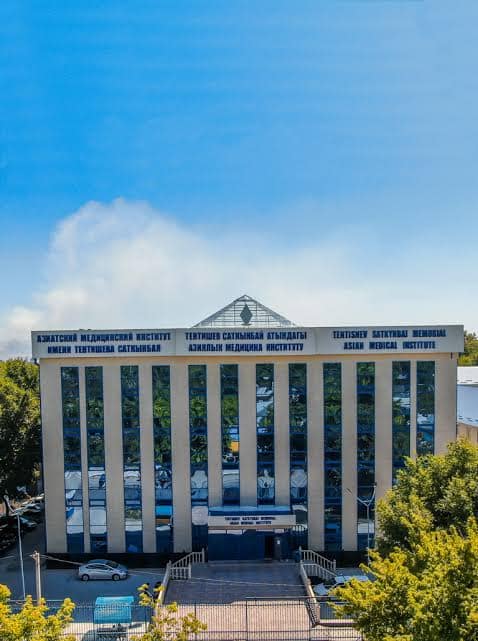
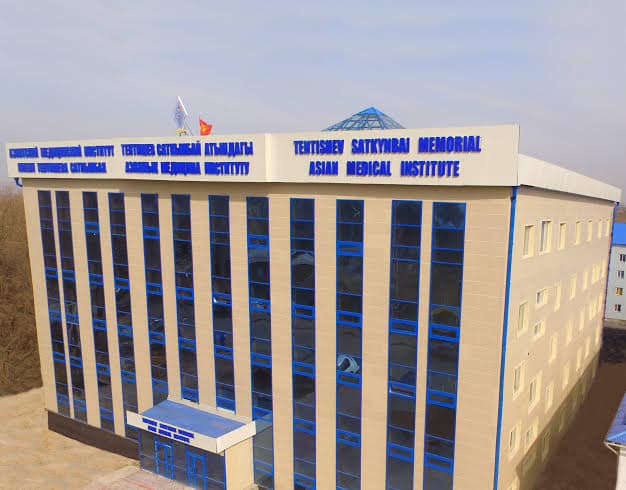
The Tentishev Satkynbai Memorial Asian Medical Institute building with its name sign in Kant
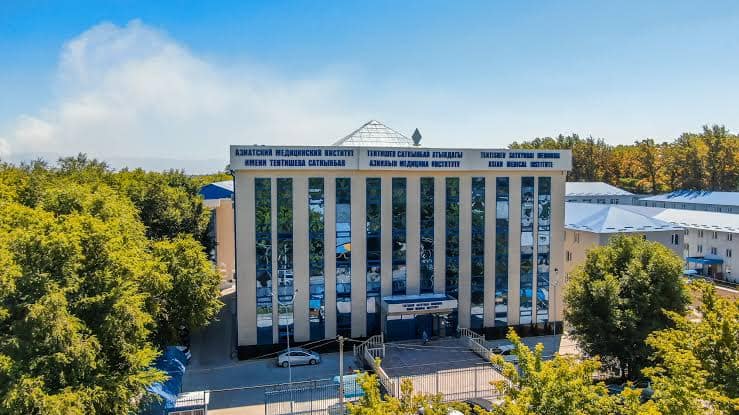
Aerial view of the Asian Medical Institute campus in Kant
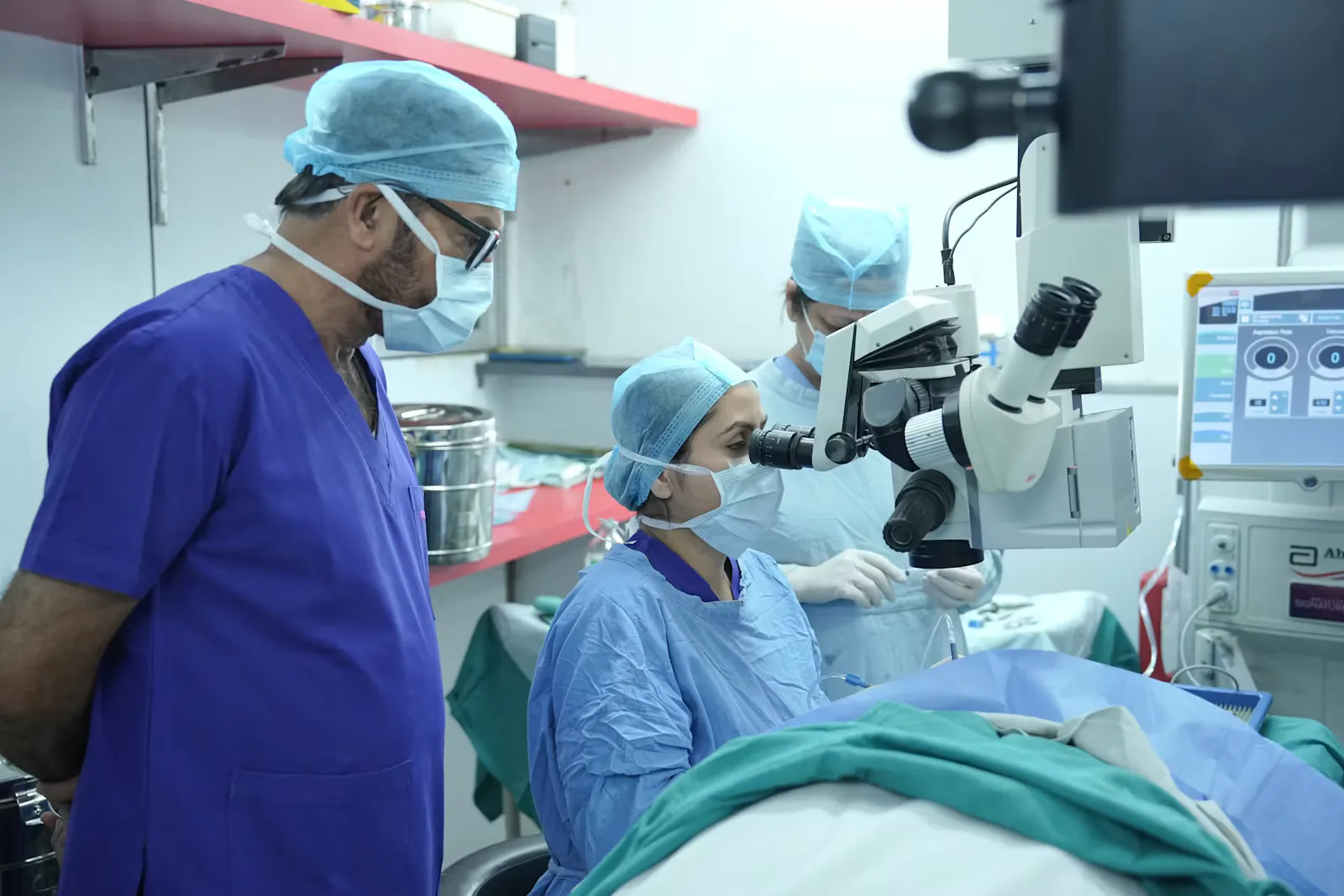
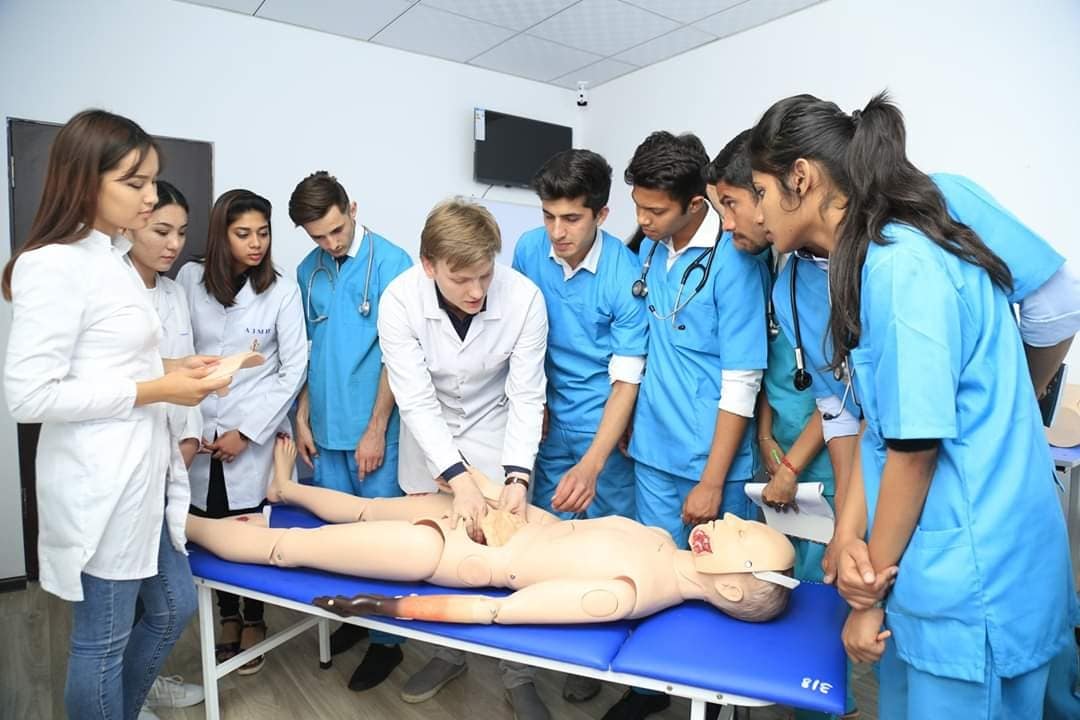
Students in a clinical skills training session at the Asian Medical Institute

The Tentishev Satkynbai Memorial Asian Medical Institute building with its name sign in Kant

Find out all about your MBBS-abroad options at the Asian Medical Institute

Download our free brochure for immediate information, or get personalised professional counselling from our experts.

Recognition & Standing

Rankings & Recognition

The Asian Medical Institute's strongest credentials are its accreditations rather than a global ranking. It is listed in the World Directory of Medical Schools, accredited by the WFME-recognised Kyrgyz agency AAEPO, and in June 2026 earned Kyrgyzstan's top-tier six-year state accreditation, one of only four institutions in the country to do so.

  • 6 years

    State accreditation term earned in 2026 (top tier)

  • WDOMS

    Listed in the World Directory of Medical Schools (ID F0002423)

  • AAEPO / WFME

    Accredited by a WFME-recognised agency (2022)

The medical degree is recognised internationally. The Asian Medical Institute is listed in the World Directory of Medical Schools (WDOMS, ID F0002423), accredited by the WFME-recognised agency AAEPO and holds Kyrgyzstan's six-year state accreditation, and Indian graduates are eligible to qualify for practice in India through the NMC screening/exit examination (FMGE, transitioning to NExT).

Accreditations and Recognition

  • World Directory of Medical Schools emblem

    WDOMS

    Listed in the World Directory of Medical Schools (ID F0002423); graduates eligible for ECFMG certification

  • World Federation for Medical Education emblem

    AAEPO / WFME

    Accredited by the WFME-recognised Kyrgyz agency AAEPO (2022) for its five and six-year medicine programmes

  • National Medical Commission (NMC) of India emblem

    NMC (India)

    Indian graduates are eligible to qualify for practice in India via the NMC screening examination (FMGE/NExT)

Complete Information About the Asian Medical Institute

Get complete information about the Asian Medical Institute, including tuition, living costs, admission, NEET rules, safety and recognition for Indian students.

Success stories

Student Success Stories

Hear directly from students who are studying medicine in Europe with futureMBBS.

Academic Excellence

Why Study Medicine at the Asian Medical Institute

The Asian Medical Institute offers an English-taught medical degree at a low cost, backed by strong Kyrgyz accreditation and a quieter campus town near Bishkek.

Top-Tier State Accreditation

In June 2026 the Asian Medical Institute earned Kyrgyzstan's top-tier six-year state accreditation, one of only four institutions in the country to pass at the full term while thirteen others failed, a genuine mark of quality among Kyrgyz medical schools.

Recognised for the Routes You Need

The institute is listed in the World Directory of Medical Schools and accredited by the WFME-recognised agency AAEPO, so graduates are eligible for India's NMC screening exam (FMGE, transitioning to NExT) and for the USMLE via ECFMG for graduation years 2008 onward.

English-Medium Programme

General Medicine is taught in English for international students, so Indian students study the whole degree in English, with Russian taught alongside for communicating with patients during clinical training.

Low Total Cost

Tuition of around US$4,000 a year and Bishkek-area living costs of roughly ₹22,000–₹40,000 a month keep the total cost of the degree far below Western Europe, the Caribbean or Indian private medical colleges.

A Quieter Campus Town

The institute is based in Kant, a smaller town about 20 kilometres from Bishkek, which offers a calmer, lower-cost environment than the capital while keeping the city and its hospitals within easy reach.

Own Teaching Clinics

Clinical training uses the institute's own polyclinic and clinic in Kant, with simulation facilities, alongside hospitals and scientific centres in Bishkek, giving students hands-on exposure through the clinical years.

Honest on Safety

Kyrgyzstan sits at the lowest tier of Western travel advisories, and while xenophobic mob violence briefly affected South Asian students in Bishkek city in May 2024, the Kant campus is about 20 kilometres away and was not reported to be involved; staying connected to the Indian Embassy and student community is the sensible approach.

Read all about MBBS abroad in our free brochure

Know exactly what options exist for your MBBS-abroad success.

How to Apply

Admission Process for MBBS

Admission to General Medicine at the Asian Medical Institute is merit-based on Class 12 results and a valid NEET qualification for Indian students, without a separate written university entrance exam. Indian students apply through the institute's admissions office or an authorised representative, receive an invitation letter, and complete their student visa and registration in Kyrgyzstan.

Admission Timeline

  1. 1
    June–August 2026Application Opens

    Applications for the autumn (September) intake open through the Asian Medical Institute admissions office; a spring intake follows for the second-semester start.

  2. 2
    Before applyingQualify NEET

    Indian applicants must hold a valid NEET-UG qualification, both to enrol at the institute and for future licensing in India through the NMC.

  3. 3
    On applicationDocument Review & Invitation

    The institute reviews Class 12 and NEET results and issues an official invitation letter to eligible applicants.

  4. 4
    After invitationVisa & Travel

    Students apply for the Kyrgyz student visa/registration, arrange medical insurance, and travel to Kyrgyzstan (direct Delhi–Bishkek flights began in December 2025).

  5. 5
    On arrivalRegistration & Medical Check

    Students complete institute registration, residence registration and a medical check before classes begin.

  6. 6
    September 2026Classes Begin

    The academic year begins on the Kant campus (a spring intake begins the second semester).

Eligibility Criteria

Academic Qualification

Applicants must have completed Class 12 with Physics, Chemistry and Biology and a minimum aggregate of 50% in these subjects (40% for reserved categories), together with English, in line with NMC rules for Indian students studying medicine abroad.

Subjects:

PhysicsChemistryBiologyEnglish

Age Requirement

Candidates must be at least 17 years old by 31 December of the admission year, as required by NMC rules for studying medicine abroad.

  • Minimum 17 yearsRequired age at the time of admission (NMC rule)

Requirements

Selection is by academic merit and a valid NEET result; there is no separate university entrance examination. Applications may be made through the institute's admissions office or an authorised representative.

  • NEET Qualification

    A valid NEET-UG qualification is mandatory for Indian applicants, both for admission and for future NMC licensing in India.

  • English Medium

    The General Medicine programme is taught in English for international students, so a working command of English is essential; no separate language exam is required for the English track.

Entrance Examination

The Asian Medical Institute admits international students on academic merit and NEET qualification rather than a written entrance examination.

ComponentRequirement
Academic recordClass 12 with Physics, Chemistry and Biology; minimum 50% aggregate in PCB (40% for reserved categories)
NEET (Indian students)Valid NEET-UG qualification is mandatory before enrolment
Entrance testNo separate university entrance examination for international applicants

Required Documents

To apply, students need to submit essential academic and identification documents:

  • Completed application form and invitation request
  • Class 10 and 12 certificates and marksheets (Physics, Chemistry, Biology)
  • Valid NEET-UG scorecard
  • Valid passport
  • + More

Admission Guidance & Document Checklist

Get the complete document checklist or admission guidance from our experts.

Program Structure

MBBS Curriculum & Internship Structure

The Asian Medical Institute teaches General Medicine through four academic departments, following the standard progression from basic sciences to full clinical training, taught in English for international students and leading to a Doctor of Medicine degree equivalent to an MBBS.

Medicine (General Medicine) Course

  • Total Duration:

    6 Years (5-year MD track also offered)

  • Degree:

    MD (Doctor of Medicine, General Medicine — equivalent to MBBS)

Curriculum Phases at the Asian Medical Institute

  • Years 1–2

    Pre-Clinical Sciences

    Foundational medical sciences taught through the Departments of Morphological Sciences and Natural & Humanitarian Sciences, with English and Russian language support:

    Human AnatomyHistologyEmbryology & CytologyMedical Biology
    Medical ChemistryNormal PhysiologyBiochemistryHistory of MedicineBioethicsLife-SafetyLatinRussian Language
  • Years 3–4

    Para-Clinical & Early Clinical

    Disease-mechanism sciences from the Department of Therapeutic Disciplines and first structured patient contact:

    Clinical PhysiologyMicrobiology, Virology & ImmunologyPharmacologyClinical Pathology
    General HygieneEpidemiologyMedical GeneticsPropaedeuticsGeneral SurgeryFamily Medicine
  • Years 5–6

    Clinical Training & Internship

    Clinical disciplines from the Departments of Therapeutic and Surgical Disciplines, with rotations in the institute's clinics and Bishkek hospitals and a concluding internship phase:

    Internal MedicineSurgeryNeurologyNeurosurgery
    EndocrinologyAnesthesiologyForensic MedicineEvidence-Based MedicineObstetrics & GynaecologyPaediatricsClinical Internship

Clinical Rotations

Clinical training uses the institute's own AMI Polyclinic (58 Gagarina Street, Kant) and AMI Clinic, along with republican medical institutions and scientific centres in Bishkek. An indicative pattern:

PhaseFocus
Years 3–4Propaedeutics, general surgery and core internal medicine, with first patient contact in the institute's polyclinic
Year 5Rotations in internal medicine, surgery, paediatrics, obstetrics and gynaecology and specialties
Year 6Clinical disciplines and the internship phase in Kant and Bishkek hospitals

Get the full curriculum

Download a free brochure to see detailed subjects, the course structure and everything you need to plan your studies.

Global Exchange

International Partner Universities

The Asian Medical Institute builds its international links through bilateral cooperation agreements (memoranda of understanding) with universities in the region rather than the European Erasmus+ scheme, since Kyrgyzstan is outside the European Higher Education Area. These partnerships support academic exchange, joint activities and staff cooperation.

CountryPartner University (MoU)
RussiaVolga Research Medical University, Nizhny Novgorod
KazakhstanAsfendiyarov Kazakh National Medical University (KazNMU)
PakistanUniversity of Lahore

Explore Your Options

The table above highlights the international cooperation partners of the Asian Medical Institute.

Leadership

Leadership & Faculty of the Asian Medical Institute

The Asian Medical Institute is led by an experienced team of Kyrgyz clinicians and academics and is named in memory of the Kyrgyz doctor Satkynbai Tentishev.

Satkynbai Tentishev (Namesake)

The institute is named in memory of Satkynbai Tentishev, a Kyrgyz doctor honoured by the founding of the school in 2004. He is remembered as a physician in whose name the institution carries forward its mission of training doctors, and the campus in Kant bears his memorial name.
Erkin Satkynbaevich Tentishev (Founder)

Erkin Satkynbaevich Tentishev is the founder of the Asian Medical Institute. He established the institute in 2004 and built it into a medical school that now teaches a large international student body in Kant.

Prof. Selpiev Toychubek Tulekovich (Rector)

Professor Selpiev Toychubek Tulekovich, Doctor of Medical Sciences, is the current Rector of the Asian Medical Institute. He leads the institution's academic and clinical work and its international student community, and oversaw the school through its top-tier 2026 state accreditation.

Faculty

The Asian Medical Institute is led by Rector Professor Selpiev Toychubek Tulekovich, supported by vice-rectors for academic work and international affairs, deans and department heads. Teaching is delivered across four departments (Morphological Sciences, Natural & Humanitarian Sciences, Therapeutic Disciplines and Surgical Disciplines) by Kyrgyz physicians, surgeons and scientists, combining classroom teaching with practice in the institute's own polyclinic and clinic, which helps students build the clinical foundation they need for the FMGE and NExT and for practice in India.

Academic Expertise

  • Experienced physicians and surgeons

  • Four academic departments

  • Kyrgyz medical scientists

  • Own polyclinic and clinic in Kant

Student Support & Mentorship

  • Dedicated international admissions support

  • FMGE preparation support

  • Clinical supervision during rotations

  • Separate hostels with Indian mess

About University

History Information

Founded in 2004

The Asian Medical Institute was founded in 2004 in Kant, Chuy region, about 20 kilometres east of Bishkek, as a private medical school named in memory of the Kyrgyz doctor Satkynbai Tentishev, with an English-medium programme aimed at international students.

Growing the Campus

The institute expanded its facilities over the following years, acquiring a clinic in 2015 and a second campus in 2016, and building its own polyclinic with teaching rooms and simulation facilities on Gagarina Street in Kant.

International Recognition

The institute was listed in the World Directory of Medical Schools and, in 2022, accredited by the WFME-recognised Kyrgyz agency AAEPO for both its five and six-year medicine programmes, opening the ECFMG pathway to its graduates.

University Status and Top-Tier Accreditation

In 2026 the institution was renamed Asian International University named after S. Tentishev and, in the same year, received Kyrgyzstan's top-tier six-year state accreditation, one of only four institutions in the country to earn the full term.

Get all information about the Asian Medical Institute in our free brochure

Read on to find out how you can study medicine at the Asian Medical Institute in Kant.

Role in medicine

Role in medical education

Two Decades of Medical Teaching in Kant

The Asian Medical Institute has taught medicine in Kant since 2004 and has grown into one of the region's established private medical schools. Its clinical teaching is built on its own polyclinic and clinic in Kant together with hospitals and scientific centres in Bishkek, so students train in real clinical settings through the senior years.

Quality Recognised by the State

The institute is accredited by the WFME-recognised Kyrgyz agency AAEPO and, in June 2026, earned Kyrgyzstan's top-tier six-year state accreditation, one of only four institutions in the country to pass at the full term, setting it apart from the many private schools that failed the same assessment.

An International Medical Community

The Asian Medical Institute teaches students from India, Nepal, Pakistan and beyond in English, and supports its large Indian community with dedicated hostels, an Indian mess and FMGE preparation, alongside cooperation agreements with universities in Russia, Kazakhstan and Pakistan.

Get all information about the Asian Medical Institute in our free brochure

Read on to find out how you can study medicine at the Asian Medical Institute.

Affordable education

MBBS Living Cost in Kant and Bishkek

Kant and the wider Bishkek area are among the most affordable places to study medicine abroad. Here is the approximate monthly breakdown for an Indian student.

Monthly Living Cost

Cost ComponentApproximate Amount
Accommodation (hostel / shared flat)₹6,000 – ₹18,000
Food₹12,000 – ₹16,000
Transportation₹1,000 – ₹1,500
Other Expenses (Utilities, Internet, Leisure)₹4,000 – ₹7,000
Get Free MBBS Guide

Average monthly living cost

₹22,000 – ₹40,000

Housing

Accommodation

The Asian Medical Institute provides student hostels in Kant, including separate hostels for male and female students and an Indian mess, and most first-year Indian students begin there before considering private flats.

Institute Hostels

The Asian Medical Institute provides student hostels in Kant, with separate accommodation for male and female students, giving first-year international students secure housing close to the campus.

Indian Mess

The hostels include an Indian mess serving vegetarian and Indian-style meals, which makes settling in much easier for Indian students who want familiar food from day one.

Furnished Shared Rooms

Rooms are furnished and typically shared between students, with common facilities and internet access, keeping costs very low compared with Western destinations.

A Safe First Year

Living in the institute hostel is the recommended option for first-year Indian students: it is supervised, keeps students close to fellow Indians, and removes the stress of finding private housing on arrival.

How to Apply

Hostel places are arranged through the institute's admissions and student services after admission; students should secure a place as early as possible.

Cost

Hostel accommodation in Kant is inexpensive by international standards; agent sources bundle hostel, mess and insurance into the total programme cost, so families should ask for a clear itemised breakdown.

Private Flats

In later years some students rent inexpensive private flats in Kant or Bishkek, typically shared between students, though most Indian students stay in the institute hostels.

Winter Readiness

Kant has a continental climate with cold, snowy winters, so students should budget for warm clothing and heating, a real adjustment for students from most parts of India.

Need accommodation details?

Get a full overview of housing options with our university guide, or reach out to an expert.

Food & Dining

100% Veg Options and Indian Food, Always Available

Indian and vegetarian food is easily available in the hostel Indian mess, in restaurants and in grocery markets in Kant and nearby Bishkek.

The Asian Medical Institute hostels include an Indian mess that serves daily vegetarian and Indian-style meals, so Indian students have familiar food on campus from the first day.

Location

How to Reach the Asian Medical Institute

Address

Asian Medical Institute named after S. Tentishev (Asian International University), 58 Gagarina Street, Kant 725012, Chuy region, Kyrgyzstan

  • Nearest Airport

    Manas International Airport (FRU), about 40 km from Kant; direct Delhi–Bishkek flights began in December 2025

  • Local Transport

    Kant sits about 20 km east of Bishkek, connected by frequent marshrutka minibuses, buses and trains at very low fares

Your Roadmap to Success

Career Pathways After Medicine at the Asian Medical Institute

Graduates earn a Doctor of Medicine (MD) in General Medicine, equivalent to an MBBS. As a WDOMS-listed institute accredited by the WFME-recognised agency AAEPO and holding Kyrgyzstan's six-year state accreditation, the Asian Medical Institute keeps international licensing pathways open, subject to each country's own requirements.

Understand the Medical Licensing Pathway

A clear overview of the exams and requirements after graduation.

Practising in India

FMGE & NExT Details

To practise medicine in India after graduating from the Asian Medical Institute, Indian students follow the licensing pathway set by the National Medical Commission (NMC). Because the institute is WDOMS-listed and teaches an English-medium programme, it meets the NMC's core criteria, and students must have qualified NEET-UG before joining.

  1. Step 1

    National Exit Test (NExT)

    Graduates must clear the qualifying examination that licenses foreign medical graduates to practise in India. At present this is the Foreign Medical Graduate Examination (FMGE), which the NMC plans to replace with the National Exit Test (NExT). Kyrgyz schools' FMGE pass rates are modest, so serious, early preparation is essential.

  2. Step 2

    Clinical Internship (CRRI)

    After qualifying, students complete the required one-year Compulsory Rotatory Residential Internship (CRRI) in India, which builds hands-on experience in Indian clinical settings under the NMC's framework.

  3. Step 3

    Medical Registration

    The final step is registration with the National Medical Commission (NMC) or the relevant State Medical Council. Once registered, the graduate holds a full licence to practise medicine in India.

Student Life Style

Student life at the Asian Medical Institute

Life at the Asian Medical Institute combines an affordable, English-taught medical course with a quieter campus town near Bishkek and a large international student community, in a country of mountains and lakes.

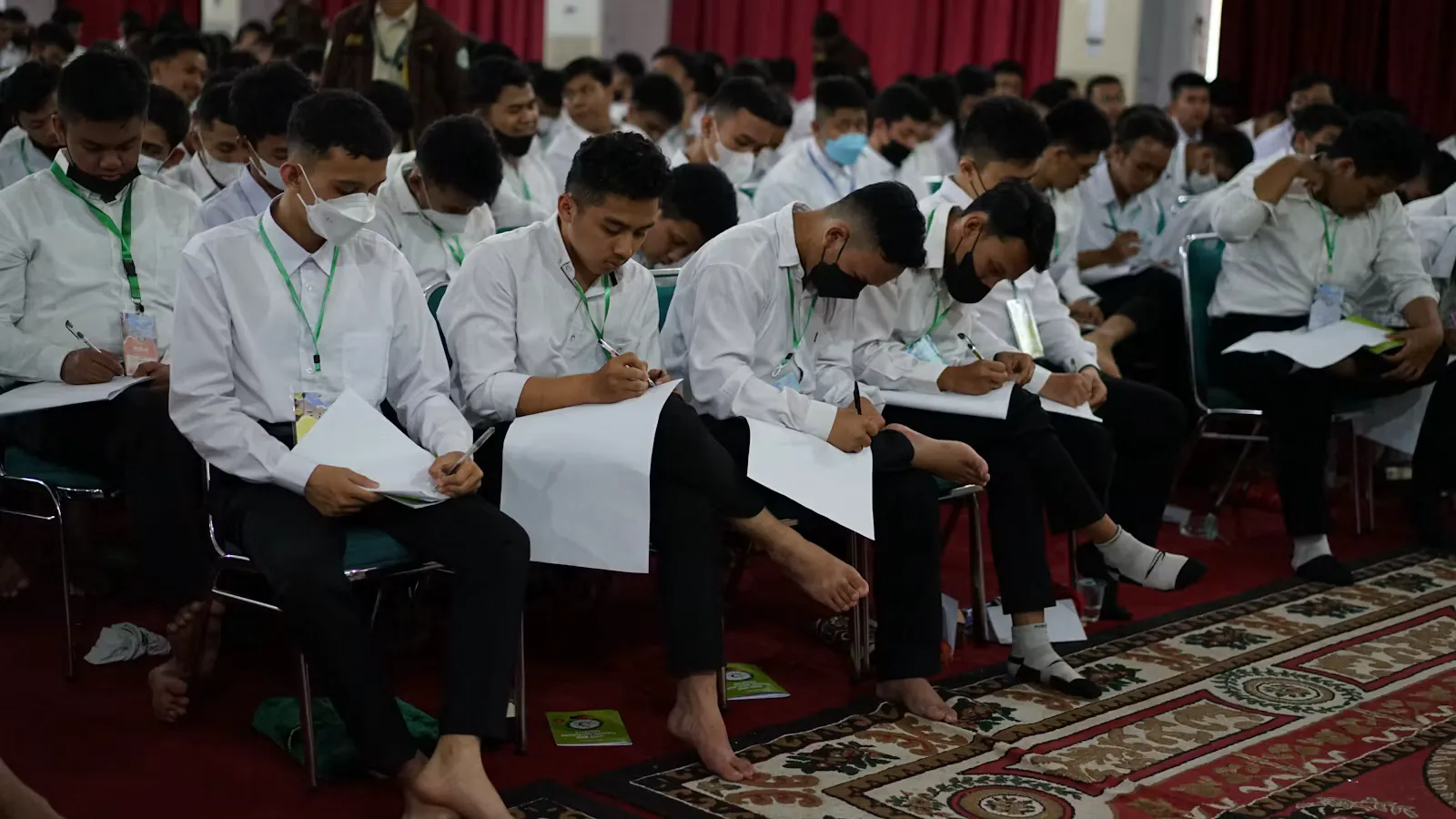
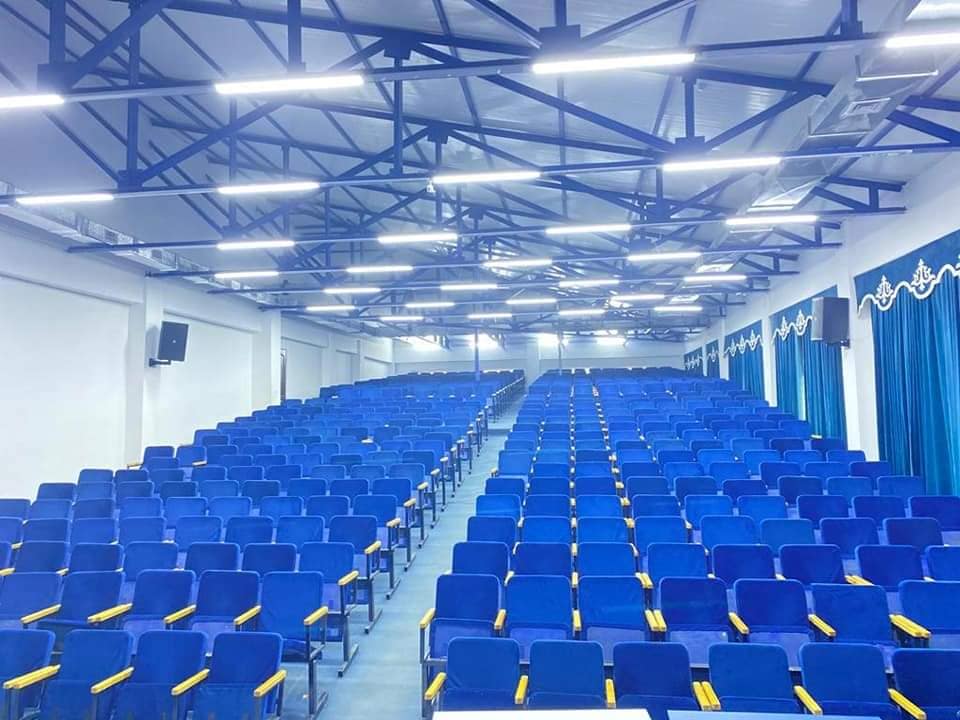
A large lecture hall with tiered seating at the Asian Medical Institute

A large lecture hall with tiered seating at the Asian Medical Institute

Academics

The programme is taught in English across four academic departments, moving from basic sciences to clinical training in the institute's polyclinic and Bishkek hospitals, with Russian taught alongside for communicating with patients.

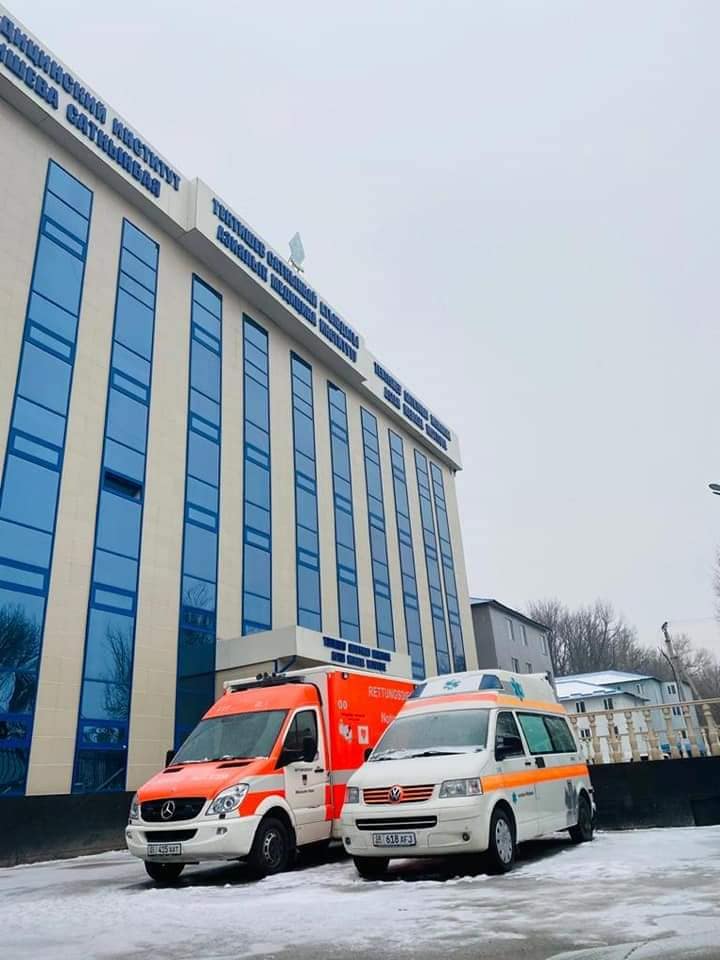
An Asian Medical Institute building with an ambulance parked outside

An Asian Medical Institute building with an ambulance parked outside

Campus and Facilities

The Kant campus has lecture halls, laboratories, a simulation centre and the institute's own polyclinic and clinic, with separate hostels for male and female students and an Indian mess, in a smaller town about 20 kilometres from the capital.

Challenges and Growth

Adjusting to a cold, continental climate, a smaller town and a new country takes time, and students should be realistic about the demands of the FMGE and NExT, but they gain independence and an international outlook alongside their medical training.

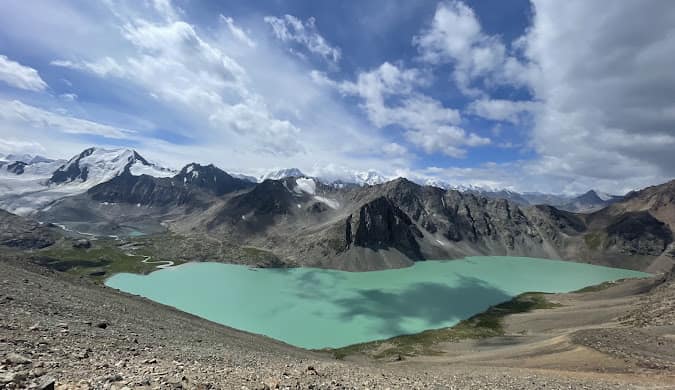
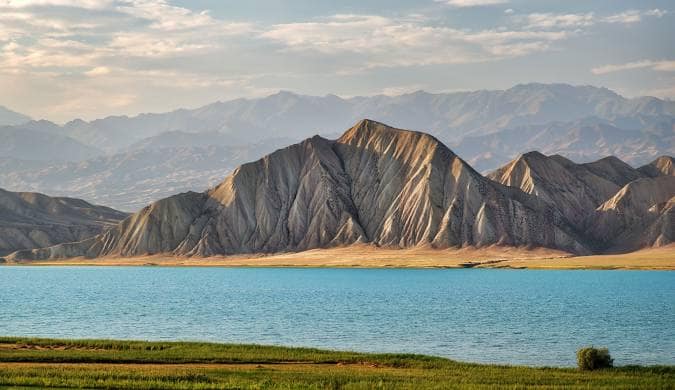
An alpine lake in the mountains of Kyrgyzstan, a popular student trip

An alpine lake in the mountains of Kyrgyzstan, a popular student trip

Social Life

With around 17,000 Indian students in Kyrgyzstan, the Bishkek area has an established Indian community, Indian restaurants and grocery options, and public Diwali and Holi celebrations supported by the Indian Embassy, so students find familiar festivals and food away from home.

Overall Experience

Studying medicine at the Asian Medical Institute is about earning a recognised degree affordably and growing as a person in a new culture, with the honest understanding that licensing back home depends on serious exam preparation and staying connected to the Indian Embassy and community.

Scholarship & Financial

Scholarship & Financial Aid

Honest note first: the Asian Medical Institute's main financial advantage for international students is its low tuition and living costs rather than large scholarships, so families should plan as fully self-funded.

The biggest saving at the Asian Medical Institute is structural: tuition of around US$4,000 a year and Kant/Bishkek-area living costs of roughly ₹22,000–₹40,000 a month keep the total cost of the degree far below Western Europe, the Caribbean or Indian private medical colleges.

  • ≈ US$4,000/year tuition
  • Low-cost hostels with Indian mess
  • Among the lowest total costs of any recognised medical route abroad

Ratings

Reviews & Ratings

Hear from students and alumni about their experience at the Asian Medical Institute.

4.1

97 reviews

Academics4.1
Infrastructure4
Hostel4.2
Campus Life4
Value for Money4.6
  • Affordable with a strong accreditation

    Student — General Medicine 2022

    The fees are low and the school passed the tough 2026 state accreditation, which reassured my parents. Kant is quiet, which helps with studying, and Bishkek is a short ride away.

  • Indian mess made settling in easy

    Student — General Medicine 2021

    Separate hostels and an Indian mess meant familiar food from day one, and there is a big Indian community. Clinical training at the institute's own clinic is hands-on.

Compare

Compare Colleges

Compare the Asian Medical Institute with a leading Indian medical college.

Quick Comparison:

Asian Medical Institute vs CMC Vellore

University
Asian Medical InstituteKant, Kyrgyzstan
CMC VelloreTamil Nadu, India
University TypePrivatePrivate (minority)
MediumEnglishEnglish
Course Duration6 years (5-year MD track also offered)5.5 years (MBBS)
Tuition (per year)~₹3.45 lakh (≈US$4,000)~₹3–4 lakh
AdmissionNEET-based merit (no entrance exam)NEET-UG
RecognitionWDOMS-listed; AAEPO/WFME + 6-year state accreditation; NMC-eligible via FMGE/NExTNMC-recognised
Global RankingNot in QS/THE world rankingsNot in QS top 500

Compare Top MBBS Universities for Me

See key differences in fees, ranking, eligibility and recognition.

Our blog

Medical Education Insights

Articles that turn complex MBBS-abroad rules into simple, practical steps for students and parents.

FAQ

Frequently Asked Questions

Short answers to the questions students and parents ask most often about MBBS at the Asian Medical Institute.