Guides & Tips
Education Loan for MBBS Abroad 2026: Banks, Rates, Rules
4 Aug 2026
17 min read
Education loan for MBBS abroad 2026: SBI, Bank of Baroda and ICICI rates, collateral above Rs. 7.5 lakh, country limits, documents and section 129 tax rules.

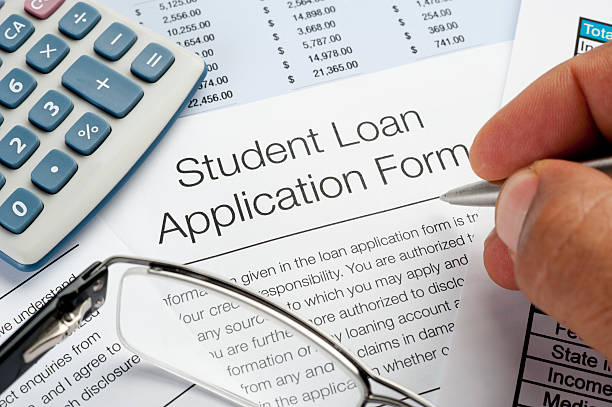
An education loan for MBBS abroad is a bank loan that pays tuition, travel and study costs for a six year medical degree outside India. In September 2026, SBI quotes 8.90% to 9.90% a year and Bank of Baroda 8.45% to 9.90%. Above Rs. 7.5 lakh, most banks ask for property or deposits as security.
Updated on 30 September 2026.
Key Takeaways
Rates are floating. SBI links its rates to its External Benchmark Rate of 7.90% (repo rate 5.25% plus 2.65%), effective 9 June 2026 (SBI education loan interest rates). When the repo rate moves, your rate moves.
Security starts above Rs. 7.5 lakh. SBI and Bank of Baroda both ask for tangible collateral, such as property, for loans above Rs. 7.5 lakh. The RBI says banks must not take collateral for education loans up to Rs. 4 lakh (RBI education loan FAQs).
Check your country before you pick SBI. SBI Global Ed-Vantage is its large loan for study abroad. It lists the Czech Republic and Poland but not Hungary, Slovakia, Latvia, Lithuania, Croatia, Romania or Cyprus (SBI Global Ed-Vantage scheme page).
PM-Vidyalaxmi does not cover MBBS abroad. The government scheme is for students admitted to top ranked institutions in India only (PIB release on PM-Vidyalaxmi).
The interest is tax deductible. Section 129 of the Income-tax Act, 2025 replaced section 80E. It lets the parent who repays deduct the interest for up to eight tax years (Income Tax Department, section 129).
What does an education loan for MBBS abroad cover?
An education loan for MBBS abroad covers far more than tuition. SBI lists these costs for Global Ed-Vantage (SBI Global Ed-Vantage scheme page):
Tuition fees payable to the university, which is the largest part of the bill.
Travel costs, so the flight to your university city can be financed.
Books and equipment needed for the course, such as instruments and a laptop.
Caution deposits charged by the university or hostel, capped at 10% of the fees.
Insurance premiums for the student during the course.
Other course related costs such as study tours and project work, capped at 20% of tuition.
Living costs such as rent and food are usually the part families fund themselves. Our guide to the cost of living in Europe for Indian MBBS students sets out the monthly figures city by city. For the full picture of studying medicine in the region, start with our MBBS in Europe guide.
Which banks give an education loan for MBBS abroad in 2026?
The table compares four bank schemes for study abroad, using each bank's own pages in September 2026. A "repayment holiday", also called a moratorium, is the period when you do not pay instalments.
Bank and scheme | Loan amount | Interest rate a year | Security needed | Repayment holiday | Repayment period |
|---|---|---|---|---|---|
Rs. 7.5 lakh to Rs. 3 crore | 8.90% with collateral, 9.40% without (Rs. 7.5 lakh to Rs. 50 lakh, select institutions only) | Tangible collateral, or third party collateral | Repayment starts 6 months after the course | Up to 15 years | |
Up to Rs. 7.5 lakh for study abroad | 9.90% without collateral | Parent or guardian as co-borrower only | Course period plus 12 months | Up to 15 years | |
Up to Rs. 60 lakh, or Rs. 1.5 crore at premier institutions | About 9.90% up to Rs. 7.5 lakh, 8.95% above it, 8.45% at premier institutions | 100% tangible collateral above Rs. 7.5 lakh | Course period plus 1 year | Up to 15 years above Rs. 7.5 lakh | |
Up to Rs. 3 crore | From 9.00% secured, from 10.25% unsecured | Property or fixed deposits for a secured loan | Option to pay simple interest during the course | Up to 15 years |
Bank of Baroda states its rates as a margin over its Repo Linked Lending Rate (BRLLR), which is 7.90% from 6 December 2025 (Bank of Baroda retail loan interest rates). A "premier institution" is one on the bank's own list. Most European medical universities are not on it, so the non-premier rate is the one to plan with.
What interest rate should you expect on an MBBS abroad education loan?
Expect about 8.5% to 10.5% a year in 2026, depending on the bank and on security. Every rate in the table above is floating. SBI says its education loan rates are "floating for entire period of loan" (SBI education loan interest rates).
Four things decide the rate you are offered:
Security. SBI charges 8.90% on a secured Global Ed-Vantage loan and 9.40% without collateral. ICICI Bank starts at 9.00% secured and 10.25% unsecured.
Loan size. Bank of Baroda charges about 9.90% up to Rs. 7.5 lakh and 8.95% above it, because larger loans come with collateral.
Your university. Bank of Baroda prices premier institutions at about 8.45%, against 8.95% for others.
Female students. SBI gives girl students 0.50% off, except at select institutions. Bank of Baroda gives 0.20% off at non-premier institutions only.
How interest builds up during the MBBS course
Interest is charged from the first payment, even while you study. SBI adds the interest built up during the repayment holiday to the loan. It then fixes the monthly instalment (EMI) on that bigger total (SBI Global Ed-Vantage scheme page). Each Rs. 10 lakh borrowed at 8.90% builds about Rs. 89,000 of interest a year. Over a six year course that adds up quickly. If your family can pay the interest each year during the course, the final EMI will be smaller.
Secured or unsecured: which education loan for MBBS abroad suits you?
A secured loan is backed by an asset you pledge. An unsecured loan relies on the income and credit record of the parent who co-signs. For a full MBBS abroad, most families need a secured loan, because the amount is far above the unsecured limits.
Loan amount | SBI security rule | Bank of Baroda security rule |
|---|---|---|
Up to Rs. 4 lakh | Parent or guardian as co-borrower | Parent as co-borrower, no security |
Rs. 4 lakh to Rs. 7.5 lakh | Parent or guardian as co-borrower, no collateral | Third party guarantee plus assignment of the student's future income |
Above Rs. 7.5 lakh | Tangible collateral, which can be offered by a third party | Tangible collateral worth 100% of the loan |
Sources: SBI Student Loan Scheme and Bank of Baroda Baroda Scholar. SBI Global Ed-Vantage also offers loans up to Rs. 50 lakh without collateral, but only for select premier institutions.
What is the margin on an MBBS abroad loan?
The margin is the share of the cost your family pays itself. SBI asks for no margin up to Rs. 4 lakh and 15% above Rs. 4 lakh for study abroad (SBI Student Loan Scheme). On a EUR 13,000 tuition bill, that means the family funds about EUR 1,950 a year and the bank funds the rest. Scholarships count towards the margin under Global Ed-Vantage, so see our guide to scholarships for MBBS abroad.
How much should you borrow for MBBS abroad?
Size the loan on the university's own published fee, not a general estimate. The table shows 2026 to 2027 tuition at eight futureMBBS partner universities, taken from each university's fee page. Our tuition fees page lists all 23 partners.
University | Country | Tuition a year (2026 to 2027) | Approximate six year tuition |
|---|---|---|---|
Czech Republic | EUR 24,250 | EUR 145,500 | |
Poland | EUR 15,100 in year 1, EUR 14,900 in years 2 to 6 | EUR 89,600 | |
Hungary | EUR 15,800 (EUR 7,900 a semester) | EUR 86,900 (year 6 is one semester) | |
Latvia | EUR 13,500 | EUR 81,000 | |
Lithuania | EUR 12,800 in years 1 to 3, EUR 13,300 in years 4 to 6 | EUR 78,300 | |
Slovakia | EUR 13,000 | EUR 78,000 | |
Czech Republic | EUR 12,500 | EUR 75,000 | |
Croatia | EUR 12,000 | EUR 72,000 |
Tuition is only part of the bill. Our breakdown of the six year cost of MBBS in Europe adds living costs and one off fees. Many countries also ask for proof of money before they issue a student visa, covered in our guide to proof of funds for MBBS in Europe. For a quick side by side, see the web story on MBBS fees in India and abroad in 2026.
Why the euro rate matters for your loan
Your loan is sanctioned in rupees, but tuition is billed in euros. If the euro rises by Rs. 1, a EUR 78,000 tuition bill costs Rs. 78,000 more. Ask the bank to sanction some room above today's converted figure, so a weaker rupee does not leave a gap in year five.
Who is eligible for an education loan for MBBS abroad?
Banks set their own rules, but the core conditions are the same across SBI and ICICI Bank:
Indian nationality. SBI and ICICI Bank both lend only to Indian nationals (SBI Student Loan Scheme, ICICI Bank education loan).
Confirmed admission. You need an admission letter from the university. ICICI Bank also accepts an application before admission, based on an offer letter.
Age and schooling. ICICI Bank sets a minimum age of 16 and asks for a completed Class 12 or diploma.
A co-borrower. A parent or guardian signs the loan with the student. Their income and credit record carry most of the weight.
Check the MBBS course meets NMC rules before you borrow
A loan only makes sense if the degree lets you work as a doctor in India. Under the NMC Foreign Medical Graduate Licentiate Regulations, 2021, the course must last at least 54 months and be taught in English. It must also include a 12 month internship at the same foreign institution. After that, you pass FMGE, the screening exam for foreign medical graduates, and complete a 12 month supervised internship in India. Our summary of the latest NMC rules for MBBS abroad explains each condition.
Does PM-Vidyalaxmi cover an education loan for MBBS abroad?
No. PM-Vidyalaxmi is for students who win merit based admission to Quality Higher Education Institutions (QHEIs) in India. These are colleges in the top 100 of the NIRF, India's national ranking. State government colleges ranked 101 to 200 and all central government institutions are also included (PIB release of 6 November 2024). Foreign universities are not included.
For students it does cover, the scheme gives a 75% government guarantee on loans up to Rs. 7.5 lakh. It also pays 3% of the interest during the repayment holiday on loans up to Rs. 10 lakh, for families earning up to Rs. 8 lakh a year. By July 2026, 1,12,817 loans worth Rs. 15,634.78 crore had been sanctioned through the PM-Vidyalaxmi portal (PIB release of 27 July 2026). It is useful if you take an MBBS seat in India instead.
How do you apply for an education loan for MBBS abroad?
Get the admission letter. Banks process the loan against confirmed admission, so this comes first.
Work out the full cost. Take the tuition from the university's fee page, then add travel, deposits, insurance and books.
Pick the scheme that fits your country and amount. Check the SBI country list. Compare the rate, the security rule and the repayment holiday in the table above.
Prepare the security papers. For a loan above Rs. 7.5 lakh, collect the property or fixed deposit documents. The bank values the property before it sanctions.
Apply online or at a branch. SBI, Bank of Baroda and ICICI Bank all take applications on their websites as well as in branches.
Read the sanction letter. Check the rate, the spread over the benchmark, the processing fee and when the repayment holiday ends.
Receive payments in stages. The bank pays the university each year as fees fall due, and you pay your margin alongside each payment.
SBI charges a processing fee on Global Ed-Vantage of 0.50% of the loan, with a minimum of Rs. 10,000 and a maximum of Rs. 50,000, plus GST (SBI Global Ed-Vantage scheme page). Bank of Baroda charges nothing up to Rs. 7.5 lakh and 1% above it, up to Rs. 10,000 (Bank of Baroda Baroda Scholar).
What documents do you need for an MBBS abroad education loan?
SBI asks for the following documents for its student loans (SBI Student Loan Scheme):
Proof of admission, meaning the university's admission or offer letter.
Academic records, such as the Class 10 and Class 12 mark sheets and the NEET UG scorecard.
Income proof of the co-borrower, such as salary slips or income tax returns.
Bank statements for the last six months of the co-borrower.
Security documents for loans above Rs. 7.5 lakh, such as property papers or fixed deposit receipts.
Tax rules for an education loan for MBBS abroad
Is education loan interest tax deductible?
Yes. Section 129 of the Income-tax Act, 2025 allows an individual to deduct the interest paid on a loan for higher education (Income Tax Department, section 129). It continues the rule in section 80E of the Income-tax Act, 1961. The loan must come from a bank or another notified institution. It can be for yourself, your spouse, your children or a student you are legal guardian of. The deduction runs for up to eight tax years. Only the interest counts, not the principal.
Is TCS charged when the loan pays fees abroad?
No. TCS, the tax a bank collects when money is sent abroad, is not collected on education remittances paid from a loan by a financial institution. This was set by the Finance Act, 2025 (Income Tax Department, key highlights of the Finance Act, 2025).
What if something goes wrong with your MBBS abroad loan?
The bank refuses because of where you live. The RBI says banks cannot reject an education loan because the student lives outside the branch's service area. Unresolved complaints can go to the RBI Ombudsman (RBI education loan FAQs).
You have no property to pledge. SBI accepts collateral offered by a third party, such as a relative (SBI Global Ed-Vantage scheme page). Below Rs. 7.5 lakh, SBI needs no collateral at all.
Your country is not on SBI's list. Bank of Baroda's Baroda Scholar covers professional degrees at recognised universities abroad. ICICI Bank lends for admission to recognised institutes in India or abroad.
The rupee weakens. Ask for a sanction with room above today's euro cost, and pay your margin early when the rate is good.
If you want help matching a university to your family's budget, you can book a free consultation with our team.
Conclusion
For most families, an education loan for MBBS abroad means a secured loan above Rs. 7.5 lakh at about 8.5% to 10% a year, floating. Start with the university's published fee and the SBI country list. Compare the rate, the security rule and the repayment holiday. Then claim the section 129 tax deduction once repayment starts.
Frequently asked questions about education loans for MBBS abroad
What is the interest rate on an education loan for MBBS abroad in 2026?
In September 2026, SBI charges 8.90% with collateral and 9.40% without on Global Ed-Vantage. Bank of Baroda charges about 8.95% above Rs. 7.5 lakh at non-premier universities. ICICI Bank starts at 9.00% secured. All are floating rates linked to the RBI repo rate, so they change during the loan.
Can I get an education loan for MBBS abroad without collateral?
Yes, for smaller amounts. SBI lends up to Rs. 7.5 lakh for study abroad with only a parent as co-borrower. The RBI says banks must not take collateral up to Rs. 4 lakh. A six year European MBBS usually costs far more, so most families need collateral for the full amount.
How much education loan can I get for MBBS abroad?
SBI Global Ed-Vantage and ICICI Bank lend up to Rs. 3 crore. Bank of Baroda lends up to Rs. 60 lakh, or Rs. 1.5 crore at premier institutions. The amount you get depends on the university fee, your collateral value and the co-borrower's income. SBI asks the family to fund 15% itself.
Does SBI give education loans for MBBS in Hungary or Slovakia?
SBI Global Ed-Vantage, its large study abroad loan, lists the Czech Republic and Poland in Europe but not Hungary, Slovakia, Latvia, Lithuania, Croatia, Romania or Cyprus. SBI's Student Loan Scheme covers study abroad up to Rs. 7.5 lakh. For larger amounts in those countries, compare Bank of Baroda and ICICI Bank.
Is PM-Vidyalaxmi available for MBBS abroad?
No. PM-Vidyalaxmi covers students admitted to top ranked institutions in India, meaning the NIRF top 100, state government institutions ranked 101 to 200, and central government institutions. Foreign universities are not included. Its 3% interest support applies to loans up to Rs. 10 lakh for families earning up to Rs. 8 lakh.
When do I start repaying an MBBS abroad education loan?
It depends on the scheme. SBI Global Ed-Vantage repayment starts six months after the course ends. SBI's Student Loan Scheme and Bank of Baroda give the course period plus one year. Interest still builds up during the course, and SBI adds it to the loan before fixing the EMI.
Can parents claim tax benefit on an MBBS abroad education loan?
Yes. Section 129 of the Income-tax Act, 2025, which continues the old section 80E, lets an individual deduct interest paid on a loan for a child's higher education. The loan must come from a bank or notified institution. The deduction lasts up to eight tax years and covers interest only, not principal.
Is TCS deducted on fees paid abroad from an education loan?
No. Since the Finance Act, 2025, banks do not collect TCS on education remittances paid from a loan taken from a financial institution. TCS is the tax collected at source when money is sent abroad. This means the full loan amount reaches the university, with nothing held back at the bank.
Sources
State Bank of India: education loan interest rates, effective 9 June 2026
Press Information Bureau: Cabinet approves PM-Vidyalaxmi, 6 November 2024
Press Information Bureau: PM-Vidyalaxmi portal for higher education loans, 27 July 2026
Income Tax Department: key highlights of the Finance Act, 2025
National Medical Commission: Foreign Medical Graduate Licentiate Regulations, 2021
Charles University, First Faculty of Medicine: admission and fees 2026 to 2027
Riga Stradins University: tuition fees for studies in English
Comenius University, Faculty of Medicine: admission process and fees
University of Split School of Medicine: call for applicants 2026 to 2027
Related Topics
- education loan for MBBS abroad
- PM Vidyalaxmi
- SBI education loan
- MBBS abroad finance
- futureMBBS
- study abroad loan
Related Articles
 Guides & Tips4 Aug 202616 min read
Financial Planning for MBBS Abroad: 2026 Budget Guide
Financial planning for MBBS abroad in 2026: six year tuition at 8 EU universities, living costs, euro rate risk, TCS above Rs 10 lakh and education loan rules.
 Guides & Tips4 Aug 20267 min read
Funny and Weird Medical Terms Doctors Actually Use
These funny and weird medical terms, from brain freeze to hospital slang like doughnut and code brown, reveal how doctors and nurses really talk on shift.
 Guides & Tips4 Aug 20267 min read
Georgia MBBS Disadvantages: What Indian Students Should Know
Georgia MBBS disadvantages, from FMGE pass-rate variance to recognition checks and clinical exposure, are worth weighing against NMC-recognised EU options.