Career
Diploma After MBBS in 2026: NMC Seats vs NBEMS Diplomas
11 Oct 2026
14 min read
Diploma after MBBS in 2026: just 353 NMC diploma seats remain, the NMC is converting them to MD/MS, and NBEMS runs its own two year diplomas. See how it works.
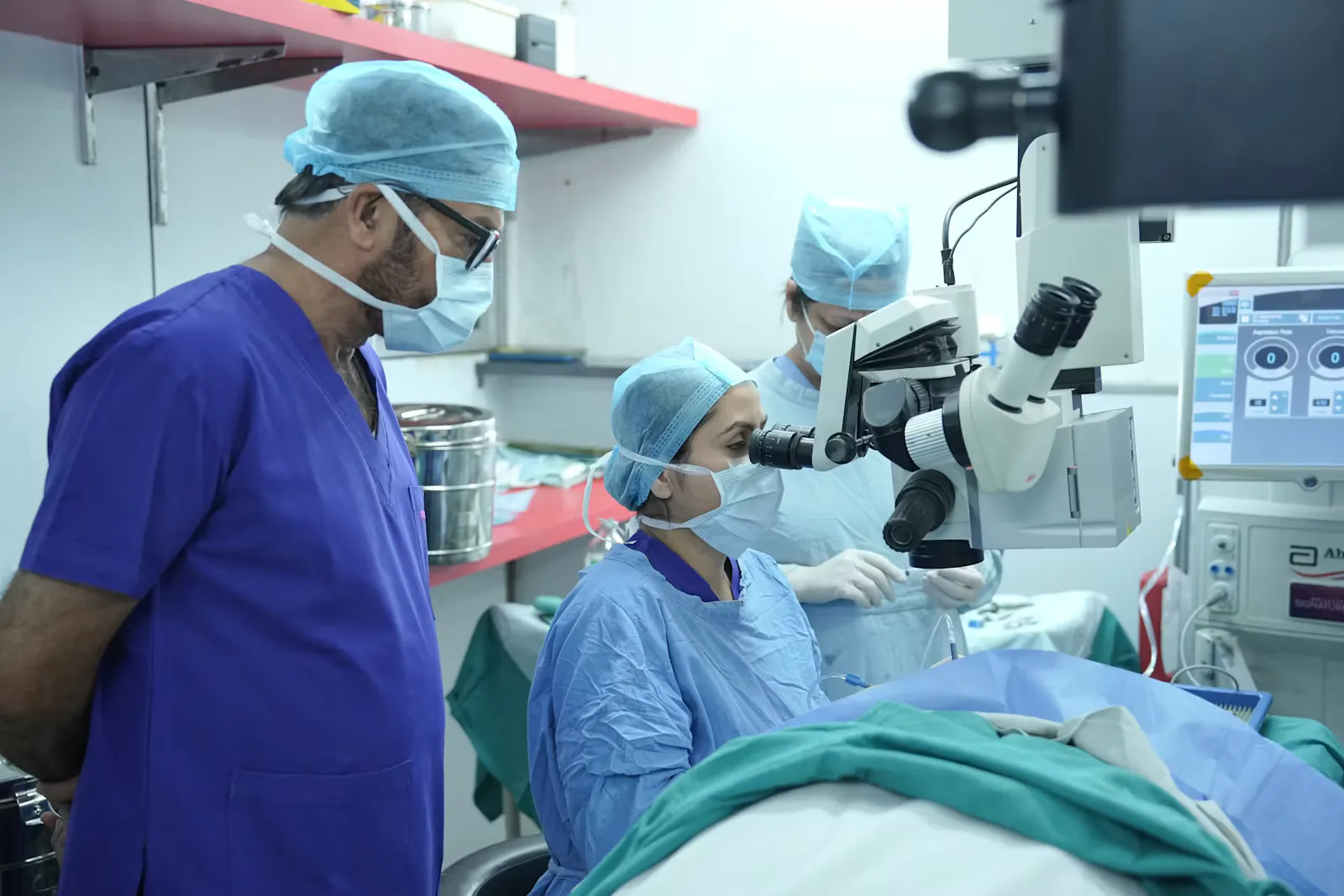
A diploma after MBBS is a two year postgraduate clinical qualification in one subject, such as anaesthesiology, paediatrics or ophthalmology. In India it now comes from two very different places. The NMC's own diploma seats in medical colleges are almost gone: the 2026-27 seat matrix lists just 353 of them, and the NMC is converting them into MD/MS seats. NBEMS diplomas, run in accredited hospitals, are the stream that is still going. Both are entered through NEET-PG.
If you are planning an MBBS in Europe and wondering what your options look like when you come home, this is the part of the map that changed most in 2026. So let's go through it properly.
Key Takeaways
- A diploma after MBBS is a two year PG course. MD and MS take three years. The PG Medical Education Regulations 2023 set both durations.
- NMC diploma seats are nearly gone. The NMC seat matrix for 2026-27 (as on 29 September 2026) lists 353 diploma seats out of 63,177 PG seats, about 0.56 percent.
- No new NMC diploma seats are allowed. Colleges can only apply to convert diploma seats into MD/MS seats, and an NMC notice of 22 June 2026 covers conversion from 2027-28 onwards.
- NBEMS runs its own post MBBS diplomas. Its October 2026 exam bulletin lists nine specialities, from anaesthesiology to emergency medicine.
- Both routes start with NEET-PG. If you studied abroad, you first need the FMGE, your internship and registration in India.
What is a diploma after MBBS?
A diploma after MBBS is a recognised postgraduate qualification that trains you in one clinical or public health subject for two years, instead of the three years an MD or MS takes. Chapter II of the PG Medical Education Regulations 2023 lists PG diploma courses at two years and broad speciality degrees at three.
Think of a diploma after MBBS as a shorter, narrower specialisation. You work in one department, you sit a final exam, and you come out as, say, a DA (Diploma in Anaesthesiology) or a DCH (Diploma in Child Health). You are a specialist in that field, but with less training time than an MD holder.
Annexure 3 of the same regulations names 28 recognised PG diploma qualifications. Some are clinical (D.A., D.G.O., D.O., D.C.H., D.Ortho., D.L.O.). Others are lab or public health subjects, like D.C.P. in clinical pathology or D.P.H. in public health.
What did the NMC change about PG diplomas?
The NMC has stopped the PG diploma from growing and is now moving its seats over to MD/MS. This happened in two steps.
The first step is already in the regulations. A footnote to Regulation 2.1 of the PG Medical Education Regulations 2023 says medical colleges may apply to the Medical Assessment and Rating Board (MARB) to convert diploma seats to degree seats, and that no new applications will be entertained to start or increase diploma seats. So since 2023, the number of NMC diploma seats could only go down.
The second step came in 2026. The NMC's "What's New" list carries a notice dated 22 June 2026 titled "Conversion of Post Graduate Diploma Seats to Post Graduate Broad Specialty Degree Seats (MD/MS) in Medical Colleges/Institutions from the Academic Year 2027-28 onwards". In plain words: from 2027-28, the plan is that these seats become MD or MS seats.
Is that bad news for anyone planning a diploma after MBBS? Not really. A converted seat is a three year degree instead of a two year diploma. For most students that is a better seat, not a lost one.
How many diploma seats are left for 2026-27?
Very few NMC seats are left for a diploma after MBBS. The NMC seat matrix for PG seats 2026-27, published by MARB as on 29 September 2026, lists 63,177 PG seats. Only 353 of them are diploma seats, which is about 0.56 percent. That's fewer than six seats in every 1,000.
They are spread across 49 institutions and 106 course lines. Government institutions hold 311 of the 353, private colleges 26 and deemed universities 16. West Bengal has the most (86), followed by Uttar Pradesh (45), Delhi (37) and Gujarat (37).
Here is the split by subject, counted line by line from that seat matrix:
| Diploma subject | Seats in the 2026-27 matrix |
|---|---|
| Anaesthesiology (D.A.) | 76 |
| Obstetrics and Gynaecology (D.G.O.) | 54 |
| Ophthalmology (D.O.) | 53 |
| Paediatrics (D.C.H.) | 33 |
| Clinical Pathology (D.C.P.) | 22 |
| Orthopaedics (D.Ortho.) | 20 |
| Health Education (D.H.E.) | 20 |
| Public Health (D.P.H.) | 13 |
| Radiodiagnosis (D.M.R.D.) | 12 |
| Otorhinolaryngology (D.L.O.) | 11 |
| Ten other subjects combined | 39 |
| Total | 353 |
The ten smaller subjects are Health Administration, Psychiatry and Sport Medicine (6 each), Tuberculosis and Chest Diseases (5), Radiation Medicine (4), Community Medicine, Radio-therapy and Diabetology (3 each), Immuno-Haematology and Blood Transfusion (2) and Forensic Medicine (1).
One caution. MARB says the matrix does not yet include seats from pending applications for new courses or higher intake, and it can be revised. Treat the numbers as the picture on 29 September 2026, not a final count.
What are NBEMS diplomas, and are they different?
Yes, they are a separate stream, and for many subjects they are now the main route to a diploma after MBBS. NBEMS (the National Board of Examinations in Medical Sciences, the same body that runs NEET-PG and the FMGE) offers its own two year post MBBS diploma courses in accredited hospitals. Its NBEMS Diploma page says the course lasts two years for post MBBS candidates and that you get in after qualifying NEET-PG.
The NBEMS Diploma Final Examination October 2026 bulletin says NBEMS started these diplomas from the 2021 admission session. It lists nine specialities for the exam:
- Anaesthesiology
- Emergency Medicine
- Family Medicine
- Obstetrics and Gynaecology
- Ophthalmology
- Otorhinolaryngology (ENT)
- Paediatrics
- Radio Diagnosis
- Tuberculosis and Chest Disease
Are they recognised? The bulletin reproduces a Ministry of Health notification of 6 August 2020 (S.O. 2629(E)) that added eight of these to the First Schedule of the Indian Medical Council Act. DA (NBE), DGO (NBE), DCH (NBE), D Fam. Med. (NBE), DO (NBE), DLO (NBE), DMRD (NBE) and DTCD (NBE) are recognised medical qualifications when granted by NBEMS after August 2020. Emergency Medicine is newer and isn't in that 2020 list, so check its status with NBEMS before you choose it.
Here's how the two streams compare on the points that matter to you:
| Point | NMC PG diploma | NBEMS post MBBS diploma |
|---|---|---|
| Where you train | NMC-approved medical college | NBEMS-accredited hospital |
| Length | 2 years | 2 years |
| Entry | NEET-PG and counselling | NEET-PG and counselling |
| Future | No new seats; conversion to MD/MS from 2027-28 | Final exam still scheduled by NBEMS in 2026 |
| Who awards it | Your university | NBEMS |
The NBEMS bulletin is dated 28 July 2026, which is after the NMC's June notice, and it still runs the diploma exam twice a year. That tells you NBEMS diplomas were still active at that point. Whether the NMC conversion plan touches them at all is a question to confirm on the NBEMS website when you get close to choosing.
How do you get a diploma seat through NEET-PG?
Every diploma after MBBS, NMC or NBEMS, starts with the same exam. The NEET-PG 2025 information bulletin calls NEET-PG the eligibility-cum-ranking exam for MD/MS/PG Diploma courses, and says admission to NBEMS diploma courses is also done through NEET-PG. The NBEMS diploma page adds that counselling for these seats is run by the Medical Counselling Committee (MCC) of DGHS, along with MD/MS/PG diploma counselling.
So a diploma after MBBS isn't a back door. You still need a NEET-PG rank. What changes is which seat you pick when your turn comes in counselling. Our guide to NEET-PG counselling walks through how the rounds work.
Can you do a diploma after MBBS from abroad?
Yes, once you are eligible for NEET-PG. A foreign degree doesn't block you from a diploma after MBBS, but it adds steps before you can even apply.
Clause 4.10 of the NEET-PG 2025 bulletin sets the rule for Indian citizens and OCIs with a foreign primary medical qualification. You must have qualified the FMGE, be registered with the NMC or a State Medical Council, and have finished your internship by the cut-off date in that year's bulletin (31 July 2025 for that cycle). Always read the current bulletin, because the cut-off date moves every year.
For a student who did MBBS in Europe, the path looks like this:
- Finish your degree abroad, including the internship your university requires, so it meets the NMC's foreign graduate rules.
- Clear the FMGE. Our post on the FMGE result and the Pass Certificate explains what you need to collect.
- Complete the supervised internship in India and get registered. The steps are in our guide to medical registration in India after MBBS in Europe.
- Write NEET-PG in a year where you meet the internship cut-off.
- Choose your seat in counselling. Compare MD/MS seats, the remaining NMC diploma seats and NBEMS diploma seats side by side.
- Register with NBEMS if you take an NBEMS diploma seat. The NBEMS page says you then get a Letter of Provisional Registration.
The internship and registration part is where most foreign graduates lose time, so read our page on FMG internship and registration early, not after the FMGE.
How is the NBEMS diploma final exam set up?
The NBEMS Diploma Final is an exit exam, held twice a year. The October 2026 bulletin sets it out like this:
- Theory: three papers of 100 marks each, three hours per paper, mostly ten short notes of ten marks.
- Pass mark for theory: at least 150 of 300 in the aggregate of the three papers. Grace marks of up to 6 apply only in the 144 to 149 band.
- Practical: 300 marks, made up of OSCE and/or clinical exam and viva. You need at least 150 of 300.
- Attempts: your first practical attempt is the session right after you pass theory. If you fail or skip it, you get two more attempts.
The NBEMS page also says trainees keep an e-logbook, follow NBEMS leave rules and get a minimum stipend set by NBEMS guidelines. Excess leave can push your exam date back, so it pays to read those rules in year one. For how PG stipends work more broadly, see our post on PG resident stipends in India.
Is a diploma after MBBS still worth it in 2026?
It depends on what you want from the next two years. Here is the honest version of whether a diploma after MBBS still makes sense.
A diploma gets you into a specialty faster. Two years instead of three is real time, and for some people (family reasons, a hospital job already lined up, a clear wish to work in anaesthesia or eye care) that matters a lot.
It also keeps a door open. The PG Medical Education Regulations 2023 say the MD/MS course is two years instead of three for a student who already holds a recognised two year PG diploma in the same subject. So a diploma isn't a dead end.
The downside of a diploma after MBBS is just as clear. NMC diploma seats are disappearing, so in many subjects the choice will be an MD/MS seat or an NBEMS diploma seat, not an NMC diploma. And because these are small, single subject courses, your options depend heavily on your NEET-PG rank and the speciality you want.
If you're still comparing all the PG routes, our overview of medical specialisations after MBBS lists every MD, MS and DNB family, and which course is best after MBBS helps you weigh them. For the MD and MS difference itself, NEETsheet has a clear explainer on MD vs MS, and its guide to medical specializations for NEET aspirants is a good first look if you are earlier in the journey. If pay is part of your decision, NEETsheet's doctor salary in India post sets out what doctors earn at different stages.
Thinking about specialising in Europe instead? That is a different system with different rules. Our PG roadmap in Europe covers it.
Planning further ahead
The best time to think about a diploma after MBBS is before you choose where to study, because the route home (FMGE, internship, registration, NEET-PG) is the same whatever you specialise in later.
Sources
- National Medical Commission, Medical Assessment and Rating Board, Seat Matrix for Postgraduate (PG) Seats for the Academic Year 2026-27 (as on 29 September 2026), read on 11 October 2026: nmc.org.in
- National Medical Commission, E-Compendium 2024, Post-Graduate Medical Education Regulations 2023 (Regulation 2.1 with footnote, Annexure 3), read on 11 October 2026: nmc.org.in
- National Medical Commission, What's New list, notice dated 22 June 2026 "Conversion of Post Graduate Diploma Seats to Post Graduate Broad Specialty Degree Seats (MD/MS) in Medical Colleges/Institutions from the Academic Year 2027-28 onwards", title read on 11 October 2026 (the notice file itself did not open)
- National Board of Examinations in Medical Sciences, NBEMS Diploma Courses page, read on 11 October 2026: natboard.edu.in
- NBEMS, Information Bulletin NBEMS Diploma Final Examination October 2026 Session (version 28 July 2026; clauses 1, 2.1, 2.3, 2.7, 4 and Annexure with MoHFW notification S.O. 2629(E) of 6 August 2020), read on 11 October 2026: nbe.edu.in
- NBEMS, NEET-PG 2025 Information Bulletin (clauses 2.1 and 4.10), read on 11 October 2026: nbe.edu.in
Related Topics
- diploma after MBBS
- PG diploma
- NBEMS diploma
- NEET-PG
- NMC
- career after MBBS
- MBBS abroad
Related Articles
 Career8 Oct 202611 min read
Indian Medical Register: Check a Doctor’s Registration
To check a doctor's registration in India, search the Indian Medical Register on the NMC website. This guide covers the four ways to search, what each field in the record means, the blacklisted doctors list, and how a foreign medical graduate confirms their own entry is correct.
 Career7 Oct 202614 min read
AMC Exam After MBBS in Europe: The Route to Australia
Planning the AMC exam after MBBS in Europe? See who is eligible, how the MCQ and clinical exam work, 2026 fees in AUD and the English scores Australia needs.
 Career6 Oct 202614 min read
How to Become a Plastic Surgeon in India: The MCh Route
Eleven and a half years, and there is no MD or MS in plastic surgery. It exists only as MCh (Plastic and Reconstructive Surgery), a super-speciality. The feeder degrees that decide whether you can enter at all, the direct six-year route a few AIIMS run, the 336 seats, and the pay scales.