
Career
How to Become a Pathologist in India: MD Seats, Fees, Salary
26 Oct 2026
15 min read
The full route to becoming a pathologist in India: NEET UG, MBBS, NEET PG, then MD or DNB Pathology. Includes 3,343 MD Pathology seats for 2026-27, deemed fees, stipend, AIIMS pay scales, a timeline with ages and options abroad.

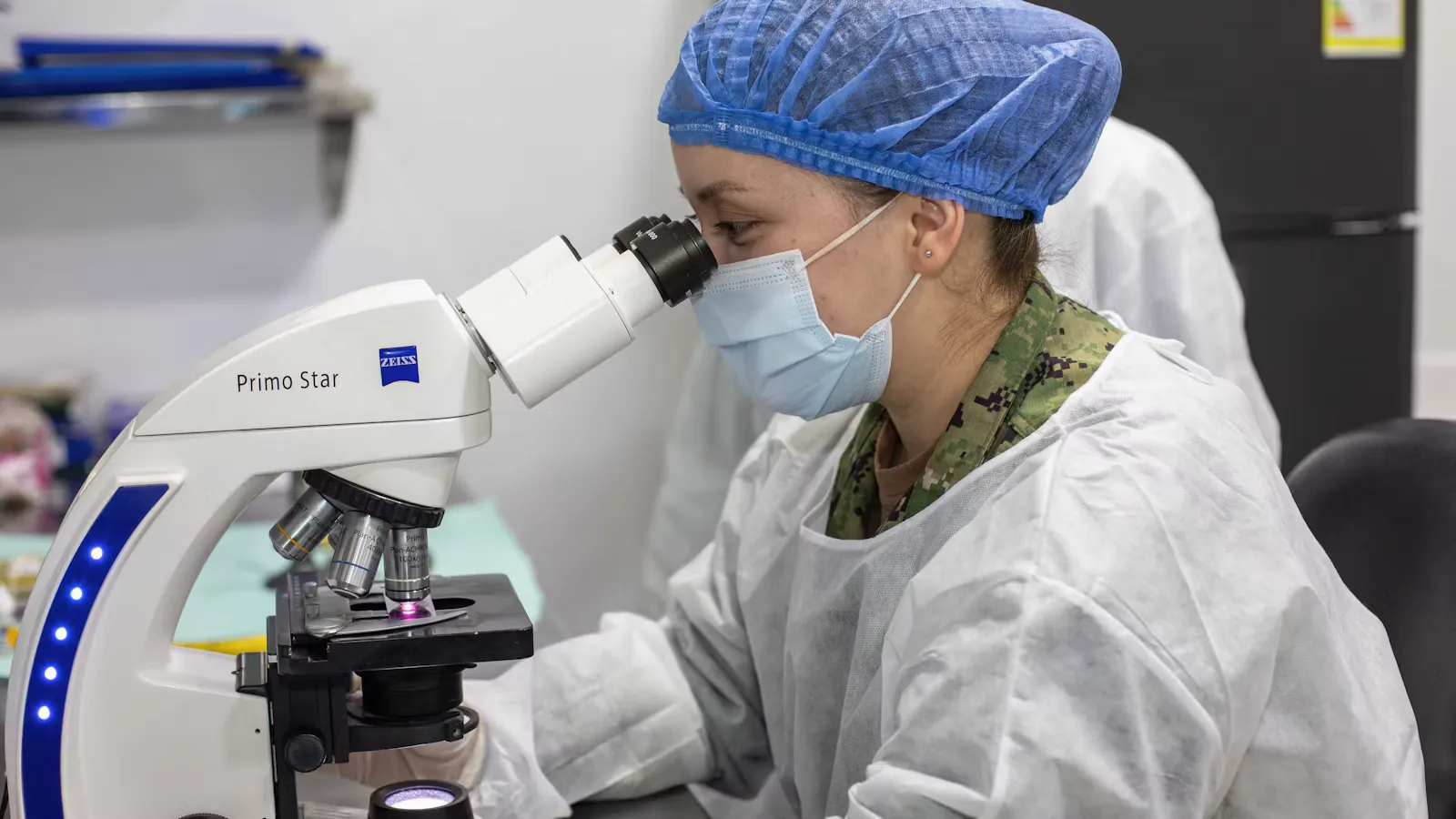
How to become a pathologist in India: pass Class 12 with Physics, Chemistry and Biology, clear NEET UG and finish MBBS with its internship. Then clear NEET PG or INI-CET and complete a 3 year MD or DNB in Pathology. The NMC PG seat matrix for 2026-27 lists 3,343 MD Pathology seats.
Key takeaways on how to become a pathologist in India
The full route from Class 12 to a qualified pathologist takes about 10 years. That is roughly 5.5 years of MBBS and internship, a NEET PG attempt, then 3 years of MD or DNB.
India has 3,343 MD Pathology seats in 2026-27 across 485 colleges. Of these, 1,833 are in government colleges, which makes Pathology one of the larger PG branches.
A further 187 DNB Pathology seats sit in 78 NBEMS-accredited hospitals in the 2026 DNB counselling seat matrix, so MD is not the only door.
Pathology seats usually cost far less than clinical branches in deemed universities. One deemed college charged Rs 9 lakh a year for MD Pathology against Rs 34 lakh for MD General Medicine.
An Assistant Professor at an AIIMS joins at Pay Level 12 of the 7th Pay Commission, Rs 1,01,500 to Rs 1,67,400 a month, plus allowances.
What does a pathologist do in India?
A pathologist is the doctor who makes the diagnosis from tissue, cells, blood and body fluids. Surgeons and physicians treat the patient. The pathologist tells them what the disease actually is. A cancer diagnosis, a blood transfusion match and a thyroid report all pass through a pathologist's hands.
MD Pathology in India trains you across five areas. Most pathologists later lean towards one or two of them.
Area | What you do | Typical example |
|---|---|---|
Histopathology | Study thin slices of tissue under the microscope after a biopsy or surgery | Confirming whether a breast lump is cancer, and which type |
Haematology | Read blood counts, blood smears and bone marrow | Diagnosing leukaemia or the cause of anaemia |
Clinical pathology | Run and sign off routine lab tests on urine, stool and body fluids | Urine analysis in a kidney patient |
Cytology | Study single cells taken by needle (FNAC) or by a smear | A Pap smear for cervical cancer screening |
Transfusion medicine | Manage the blood bank, grouping and cross-matching | Supplying safe blood for an emergency surgery |
Pathology suits someone who likes problem solving, detail and fixed working hours. Most work happens in the lab, with less night duty than ward-based branches. That balance is a big reason students pick it.
What is the step-by-step route to become a pathologist in India?
There is one route: MBBS first, then a postgraduate degree in Pathology. A BSc in lab technology leads to a technologist career, not a pathologist's post. Here are the steps in order.
Pass Class 12 with Physics, Chemistry, Biology and English. This is the base eligibility for NEET UG. The full rules are in the NEET 2027 eligibility criteria guide.
Clear NEET UG. The National Testing Agency's NEET UG portal runs the exam every year, and your rank decides your MBBS seat. You can see how colleges compare on our MBBS in India hub.
Complete MBBS and the compulsory rotating internship. This takes about 5.5 years in total. Pathology is a second-year MBBS subject, so you get a first taste early.
Clear NEET PG or INI-CET. NEET PG is conducted by NBEMS (the National Board of Examinations in Medical Sciences) for most MD, MS and DNB seats. INI-CET fills seats at AIIMS, JIPMER, PGIMER and NIMHANS. Our INI-CET vs NEET PG comparison explains which exam fits which college.
Choose MD Pathology or DNB Pathology in counselling. Seats are filled through MCC for the All India quota and through state counselling for state quota seats.
Complete the 3 year course, thesis and district posting. The Post-Graduate Medical Education Regulations, 2023 set broad-speciality courses at 3 years and require a thesis. They also add a 3 month District Residency Programme in the 3rd, 4th or 5th semester.
Register your MD with the State Medical Council and start work. Most new pathologists join as senior residents or take a hospital or lab post.
If you are still in school, the NEETsheet guide to becoming a doctor after NEET covers the first two steps in more depth.
MD Pathology vs DNB Pathology: which should you choose in 2026?
Both lead to the same job: a qualified pathologist. MD Pathology is awarded by a university attached to a medical college. DNB Pathology is awarded by NBEMS after training in an accredited hospital, often a large private or trust hospital with a busy lab.
Point | MD Pathology | DNB Pathology |
|---|---|---|
Awarding body | University, under NMC rules | NBEMS |
Duration | 3 years | 3 years after MBBS |
Where you train | Government, private or deemed medical college | NBEMS-accredited hospital |
Seats in 2026 | 3,343 | 187 |
Entry exam | NEET PG (or INI-CET at INI institutes) | NEET PG |
Super-speciality eligibility | DM Onco-Pathology, DM Clinical Haematology | Same, PGMER 2023 lists MD and DNB together |
The NBEMS manual for DNB broad-speciality trainees sets out training, thesis and exam rules. For the wider picture of all four PG degrees, read MD vs MS vs DNB vs Diploma and our guide to DNB after MBBS.
How many MD Pathology seats are there in India in 2026-27?
The NMC seat matrix for PG seats, academic year 2026-27 (as on 29 September 2026) lists 3,343 MD Pathology seats in 485 colleges. We counted every MD Pathology row in the matrix. The split by college type is below.
College type | MD Pathology seats 2026-27 | Share |
|---|---|---|
Government | 1,833 | About 55% |
Private | 1,077 | About 32% |
Deemed university | 433 | About 13% |
Total | 3,343 | 100% |
So more than half of all MD Pathology seats are in government colleges. That matters, because government seats carry the lowest fees.
State | MD Pathology seats 2026-27 |
|---|---|
Karnataka | 450 |
Maharashtra | 408 |
Uttar Pradesh | 368 |
Gujarat | 288 |
Tamil Nadu | 235 |
The largest single intake is at B J Medical College, Ahmedabad, with 36 seats. Grant Medical College, Mumbai and Osmania Medical College, Hyderabad have 30 each. SMS Medical College, Jaipur has 29 and King George's Medical University, Lucknow has 24.
Which related pathology courses are in the 2026-27 seat matrix?
Course | Level | Seats 2026-27 |
|---|---|---|
MD Immuno Haematology and Blood Transfusion | Broad speciality (after MBBS) | 215 |
DM Onco-Pathology | Super speciality (after MD or DNB Pathology) | 58 |
DM Clinical Haematology | Super speciality (open to MD or DNB Pathology) | 41 |
DNB Pathology | Broad speciality (after MBBS) | 187 |
The DNB figure comes from the MCC final seat matrix for DNB PG counselling 2026. For every branch side by side, see our speciality-wise PG seat matrix.
What are MD Pathology fees in India?
Fees depend on the type of college far more than on the branch. Government seats are the cheapest, with fees set by the state or the central institute. Deemed university seats cost the most, and the gap between branches inside a deemed college is large.
The BLDE (Deemed to be University) PG medical admission notification dated 21 August 2025 shows this clearly for its Vijayapura college.
MD branch at BLDE, 2025 admissions | All India quota fee a year | NRI quota fee a year |
|---|---|---|
Anatomy | Rs 55,000 | Not offered |
Pathology | Rs 9,00,000 | Rs 25,00,000 |
General Medicine | Rs 34,00,000 | Rs 80,00,000 |
Radio-Diagnosis | Rs 35,00,000 | Rs 95,00,000 |
So at this college, a full 3 year MD Pathology costs about Rs 27 lakh in tuition. MD General Medicine costs about Rs 1.02 crore. The notice adds a one-time Rs 15,000 processing fee and hostel and mess at about Rs 1.75 to 2.25 lakh a year. These are 2025 admission fees, last checked on 26 October 2026; deemed colleges usually publish new fees just before MCC counselling.
How much stipend does an MD Pathology resident get?
Every PG resident in India is paid a monthly stipend while training, and Pathology residents get the same stipend as clinical residents in the same college. The same BLDE notice lists Rs 45,000 a month in the first year, Rs 50,000 in the second and Rs 55,000 in the third. Government colleges pay at rates fixed by each state or institute, and the NMC publishes a college-wise stipend list. Our full PG resident stipend guide compares the states.
What is a pathologist's salary in India?
The clearest official salary figures come from government faculty recruitment. The AIIMS Bathinda faculty advertisement dated 31 July 2026, which includes a Pathology post, lists these 7th Pay Commission scales.
Post | Pay level | Basic pay range a month |
|---|---|---|
Assistant Professor | Level 12 | Rs 1,01,500 to Rs 1,67,400 |
Associate Professor | Level 13A1+ | Rs 1,38,300 to Rs 2,09,200 |
Additional Professor | Level 13A2+ | Rs 1,48,200 to Rs 2,11,400 |
Professor | Level 14A | Rs 1,68,900 to Rs 2,20,400 |
These figures are basic pay only. Dearness allowance, house rent allowance and non-practising allowance (NPA, an extra payment for doctors who do not take private patients) are added on top. Private lab and hospital salaries are set by each employer and grow with experience and reporting volume. The NEETsheet guide to doctor salary in India explains how pay grows across a medical career.
Where do pathologists work in India?
Pathology opens more kinds of workplaces than most branches, because every hospital needs a lab.
Medical colleges: every NMC-recognised college needs a Pathology department for MBBS teaching, so faculty posts exist across all states.
Government hospitals and services: district hospitals, central health services and state health services run labs and blood banks. Our guide to government jobs after MBBS lists the main recruiting bodies.
Corporate and cancer hospitals: histopathology and onco-pathology reports drive cancer treatment, so large hospitals employ several pathologists.
Diagnostic laboratory chains: pathologists review and sign off the reports, which creates steady demand in every city.
Blood banks: transfusion medicine posts suit pathologists with an interest in blood safety.
Your own lab: many pathologists later set up an independent diagnostic centre.
Most teaching jobs need senior residency experience first. Our senior residency after MD or MS guide explains how that works.
Can an Indian pathologist work abroad?
Yes, and pathology travels well because the core science is the same everywhere. The two most common routes are the UK and the USA.
Country | Key exams | What it involves |
|---|---|---|
United Kingdom | FRCPath, plus PLAB or a sponsored route for GMC registration | The Royal College of Pathologists FRCPath overseas examinations page confirms Part 1 exams run online and can be sat from home |
United States | USMLE Step 1, Step 2 CK, then a pathology residency | The USMLE Bulletin of Information sets eligibility and rules; Indian MD holders still complete US residency |
Our guides to working in the UK after MBBS and USMLE after MBBS from India cover each step.
How long does it take to become a pathologist in India? Timeline from Class 12
Stage | Duration | Typical age at the end |
|---|---|---|
Class 12 (PCB) and NEET UG | 1 year | 17 to 18 |
MBBS including internship | About 5.5 years | 23 to 24 |
NEET PG or INI-CET and counselling | A few months to 1 year | 24 to 25 |
MD or DNB Pathology | 3 years | 27 to 28 |
Senior residency (optional, needed for teaching) | 1 to 3 years | 28 to 31 |
Consultant, faculty or lab head | Ongoing | About 28 onwards |
DM Onco-Pathology or DM Clinical Haematology (optional) | 3 years | 31 to 34 |
A worked example: Priya's path to MD Pathology
Year | Milestone |
|---|---|
2027 | Finishes Class 12 with PCB and clears NEET UG |
2027 to 2033 | MBBS and internship at a state government college |
2033 | Clears NEET PG and picks MD Pathology |
2033 to 2036 | MD Pathology, thesis and district residency |
2036 to 2037 | Senior resident in Pathology |
For example, take Priya. She finishes Class 12 in 2027 and gets a government MBBS seat through NEET UG.
In second year, Pathology is the subject she enjoys most. She likes slides, patterns and getting the answer right.
After internship she sits NEET PG in 2033. Her rank is not high enough for MD Medicine, but it clears MD Pathology at a government college. With 1,833 government seats in the branch, that is a realistic target.
Her tuition is low, and her monthly stipend covers her living costs. She spends her district residency running a district hospital lab.
She finishes MD in 2036 and takes a one-year senior residency. In 2037 she applies for an Assistant Professor post at Pay Level 12.
Three things to notice from Priya's case. Pathology has a large pool of government seats, so a mid-range NEET PG rank can still land one. Interest built during second-year MBBS matters, because it shapes your choice list. A year of senior residency opens the teaching route.
What if you do not get MD Pathology?
Missing an MD Pathology seat in one round is common, and several good options remain.
Go for DNB Pathology. The 187 DNB seats go through MCC's separate DNB counselling, and the degree leads to the same career.
Pick a related lab branch. MD Immuno Haematology and Blood Transfusion (215 seats) leads to blood bank and transfusion medicine careers. MD Microbiology and MD Biochemistry are also lab-based branches.
Try INI-CET as well. It runs twice a year, in January and July sessions. Our INI-CET January 2027 guide has the current session.
Reattempt NEET PG. Many students work as a medical officer or junior resident for a year while they prepare.
Weigh up other branches. Our guide to which course is best after MBBS and the best specialisations after MBBS web story compare the options. If imaging appeals, read how to become a radiologist.
FAQs on how to become a pathologist in India
How many years does it take to become a pathologist in India?
It takes about 10 years after Class 12. MBBS with internship takes about 5.5 years, then MD or DNB Pathology takes 3 years under PGMER 2023. Add a few months to a year for NEET PG and counselling. Most students qualify as pathologists at 27 or 28 years of age.
Can I become a pathologist without MBBS?
No. A pathologist in India holds MBBS and then MD Pathology or DNB Pathology, the postgraduate degrees listed in PGMER 2023. A BSc or MSc in medical lab technology trains you as a lab technologist, which is a different job with a different route. The doctor's route always starts with NEET UG and MBBS.
How many MD Pathology seats are there in India in 2026?
There are 3,343 MD Pathology seats in the NMC seat matrix for 2026-27, dated 29 September 2026. Of these, 1,833 are in government colleges, 1,077 in private colleges and 433 in deemed universities. Another 187 DNB Pathology seats are offered through MCC's DNB counselling in 2026.
What NEET PG rank do I need for MD Pathology?
There is no fixed rank, because closing ranks change every year by college, quota and category. Pathology has 3,343 MD seats in 2026-27, and about 55% are in government colleges. That large pool gives a wide range of ranks a real chance. Study last year's MCC and state allotment lists before choice filling.
What is the salary of a pathologist in a government job?
An Assistant Professor of Pathology at an AIIMS starts at Pay Level 12. Basic pay is Rs 1,01,500 to Rs 1,67,400 a month in the AIIMS Bathinda advertisement of 31 July 2026. Dearness allowance, house rent allowance and non-practising allowance are paid on top of this basic pay.
What are the fees for MD Pathology in a deemed university?
Fees vary by college. BLDE (Deemed to be University) listed MD Pathology at Rs 9 lakh a year for All India quota seats in its notice of 21 August 2025. That is about Rs 27 lakh for 3 years. The same college charged Rs 34 lakh a year for MD General Medicine.
Is DNB Pathology equal to MD Pathology?
Yes, for practice and for super-speciality entry. PGMER 2023 lists MD and DNB Pathology together as the entry qualification for DM Onco-Pathology and DM Clinical Haematology. DNB Pathology is a 3 year course after MBBS, with 187 seats in the 2026 MCC DNB counselling seat matrix.
Which super-speciality can a pathologist do after MD?
MD or DNB Pathology holders can take DM Onco-Pathology, which has 58 seats in 2026-27, or DM Clinical Haematology, which has 41 seats. Both are 3 year courses. Shorter post-doctoral certificate courses, such as the PDCC in Renal Pathology listed in PGMER 2023, are also open.
Still at the NEET stage? NEETsheet's free resources at neetsheet.in can help you get the MBBS seat that starts this whole path.
Sources
Related Topics
- Pathology
- MD after MBBS
- NEET PG
- Career after MBBS
- DNB
Related Articles
 Career25 Oct 202613 min read
General Surgeon in India: Role, Operations and Training
A general surgeon treats hernias, gallstones, appendicitis, breast lumps and trauma. See what the job involves, which operations it covers and how to train.
 Career24 Oct 202615 min read
Surgeon Salary in India 2026: Government Pay by Post
Surgeon salary in India in 2026 from official pay rules: Senior Resident to Professor pay levels, NPA, DA and what you earn while training for MS. Plan ahead.
 Career23 Oct 202618 min read
USMLE After MBBS From India: Steps, Fees and 2027 Dates
How an Indian MBBS graduate gets ECFMG certified and matched into a US residency: Step 1, Step 2 CK, OET, Pathways, ERAS and NRMP, with every fee in rupees and the 2027 Match calendar.