
NEET
NEET Syllabus 2026: Physics, Chemistry and Biology Units
28 Jul 2026
12 min read
NEET syllabus 2026: the official NMC list of 50 units, with 20 in Physics, 20 in Chemistry and 10 in Biology, unchanged from 2025. Unit tables and study tips.

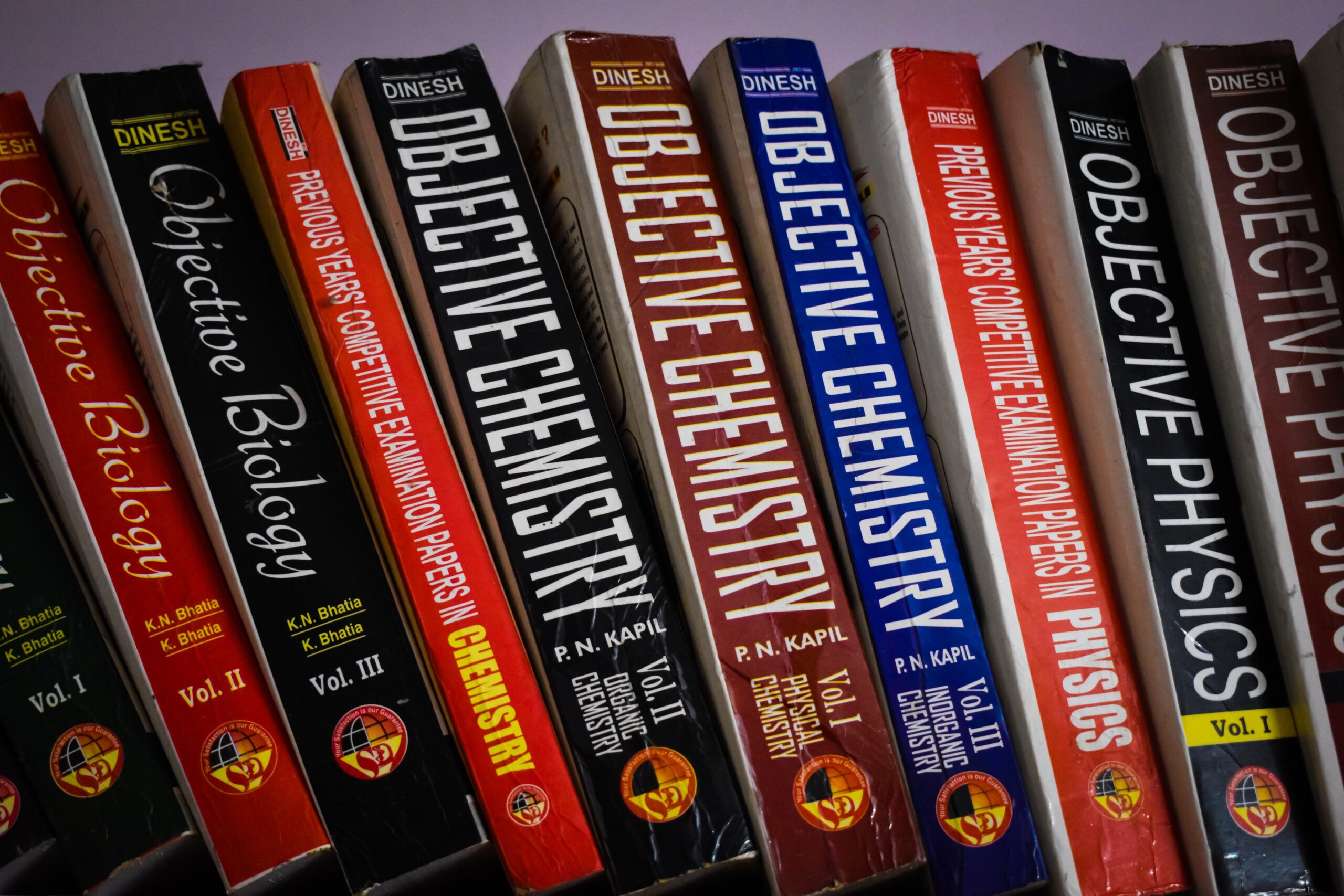
The NEET syllabus is the official list of topics that NEET UG tests: 20 units in Physics, 20 in Chemistry and 10 in Biology. The National Medical Commission (NMC), the regulator for medical education in India, notified the NEET UG 2026 syllabus on 22 December 2025. The National Testing Agency (NTA) confirms it is unchanged from the previous year.
Key Takeaways: NEET Syllabus 2026
The NEET UG 2026 syllabus has 50 units: 20 in Physics, 20 in Chemistry and 10 in Biology, as listed in the NMC syllabus for NEET (UG) 2026.
The NMC Undergraduate Medical Education Board finalised it by public notice on 22 December 2025. The NTA NEET UG 2026 information bulletin states there is no change from the previous year.
The paper tests the syllabus through 180 compulsory questions: 45 in Physics, 45 in Chemistry and 90 in Biology, for 720 marks in three hours.
Biology carries 360 of the 720 marks, or 50%, so half the paper comes from just 10 Biology units.
Each subject ends with a practical unit. Physics lists 14 named experiments and Chemistry lists named preparations, titrations and salt analysis.
On 15 May 2026, the Union Education Minister said NEET UG will move to a computer-based test from 2027 (News On AIR, 15 May 2026). The mode changes, not the syllabus.
NEET syllabus 2026 at a glance
NEET UG (National Eligibility cum Entrance Test, Undergraduate) is the single entrance exam for MBBS, BDS and AYUSH courses in India. NTA runs the exam, and NMC sets what it covers. Our NEET UG hub page brings together the syllabus, cut-offs and counselling in one place.
Item | Detail |
|---|---|
Syllabus set by | National Medical Commission (NMC), Undergraduate Medical Education Board |
Latest syllabus | NEET (UG) 2026, public notice dated 22 December 2025 |
Change from 2025 | None, according to the NTA information bulletin |
Subjects | Physics, Chemistry, Biology (Botany and Zoology) |
Units | 50 in total: Physics 20, Chemistry 20, Biology 10 |
Questions and marks | 180 questions, 720 marks |
Duration | 180 minutes (three hours) |
Where to download | neet.nta.nic.in, under Syllabus for NEET (UG)-2026 Examination |
Source: NMC syllabus for NEET (UG) 2026 and NEET UG 2026 information bulletin. For a short summary of the units, see our NEET syllabus page.
How the NEET syllabus maps to the exam paper
Each subject in the syllabus becomes one section of the paper. Biology is split into Botany (plant biology) and Zoology (animal biology) in the question paper. Both still come from the same 10 Biology units.
Subject | Syllabus units | Questions | Marks |
|---|---|---|---|
Physics | 20 | 45 | 180 |
Chemistry | 20 | 45 | 180 |
Biology (Botany and Zoology) | 10 | 90 | 360 |
Total | 50 | 180 | 720 |
Every question has four options. A correct answer earns 4 marks. A wrong answer loses 1 mark, which is called negative marking. An unanswered question scores zero. If a question is dropped, every candidate gets 4 marks for it. These rules are in the NEET UG 2026 information bulletin, Examination Scheme. Our guide to the NEET exam pattern explains the scoring in more detail.
NEET Physics syllabus: 20 units
The NEET Physics syllabus runs from measurement to electronic devices. It covers the Class 11 and Class 12 Physics courses. The 20 units are listed below in the order NMC gives them.
Unit | NEET Physics unit name |
|---|---|
1 | Physics and Measurement |
2 | Kinematics |
3 | Laws of Motion |
4 | Work, Energy and Power |
5 | Rotational Motion |
6 | Gravitation |
7 | Properties of Solids and Liquids |
8 | Thermodynamics |
9 | Kinetic Theory of Gases |
10 | Oscillations and Waves |
11 | Electrostatics |
12 | Current Electricity |
13 | Magnetic Effects of Current and Magnetism |
14 | Electromagnetic Induction and Alternating Currents |
15 | Electromagnetic Waves |
16 | Optics |
17 | Dual Nature of Matter and Radiation |
18 | Atoms and Nuclei |
19 | Electronic Devices |
20 | Experimental Skills |
Experimental Skills in the NEET Physics syllabus
Unit 20 asks for familiarity with the method and observations of 14 named experiments. Students often skip it, but it is part of the official syllabus. The experiments include:
Vernier callipers and screw gauge: measuring diameter, depth and the thickness of a wire or sheet.
Simple pendulum and metre scale: energy loss over time, and finding mass by the principle of moments.
Properties of matter: Young's modulus of a wire, surface tension by capillary rise, and viscosity from terminal velocity.
Heat and sound: specific heat capacity by the method of mixtures, and the speed of sound with a resonance tube.
Electricity: resistivity with a metre bridge, resistance by Ohm's law, and a galvanometer by the half-deflection method.
Optics: focal length of mirrors and a convex lens by parallax, and the angle of deviation for a glass prism.
NEET Chemistry syllabus: 20 units
The NEET Chemistry syllabus is divided into three parts. Physical Chemistry has 8 units, Inorganic Chemistry has 4 and Organic Chemistry has 8. Physical Chemistry deals with numbers and laws. Inorganic Chemistry deals with elements and their compounds. Organic Chemistry deals with carbon compounds and their reactions.
Part | Units | NEET Chemistry unit names |
|---|---|---|
Physical Chemistry | 1 to 8 | Some Basic Concepts in Chemistry; Atomic Structure; Chemical Bonding and Molecular Structure; Chemical Thermodynamics; Solutions; Equilibrium; Redox Reactions and Electrochemistry; Chemical Kinetics |
Inorganic Chemistry | 9 to 12 | Classification of Elements and Periodicity in Properties; p-Block Elements; d- and f-Block Elements; Co-ordination Compounds |
Organic Chemistry | 13 to 20 | Purification and Characterisation of Organic Compounds; Some Basic Principles of Organic Chemistry; Hydrocarbons; Organic Compounds Containing Halogens; Organic Compounds Containing Oxygen; Organic Compounds Containing Nitrogen; Biomolecules; Principles Related to Practical Chemistry |
Practical Chemistry in the NEET syllabus
Unit 20 covers the chemistry behind school laboratory work. It is examined through theory questions, not a practical test.
Detection of nitrogen, sulphur and halogens in organic compounds, and of hydroxyl, carbonyl, carboxyl and amino groups.
Preparation of Mohr's salt and potash alum (inorganic), and acetanilide, p-nitroacetanilide, aniline yellow and iodoform (organic).
Titrations: acids and bases with indicators, oxalic acid against KMnO4, and Mohr's salt against KMnO4.
Salt analysis: ten named cations and eight named anions. Insoluble salts are excluded.
NEET Biology syllabus: 10 units
The NEET Biology syllabus has only 10 units, but they carry 90 questions and 360 marks. Each unit is long. Human Physiology alone covers six topic areas, from breathing to hormones. The table shows each unit with its main topics from the NMC document.
Unit | NEET Biology unit | Main topics in the NMC syllabus |
|---|---|---|
1 | Diversity in Living World | Classification, five kingdoms, viruses and viroids, plant groups, animal phyla and classes |
2 | Structural Organisation in Animals and Plants | Flowering plant morphology and anatomy, five plant families, animal tissues, insect and frog body systems |
3 | Cell Structure and Function | Cell organelles, biomolecules, enzymes, cell cycle, mitosis and meiosis |
4 | Plant Physiology | Photosynthesis, respiration, plant growth and growth regulators |
5 | Human Physiology | Breathing, blood and circulation, excretion, locomotion, nervous system, hormones |
6 | Reproduction | Reproduction in flowering plants, human reproduction, reproductive health |
7 | Genetics and Evolution | Mendelian inheritance, molecular basis of inheritance, evolution |
8 | Biology and Human Welfare | Human diseases, basic immunology, cancer, HIV and AIDS, microbes in human welfare |
9 | Biotechnology and Its Applications | Recombinant DNA technology, insulin and vaccines, gene therapy, Bt crops, biosafety |
10 | Ecology and Environment | Population interactions, ecosystems, energy flow, biodiversity and its conservation |
Source: NMC syllabus for NEET (UG) 2026. NMC adds a note under Human Physiology that the diseases and disorders listed there are to be studied in brief.
The insect and frog correction in the NEET Biology syllabus
Unit 2 of the Biology syllabus says "of an insect (Frog)". A frog is not an insect. The NEET UG 2026 information bulletin answers this in its syllabus FAQs. The line should be read as "of an insect and a frog". So students study the body systems of both.
Has the NEET syllabus changed for 2026?
No. The NEET UG 2026 information bulletin answers this in its syllabus FAQs. There is no change in the NEET UG 2026 syllabus compared with the previous year. The NMC Undergraduate Medical Education Board finalised the 2026 version by public notice on 22 December 2025. That notice asks students and colleges to use this version for the 2026 to 2027 academic year.
The bulletin also links the syllabus to three regulators: NMC, the National Commission for Indian System of Medicine (NCISM) and the National Commission for Homoeopathy (NCH). In plain terms, the same syllabus is used for MBBS, BAMS, BHMS and other courses filled through NEET UG.
What the NEET syllabus means for 2027 aspirants
The 2026 document is the latest syllabus NMC has notified. Union Education Minister Dharmendra Pradhan spoke about the exam on 15 May 2026. He said NEET UG will be a computer-based test (CBT) from next year, replacing the OMR answer sheet (News On AIR, 15 May 2026). In a CBT, questions appear on a screen and you answer with a mouse.
That announcement concerns the mode of the exam, not the units. Our web story on the NEET UG 2027 computer-based test explains the switch in short. The NEET UG 2027 preparation guide sets out a plan for the full cycle.
How to use the NEET syllabus while studying
The syllabus is a checklist. Anything inside it can be asked, and anything outside it can be dropped from your plan. Most students use the NCERT Class 11 and 12 textbooks, the standard school books for these classes, as their base.
Print the NMC syllabus and map every textbook chapter to a syllabus unit. Strike out textbook sections the syllabus does not list.
Track progress unit by unit: 20 in Physics, 20 in Chemistry and 10 in Biology. Fifty ticks means full coverage.
Do not skip the practical units. Physics Unit 20 and Chemistry Unit 20 name exactly what can be asked.
Solve past questions for each unit as you finish it. Our NEET previous year question papers are sorted for this.
Give Biology the most time. It carries half the marks, and its units are long and detailed.
Practise under exam conditions. With negative marking, a careless guess costs marks on any unit.
For a full study plan built on this syllabus, read our guide on how to prepare for NEET. If the exam is only weeks away, our NEET crash course guide shows how to revise the syllabus in a shorter time.
Who must study the NEET syllabus?
Every candidate for an undergraduate medical seat in India sits NEET UG. This includes Indian citizens and OCI cardholders who plan to study MBBS or BDS abroad, as the NEET UG 2026 information bulletin sets out. The eligibility rules, including age and Class 12 subjects, are summed up in our web story on NEET UG eligibility rules.
Conclusion
The NEET syllabus is short to list and long to learn. It has 50 units: 20 in Physics, 20 in Chemistry and 10 in Biology. NMC finalised it on 22 December 2025, and NTA confirms it is unchanged from the previous year. Work from the official PDF, tick off every unit, and give Biology the time its 360 marks deserve.
Frequently asked questions about the NEET syllabus
Related Topics
- NEET syllabus
- NEET syllabus 2026
- NEET UG topics
- NCERT syllabus
Related Articles
 NEET28 Jul 20267 min read
NEETsheet App for NEET Preparation: Features Explained
NEETsheet app for NEET preparation: full-length mock tests, chapter-wise MCQs, solved PYQs, analytics and rank prediction, explained feature by feature.
 NEET28 Jul 20266 min read
NEETsheet Best App for NEET Prep: Who Should Use It?
NEETsheet best app for NEET prep? Who it suits: Class 11 beginners, repeat droppers, self-study aspirants and budget-conscious students, honestly compared.
 NEET28 Jul 20265 min read
How NEETsheet the Best App Fits Your NEET Study Routine
NEETsheet the best app for a daily and weekly NEET study routine: when to run mock tests, how to schedule chapter-wise practice, and what changes near the exam.