Guides & Tips
MBBS in Europe 2026: Fees, Countries and Admission Guide
23 Sept 2026
16 min read
MBBS in Europe 2026: tuition from EUR 10,000 to EUR 24,250 a year at 23 partner universities in 9 countries, plus NEET, NMC rules, admission and FMGE results.

MBBS in Europe for Indian students means a six-year, English-taught medical degree at a public or private university in the European Union. At our 23 partner universities in nine countries, tuition for 2026/2027 runs from EUR 10,000 to EUR 24,250 a year. A qualifying NEET UG score is still compulsory if you want to practise in India.
Key Takeaways
Tuition is set by each university. It ranges from EUR 10,000 a year at UMF Cluj in Romania to EUR 24,250 at Charles University First Faculty of Medicine in Prague, about Rs. 10.9 lakh to Rs. 26.4 lakh.
NEET UG is compulsory for India. Since May 2018, every Indian citizen who joins a medical course abroad must qualify NEET UG to be allowed to sit FMGE later.
The NMC sets the course rules. The degree must last at least 54 months, be taught in English and include a 12-month internship at the same foreign university.
FMGE is the exam at the end. In December 2025, 23.94% of all candidates passed, roughly one in four. Graduates from our nine partner countries are a very small group in these results.
Admission routes differ. Some universities run an entrance exam, some rank on Class 12 marks, and some accept a high NEET score in place of their test.
What is MBBS in Europe?
In Europe the degree is not called MBBS. Universities award a Doctor of Medicine (MD) or a national title such as MUDr. in the Czech Republic and Slovakia. Indian families still search for it as MBBS in Europe, because it leads to the same goal: becoming a doctor. Our MBBS in Europe hub page covers every country in detail.
futureMBBS works with 23 partner universities across nine EU countries: Czech Republic (5), Hungary (4), Poland (3), Slovakia (3), Croatia (2), Latvia (2), Romania (2), Cyprus (1) and Lithuania (1). The full list, with links to each university, is on our partner universities page.
Which countries offer MBBS in Europe with futureMBBS?
Country | Partner universities | Country guide |
|---|---|---|
Czech Republic | Charles University (First Faculty of Medicine, Third Faculty of Medicine, Faculty of Medicine in Pilsen), Masaryk University in Brno, Palacký University Olomouc | |
Hungary | Semmelweis University, University of Debrecen, University of Pécs, University of Szeged | |
Poland | Poznań University of Medical Sciences, Medical University of Łódź, Medical University of Białystok | |
Slovakia | Comenius University Faculty of Medicine in Bratislava, Jessenius Faculty of Medicine in Martin, Pavol Jozef Šafárik University in Košice | |
Croatia | University of Split School of Medicine, University of Zagreb School of Medicine | |
Latvia | Rīga Stradiņš University, University of Latvia | |
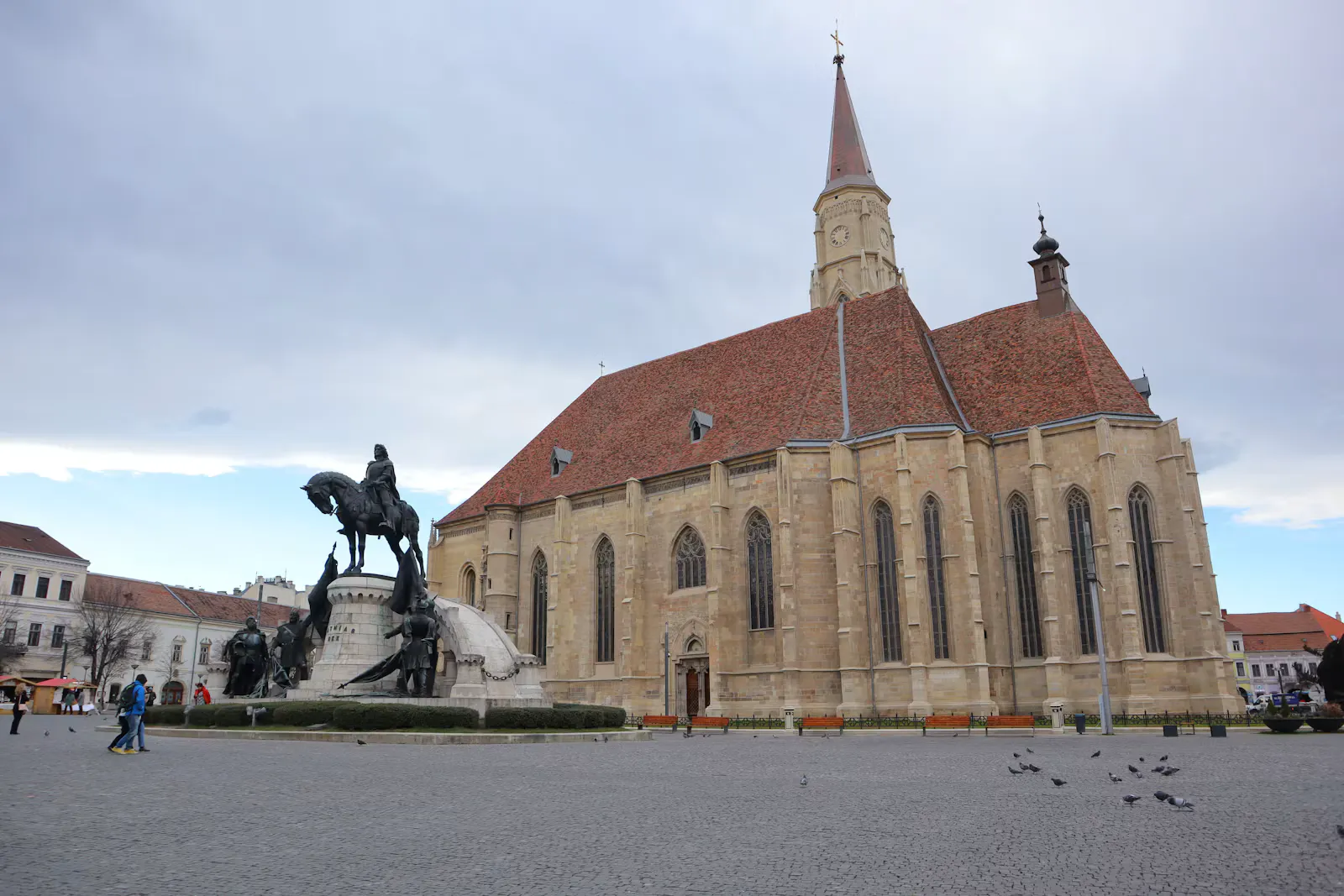
Romania | "Iuliu Hațieganu" University of Medicine and Pharmacy (UMF Cluj), Victor Babeș University of Medicine and Pharmacy in Timișoara | |
Cyprus | University of Nicosia Medical School (private) | |
Lithuania | Lithuanian University of Health Sciences (LSMU), Kaunas |
All of these universities are public, except the University of Nicosia, which is private. For a quick visual comparison of destinations, see our web story on the best countries for MBBS abroad in 2026.
What does MBBS in Europe cost in 2026?
Tuition is the biggest cost, and each university publishes its own figure. The table shows 2026/2027 fees taken from each university's official page. Rupee figures use the European Central Bank rate of EUR 1 = Rs. 108.82 on 30 September 2026 (ECB euro reference rate for the Indian rupee).
University (country) | Tuition a year, 2026/2027 | In rupees (approx.) | Six-year tuition |
|---|---|---|---|
EUR 10,000 | Rs. 10.9 lakh | EUR 60,000 at the current fee | |
EUR 11,850 in year 1, rising to EUR 14,610 in year 6 | Rs. 12.9 lakh in year 1 | EUR 77,340 | |
EUR 12,000 | Rs. 13.1 lakh | EUR 72,000 | |
EUR 12,500 | Rs. 13.6 lakh | EUR 75,000 | |
EUR 12,800 in years 1 to 3, EUR 13,300 in years 4 to 6 | Rs. 13.9 lakh | EUR 78,300 | |
EUR 13,000 | Rs. 14.1 lakh | EUR 78,000 | |
EUR 13,500 | Rs. 14.7 lakh | EUR 81,000 | |
EUR 15,100 in year 1, EUR 14,900 after | Rs. 16.4 lakh | EUR 89,600 | |
EUR 15,800 | Rs. 17.2 lakh | EUR 86,900 (year 6 is one semester) | |
EUR 24,000 | Rs. 26.1 lakh | EUR 144,000 | |
Charles University First Faculty of Medicine (Czech Republic) | EUR 24,250 | Rs. 26.4 lakh | EUR 145,500 |
So most partner universities sit between EUR 12,000 and EUR 16,000 a year. The two Prague and Nicosia programmes cost close to twice that. Our tuition fees page lists every partner university, and our guide to the six-year cost of MBBS in Europe adds up full totals.
One-off fees and extra charges for MBBS in Europe
Application fees. EUR 285 at Charles University First Faculty, EUR 200 at Split, EUR 99 at Comenius and EUR 300 (non-refundable) at UMF Cluj.
Registration and deposits. Rīga Stradiņš charges a one-time EUR 1,800 registration fee for new Medicine students. The University of Nicosia lists a EUR 1,500 administrative fee and a EUR 3,500 seat reservation deposit.
Early payment. Split asks for the full first-year tuition within one week of the admission letter. UMF Cluj asks for 50% of the tuition as a confirmation fee.
Clinical-year supplements. The University of Nicosia adds EUR 3,000 to EUR 6,000 a year in years 5 and 6 for students placed in Germany, Switzerland, the UK or the USA. For Indian students this matters for a second reason, explained in the NMC section below.
Living costs for MBBS in Europe
Living costs depend on the city. Charles University puts Prague at about EUR 550 a month in a dormitory with a modest lifestyle, up to EUR 1,000 a month in private housing (Charles University, costs of living). Rīga Stradiņš University suggests at least EUR 1,200 a month in Riga, including rent (RSU, Life in Riga). That is about EUR 6,600 to EUR 14,400 a year, or Rs. 7.2 lakh to Rs. 15.7 lakh. Our guide to the cost of living in Europe for Indian MBBS students covers more cities.
Who is eligible for MBBS in Europe from India?
Two sets of rules apply. India decides whether your foreign degree will count at home. The university decides whether it will admit you.
Indian rules for MBBS in Europe
NEET UG. The NMC Screening Test Regulations, as amended in 2018 say any Indian citizen or Overseas Citizen of India who joins a medical course abroad on or after May 2018 must qualify NEET UG. The NEET result counts as the eligibility certificate.
Class 12 subjects. The same rule requires you to meet the MBBS eligibility conditions used in India, which include Physics, Chemistry, Biology and English. Our MBBS abroad eligibility guide sets out marks and age rules.
The right course. Under the NMC Foreign Medical Graduate Licentiate Regulations, 2021, the course must last at least 54 months, be taught in English and include a 12-month internship at the same foreign institution.
University rules for MBBS in Europe
Class 12 marks. Rīga Stradiņš asks for at least 70% in the required subjects and accepts Physics in place of Mathematics for Indian boards (RSU general requirements). The University of Latvia asks for about 80% in Biology and Chemistry plus a SAT score of 1200 (University of Latvia Medicine page).
English. IELTS is not compulsory everywhere. Comenius, Semmelweis, Pécs and Charles University First Faculty need no certificate, while Poznań and Nicosia ask for IELTS 6.5. Our guide to MBBS in Europe without IELTS covers all 23 universities.
Apostilled documents. Indian school certificates need an Apostille, an official stamp from the Ministry of External Affairs that proves a document is genuine. Our apostille guide for MBBS in Europe explains the process.
Who cannot apply for MBBS in Europe
An Indian student who joined a foreign course after May 2018 without a qualifying NEET UG score cannot sit FMGE, so cannot practise in India.
A student without a SAT score of 1200 cannot apply to the University of Latvia from India, whatever the Class 12 marks.
A student below 70% in a required subject does not meet the Rīga Stradiņš minimum.
How do you get admission to MBBS in Europe?
Each university uses one of three routes. Knowing which one applies tells you how to prepare.
Admission route | Examples from our partner universities | What it involves |
|---|---|---|
Entrance exam | Comenius Bratislava, Semmelweis, Pécs, Szeged, Charles University, Masaryk, Zagreb | A written test in Biology and Chemistry (some add Physics or English), often followed by an interview |
Marks and interview | Rīga Stradiņš, University of Latvia, University of Split | Ranking on Class 12 marks, documents and an online interview |
Test with a NEET exemption | LSMU Kaunas | An online test of 30 Biology and 30 Chemistry questions, waived for a NEET UG score of 650 or more (LSMU Medicine admission page) |
Semmelweis, for example, runs an online written test with Medical Biology, Medical Chemistry, General English and Biomedical English sections, then an interview (Semmelweis General Medicine admission). Victor Babeș in Timișoara first runs an online English test, then its admission exam (Victor Babeș admission 2026 for non-EU citizens). Our guide to MBBS entrance exams in Europe explains each format.
Steps to apply for MBBS in Europe
Qualify NEET UG. Keep your scorecard. Some universities, such as LSMU, use the score in admission.
Shortlist universities. Compare fees, admission route and English rules using the tables above.
Prepare documents. Passport, Class 10 and 12 marksheets with an Apostille, English proof where asked, and a motivation letter.
Apply online and pay the application fee. Each university has its own portal and deadline. Our MBBS abroad deadlines page lists them.
Sit the exam or interview. Most are online for Indian applicants.
Accept the offer and pay. Then apply for the student visa or residence permit.
What visa do you need for MBBS in Europe?
Every EU country issues its own long-stay student visa or residence permit. The country's rules, not the EU, decide the documents. Three examples from our partner universities:
Romania. UMF Cluj says the Type D student visa is granted on a Letter of Acceptance from the Ministry of Education, and the full first-year tuition must be paid before the visa (UMF Cluj international admission page).
Lithuania. A course longer than one year needs a Temporary Residence Permit. Indian students apply on the MIGRIS portal and give documents at a VFS Global centre in India, using a mediation number from LSMU (LSMU residence permit information).
Slovakia. Comenius asks applicants from outside the EU to sit the March or June entrance exam, because the student visa takes several weeks (Comenius admission process).
Most countries also ask for proof of funds. Our guides to the student visa for MBBS in Europe and proof of funds list the amounts by country.
Is MBBS from Europe valid in India?
Yes, if the course and the student meet the NMC Foreign Medical Graduate Licentiate Regulations, 2021. The rules are:
Course length. At least 54 months of study. All our partner programmes run for six years.
Internship abroad. At least 12 months of internship at the same foreign institution.
Language. The degree must be taught in English.
Licence abroad. The graduate must be registered to practise in the country that awarded the degree, on the same terms as its citizens.
Same place throughout. The whole course, training and internship must be done outside India at the same foreign institution. Clinical rotations in another country, such as Nicosia's UK or USA placements or an Erasmus exchange semester, can break this rule. Indian students should keep every rotation at the home university.
After returning. The graduate passes FMGE, the screening exam for foreign medical graduates, and then completes a 12-month supervised internship in India.
Our summary of the latest NMC rules for MBBS abroad explains each condition, and the local language guide covers the language patients speak in clinical years.
FMGE results for MBBS in Europe graduates
FMGE (Foreign Medical Graduate Examination) is run by the National Board of Examinations in Medical Sciences (NBEMS). Nationally, 6,709 of 36,037 candidates passed in June 2025 (18.62%) and 10,264 of 42,868 passed in December 2025 (23.94%) (NBEMS FMGE page). The country-wise tables in the NBEMS FMGE Performance Report 2025 show our partner countries:
Country | June 2025: passed of appeared | December 2025: passed of appeared | 2025 total |
|---|---|---|---|
Czech Republic | 3 of 3 | 2 of 4 | 5 of 7 |
Hungary | 2 of 2 | 7 of 8 | 9 of 10 |
Poland | 2 of 3 | 9 of 15 | 11 of 18 |
Romania | 1 of 9 | 2 of 7 | 3 of 16 |
Lithuania | 1 of 3 | 0 of 1 | 1 of 4 |
Latvia | 0 of 2 | 0 of 4 | 0 of 6 |
Slovakia, Croatia and Cyprus do not appear in the 2025 country tables. Across the six listed countries, 29 of 61 candidates passed in 2025. These are very small groups, so one result moves the percentage sharply. Compare that with 7,437 candidates from Kyrgyzstan in December 2025 alone. Country-wise trends are in our FMGE pass rate by country guide and the FMGE pass rate country-wise web story.
What can you do after MBBS in Europe?
Practise in India. Pass FMGE, finish the 12-month supervised internship and register with a State Medical Council. Our guide to medical registration in India after MBBS in Europe explains the steps.
Work in Europe. Each country has its own licence and language rules for doctors. See our guide to the medical licence in Europe after MBBS.
Train in the USA. The USMLE route is covered in our USMLE after MBBS in Europe guide.
If you would like help matching universities to your NEET score and budget, you can book a free consultation with our team.
Conclusion: is MBBS in Europe right for you?
MBBS in Europe suits a student with a qualifying NEET UG score and a family that can plan for EUR 10,000 to EUR 24,250 a year in tuition, plus living costs. Choose the admission route that fits your marks and English. Check that the course meets the NMC rules, and keep every year of training at the same university.
Frequently asked questions about MBBS in Europe
Sources
National Medical Commission, Foreign Medical Graduate Licentiate Regulations, 2021 (PDF)
National Medical Commission, Screening Test Regulations 2002 with the 2018 NEET amendment (PDF)
Charles University First Faculty of Medicine, admission and fees 2026/2027
Comenius University Faculty of Medicine, admission process and fees
University of Split School of Medicine, call for applicants 2026/2027
Rīga Stradiņš University, tuition fees for studies in English
Lithuanian University of Health Sciences, Medicine admission
Lithuanian University of Health Sciences, residence permit information
European Central Bank, euro reference rate for the Indian rupee
Related Topics
- MBBS in Europe
- MBBS in Europe fees
- European MBBS programs
- futureMBBS
- Indian students
- EU medical universities
Related Articles
 Guides & Tips23 Sept 20267 min read
MBBS in Foreign Countries: 2026 Eligibility & Costs
MBBS in foreign countries: real 2026 eligibility, NEET/FMGE rules and cost ranges for Indian students, with a focus on our 9 EU partner countries abroad
 Guides & Tips23 Sept 20268 min read
MBBS in Germany 2026: Fees, C1 German & Eligibility
MBBS in Germany (Humanmedizin): real 2026 fees, the C1 German language requirement, NEET/TMS eligibility and career facts for Indian students to plan around.
 Guides & Tips23 Sept 202612 min read
MBBS in Hungary for Indian Students 2026: Full Guide
Study MBBS in Hungary in 2026: tuition at Semmelweis, Debrecen, Pécs & Szeged, entrance exams, NMC/FMGE rules and fees for Indian students. Book free advice.