Guides & Tips
Apostille for MBBS in Europe 2026: Document Checklist
17 Aug 2026
14 min read
Getting an apostille for MBBS in Europe? Follow the exact MEA steps, the Rs 50 fee, nostrification rules and the timeline Indian students must start now.


An apostille is a single certificate that proves your Indian marksheet or school certificate is genuine, so a medical university in Europe can accept it without sending it back to India to be checked. If you are holding an offer letter from a European medical school this month, the apostille is usually the piece of paperwork that decides whether you join this intake or wait a year. It is also the step most Indian families start far too late.
Key Takeaways
- India has been part of the Hague Apostille Convention since 2005, so a certificate stamped in India is accepted across every EU country you might study medicine in.
- The Ministry of External Affairs charges Rs 50 per apostille sticker. The outsourced agency that actually takes your file charges Rs 84 per document plus Rs 3 per page for scanning.
- Since July 2012, MEA does not accept documents directly from individuals. Everything goes through designated outsourced agencies, now spread across 16 cities.
- MEA never legalises photocopies. The original or a properly notarised true copy has to be submitted.
- An apostille is only step one in some countries. The Czech Republic also wants nostrification, a separate recognition of your Class 12 certificate that costs CZK 3,000 at a regional authority.
- Because Czech schooling normally runs 13 years against India's 12, nostrification can trigger extra subject exams, so plan for it rather than discover it.
- The Apostille Convention now has 130 Contracting Parties, which is why one stamp works in Prague, Riga, Budapest and Warsaw alike.
What Is an Apostille, and Why Does Every EU Medical University Want One?
An apostille is a standardised authentication certificate attached to a public document so that another country accepts it as genuine. India joined the Hague Convention of 5 October 1961 in 2005, and the Ministry of External Affairs is the body that issues it. One stamp replaces the old embassy-by-embassy chain.
Think about the problem from the admissions officer's side. A faculty in Pilsen or Kaunas receives thousands of certificates from dozens of school boards it has never heard of: CBSE, ICSE, Maharashtra State Board, Tamil Nadu HSC. It has no way to tell a real Class 12 marksheet from a printed copy. The stamp solves that. It says a recognised Indian authority has verified the signature and seal on the document.
The convention is not a small club. The Hague Conference on Private International Law lists 130 Contracting Parties as of its 30 June 2026 update. Every European destination Indian medical students actually apply to is inside it.
| Study destination | Apostille Convention in force since |
|---|---|
| Hungary | 18 January 1973 |
| Cyprus | 30 April 1973 |
| Croatia | 8 October 1991 |
| Latvia | 30 January 1996 |
| Lithuania | 19 July 1997 |
| Czech Republic | 16 March 1999 |
| Romania | 16 March 2001 |
| Slovakia | 18 February 2002 |
| Poland | 14 August 2005 |
| India | 14 July 2005 |
Because India and all of these countries are inside the same convention, no embassy legalisation is needed on top. That is the whole point of the system, and it saves weeks.
Which Documents Actually Need an Apostille?
The short answer: the ones that prove you finished school and that you are who you say you are. MEA covers educational documents such as degrees, diplomas, matriculation and secondary-level certificates, and personal documents such as birth certificates, affidavits and powers of attorney. Your passport itself is never apostilled.
For an MBBS application in Europe, the file usually pulls from this set:
- Class 10 certificate and marksheet: proof of date of birth and school record.
- Class 12 certificate and marksheet: the single most important document, because it is what the university recognises as your entry qualification.
- Birth certificate: routinely asked for at enrolment and for the residence permit.
- Medical fitness certificate and, in some countries, a police clearance certificate.
- Transcript of subjects and teaching hours for your last school years, where the university's recognition office asks for it.
Do not guess. Read the offer letter's document annexe line by line and count how many separate certificates it names, because the agency fee is charged per document, not per application. And remember the rule that catches people out: MEA does not legalise photocopies, so you submit the original or a properly notarised true copy.
How Do You Get an Apostille in India, Step by Step?
You cannot walk into MEA with your marksheet. Since July 2012 the ministry has not accepted documents over the counter from individuals, and since 1 January 2019 the service has been decentralised to Branch Secretariats and Regional Passport Offices in 16 cities. The sequence below is the one MEA publishes.
- Get the document authenticated first. Your certificate goes to the relevant state-level authority, handled through the Regional Authentication Centres your state operates. MEA legalises on the basis of the signature of a designated state or union-territory signing authority, so this step cannot be skipped.
- Check whether e-Sanad covers your board or university. e-Sanad is MEA's online route for verification and attestation, built so that participating issuing authorities push your record digitally instead of you carrying paper.
- Submit to a designated outsourced agency. Four agencies are named on MEA's own page, with collection centres across the 16 decentralised cities. You hand over the original or notarised copy, a photocopy, and a photocopy of your passport.
- Pay the fees. Rs 50 per sticker to MEA, Rs 84 per document to the agency, Rs 3 per page for scanning.
- Collect the stamped document from the same agency. The sticker is affixed to the document itself.
- Get certified translations if the university asks for them. This is a separate job and is often done in the destination country.
- Scan everything before you post or carry it. Universities frequently want an emailed set first and the physical set at enrolment.
Apply early. MEA's own advice on the service page is that applicants should apply well in advance because the ministry needs time to verify and process documents. And it warns, in plain words, not to rely on unauthorised persons or touts. That warning is worth taking seriously in a market full of people offering to "handle" your papers for a fee.
What Does an Apostille Cost, and How Long Does It Take?
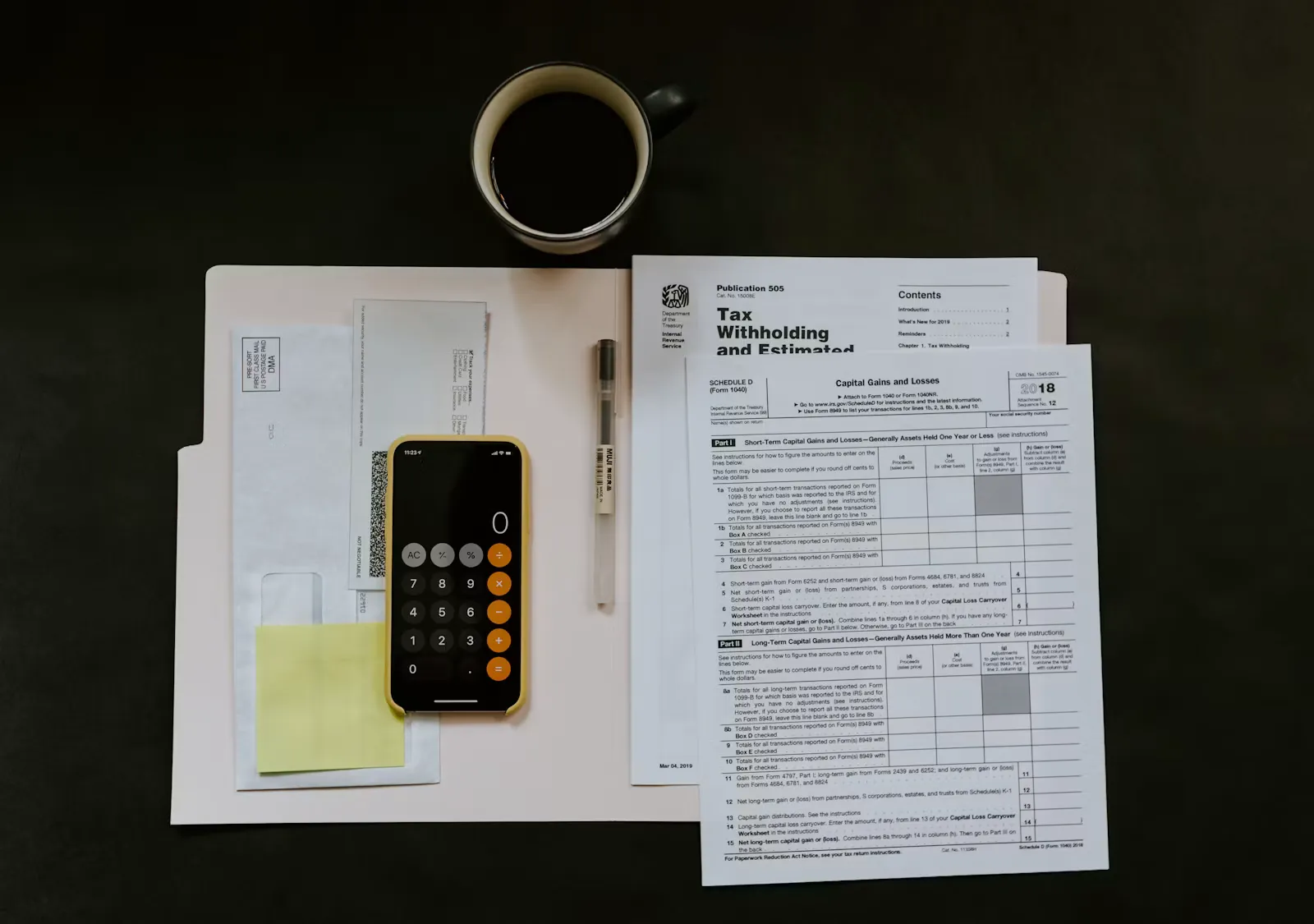
Far less than most families expect. The government fee is Rs 50 per sticker, and normal attestation is free. What you are really paying for is the handling chain around it: the agency fee, the scanning charge, notarisation, translation and courier. MEA does not publish a guaranteed turnaround, so build in weeks, not days.
| Charge | Apostille | Normal attestation |
|---|---|---|
| MEA fee | Rs 50 per sticker | Free of cost |
| Outsourced agency service charge | Rs 84 per document | Rs 84 per document |
| Scanning charge | Rs 3 per page | Rs 3 per page |
Is an Apostille Enough for a Czech or Latvian Medical School?
Not always, and this is the gap that costs students an intake. The stamp proves your certificate is real. It does not say your Indian Class 12 is equivalent to the local school-leaving qualification. Several EU countries run a second, separate procedure for that, and it has its own fee, its own office and its own queue.
The Czech Republic is the clearest example. Charles University's guidance on nostrification explains that applicants who finished school outside a short list of neighbouring countries must have their certificate recognised before they can study. Nostrification is the state route, handled by the relevant regional authority, valid at every Czech higher-education institution, with an administrative fee of CZK 3,000. Institutional nostrification is the alternative: it is run by the faculty you applied to, involves no recognition exams, and is valid only at that one faculty.
There is a detail in there that Indian students should read twice. Czech school attendance is typically 13 years, against 12 in India. Where the hours in a subject do not match Czech standards, the state nostrification procedure can prescribe extra examinations. Choosing the faculty's own institutional route, where it is offered, avoids those exams entirely. That's exactly the kind of question worth asking the admissions office before you pick a path.
Latvia handles recognition through the Academic Information Centre, the national body for evaluating foreign qualifications. Other countries route it through their own national recognition centre in the ENIC-NARIC network. The MEA stamp is the entry ticket to that process, not a substitute for it.
When Should You Start the Apostille Process for a 2026 Intake?
The honest answer is: before you have an offer in hand. Authentication, legalisation and translation all sit on other people's timelines: a state authority, an outsourced agency, a court translator. None of them will speed up because your enrolment date is close.
August is the pinch point for Indian applicants, and this year is no different. The Medical Counselling Committee published a revised Round 1 schedule dated 13 August 2026 for the all-India quota, and thousands of students are now sitting between a possible Indian seat and a confirmed European one. If you wait for the Indian rounds to finish before touching your documents, you are starting the apostille chain with the European enrolment date already on top of you.
A sensible order of work looks like this:
- Collect originals of Class 10 and 12 certificates, marksheets and your birth certificate now, in one folder.
- Get the state-level authentication moving while you are still comparing universities.
- Book the MEA stamp through a designated agency as soon as authentication is done.
- Ask each shortlisted university, in writing, whether it needs nostrification, faculty recognition, or neither.
- Arrange certified translations last, once you know which country you are going to.
Four Mistakes That Cost Students an Intake
All four are avoidable. They come up again and again in the weeks before a European intake closes, and none of them are complicated. They're just easier to fix in June than in September.

Submitting photocopies. MEA does not legalise photocopies. Bring the original or a properly notarised true copy, along with a photocopy and a photocopy of your passport for the agency's file.
Stamping too few documents. Families often apostille the Class 12 marksheet and stop there. Universities ask for the certificate as well, plus the birth certificate, and sometimes Class 10. Each one is a separate fee and a separate trip.
Assuming the stamp is the last step. In the Czech Republic it is not. Recognition of your school-leaving qualification is a distinct procedure with its own cost and its own waiting time.
Using a tout. MEA states on its own service page that applicants should not rely on unauthorised persons for apostille or attestation work. If someone promises it same-day, they are describing something the ministry does not offer.
If you are still mapping out the wider process, our guides on eligibility for MBBS abroad, the current NMC guidelines and rules and the pre-departure checklist cover the steps sitting either side of this one. The MBBS in Europe hub and the application deadlines page are the two worth bookmarking while your documents are in the queue, and the universities page shows which faculties are in play.
Sources
- Attestation / Apostille, Ministry of External Affairs, Government of India (page last updated 12 August 2026): https://www.mea.gov.in/apostille-menu
- Status table, Convention of 5 October 1961 Abolishing the Requirement of Legalisation for Foreign Public Documents, HCCH (status update 30 June 2026): https://www.hcch.net/en/instruments/conventions/status-table/?cid=41
- e-Sanad, online attestation and apostille of documents, Ministry of External Affairs, Government of India: https://esanad.nic.in/
- Nostrification: secondary education recognition, Institute for Language and Preparatory Studies, Charles University (last change 22 June 2026): https://ujop.cuni.cz/UJOPEN-132.html
- Recognition of foreign qualifications, Academic Information Centre, Latvia: https://www.aic.lv/en/recognition
- ENIC-NARIC networks, national recognition information centres: https://www.enic-naric.net/
- UG Medical Counselling, revised Round 1 schedule dated 13 August 2026, Medical Counselling Committee, Ministry of Health and Family Welfare: https://mcc.nic.in/ug-medical-counselling/
on publish -->
Related Topics
- apostille
- MBBS in Europe
- document attestation
- MEA
- study abroad documents
- Indian students
- admission process
Related Articles
 Guides & Tips13 Aug 202614 min read
Health Insurance for MBBS Students in Europe: 2026 Guide
Health insurance for MBBS students in Europe: 2026 rules for Czechia, Hungary and Poland, minimum cover and monthly costs. Build your visa file right today.
 Guides & Tips11 Aug 202613 min read
Cost of Living in Europe for Indian MBBS Students 2026
Cost of living in Europe for Indian MBBS students in 2026: real rent, food and monthly budget data for EU cities, backed by Eurostat. Plan your budget today.
 Guides & Tips4 Aug 202617 min read
Abroad MBBS Fees 2026: Tuition by Country and University
Abroad MBBS fees 2026 from official university fee pages: EUR 10,000 to EUR 24,250 a year in Europe, plus Kyrgyzstan, Kazakhstan, Russia, China and Ukraine.