
Study Medicine (MD) in Australia
Earn a globally respected, AMC-accredited MD at world-leading Australian universities, through either undergraduate or graduate entry.


5000+ Students trust us
AMC / AHPRA
Licensing Exam
UCAT / GAMSAT + Interview
Admission Criteria
MD (4–6 Yrs)
Medical Programme
Canberra
Capital
Universities
Top Medical Universities for MD in Australia
Australia is home to some of the world's highest-ranked medical schools, all accredited by the Australian Medical Council (AMC). Most award the MD through either graduate entry (four years after a bachelor's) or direct undergraduate entry (five to six years from Year 12). Places for international students are limited and highly competitive.




Introduction
About Studying Medicine in Australia
- Study programme:MD (Doctor of Medicine, MBBS-equivalent)
- Language:English
- Total duration:4 Years (graduate entry) or 5–6 Years (undergraduate entry)
- Degree awarded:MD (Doctor of Medicine)
- Entrance exam:UCAT-ANZ / GAMSAT + interview (NEET-UG not used)
- Regulator:Australian Medical Council (AMC) / AHPRA
- Avg. tuition (per year):₹65–82 lakh (approx., international)
- Licensing:AMC / AHPRA registration; does not meet NMC rules for India
For Indian students Australia is a premium option: entry is highly competitive through the UCAT-ANZ or GAMSAT plus interviews, and international tuition is very high, so realistic financial planning is essential. NEET UG is not part of admission here, and because this degree does not meet the NMC's rules, NEET UG does not open a route to practise in India from it.



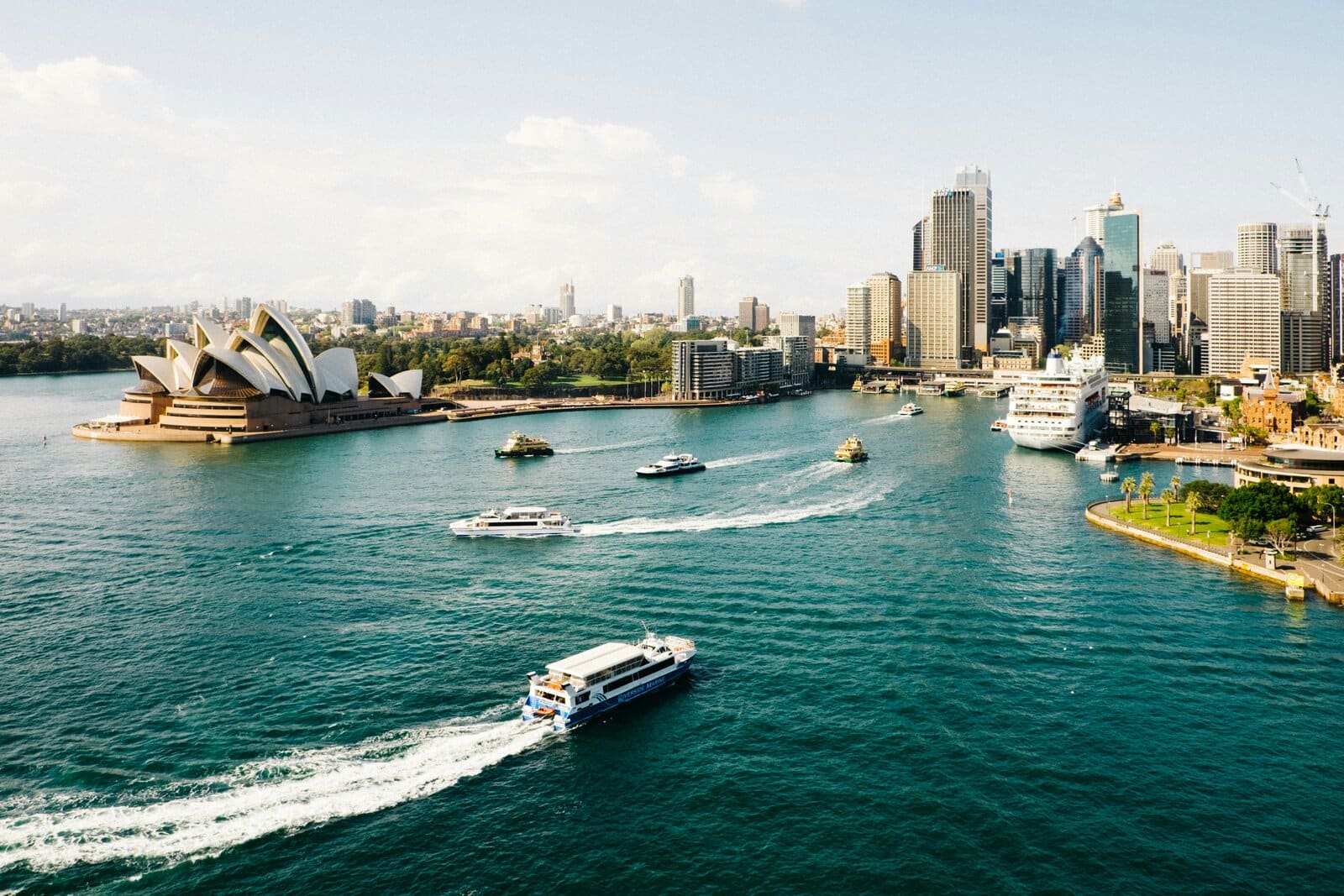
The Sydney Opera House and Sydney Harbour Bridge from the air, Australia
Get all information about studying MBBS abroad
Read on to find out how you can fulfil your dream of studying medicine in Australia.
Why Australia
Why Study Medicine in Australia
Australia pairs world-leading medical schools with strong clinical training and high living standards, though at a very high cost and a competitive entry bar.
World-Leading Medical Schools
MD Degree (MBBS-Equivalent)
Two Entry Pathways
Strong Clinical Training
High Quality of Life
Global Recognition
Read all about MBBS abroad in our free brochure
Know exactly what options exist for your MBBS-abroad success.
Programme Structure
MD Programme Structure in Australia
The Australian MD is a four-year graduate-entry degree or a five-to-six-year undergraduate-entry programme, taught in English with an integrated curriculum and clinical placements, followed by an internship year to gain general registration.
Doctor of Medicine (MD)
Duration:
4 Years (graduate) / 5–6 Years (undergraduate)
Degree:
MD (Doctor of Medicine, MBBS-equivalent)
Structure of the Medical Programme
Early Years
Pre-Clinical / Foundation
Integrated basic and clinical sciences with early patient contact and communication skills:
AnatomyPhysiologyBiochemistryPharmacologyPathologyClinical SkillsResearchLater Years
Clinical Years
Full-time clinical placements (rotations) across teaching hospitals and community settings:
Internal MedicineSurgeryObstetrics & GynaecologyPaediatricsPsychiatryGeneral PracticeSpecialties
Important: Australia awards the MD, not the MBBS. Depending on the university, the MD is entered directly after Year 12 (a five-to-six-year programme) or after a bachelor's degree (a four-year graduate programme). Graduation is followed by a supervised internship year to obtain general registration with AHPRA.
Get the full curriculum
Download a free brochure to see detailed subjects, the course structure and everything you need to plan your studies.
Admissions
Eligibility Criteria
Academic Qualification
For undergraduate entry, applicants need excellent Year 12 / Class 12 results with the required science subjects and the UCAT-ANZ; for graduate entry, a recognised bachelor's degree and the GAMSAT. NEET UG is not part of admission here, and because this degree does not meet the NMC's rules, NEET UG does not open a route to practise in India from it.
Prerequisites:
Undergraduate entry (Class 12):
Graduate entry (Bachelor's):
Minimum Requirements
Indicative minimum requirements for application (vary by university and pathway):
| Category | Requirement |
|---|---|
| Class 12 (undergraduate entry) | High % in PCB + UCAT-ANZ |
| Bachelor's (graduate entry) | Strong GPA + GAMSAT |
| English (IELTS Academic) | 7.0+ (no band below 7.0) |
| NEET-UG | Not part of admission |
Age Requirement
Candidates must meet the following criterion at the time of admission:
- Minimum age 17–18Applicants are generally at least 17–18 by the start of the course; there is no fixed upper age limit.
Entrance & Application Requirements
Applicants sit the UCAT-ANZ (undergraduate) or GAMSAT (graduate), attend an interview and meet the English requirement.
UCAT-ANZ / GAMSAT
Admissions tests for Australian medicine, UCAT-ANZ for undergraduate entry and GAMSAT for graduate entry, followed by an interview (often multiple mini-interviews).
IELTS (English)
English-proficiency test for applicants whose prior education was not in English; most schools ask for IELTS Academic 7.0–7.5.
Practising in India (FMGE): An Australian medical degree does not meet the NMC's rules for practising in India. Melbourne, Sydney and Queensland teach a four-year graduate-entry MD, which is short of the 54 months the NMC requires (ACER GAMSAT list). Monash's five-year course is long enough. No Australian course includes the 12-month internship at the same university that the NMC's FMGL Regulations 2021 ask for, because the intern year is a state health service job. International graduates are placed in the lowest priority groups for intern posts and are not guaranteed one. General registration with the Medical Board of Australia comes only after that intern year. The NBEMS FMGE bulletin still lists an exemption for doctors with both an Australian medical degree and an Australian postgraduate qualification who are registered there, but students admitted after 18 November 2021 are judged under the FMGL rules.
Admission Guidance & Document Checklist
Get the complete document checklist or admission guidance from our experts.
Study Visa
Student Visa Overview
International students study in Australia on a Student visa (subclass 500). Once you accept an offer and receive a Confirmation of Enrolment (CoE), you apply online, showing your finances, English and health cover.
Accept your university offer and receive the electronic Confirmation of Enrolment (CoE), which is required for the subclass 500 visa application.
Show evidence of funds for 12 months of living costs (about AUD 29,710 for 2026 for a single student) plus tuition and return airfare.
Purchase Overseas Student Health Cover (OSHC) for the duration of your stay, a mandatory condition of the visa.
Meet the English requirement (IELTS / equivalent) and prepare your CoE, financial evidence, passport and Genuine Student statement.
Lodge the subclass 500 application online through ImmiAccount, complete health checks and provide biometrics if requested.
Once the visa is granted, travel to Australia (up to 90 days before the course starts), enrol and comply with visa conditions such as work limits.
Get help with your subclass 500 visa
Our experts guide you through the CoE, financial requirement and visa application end to end.
Cost
Cost of Living for Medical Students in Australia
Living costs in Australia are high and vary by city (Sydney and Melbourne are the most expensive). Here is an indicative monthly breakdown for a medical student (in ₹ approximations); the subclass 500 visa requires proof of about AUD 29,710 a year for living costs.
Monthly Living Cost
| Category | Monthly Expense (approx.) |
|---|---|
| Accommodation | ₹70,000 – ₹1,40,000 |
| Food / Groceries | ₹25,000 – ₹45,000 |
| Transportation | ₹8,000 – ₹16,000 |
| Utilities / Internet | ₹9,000 – ₹16,000 |
| Health Cover (OSHC) & Insurance | ₹5,000 – ₹9,000 |
| Miscellaneous | ₹12,000 – ₹25,000 |
Total Monthly
₹1,29,000 – ₹2,51,000
About the Country
History of Medical Education in Australia

Uluru (Ayers Rock) under a blue sky in the Northern Territory, Australia
From Colonial Schools to Global Leaders
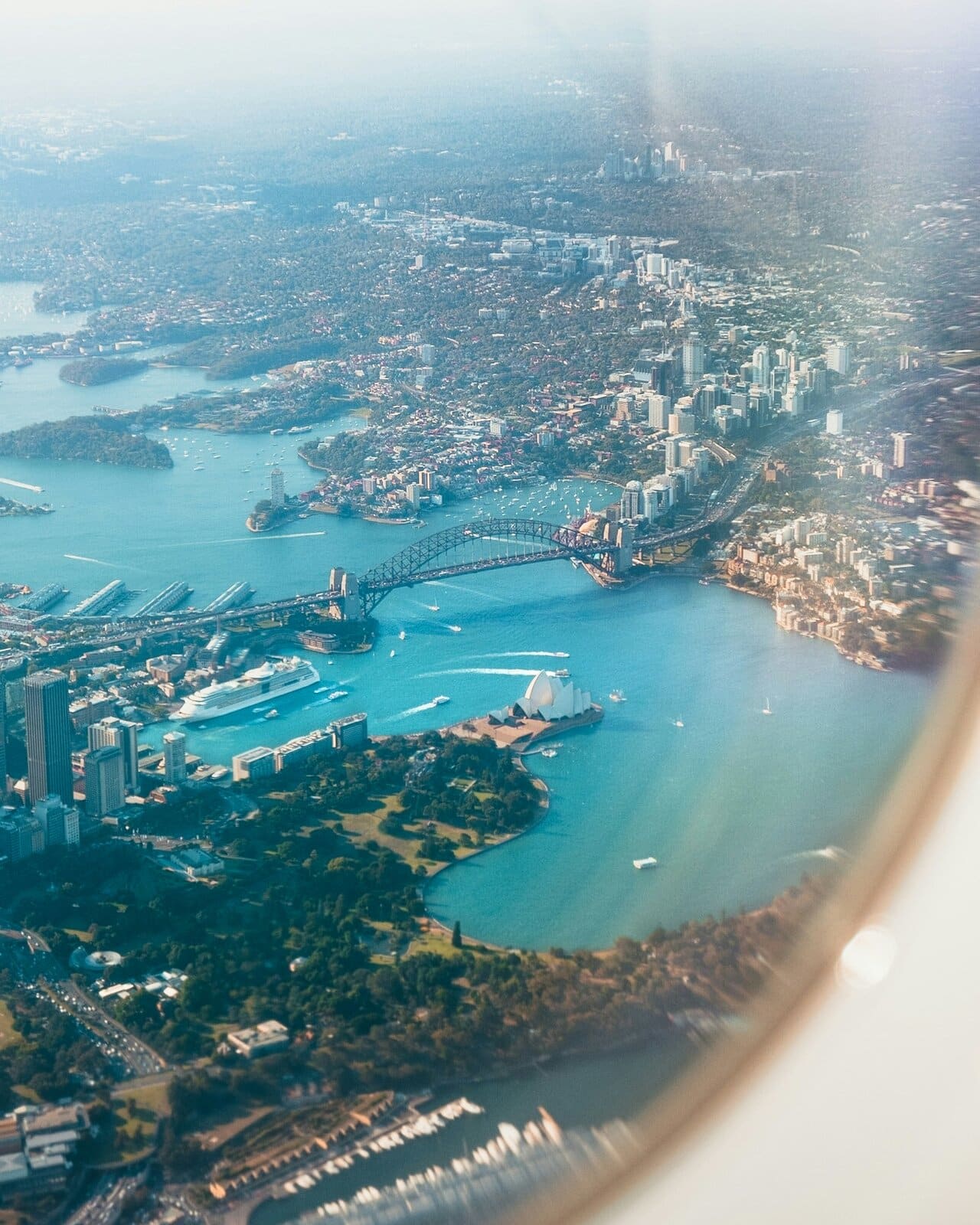
Aerial view of Sydney Harbour, the Opera House and Harbour Bridge, Australia
The Move to the MD
Get all information about MBBS in Australia in our free brochure
Read on to find out how you can fulfil your dream of studying medicine in Australia.
Role in Medicine
Australia's Role in Global Medical Education

The Sydney Opera House illuminated with colourful light projections at night, Australia
A Global Standard-Setter
Research and Clinical Innovation
Get all information about MBBS in Australia in our free brochure
Read on to find out how you can fulfil your dream of studying medicine in Australia.
How to Practise
Your Path After the MD in Australia
After the MD
Finish the four-year graduate MD or five-to-six-year undergraduate MD at an AMC-accredited Australian university.
Obtain provisional registration with the Medical Board of Australia (AHPRA) to begin supervised practice as an intern.
Work a supervised internship year in an Australian hospital to gain general registration with AHPRA.
Continue prevocational training and then apply to a specialist college (for example RACP, RACS, RACGP) for vocational training, lasting roughly 3 to 7 years.
An Australian MD does not meet the NMC's FMGL Regulations 2021: no course includes a 12-month internship at the same university, and the graduate MD is shorter than 54 months. Students admitted after 18 November 2021 are judged under these rules.
Complete Australian specialty fellowship training through a specialist college such as RACP, RACS or RACGP.
Work as a resident, registrar, GP or consultant in Australia once you hold general registration with the Medical Board of Australia.
Duration of Residency
Postgraduate / specialty training length depends on the pathway. Typical durations after the MD are:
| Pathway | Duration |
|---|---|
| Internship (PGY1) | 1 year |
| General Practice (RACGP) | 3–4 years |
| Physician / Surgery (RACP / RACS) | 5–7 years |
| MD / MS in India | Not open |
| DNB in India | Not open |
Understand the Australian Registration Pathway
A clear overview of AHPRA registration, the internship, specialty training and the NMC rules for India after your MD.
Our blog
Medical Education Insights
Articles that turn complex MBBS-abroad rules into simple, practical steps for students and parents.






Compare
Compare Pathways
See how the Australian MD pathway compares with the MBBS route in India.
Quick Comparison:
MD in Australia vs MBBS in India
| Pathway | MD in AustraliaAustralia | MBBS in IndiaIndia |
|---|---|---|
| Entry Level | After Class 12 or a Bachelor's | After Class 12 (10+2) |
| Entrance Exam | UCAT-ANZ / GAMSAT (no NEET) | NEET-UG |
| Degree | MD (MBBS-equivalent) | MBBS |
| Course Duration | 4 yrs (grad) / 5–6 yrs (undergrad) | 4.5 years + 1-yr internship |
| Medium | English | English |
| Licensing | AMC / AHPRA (Australia); does not meet NMC rules | NMC registration after internship |
| Approx. Tuition (full course) | ₹2.6–3.4 crore | ₹50 lakh – ₹1 crore+ (private) |
Compare Top MBBS Destinations for Me
See key differences in fees, duration, eligibility and recognition.
FAQ
Frequently Asked Questions
Short answers to the questions students and parents ask most often about studying medicine in Australia.