
Universities
MBBS Syllabus in Europe: What You Study, Year by Year
3 Oct 2026
15 min read
MBBS syllabus in Europe explained: what you study in each of the six years, how the final-year rotations work, and how to check a curriculum against NMC rules.
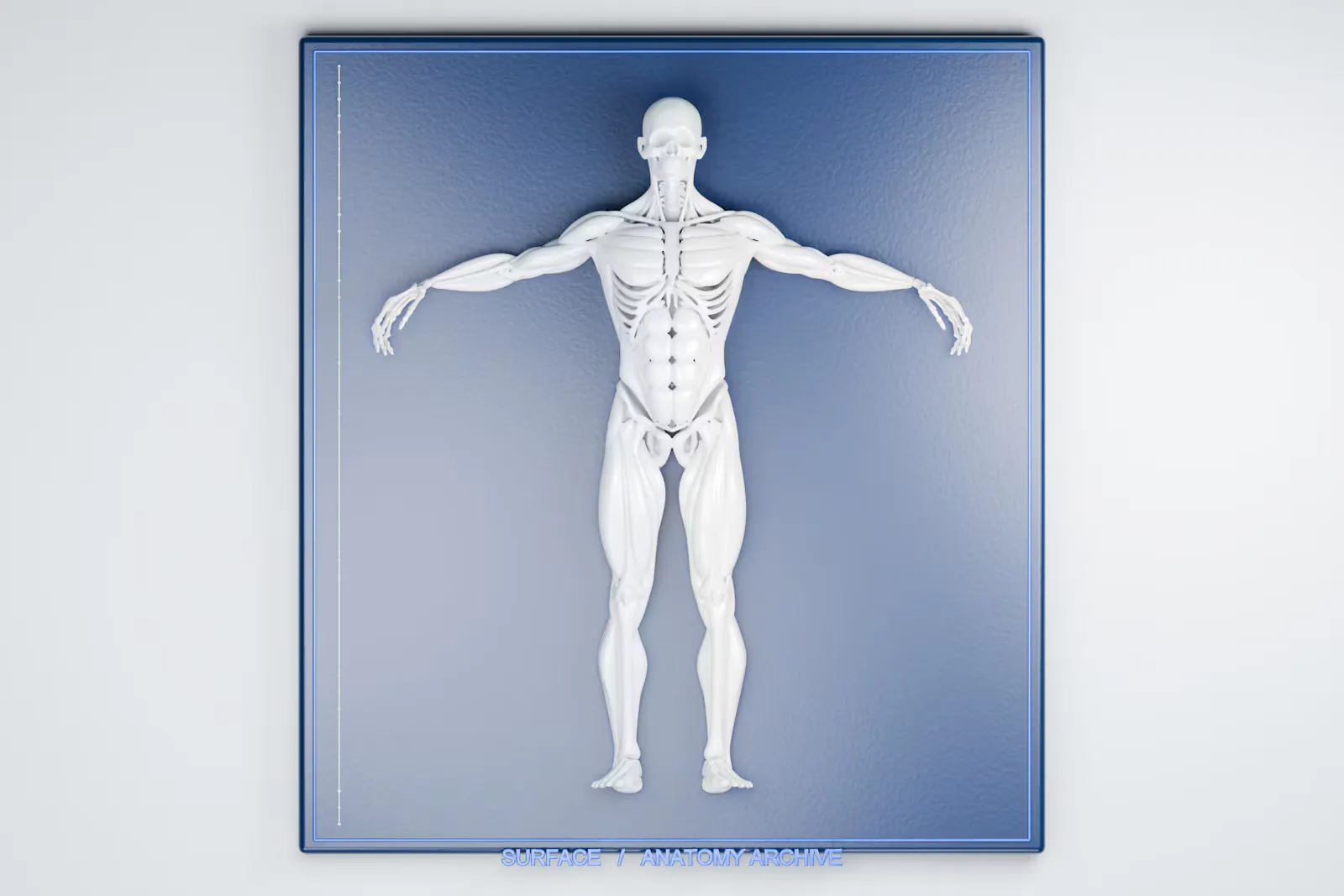
The MBBS syllabus in Europe is a six-year, 360-credit programme that moves from basic science to supervised clinical work: two years of anatomy, physiology and biochemistry, then pathology and pharmacology, then clinical subjects taught in hospital blocks, and a final year spent almost entirely on the wards. The subjects match what India expects. What differs is the order, the format and a few extras, like a local language course. This guide walks through each year using two real partner-university curricula, then shows you how to check any MBBS syllabus against the NMC's own subject list before you apply.
Key Takeaways
- A European medical degree is six years and usually 360 ECTS credits. EU law sets the floor at five years and 5,500 hours of theoretical and practical training under a university.
- Year one is heavy on anatomy. At Charles University's Faculty of Medicine in Pilsen, anatomy alone carries 22 of the 60 first-year credits, about 37 percent.
- Clinical subjects start in year three or four. Semmelweis University teaches years four and five as subject blocks measured in weeks, 38 and 39 weeks a year.
- The final year is ward work. Semmelweis schedules 39 weeks of rotations, from 8 weeks of internal medicine to 1 week of transfusion medicine, then a written, oral and practical final board exam.
- India checks subjects, not credits. The NMC's FMGL Regulations 2021 require you to have studied the subjects in Schedule I, in English, at one institution, with no part of the training done in India.
- Your transcript is your proof. An NMC FAQ of 8 June 2026 says State Medical Councils look at official records showing subjects studied, duration, clinical postings and practical training.
What is the MBBS syllabus in Europe?
The MBBS syllabus in Europe is the full list of compulsory subjects, electives, practicals and clinical rotations a medical faculty requires before it awards its medical degree. In most EU countries that degree is called General Medicine or Doctor of Medicine (MD, or MUDr. in the Czech Republic and Slovakia), not MBBS, but Indian students and the NMC treat it as the equivalent primary medical qualification.
There is no single European MBBS syllabus. Each university writes its own. What ties them together is EU Directive 2005/36/EC (as amended by Directive 2013/55/EU), which says basic medical training must cover at least five years of study and at least 5,500 hours of theoretical and practical training, provided by or supervised by a university. Most faculties go beyond that and run six years. If you want to understand how those hours turn into credits on a transcript, our guide to ECTS credits for MBBS in Europe covers it.
So when people ask "what is the MBBS syllabus abroad?", the honest answer is: read the specific university's study plan. The good news is that the big partner universities publish theirs in full, in English.
How the six years are divided
Every curriculum we checked follows the same three-phase logic. Here's how Charles University's Pilsen faculty describes its own programme in its 2025/26 first-year guide: the first two years cover theoretical disciplines, the third year and part of the fourth cover preclinical subjects as clinical teaching begins, and the highest years are fully clinical.
| Phase | Years | What it covers | Typical format |
|---|---|---|---|
| Theoretical (basic science) | 1 to 2 | Anatomy, histology, biophysics, chemistry, biochemistry, physiology, cell biology, genetics | Lectures plus weekly labs and dissection |
| Preclinical | 3 (and part of 4) | Pathology, pharmacology, microbiology, pathophysiology, introduction to clinical medicine | Lectures, labs, first patient contact |
| Clinical | 4 to 5 | Internal medicine, surgery, paediatrics, obstetrics and gynaecology, psychiatry, neurology, and the smaller specialties | Hospital blocks counted in weeks |
| Final year | 6 | Supervised rotations through the major disciplines, then state or final exams | Full-time ward work |
That rhythm will look familiar if you've read the Indian MBBS syllabus. NEETsheet has a clear breakdown of the MBBS syllabus in India, subject by subject, and laying the two side by side is a good exercise. The subjects overlap almost completely. The packaging doesn't.
What do you study in years one and two?
In years one and two you study the science of a healthy body: anatomy, histology and embryology, biophysics, medical chemistry, biochemistry and physiology, plus genetics and cell biology. Anatomy dominates. At Pilsen it is worth 22 of the 60 first-year credits, and Semmelweis spreads macroscopic anatomy across the first two semesters.
Take Pilsen's first-year General Medicine plan for 2025/26. The full 60 credits break down like this: anatomy 22, medical biology and genetics 9, biophysics 6, medical chemistry and biochemistry 4, histology and embryology 4, first aid 4, Czech medical terminology 4, basics of clinical medicine 3, radiology technology 2, Latin terminology 1 and basics of IT 1.
At Semmelweis University in Budapest, the 2025/26 English-language curriculum puts cell science, medical chemistry, macroscopic anatomy and embryology, medical biophysics, medical terminology and medical communication into the first semester. The second semester adds biochemistry, microscopic anatomy and a first aid course. Physiology arrives in year two at 11 credits per semester, alongside biochemistry II, molecular cell biology, and genetics and immunology.
One detail surprises a lot of Indian students: there's a summer nursing practice. Semmelweis lists a one-month "Summer Practice: Nursing" at the end of year one. You're on a ward in your first summer, long before you treat anyone.
When do clinical subjects start?
Clinical subjects start properly in year three or four. At Semmelweis, year three brings pathology, pharmacology, microbiology, pathophysiology, internal medicine propedeutics (how to examine a patient), clinical ECG and basic surgical techniques. From year four, the timetable switches from weekly lectures to subject blocks measured in weeks.
That switch is the biggest change in how you study. In Semmelweis's years four and five (38 and 39 weeks of teaching), you rotate through blocks like these:
- Year four: internal medicine I (metabolism, endocrinology, gastroenterology, nephrology), cardiology with heart and vascular surgery, surgery, traumatology and orthopaedics, medical imaging, ENT, dermatology, ophthalmology, pulmonology and thoracic surgery, laboratory medicine, emergency medicine, clinical pharmacology, family medicine, and a week of oral surgery and dentistry.
- Year five: internal medicine II (haematology, infectology, immunology, rheumatology), forensic medicine, obstetrics and gynaecology, paediatrics, urology, oncology, intensive therapy and anaesthesiology, neurology and neurosurgery, psychiatry, clinical genetics, rehabilitation, sports medicine and public health.
Each block ends with its own exam. Fall behind in one and a prerequisite can stop you entering the next, because the curriculum lists prerequisite subjects for nearly every clinical course. That's one reason students describe the middle years as the hardest stretch of the MBBS syllabus, and why our piece on whether MBBS is easy is blunt about the workload.
The final year: rotations, not lectures
The last year of a European MBBS syllabus is spent almost entirely in hospitals. Semmelweis schedules 39 weeks of supervised rotations in 2025/26, each ending in a comprehensive or practical exam, and then the final board examination with a written, an oral and a practical part. A thesis, defended before graduation, also counts towards the final grade.
Here's how those 39 weeks are split at Semmelweis:
Add up the listed hours and you get 1,560 hours of supervised practice in that single year, at roughly 40 hours a week.
Pilsen works differently in one important respect. Its first-year guide notes that sixth-year General Medicine students "also complete practical internships before State Exams in hospitals in their home countries". For an Indian student that sentence needs care. The NMC's Foreign Medical Graduate Licentiate Regulations 2021 say the entire course, training and internship or clerkship must be done in the same foreign institution, and that no part of it may be done in India or in any third country. So if a placement is offered at home, confirm in writing with the faculty that you can complete it at the Pilsen faculty's own teaching hospitals instead.
How the European final year lines up with the NMC's separate 12-month internship requirement is a bigger question, and we've given it a guide of its own: medical internship in Europe after MBBS.
Which subjects does the NMC expect to see?
The NMC expects a foreign course equivalent to the Indian MBBS. Under regulation 4 of the FMGL Regulations 2021, you need a course of at least 54 months, a 12-month internship at the same institution, English as the medium of instruction, and the mandatory subjects in Schedule I. The whole course must be finished within ten years of joining.
Schedule I names the clinical subjects your internship must give you hands-on training in, including but not limited to: Community Medicine, General Medicine, Psychiatry, Paediatrics, General Surgery, Anaesthesia, Obstetrics and Gynaecology, Orthopaedics, Otorhinolaryngology, Ophthalmology, Dermatology, emergency or casualty services, and lab services. It adds that the course must be commensurate with the Indian MBBS under the Graduate Medical Education Regulations, 1997.
Here's how that list maps onto one real European MBBS syllabus:
| NMC Schedule I subject | Where it sits at Semmelweis (2025/26) |
|---|---|
| General Medicine | Internal Medicine I and II (years 4 and 5), 8-week final-year rotation |
| General Surgery | Surgery (year 4), 6-week final-year rotation |
| Paediatrics | Pediatrics (year 5), 6-week final-year rotation |
| Obstetrics and Gynaecology | Obstetrics and Gynaecology (year 5), 4-week final-year rotation |
| Psychiatry | Psychiatry and Psychotherapy (year 5), 3-week final-year rotation |
| Anaesthesia | Intensive Therapy and Anaesthesiology (year 5) |
| Orthopaedics | Traumatology and Orthopedics (year 4) |
| Otorhinolaryngology | Otorhinolaryngology (year 4) |
| Ophthalmology | Ophthalmology (year 4) |
| Dermatology | Dermatology (year 4) |
| Emergency or casualty | Emergency Medicine and Oxyology (year 4), Prehospital Emergency Medicine (final year) |
| Lab services | Laboratory Medicine (year 4), Transfusion (final year) |
| Community Medicine | Public Health (year 5) |
Look at the last row. Every subject has a home, but Community Medicine in India covers Indian epidemiology and the national health programmes, and a Hungarian public health course won't teach you those. A 2025 review of Indian international medical graduates in Medical Science Educator found that India's licensing exams emphasise region-specific clinical conditions and structured case-based assessment, which creates a disconnect for students trained under different emphases. Plan to cover Indian community medicine yourself before the FMGE, India's licensing exam for foreign graduates.
Why is a local language part of the MBBS syllabus?
A local language is part of the syllabus because from year three you talk to patients who don't speak English. The course is taught in English, but Semmelweis requires four semesters of Medical Hungarian and a comprehensive exam in Hungarian medical terminology before it issues the diploma. Pilsen teaches Czech medical terminology in year one and Czech for hospital practice in year three.
Students often treat these classes as a side subject. Don't. They carry credits, they have exams, and at Semmelweis the language exam is a condition of graduating. Our guide to the local language for MBBS in Europe explains what level you'll actually need on the wards.
The language course doesn't change the NMC's requirement that your degree's medium of instruction is English. Your transcript should still show English as the language of instruction.
A five-step syllabus check before you apply
You can check any university's MBBS syllabus yourself in an evening. Schedule I even says the curriculum should be available for review, if necessary on the institution's website, at the time you join. Here's the order we suggest:
- Download the official study plan. Use the faculty's own site, for example the Semmelweis registrar's curriculum page. Make sure it's for your intake year, because plans are amended (Semmelweis's 2025/26 plan follows a Senate decision of 2024).
- Tick off the Schedule I subjects. Find each clinical subject from the table above. Note the year and whether it has a final-year rotation.
- Check the language of instruction. It must be English for the whole programme, with any local-language classes listed as separate subjects.
- Ask where the final-year placements happen. Get it in writing that every rotation, clerkship and internship is done in that country, at that institution.
- Plan your India-specific gaps. List what the European course won't cover, like Indian community medicine and national health programmes, and schedule time for it before the FMGE.
Keep the study plan you downloaded. Years later, when a State Medical Council checks your file, you'll want to show what the course looked like when you joined.
What will India look at on your transcript?
India looks at what you studied, for how long and where. In an FAQ dated 8 June 2026 on compensating online classes, the NMC described the transcripts it expects as official records from the parent foreign institution that document the subjects studied, the duration of study, clinical postings and practical training. State Medical Councils examine them alongside passport records.
That makes the transcript the practical bridge between a European MBBS syllabus and an Indian licence. Ask for a full transcript, not just the diploma, at graduation, and get it apostilled before you leave. The rest of the paperwork chain, from FMGE to permanent registration, is in our guide to medical registration in India after MBBS in Europe.
And before any of this, the NEET qualification still applies. If you're still in school and checking where you stand, NEETsheet explains the NEET qualifying marks and lays out the full route to becoming a doctor after NEET.
Sources
Every fact above was read on the issuing body's own page or document on 3 October 2026.
- National Medical Commission, Foreign Medical Graduate Licentiate Regulations 2021, dated 18 November 2021 (regulation 4, Schedule I): https://nmc.org.in/storage/cms/rules-regulation-nmc/22bEhC9b9MY6TgjvDdFheBsyRYp8Hdj1K0gHsOjD.pdf
- National Medical Commission, Frequently Asked Questions on the Public Notice of 18 March 2026, dated 8 June 2026 (what transcripts must document): https://nmc.org.in/storage/cms/rules-regulation-nmc/mCMboVaMMdlR8sYWcwwnwPlpzIoRvKHWVomoWGmo.pdf
- National Medical Commission, Rules and Regulations index: https://nmc.org.in/page/rules-regulations-rules-regulations-nmc
- European Parliament and Council, Directive 2013/55/EU of 20 November 2013 amending Directive 2005/36/EC, Article 1 point 18, new Article 24(2) (five years, 5,500 hours), Official Journal of the European Union L 354, 28 December 2013, published on EUR-Lex
- Semmelweis University, Faculty of Medicine, English Language Program, Study Program 2025/2026: https://semmelweis.hu/jogigfoig/files/2025/09/70_2025_Melleklet_mintatanterv_angol.pdf
- Semmelweis University Registrar, Medicine curriculum page: https://semmelweis.hu/registrar/medicine/curriculum-medicine/
- Charles University, Faculty of Medicine in Pilsen, Students Guide 2025/26 (study structure, first-year credits, language teaching): https://lfp.cuni.cz/wp-content/uploads/2025/07/STUDENTS-GUIDE-202526.pdf
- Zholdybayeva A, Chyngyshpayeva Y, Mirsaliev M. Educational and Licensing Challenges Faced by Indian International Medical Graduates: A Critical Synthesis. Medical Science Educator, 2025;35(5):2605 to 2614: https://pmc.ncbi.nlm.nih.gov/articles/PMC12812123/
Related Topics
- MBBS syllabus
- MBBS in Europe
- medical curriculum
- NMC
- FMGL 2021
- Semmelweis University
- Charles University Pilsen
Related Articles
 Universities23 Sept 202617 min read
S V Medical College Tirupati: NEET Cutoff 2026 and Fees
S V Medical College Tirupati: 240 MBBS seats under Dr. NTR UHS. See 2026 and 2025 closing ranks, Rs. 15,000 tuition, quotas, documents and counselling steps.
 Universities23 Sept 202622 min read
Sardar Patel Medical College Bikaner: 2026 Cutoff, Fees
Sardar Patel Medical College Bikaner MBBS 2026: 250 seats, AIQ and Rajasthan state closing ranks, Rs. 73,900 tuition, Rs. 10 lakh bond and admission steps.
 Universities23 Sept 202621 min read
SMS Medical College Jaipur MBBS 2026: Seats, Fees, Cutoff
SMS Medical College Jaipur MBBS 2026: 250 seats, AIQ and Rajasthan state closing ranks, Rs. 73,900 tuition, Rs. 10 lakh bond, deposits, documents and dates.