Universities
Bicol Christian College of Medicine: FMGE and NMC Rules
31 Jul 2026
11 min read
Bicol Christian College of Medicine, Legazpi City: the four-year MD, NMAT entry, Ago General Hospital, NMC rules and official FMGE pass rates for 2023 to 2025.

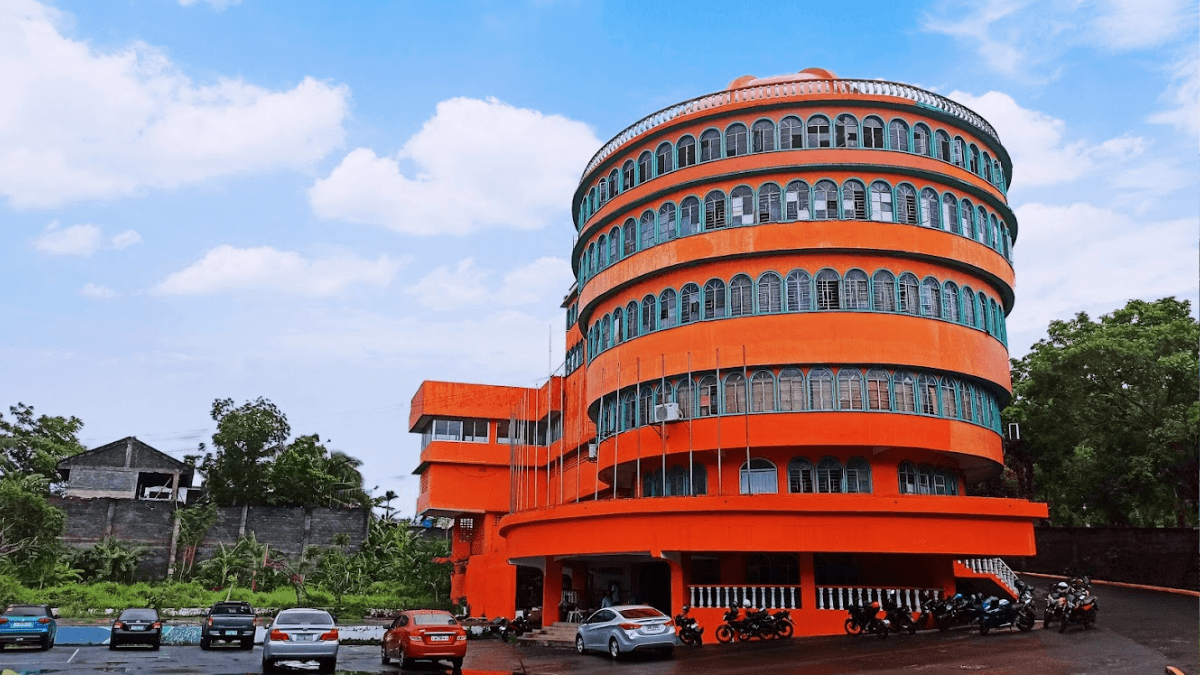
Bicol Christian College of Medicine is a private medical school in Legazpi City, Philippines, run by the Ago Medical and Educational Center (AMEC). It awards a four-year Doctor of Medicine (MD). In the December 2025 FMGE, the exam foreign medical graduates sit to work in India, 8.20% of its graduates passed.
Updated on 30 September 2026.
Key Takeaways
Part of a group founded in 1975. Dr. Damaceno J. Ago and Dr. Eden Fernandez Ago founded AMEC in 1975 as a nursing school. The medical college itself was established in 1980 (AMEC-BCCM official website).
The MD is four years. The college lists its Doctor of Medicine as a four-year curriculum with clerkship placements in regional hospitals (AMEC-BCCM official website).
Main teaching hospital. Ago General Hospital, run by the same group, is the main clinical training site for medicine (AMEC-BCCM official website).
FMGE results are below the Philippine average. Pass rates were 8.79% in 2023, 12.38% in 2024, 10.20% in June 2025 and 8.20% in December 2025. All Philippine schools together passed at 18.56% in December 2025 (NBEMS FMGE Performance Report 2025).
Not a futureMBBS partner. futureMBBS works with 23 partner universities in 9 European countries. The Philippines is not one of them (futureMBBS partner universities).
What is Bicol Christian College of Medicine?
Bicol Christian College of Medicine, often shortened to BCCM, is the medical college of the Ago Medical and Educational Center in Legazpi City, Albay. The two names usually appear together as AMEC-BCCM. The address is 85 Rizal Street, Old Albay District, Legazpi City (AMEC-BCCM official website).
AMEC began as a school of nursing in 1975. It later added midwifery, medical technology, dentistry and other courses. The college of medicine opened in 1980. Families call this route "MBBS in the Philippines", but the degree on the certificate is a Doctor of Medicine (AMEC-BCCM official website). For the wider country picture, see our MBBS in the Philippines country guide.
Bicol Christian College of Medicine at a glance
Item | Detail |
|---|---|
Type | Private college, part of the Ago Medical and Educational Center |
Location | 85 Rizal Street, Old Albay District, Legazpi City, Albay |
AMEC founded | 1975, as a school of nursing |
College of medicine established | 1980 |
Degree awarded | Doctor of Medicine (MD) |
MD length | Four years, with clerkship in regional hospitals |
Main teaching hospital | Ago General Hospital |
Entrance test for medicine | NMAT, the National Medical Admission Test |
FMGE pass rate, December 2025 | 8.20% (25 of 305 passed) |
How do Indian students get into Bicol Christian College of Medicine?
The Philippine MD is a graduate-entry degree. A student usually completes a pre-medical bachelor's degree before starting it. AMEC-BCCM teaches two such degrees itself, a BS in Biology and a BS in Psychology. The college describes the BS in Biology as a foundation for students aiming at medicine.
For medicine, the college asks for an NMAT result. The NMAT is the entrance test for Philippine medical schools. International applicants also need proof of English proficiency and must meet visa requirements (AMEC-BCCM official website).
Steps from Class 12 to the MD at Bicol Christian College of Medicine
Qualify NEET UG in India. It is the entrance test every Indian student needs before studying medicine abroad. Our guide on eligibility for MBBS abroad sets out the Indian rules.
Complete a pre-medical bachelor's degree, such as the BS in Biology or BS in Psychology offered at AMEC-BCCM.
Sit the NMAT and get a result that meets the college's requirement.
Apply to the Doctor of Medicine with the documents listed below.
Complete the four-year MD, including the clerkship in hospital.
Documents Bicol Christian College of Medicine asks for
The list below comes from the admission section of the AMEC-BCCM official website.
Application form, filled in completely.
Transcript of records from school or college, original and photocopy.
Birth certificate, authenticated.
Two recent 2x2 ID photos on a white background.
Certificate of Good Moral Character, a conduct certificate from your last school or college.
NMAT result, for medicine applicants.
Proof of English proficiency and visa documents, for international applicants.
Bicol Christian College of Medicine MD programme and clinical training
The Doctor of Medicine at Bicol Christian College of Medicine is a four-year, outcome-based curriculum. The college says it combines clinical apprenticeship, problem-based learning and digital resources. Clerkship placements take place in regional hospitals (AMEC-BCCM official website).
The medicine department covers anatomy, physiology, biochemistry, pharmacology, pathology, microbiology, surgery, internal medicine, paediatrics, psychiatry, obstetrics and gynaecology, and community medicine. Ago General Hospital is the main clinical training site. The college also lists simulation, anatomy and skills laboratories, a library with e-learning, and an on-campus dormitory for students from outside Albay.
Does the Bicol Christian College of Medicine MD meet NMC rules?
NMC, the National Medical Commission, is India's medical regulator. Its Foreign Medical Graduate Licentiate Regulations, 2021 decide who can work as a doctor in India after studying abroad. They apply to students who joined a foreign course after 18 November 2021 (NMC Foreign Medical Graduate Licentiate Regulations, 2021 (PDF)).
NMC rule | What it means for a Bicol Christian College of Medicine student |
|---|---|
Course of at least 54 months | The medical degree course itself must last at least four and a half years |
12-month internship in the same foreign institution | The internship must be done at the same school that awards the degree |
Teaching in English | The whole degree must be taught in English |
Licence to practise in the country of study, at par with citizens | The graduate must be able to register as a doctor in the Philippines on the same terms as a Filipino doctor |
Whole course done at the same foreign institution | Training, internship and clerkship all happen outside India at one school |
Whole course completed within 10 years | Counted from the date of joining |
12-month supervised internship in India | Done after passing FMGE |
This is the point that matters most. Bicol Christian College of Medicine lists its MD as four years, which is 48 months. The pre-medical degree is a separate programme that comes before it. Ask the college to state in writing how its MD, internship and licence route meet each line of the table before paying any fees.
To read these rules against your own start date, see our guide on which NMC rules apply to you and our explainer on how to check NMC and WDOMS recognition. Current NMC documents are on the NMC rules and regulations page.
Bicol Christian College of Medicine FMGE pass rate, 2023 to 2025
FMGE, the Foreign Medical Graduate Examination, is run by NBEMS, the National Board of Examinations in Medical Sciences. A graduate must pass it before the internship in India (NBEMS FMGE exam page). NBEMS publishes results school by school, so the figures below are the official ones.
FMGE session | Appeared | Passed | Pass rate |
|---|---|---|---|
2023 (both sessions) | 785 | 69 | 8.79% |
2024 (both sessions) | 719 | 89 | 12.38% |
June 2025 | 304 | 31 | 10.20% |
December 2025 | 305 | 25 | 8.20% |
Sources: NBEMS FMGE 2023 report, NBEMS FMGE 2024 report and NBEMS FMGE Performance Report 2025.
In plain terms, about one in ten Bicol Christian College of Medicine graduates passed each session. The best result was 12.38% in 2024. It then fell back to 8.20% in December 2025. The number of candidates also fell, from 785 in 2023 to 609 across the two 2025 sessions.
Bicol Christian College of Medicine against other Philippine schools, December 2025
The table compares Bicol Christian College of Medicine with the four Philippine schools that sent the most graduates to the December 2025 FMGE (NBEMS FMGE Performance Report 2025).
Philippine school | Appeared | Passed | Pass rate |
|---|---|---|---|
University of Perpetual Help System Dalta, Jonelta Foundation School of Medicine | 1,115 | 203 | 18.21% |
Davao Medical School Foundation College of Medicine | 1,055 | 116 | 11.00% |
UV Gullas College of Medicine | 1,025 | 284 | 27.71% |
AMA School of Medicine | 636 | 117 | 18.40% |
Bicol Christian College of Medicine | 305 | 25 | 8.20% |
All Philippine schools | 4,864 | 903 | 18.56% |
Across all Philippine schools, 18.99% passed in June 2025 and 18.56% in December 2025. Bicol Christian College of Medicine was at less than half that rate in both sessions. For other Philippine schools, see our guides to AMA School of Medicine and Davao Medical School Foundation. For every country side by side, see our web story on FMGE pass rates by country.
National FMGE pass rates for context
FMGE session | Appeared (all countries) | Passed | Pass rate |
|---|---|---|---|
2023 | 61,616 | 10,261 | 16.65% |
2024 | 79,000 | 20,382 | 25.80% |
June 2025 | 36,037 | 6,709 | 18.62% |
December 2025 | 42,868 | 10,264 | 23.94% |
In December 2025, roughly one in four foreign graduates passed nationally. At Bicol Christian College of Medicine, fewer than one in twelve did. Our guide to the FMGE exam explains the paper, the pass mark and the attempts.
Does futureMBBS place students at Bicol Christian College of Medicine?
No. futureMBBS works with 23 partner universities in 9 European countries: the Czech Republic (5), Hungary (4), Poland (3), Slovakia (3), Croatia (2), Latvia (2), Romania (2), Cyprus (1) and Lithuania (1). The Philippines is not among them (futureMBBS partner universities).
This guide sets out the official facts on Bicol Christian College of Medicine so a family can judge it fairly. If you are comparing the Philippine route with a six-year European degree, our comparison of MBBS in the Philippines and a European medical school walks through both.
Conclusion: is Bicol Christian College of Medicine right for you?
Bicol Christian College of Medicine is a private Legazpi City college with a four-year MD and its own teaching hospital. Its FMGE results have stayed between about 8% and 12% since 2023, well below the Philippine and national figures. The MD also runs 48 months, so the NMC course-length, internship and licence rules need a clear written answer from the college before any fees are paid.
Sources
Related Topics
- Bicol Christian College of Medicine
- MBBS in Philippines
- NMC recognition
- FMGE
- futureMBBS
Related Articles
 Universities31 Jul 20267 min read
MSU MBBS Recognition: Is Malaysia's MSU Degree Valid?
MSU MBBS recognition explained: Malaysian Medical Council, Sri Lanka and Maldives council listings, WHO's IMED directory, and what Indian students must verify.
 Universities29 Jul 202613 min read
Kyiv Medical University of UAFM 2026: Fees, FMGE, Status
Kyiv Medical University (UAFM) 2026: USD 4,000 yearly fee, 18.18% FMGE pass rate, martial law status, Polish campus NMC rule, admission steps and documents.
 Universities28 Jul 202614 min read
Kharkiv National Medical University 2026: FMGE, NMC Rules
Kharkiv National Medical University in 2026: Indian Embassy advice on Ukraine, NMC rules on online study, FMGE results 2023 to 2025 and how admission works.