Career
Specialist Training in Europe: How Long It Takes 2026
25 Aug 2026
10 min read
Specialist training in Europe runs three to five years, fixed by EU law. See the legal minimum for every major specialty and how Indian graduates apply.

Specialist Training in Europe: How Long It Takes After MBBS
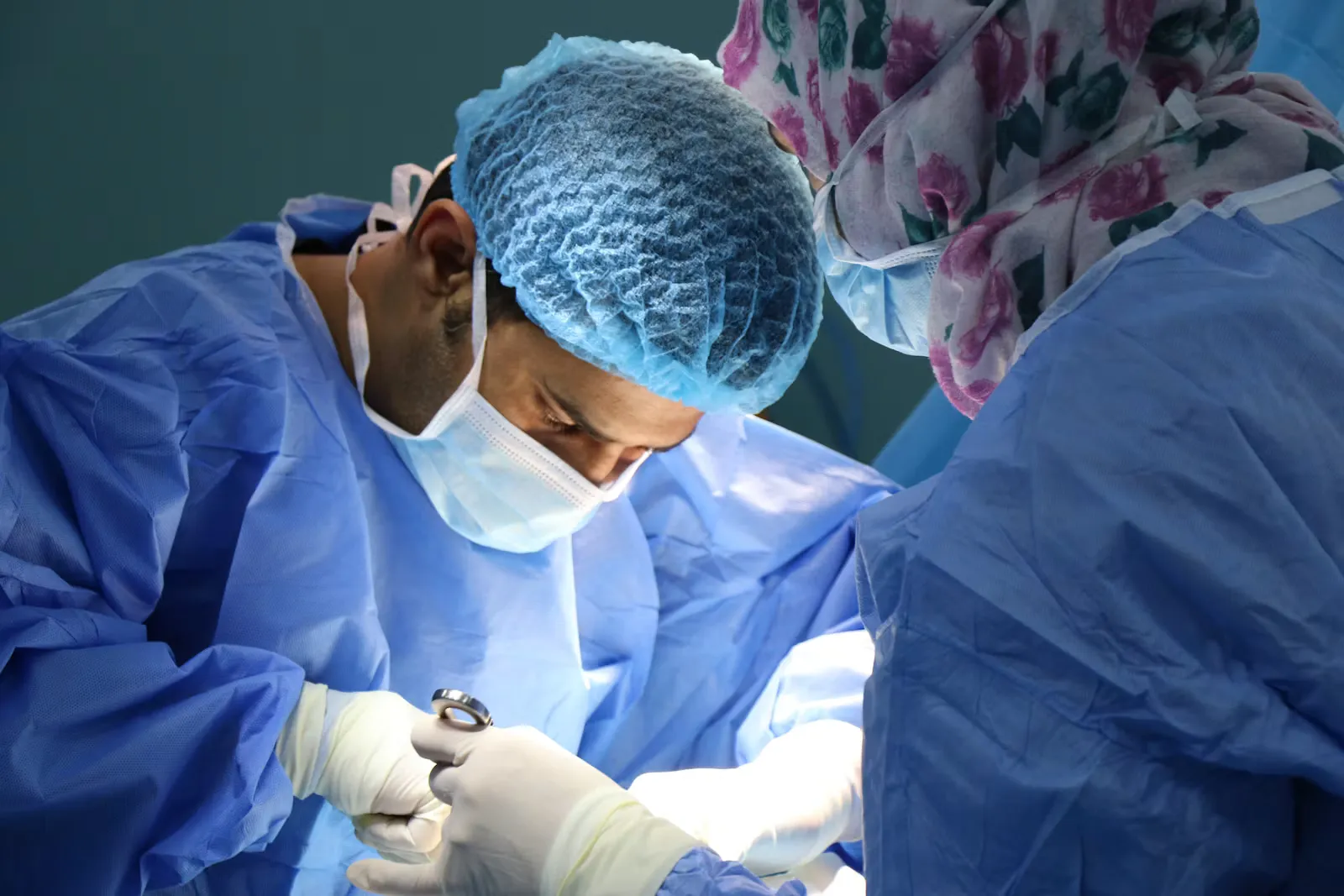
Specialist training is the paid, supervised hospital post you take after your medical degree, and across the European Union its length is fixed by law rather than by the hospital that hires you. Directive 2005/36/EC sets a floor of three years for anaesthetics, ophthalmology and ENT, four years for paediatrics, cardiology, psychiatry and radiology, and five years for general surgery, orthopaedics, urology and general internal medicine. That means specialist training in Europe cannot quietly be cut short. A Czech, Hungarian or Polish residency has to run at least as long as a German one in the same specialty.
Key Takeaways
- Three to five years, set by law. Annex V, point 5.1.3 of Directive 2005/36/EC fixes a minimum period for every specialty the EU recognises: three years at the short end, five at the long end.
- Family medicine is three years. Article 28 requires at least three years of full-time training for general-practice qualifications issued after 1 January 2006.
- It is a job, not a course. Article 25 requires full-time specialist training inside an approved hospital or university clinic, on-call duty included. That's why trainees in most EU countries are salaried staff.
- Your degree comes first. Admission to specialist training needs a completed basic medical degree of at least five years and 5,500 hours of theory and practice (Article 24).
- Automatic recognition was written for EU citizens. Article 2(1) applies the directive to nationals of a member state, so an Indian graduate moving to a second EU country is judged under that country's own national rules.
What is specialist training, and how is it different from Indian PG?
Specialist training is the stretch of supervised hospital work that turns a newly qualified doctor into a cardiologist, a surgeon or a paediatrician. In the EU it is a salaried post inside an approved department, not a taught course you pay for. In India the same step is an MD, MS or DNB seat, won through NEET-PG.
The difference that matters most is how you get in. NEET-PG, the single national postgraduate entrance exam run by the National Board of Examinations in Medical Sciences, decides an Indian seat on one rank list. Most EU countries run selection through the health ministry or the national medical chamber instead, often specialty by specialty and region by region, using your degree results, an interview and sometimes a written test. There is no single European rank list to top.
The second difference is money. An Indian PG seat is something you pay for or win on merit; a European training post is a contract of employment. You are staff from day one, with a salary, a rota and a supervisor who signs off your logbook. Our wider PG roadmap in Europe walks through the licensing steps that sit either side of this.
How long does specialist training in Europe take, specialty by specialty?
The directive lists a minimum period for every specialty that all EU countries recognise automatically. Three years is the shortest and five the longest. A country may train you for longer, and several do, but none may certify you as a specialist any sooner. These are the minimums that matter most to Indian graduates.
| Specialty (EU title) | EU minimum |
|---|---|
| Anaesthetics | 3 years |
| Ophthalmology | 3 years |
| Otorhinolaryngology (ENT) | 3 years |
| Dermato-venereology | 3 years |
| Endocrinology | 3 years |
| General haematology | 3 years |
| Allergology | 3 years |
| General practice (family medicine) | 3 years |
| Paediatrics | 4 years |
| Obstetrics and gynaecology | 4 years |
| Cardiology | 4 years |
| Gastroenterology | 4 years |
| Neurology | 4 years |
| Psychiatry | 4 years |
| Child psychiatry | 4 years |
| Diagnostic radiology | 4 years |
| Radiotherapy | 4 years |
| Respiratory medicine | 4 years |
| Nuclear medicine | 4 years |
| Geriatrics | 4 years |
| Rheumatology | 4 years |
| Pathological anatomy | 4 years |
| General (internal) medicine | 5 years |
| General surgery | 5 years |
| Orthopaedics | 5 years |
| Urology | 5 years |
| Neurological surgery | 5 years |
| Cardiac surgery | 5 years |
| Thoracic surgery | 5 years |
| Vascular surgery | 5 years |
| Paediatric surgery | 5 years |
| Plastic surgery | 5 years |
| Accident and emergency medicine | 5 years |
| Medical oncology | 5 years |
Read that table as a floor, not a forecast. The directive fixes the minimum; the real programme length is written into national rules, so the same specialty can run six years in one country and the bare five next door. Before you commit to a specialty, check the published curriculum of the national medical chamber where you intend to train. If you are still weighing options, our guide to medical specialisations is a gentler place to start.
Are you paid while you do specialist training?
In most EU systems, yes. A trainee is an employed hospital doctor with a contract, not a fee-paying student. Article 25 requires full-time training inside an approved department, including duty on call, so the post has to be a real job with real hours. Pay levels, though, are national rather than European.
That is a genuine break from what many Indian families expect. A specialist training post in the EU is usually funded by the health system, and the trainee draws a salary that rises with each year of the programme. The figure varies enormously between, say, Latvia and Ireland, and it is set by national pay agreements you can read before you apply. Our overview of jobs after MBBS puts the training years in the context of a whole career.
How do you get a training post after a European medical degree?
There is no single European application portal, so the order of operations matters more than the paperwork. Broadly, this is how the process runs for a graduate of an EU medical faculty:
- Finish the degree and any internship your faculty requires. Article 24 sets the floor at five years and 5,500 hours; most EU medical schools run six years, and Indian students also need that year of internship to satisfy the National Medical Commission (NMC), India's medical regulator, back home.
- Register with the competent authority. Every country names one, usually the medical chamber or the health ministry. The EU's own Regulated Professions Database tells you which body handles doctors in each member state.
- Reach the language level that authority asks for. Your degree may have been taught in English; ward rounds and consent forms will not be. Start in your third year, not your sixth.
- Choose the specialty early. Selection rounds often open once a year and ask for evidence from your clinical years: electives, audits, a research project.
- Apply through the national or hospital-level round. Some countries run a central match; others let individual teaching hospitals recruit. Ask the chamber which model applies before you plan your final year.
- Sort residence and work permission before the contract starts. As a non-EU national you need a permit that covers employment, and that is a separate process from your professional registration.
Does an Indian passport change how specialist training works?
Not inside the country that awarded your degree, where you apply on the same terms as every other graduate of that faculty. It changes things when you move on. Article 2(1) applies the directive to nationals of a member state, so a second EU country weighs your specialist training application under its own national rules.
In practice, that argues for choosing your university partly on where you would realistically want to train afterwards, not just on tuition. A degree from a faculty in the country where you want to do your residency keeps everything in one legal system: one chamber, one language, one set of forms. Our note on how to choose the right European medical school covers the same trade-off from the admissions side, and the MBBS in Europe hub has the country-by-country picture.
If your plan is to come home instead, the training years look different again: you would need to clear the FMGE (the Foreign Medical Graduate Examination, India's screening test for graduates of foreign medical schools) and then take NEET-PG here like everyone else.
Why do European hospitals keep opening training posts?
Because the workforce is ageing faster than it is being replaced. The WHO Regional Office for Europe reported in September 2022 that in 13 of the 44 countries which supplied data, 40% of medical doctors were already aged 55 or over. Eurostat counted roughly 1.98 million practising physicians across the EU in 2023.
Be honest with yourself about what that does and does not mean. An ageing workforce creates vacancies; it does not hand anyone a post. Selection is still competitive, language still decides most cases, and the popular specialties in the big cities fill first. What the numbers do tell you is that the door is open, and that it is likely to stay open through the years you would spend studying.
Still working out which EU country to study in? We help Indian students shortlist partner medical universities and get the application right the first time. Book a free counselling session whenever you want a second opinion, and check the current application deadlines before you plan your year.
Sources
- European Union, Directive 2005/36/EC on the recognition of professional qualifications, consolidated text of 1 January 2024 (Articles 2, 21, 24, 25, 28 and Annex V, point 5.1.3): https://eur-lex.europa.eu/eli/dir/2005/36/2024-01-01
- European Commission, Regulated Professions Database (accessed 25 August 2026): https://ec.europa.eu/growth/tools-databases/regprof/
- WHO Regional Office for Europe, "Ticking timebomb: Without immediate action, health and care workforce gaps in the European Region could spell disaster" (14 September 2022): https://www.who.int/europe/news/item/14-09-2022-ticking-timebomb--without-immediate-action--health-and-care-workforce-gaps-in-the-european-region-could-spell-disaster
- Eurostat, Healthcare personnel statistics: physicians, data extracted September 2025 (1.98 million practising physicians in the EU in 2023): https://ec.europa.eu/eurostat/statistics-explained/index.php?title=Healthcare_personnel_statistics_-_physicians
- National Board of Examinations in Medical Sciences (NBEMS), NEET-PG (accessed 25 August 2026): https://natboard.edu.in/
Related Topics
- specialist training
- residency
- jobs after MBBS
- MBBS in Europe
- EU law
- Indian students
- medical careers
Related Articles
 Career21 Aug 202612 min read
Doctor Working Hours in Europe: The 2026 Legal Limits
Doctor working hours in Europe are capped at a 48-hour average week by EU law. See the rest rules, the on-call catch and the opt-out before you sign it.
 Career20 Aug 202614 min read
Doctor Salary in Europe 2026: Real Pay for MBBS Graduates
Doctor salary in Europe is set country by country. See the 2026 statutory pay floors in Slovakia and Poland, INR comparisons, and the licence rules first.
 Career14 Aug 202614 min read
EU Blue Card for Doctors: Work in Europe After MBBS 2026
The EU Blue Card is how non-EU doctors stay and work in Europe after MBBS. Learn the real salary, contract and licensing rules for 2026 before you apply.