Career
EU Blue Card for Doctors: Work in Europe After MBBS 2026
14 Aug 2026
14 min read
The EU Blue Card is how non-EU doctors stay and work in Europe after MBBS. Learn the real salary, contract and licensing rules for 2026 before you apply.

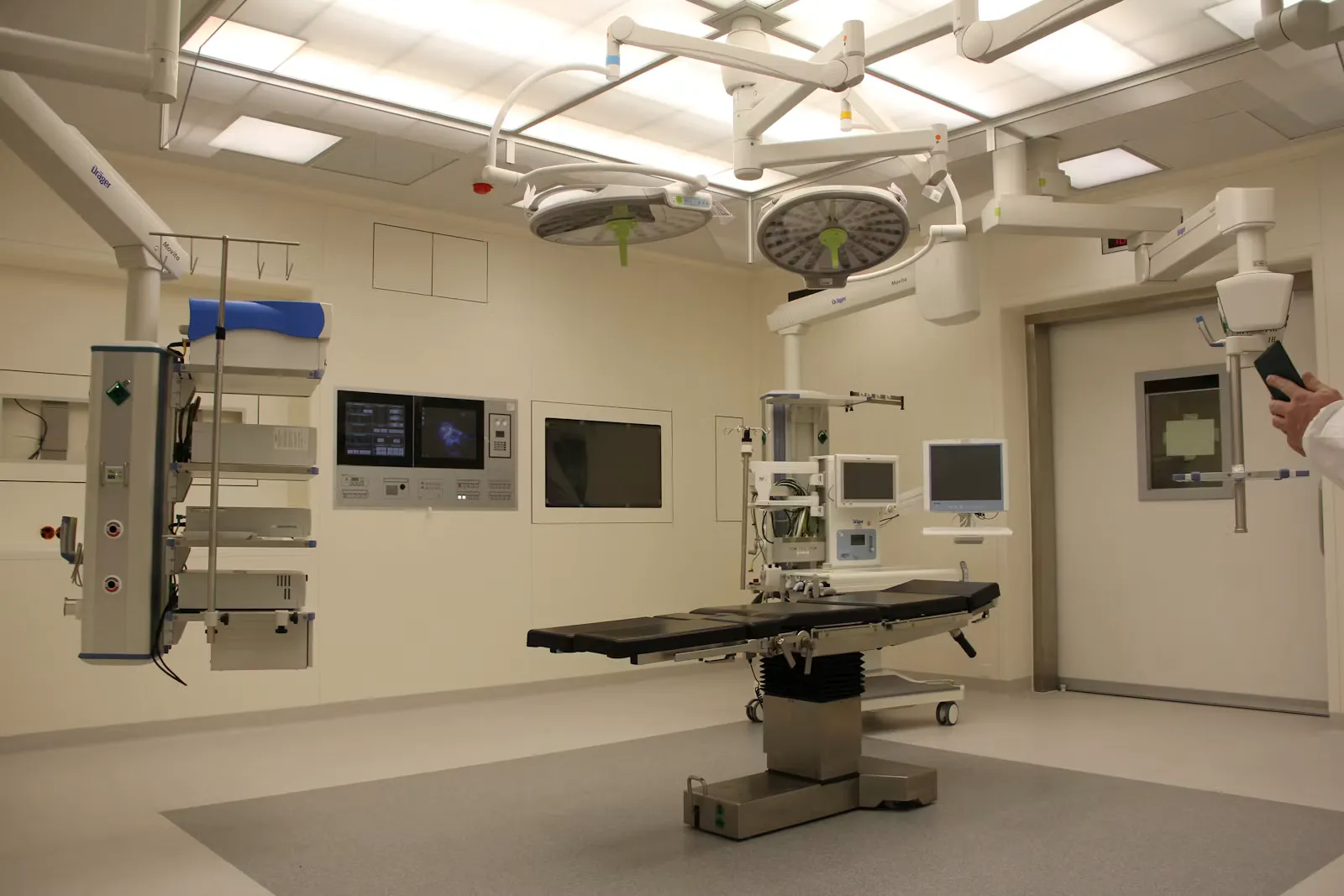
The EU Blue Card is a residence-and-work permit that lets a non-EU citizen, including an Indian graduate of a European medical school, live and work in an EU country in a highly qualified job. For doctors it is the main long-term route to staying on in Europe after MBBS. But here is the part almost nobody explains properly: the EU Blue Card is an immigration document, not a medical licence. Medicine is a regulated profession everywhere in the EU, so the licence has to come first.
Key Takeaways
- The EU Blue Card is governed by Directive (EU) 2021/1883, which EU countries had to write into national law by 18 November 2023.
- To qualify you need a higher-education qualification, a work contract or binding job offer of at least 6 months, and a salary at or above the threshold your host country publishes.
- That threshold must sit between 1.0 and 1.6 times the country's average gross annual salary, so it is very different in Riga than in Prague.
- If you graduated less than 3 years ago, a country may apply a reduced threshold of at least 80% of its normal figure. The same discount applies to shortage occupations.
- For regulated professions like medicine, you must show you already meet the national conditions to practise. The permit does not create that right.
- An EU degree does not hand a non-EU national automatic recognition across all 27 countries; Directive 2005/36/EC applies to nationals of a Member State.
- Europe is hiring: Eurostat counted about 1.98 million practising physicians in the EU in 2023, and WHO/Europe has an active workforce framework running to 2030.
What Is the EU Blue Card, and Who Is It For?
The EU Blue Card is the European Union's permit for highly qualified employment by people who are not EU citizens. It is set out in Directive (EU) 2021/1883, which replaced the older 2009 rules and had to be in force in every Member State by 18 November 2023. It gives you the right to live in that country, work in the job you were hired for, and bring your family.
Two things make it attractive compared with an ordinary national work permit. It counts towards long-term residence, and after 12 months it allows regulated movement to a second EU country, which matters if you finish residency in one place and want to work in another. That mobility is written into the directive itself, not left to each government's mood.
Does an EU Medical Degree Let You Work Anywhere in Europe?
No, and this is the single most expensive misunderstanding in this whole topic. Automatic EU-wide recognition of a basic medical qualification comes from Directive 2005/36/EC, and Article 2(1) of that directive says plainly that it "shall apply to all nationals of a Member State" who want to pursue a regulated profession. You are an Indian national. The automatic route was not written for you.
What that means in practice: your Czech, Hungarian or Latvian degree is a genuine European medical degree, and the country that awarded it will normally have a clear national path to registration and residency training. But carrying that same degree to a third EU country as a non-EU citizen is a national decision each time, not a stamp you already own. The EU Regulated Professions Database lists "doctor of medicine" as regulated in every Member State, which is exactly why each one gets to set its own conditions.
None of this makes Europe a bad plan. It just means you should choose the country you study in partly on where you would realistically want to work afterwards. That is worth raising early in your MBBS in Europe research rather than in your sixth year.
What Do You Need to Qualify for an EU Blue Card as a Doctor?
Article 5 of the directive sets four conditions, and all of them have to be true at once. This is the checklist an immigration officer actually works through:
| Condition | What the directive requires | What it means for a medical graduate |
|---|---|---|
| Qualification | Higher professional qualification (a higher-education qualification) | Your six-year MD/MUDr degree from the EU university |
| Job | Work contract or binding job offer of at least 6 months | A signed hospital or clinic contract, not a promise |
| Salary | At or above the national threshold, 1.0 to 1.6× average gross annual salary | Junior doctor pay varies hugely by country, so check before you accept |
| Regulated profession | Proof you meet the national conditions to exercise the profession | Your medical registration or licence, obtained first |
That last row is the one that catches people out. The directive requires applicants in regulated professions to "present documents attesting to the fulfilment of the conditions set out under national law for the exercise by Union citizens of the regulated profession". In plain words: before your EU Blue Card file can be approved, you must already be allowed to work as a doctor there. Registration usually means an application to the national medical chamber, a document check and, almost everywhere, proof of the local language at a working clinical level, not just conversational.
How Much Do You Have to Earn to Qualify?
Enough to clear the salary threshold your host country publishes, and that figure is not a single EU number. Under Article 5(3), each country sets its own threshold after consulting social partners, and it must be at least 1.0 times and not more than 1.6 times the average gross annual salary in that country. So the bar moves with local wages.
There are two discounts, and recent graduates should know about both. Article 5(4) lets a country apply a lower threshold, at least 80% of its normal figure, for professions in ISCO major groups 1 and 2 where it has a particular shortage of workers. Doctors sit in major group 2. Article 5(5) does the same for anyone who obtained their higher-education qualification no more than three years before applying. Neither discount can go below 1.0 times the average gross salary, so there is a floor.
Why European Hospitals Are Actually Hiring
This is not a theoretical opportunity. Eurostat counted roughly 1.98 million practising physicians across the EU in 2023, but the distribution is uneven and the workforce is greying. In ten EU countries, more than 39% of physicians were already aged 55 or over. Poland alone had 141,452 practising physicians, and Cyprus's ratio jumped from 398 to 535 physicians per 100,000 inhabitants between 2018 and 2023, a 34.3% rise in five years and the largest in the EU.
At policy level, 53 countries in the WHO European Region unanimously adopted a Framework for action on the health and care workforce 2023 to 2030 in September 2023, built around retaining and recruiting staff. Governments are not quietly hoping the shortage fixes itself.

The Order That Actually Works: Licence First, Permit Second
Most people picture this backwards. They imagine applying for a permit, arriving, and then sorting out registration. The directive is built the other way round. Here is the sequence that reflects how it really runs:
- Finish your six-year medical programme and obtain your degree and transcripts from the EU university.
- Complete whatever internship or pre-registration year the host country requires before independent practice.
- Reach the required level in the national language, usually B2 to C1 for clinical work, tested separately from any English certificate you hold.
- Apply to the national medical chamber or licensing authority for registration to practise.
- Sign a work contract or binding job offer of at least six months at or above the published salary threshold.
- Submit the EU Blue Card application with your degree, registration proof, contract and salary evidence attached.
- If you plan to move to a second EU country later, wait out the first 12 months, then apply there under the directive's mobility rules.
If your goal is a specialist qualification rather than a hospital job straight away, the residency route is a parallel path with its own timeline. Our complete PG roadmap in Europe walks through licensing country by country.
What Happens If You Lose Your Job on an EU Blue Card?
You get a cushion, and it grows with time. The directive stops Member States from withdrawing an EU Blue Card the moment employment ends. You may accumulate up to 3 months of unemployment if you have held the card for less than two years, and up to 6 months once you have held it for at least two years. During that period you are allowed to look for and take up new work, though you have to tell the authorities when the unemployment period begins.
Countries may be more generous than this, never less. It is a real protection, and it is one reason the EU Blue Card is worth more than a plain employer-tied work permit: a first job that turns out to be a bad fit does not automatically end your stay.
Should You Stay in Europe or Come Back to India?
Both are legitimate, and plenty of graduates do a few years of one and then the other. If you plan to practise in India, your degree has to satisfy the National Medical Commission's Foreign Medical Graduate Licentiate framework and you must clear the screening exam. That is a separate track from anything the EU Blue Card touches, and worth checking against our guide to NMC-approved medical colleges abroad before you enrol anywhere.
Be honest with yourself about language, too. Staying in Europe long-term realistically means functioning in Czech, Hungarian, Polish or Latvian on a ward round. Students who start that in second year find it manageable. Students who leave it to sixth year usually do not. For a wider view of the options, our guides to jobs after MBBS and career options after MBBS cover the India-side picture in more detail.

How Does This Fit Your NEET UG 2026 Timeline?
Right now, in mid-August 2026, this is not an abstract question. The Medical Counselling Committee published a revised Round 1 schedule dated 13 August 2026, shifting registration, choice filling and reporting later into the month; its PwBD portal for Round 1 is open until 11:00 a.m. on 17 August 2026. Check your own login for the dates that apply to you, because the schedule has already moved once.
That matters because European application windows do not pause for Indian counselling. If Round 1 does not land you a government seat, the September 2026 intake in several EU countries is still a live option, but only if your documents are ready. Our application deadlines page tracks the current cycle, and the universities hub lists where we actually place students. Thinking about the EU Blue Card now, six years early, is not premature planning; it is how you pick the right country in the first place.
Sources
- European Parliament and Council, Directive (EU) 2021/1883 on the conditions of entry and residence of third-country nationals for the purpose of highly qualified employment (EU Blue Card), Articles 3, 5, 8 and 15; transposition deadline 18 November 2023, EUR-Lex: https://eur-lex.europa.eu/eli/dir/2021/1883/oj/eng
- European Parliament and Council, Directive 2005/36/EC on the recognition of professional qualifications, Article 2(1) (scope limited to nationals of a Member State), EUR-Lex: https://eur-lex.europa.eu/eli/dir/2005/36/oj/eng
- European Commission, Regulated Professions Database (doctor of medicine listed as a regulated profession across Member States): https://ec.europa.eu/growth/tools-databases/regprof/
- Eurostat, "Healthcare personnel statistics: physicians", online data code hlth_rs_prs2, data extracted September 2025 (1.98 million practising physicians in the EU in 2023; Austria 551, Italy 535, Cyprus 535, Germany 466, Latvia 336 and Finland 288 per 100 000 inhabitants; Poland 141 452 physicians; Cyprus up 34.3% since 2018): https://ec.europa.eu/eurostat/statistics-explained/index.php?title=Healthcare_personnel_statistics_-_physicians
- WHO Regional Office for Europe, "Health workforce" topic page, Framework for action on the health and care workforce 2023 to 2030 adopted by 53 countries at the 73rd Regional Committee, September 2023: https://www.who.int/europe/health-topics/Health-workforce
- Medical Counselling Committee, UG Medical Counselling 2026, revised Round 1 schedule dated 13 August 2026 and PwBD portal open to 11:00 a.m. on 17 August 2026, mcc.nic.in: https://mcc.nic.in/ug-medical-counselling/
on publish -->
Related Topics
- EU Blue Card
- jobs after MBBS
- work in Europe
- MBBS in Europe
- medical licensing
- Indian students
- careers in medicine
Related Articles
 Career13 Aug 202614 min read
Part-Time Work for MBBS Students in Europe: 2026 Rules
Part-time work for MBBS students in Europe: 2026 rules for Czechia, Hungary and Poland, legal hours, permits and real pay. Plan your student budget right.
 Career4 Aug 20267 min read
Doctor Salary in India 2026: Government vs Private Pay
Doctor salary in India for 2026: real 7th Pay Commission government pay levels, private hospital ranges, top-paying specializations, and city-wise gaps.
 Career4 Aug 20266 min read
How Long Does It Take to Become a Doctor in India?
How long does it take to become a doctor in India? At least 5.5 years for MBBS, 8.5+ for a specialist. See the full timeline, steps, and NEET-PG update.