Career
How to Become a Plastic Surgeon in India: The MCh Route
6 Oct 2026
14 min read
Eleven and a half years, and there is no MD or MS in plastic surgery. It exists only as MCh (Plastic and Reconstructive Surgery), a super-speciality. The feeder degrees that decide whether you can enter at all, the direct six-year route a few AIIMS run, the 336 seats, and the pay scales.
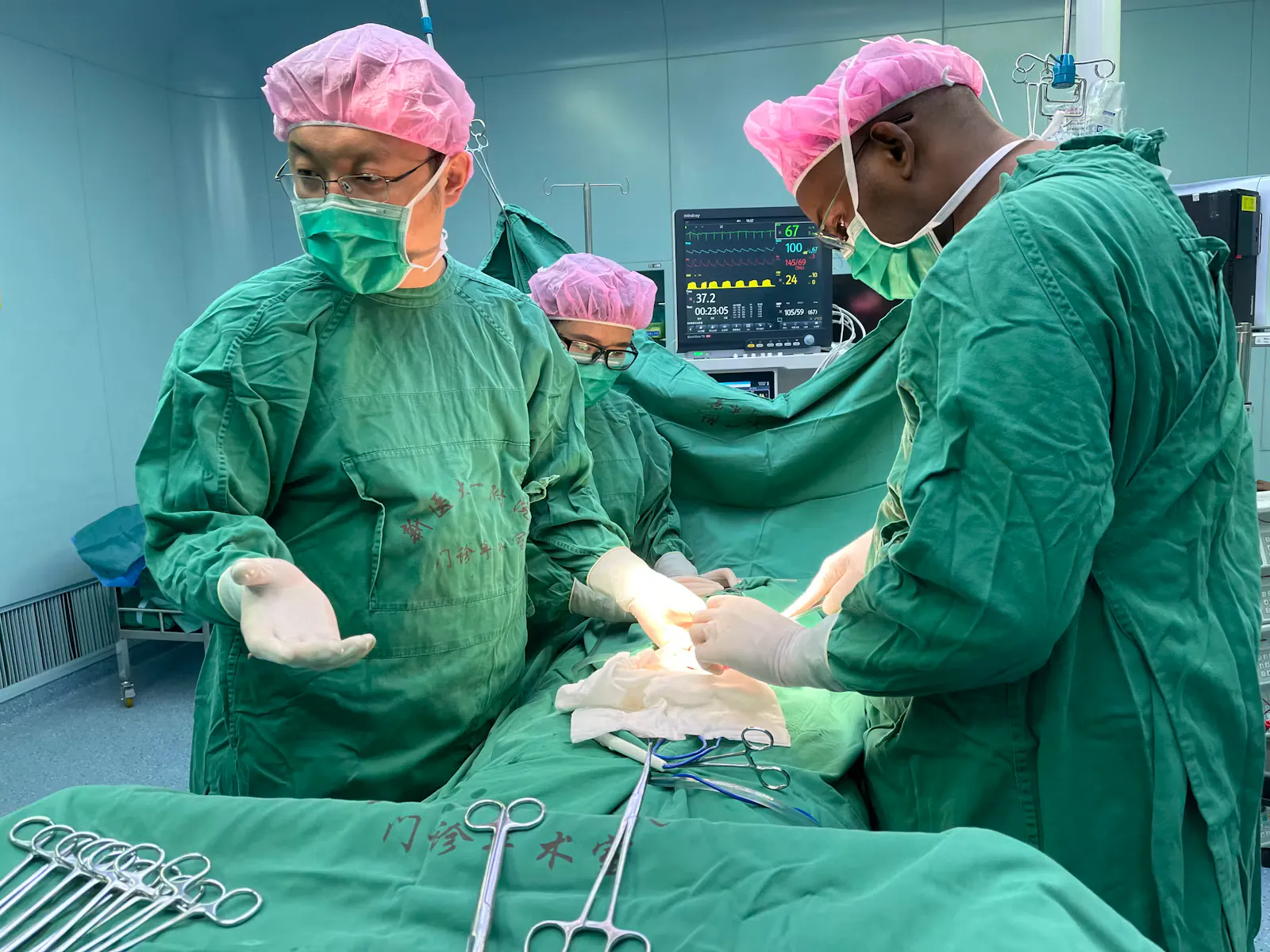
How to become a plastic surgeon in India takes eleven and a half years. You do MBBS, a one-year internship, then MS General Surgery, then a three-year MCh in Plastic and Reconstructive Surgery. There is no MD or MS in plastic surgery. It exists only as a super-speciality.
Becoming a plastic surgeon in India at a glance
Item | Detail |
|---|---|
Qualification | M.Ch. (Plastic and Reconstructive Surgery) |
Level | Super-speciality, entered after a broad speciality degree |
Entrance exam | NEET SS, or INI-CET for the Institutes of National Importance |
Feeder degrees | MS or DNB in General Surgery, or in Otorhinolaryngology |
Course length | 3 years |
Total from start of MBBS | 11.5 years |
Seats | 336 M.Ch seats across 101 colleges under NMC, plus 41 at the INIs |
Status during the course | Senior resident, Pay Level 11 |
The regulation behind all of this is the Postgraduate Medical Education Regulations, 2023, notified on 29 December 2023.
How to become a plastic surgeon in India, step by step
Take Physics, Chemistry and Biology in Class 12, then clear NEET UG. NEET UG is conducted by the National Testing Agency and is the only entrance exam for MBBS. Our NEET guide covers the exam and the cut-offs.
Complete MBBS over four and a half years. The NMC Competency Based Medical Education Curriculum sets the teaching period at four and a half years across four professional phases.
Do the one-year compulsory rotating internship. The regulations require an internship of not less than twelve months before you are treated as a graduate.
Clear NEET PG and take MS in General Surgery. This is the stage that decides everything. Pick the wrong broad speciality and the MCh door closes. Our guide to becoming a surgeon in India covers the MS General Surgery stage in full.
Clear NEET SS and take the MCh in Plastic and Reconstructive Surgery. NEET SS is conducted by the National Board of Examinations in Medical Sciences. The MCh runs three years.
Add it up and the minimum is eleven and a half years from the first day of MBBS. In practice, candidates take time to prepare for NEET PG after internship and again for NEET SS after the MS, so twelve to fourteen years is the realistic figure.
What is the plastic surgery qualification actually called?
M.Ch. (Plastic and Reconstructive Surgery). Not "MCh Plastic Surgery", though you will see that shorthand on college seat lists. The regulation lists it at entry 10 of Annexure-2 of the Postgraduate Medical Education Regulations, 2023, its list of recognised super-speciality qualifications.
Search the whole of the Postgraduate Medical Education Regulations, 2023 for the word "plastic" and you get two results. Both are this one qualification. There is no MD in plastic surgery and no MS in plastic surgery. Annexure-1 lists only six MS degrees in the entire country: General Surgery, Obstetrics and Gynaecology, Ophthalmology, Orthopaedics, Otorhinolaryngology, and Traumatology and Surgery.
That matters practically. A student searching for a plastic surgery course to take straight after MBBS is searching for something that does not exist in the ordinary route. You reach it through general surgery.
Which degree lets you enter MCh Plastic and Reconstructive Surgery?
Two under the regulation, three under the current exam bulletin. This is the single most important section on the page, because getting it wrong costs three years.
Annexure-7 of the Postgraduate Medical Education Regulations, 2023 lists the feeder qualifications for every super-speciality. Entry 10 reads: "M.Ch. (Plastic and Reconstructive Surgery) | M.S./DNB (General Surgery), M.S./DNB (Otorhinolaryngology)".
The NEET SS 2025 information bulletin from the National Board of Examinations in Medical Sciences lists three. Its Annexure B, entry 42, gives the prior eligibility for Plastic and Reconstructive Surgery as MS or DNB in General Surgery, MS or DNB in Otorhinolaryngology, and MS in Traumatology and Surgery.
Feeder degree | In PGMER 2023 | In the NEET SS 2025 bulletin |
|---|---|---|
MS or DNB, General Surgery | Yes | Yes |
MS or DNB, Otorhinolaryngology | Yes | Yes |
MS, Traumatology and Surgery | Not listed | Yes |
The NEET SS 2024 bulletin listed only the first two. Traumatology and Surgery was added for 2025, so this is a recent widening of the route, and it is worth checking the current year's bulletin before you commit to a broad speciality.
What is not on either list matters just as much. Orthopaedics does not feed plastic surgery. Neither does any MD branch. A student who takes an easier-to-get MD because the rank was comfortable has closed this route for good.
Is there a direct six-year MCh after MBBS?
Yes, at a handful of AIIMS, and almost nobody writes about it. It is worth understanding precisely, because the picture has two halves.
The Postgraduate Medical Education Regulations, 2023 recognise a six-year DM or MCh category, but Annexure-6 lists only two courses in it: DM (Neurology) and MCh (Neurosurgery). Plastic surgery is not in NMC's six-year list.
The Institutes of National Importance run their own courses under their own Acts, and several AIIMS do offer a direct six-year MCh in plastic surgery. Their official seat-position notices name it. The AIIMS final seat position for the INI-CET July 2025 session lists "Burns & Plastic Surgery (6 Years)" at AIIMS Nagpur and "Plastic and Reconstructive Surgery (MCh 6 Years)" at AIIMS Bathinda. Earlier sessions carried the same course at AIIMS Bhubaneswar and AIIMS Rishikesh.
How the six-year course runs is set out in the AIIMS prospectus. You enter after MBBS and internship, on the same eligibility as MD and MS candidates. The first six months are spent in the super-speciality itself, followed by a departmental examination that decides whether you continue. In the prospectus wording, a candidate who does not qualify "would be given a certificate of six months Junior Residency". The next year is a course in the principles of surgery, with a qualifying examination at eighteen months, conducted jointly by the Department of Surgery and the super-speciality department.
Two further details are worth knowing before you choose it. The six-year route requires two theses, against one for the three-year route. And you join as a junior resident, not a senior resident, so the early years are paid at the lower scale.
The seats are very few, one or two per institute per session, so treat this as a route worth knowing about rather than a plan to rely on.
How many years does it take to become a plastic surgeon?
Stage | Standard route | Direct six-year route |
|---|---|---|
MBBS teaching | 4.5 years | 4.5 years |
Compulsory rotating internship | 1 year | 1 year |
MS General Surgery | 3 years | Not required |
MCh Plastic and Reconstructive Surgery | 3 years | 6 years |
Total | 11.5 years | 11.5 years |
Both routes land on the same number. The six-year course does not save you time. What it saves you is one entrance exam, because you never sit NEET SS, and the risk of not getting an MCh seat after finishing your MS.
How many MCh plastic surgery seats are there in India?
336 under NMC, plus about 41 more at the Institutes of National Importance. No single document adds the pools together, so they are best read separately.
NMC publishes a super-speciality seat matrix. The NMC super-speciality seat matrix as on 2 April 2026 covers the academic year 2025-26. Counting the plastic surgery rows gives this.
Measure | Figure |
|---|---|
Colleges offering MCh plastic surgery under NMC | 101 |
Seats in 2024-25 | 290 |
New seats granted for 2025-26 | 46 |
Final seats, 2025-26 | 336 |
States and union territories with at least one seat | 25 |
Government seats, of the 336 | 240 |
Seats grew by 46 in one year, which is a 15.9% rise on the 290 of 2024-25. Karnataka has the most colleges at 15, then Tamil Nadu at 14 and Maharashtra at 11. NMC labels the matrix "Tentative Seats", so the figure moves as new permissions are granted.
The Institutes of National Importance sit outside that matrix entirely. There are no AIIMS, PGIMER or JIPMER rows in it. The INI-SS January 2025 prospectus lists MCh Plastic and Reconstructive Surgery at twelve institutes, with 28 general seats and 13 sponsored seats. DNB plastic surgery seats at accredited hospitals are a third pool again.
Against 336 seats, this is one of the harder super-specialities to enter. For the wider postgraduate picture, see our piece on PG seats in India.
What does the MCh course involve?
Three years, as a senior resident, with a thesis.
The status point is worth spelling out because it is also a pay point. The regulations state that "Post-graduate students pursuing super-speciality courses will also be called as senior residents. Students pursuing broad-speciality courses will be called as junior residents." So the day you start your MCh, you move up a pay level.
A thesis is compulsory. The regulations say that "All broad-speciality and super-speciality students will do thesis related research and will write thesis." You also keep a surgical logbook, and the rule is specific for surgeons: MS and MCh students "shall mandatorily enter details of surgical procedures assisted or done independently."
Leave is 20 days of paid casual leave a year, with one weekly holiday subject to the demands of the work. Our guide to what PGMER 2023 gives a PG resident covers the entitlements in full.
What does a plastic surgeon earn in India?
Government pay is published scale by scale. The useful thing about the super-speciality route is that the pay rise comes during the course, not after it.
Stage | Pay Level | Basic pay per month |
|---|---|---|
Junior Resident, during MS General Surgery | Level 10 | Rs. 56,100 |
Senior Resident, during the MCh itself | Level 11 | Rs. 67,700 |
Senior Resident post after the MCh | Level 11 | Rs. 67,700 |
The PGIMER Chandigarh prospectus for DM and MCh courses puts it plainly: the three-year course entitles senior residents to "Level-11 of the pay matrix... with the basic pay of Rs.67700/- plus other allowances as applicable as per 7th CPC". Read it in the PGIMER prospectus for DM and MCh courses. The same figure appears in the AIIMS Raipur senior resident advertisement of March 2026.
On top of basic pay, a government doctor draws Non-Practising Allowance at 20 per cent of basic pay, with basic pay plus NPA capped at Rs. 2,37,500 a month, as the Press Information Bureau release of 26 July 2019 records. It is paid in lieu of private practice: the same release notes that under Rule 13 of the Central Health Service Rules, 2014, doctors appointed to the service "shall not be allowed private practice of any kind whatsoever". In the private sector, pay is set by each hospital and varies with city, institution and caseload.
Is cosmetic surgery a separate qualification?
No. Aesthetic surgery is part of the same MCh, and NMC's own syllabus says so.
The NMC competency based training guidelines for MCh in Plastic and Reconstructive Surgery, dated 27 December 2022, state that "The M.Ch. Plastic and Reconstructive Surgery course will include Aesthetic, Hand Surgery and Burn Care in its syllabus."
The syllabus runs to thirteen heads, and they show how wide the speciality is: general plastic surgery, microvascular and peripheral nerve surgery, burns and post-burn deformity, craniofacial and cleft surgery, head and neck, breast, hand and upper extremity, trunk and lower extremity, aesthetic surgery and medicine, reconstructive surgery of external genitalia, sex reassignment, peripheral vascular surgery, and maxillofacial trauma and reconstruction.
Aesthetic surgery is head number nine of thirteen. The sub-topics include setting up an aesthetic practice, the ethics and medico-legal aspects of aesthetic surgery, and the use of lasers, threads, botulinum toxin and fillers.
So the picture most students carry, of cosmetic surgery as the whole job, is the reverse of the training. Reconstruction after burns, trauma, cancer and congenital deformity is the bulk of it. Aesthetic work is one part of a long syllabus.
Who cannot take this route
Anyone without MBBS. Every route to plastic surgery starts with MBBS. There is no diploma, certificate or direct course after Class 12.
Holders of an MD in any branch. The feeder list is surgical only. An MD in Dermatology, General Medicine or anything else does not qualify you for this MCh.
MS Orthopaedics and MS Ophthalmology holders. Both are surgical degrees, and neither is on the feeder list for plastic surgery.
Dental graduates. BDS and MDS holders enter a different system. MCh Plastic and Reconstructive Surgery requires a medical broad speciality degree.
What if you do not get an MCh seat?
You are still a qualified surgeon. An MS in General Surgery is a complete specialist qualification, and most MS General Surgery holders practise as general surgeons without a super-speciality.
If plastic surgery remains the goal, three things are worth knowing. NEET SS can be attempted again, and many candidates clear it on a second or third attempt. The DrNB route through the National Board of Examinations in Medical Sciences is a separate pool of seats at accredited hospitals. And the INI-CET route into the Institutes of National Importance is a separate exam from NEET SS, so preparing for both widens your chances rather than splitting them.
If you are still choosing a branch rather than committed to this one, our guides to which course is best after MBBS and to becoming a cardiologist cover the other long super-speciality routes. The web story on specialisations after MBBS is the quick version.
Related Topics
- Plastic Surgery
- Super Speciality
- NEET SS
- Career After MBBS
Related Articles
 Career6 Oct 202614 min read
Doctor vs Engineer in India: Money, Years and Stress
Engineering gets you earning four years after Class 12. Medicine takes five and a half before you can register, and the first paid year can be worth as little as Rs. 5,000 a month. The official funnel numbers, the published pay scales, and what the NMC task force found about workload.
 Career5 Oct 202612 min read
PG Resident Stipend in India: What States Actually Pay
There is no national PG stipend. The regulation only requires parity with your own state, so NMC's own compiled list runs from Rs. 40,000 to Rs. 1,03,543. What the rule says, what states publish, and what NMC found when it surveyed private college residents.
 Career4 Oct 202616 min read
How to Work as a Doctor in Poland After Your MD There
Want to work as a doctor in Poland after an English MD? The LEK exam, the six month English staż, the Polish language test and the graduate permit, explained.