Career
PG Courses After MBBS Abroad: Options & Costs 2026
30 Sept 2026
10 min read
Explore PG courses after MBBS abroad: MD, MS and residency options across our EU partner countries, 2026 tuition costs, eligibility rules and NEET-PG comparison


PG courses after MBBS abroad are postgraduate medical qualifications (MD, MS, DNB-equivalent residency or diploma programmes) that Indian medical graduates pursue outside India to specialise, often at a fraction of the cost of a private Indian PG seat. Over 2.73 lakh doctors registered for NEET PG 2026, held on 30 August 2026, while India had 57,503 PG medical seats in 2025-26. So thousands look at MBBS in Europe destinations, where specialist training is usually a paid hospital residency. Here you'll find the course types, our nine EU partner countries, real 2026 costs, eligibility, and how a foreign PG stacks up against staying in India.
If you're comparing specialisation options generally rather than a specific country, our companion guide on post-graduate medical specialisations after MBBS covers the full field-by-field breakdown, while how to do PG abroad after MBBS walks through the step-by-step application process and entrance exams.
Key Takeaways
PG courses after MBBS abroad mainly take the form of MD/MS-style specialisation or a paid specialist residency. There's no single fixed degree name across countries.
Several of our EU partner countries, including the Czech Republic, Hungary, Slovakia, Poland and Romania, run specialist training mainly as a paid hospital residency for doctors licensed in that country.
NEET PG (with INI-CET for AIIMS, JIPMER, PGIMER and NIMHANS) remains the gateway for postgraduate seats in India in 2026; NExT has not yet been introduced, so FMGE still applies to foreign MBBS graduates who want to register in India.
Costs differ by country and by university.
Choose a university listed in the World Directory of Medical Schools (WDOMS) that meets NMC rules for Indian students.
What PG courses can you take after MBBS abroad?
PG courses after MBBS abroad generally fall into four categories: MD/MS-equivalent specialisation, a paid hospital residency, a diploma or fellowship, and a small number of MBA/health-management add-ons for graduates who want a non-clinical path. Unlike India's rigid MD/MS/DNB naming, European systems often describe the same specialist pathway as "residency" or "specialist training", so course names vary more than the training content itself.
Course type | Typical duration | What it covers |
|---|---|---|
MD (Doctor of Medicine) | 3 to 6 years | Clinical specialisations: internal medicine, radiology, psychiatry, and more |
MS (Master of Surgery) | 3 to 6 years | Surgical branches: orthopaedics, neurosurgery, ENT, general surgery |
Residency / specialist training | 3 to 6 years | Integrated work-study PG, paid, mandatory for local licensing in most EU countries |
Diploma / Fellowship | 1 to 2 years | Shorter, practical-oriented training in a narrower field (oncology, cardiology) |
PhD | 3 to 5 years | Optional, research-focused, usually taken after a clinical PG |
Which EU countries offer the best PG courses after MBBS?
Nine countries make up our confirmed partner network, and each has its own PG strengths worth comparing before you commit to an application. Government-funded residency, English-taught programmes and relatively low competition for seats are the common threads across all nine, even though fees and specialisation lists differ by university.
PG courses after MBBS in Lithuania
Lithuanian University of Health Sciences (LSMU) in Kaunas runs fully English-taught PG programmes and gives students practical exposure at LSMU Kaunas Clinics, one of the largest teaching hospitals in the Baltic states. LSMU has partner universities across Europe, Asia, the Americas, Australia and Africa, and Lithuania's cost of living remains one of the lower ones in our network.
PG courses after MBBS in Hungary
Hungary is home to Semmelweis University in Budapest, the country's oldest medical school, plus the University of Pécs and University of Szeged, both well-regarded for postgraduate clinical training. Hungary is an EU member state, so its PG degrees fall under the EU's mutual-recognition framework for regulated professions (Directive 2005/36/EC, as amended by Directive 2013/55/EU), which supports free movement for specialists across the EU once fully licensed.
PG courses after MBBS in Slovakia
Comenius University runs specialist training through its Faculty of Medicine in Bratislava and its Jessenius Faculty of Medicine in Martin, linked to their teaching hospitals. UPJŠ Košice and the Slovak Medical University in Bratislava complete Slovakia's medical schools, all of which use degrees accredited within the EU.
PG courses after MBBS in Latvia
Riga Stradiņš University and the University of Latvia both offer clinically integrated PG training linked to Latvia's national healthcare system. Riga Stradiņš in particular draws a large international student cohort and keeps living costs relatively affordable compared with Western Europe.
PG courses after MBBS in Cyprus
The University of Nicosia teaches its MD and postgraduate tracks entirely in English and has clinical-placement links with hospitals in Switzerland and the UK, making it attractive for students eyeing an eventual USMLE or PLAB route. Cyprus sits at the premium end of our network on cost, so budget accordingly.
PG courses after MBBS in Poland
Medical University of Poznań, Medical University of Łódź and the Medical University of Białystok all run PG programmes with a strong emphasis on small-group, hands-on clinical teaching. Poland's PG seats are generally considered less competitive to enter than an equivalent Indian government-college seat.
PG courses after MBBS in Croatia
The University of Split's School of Medicine and the Zagreb School of Medicine run English-taught medical studies, and Zagreb selects applicants through its own entrance exam. Croatia also has one of the lower costs of living among our nine countries.
PG courses after MBBS in Romania
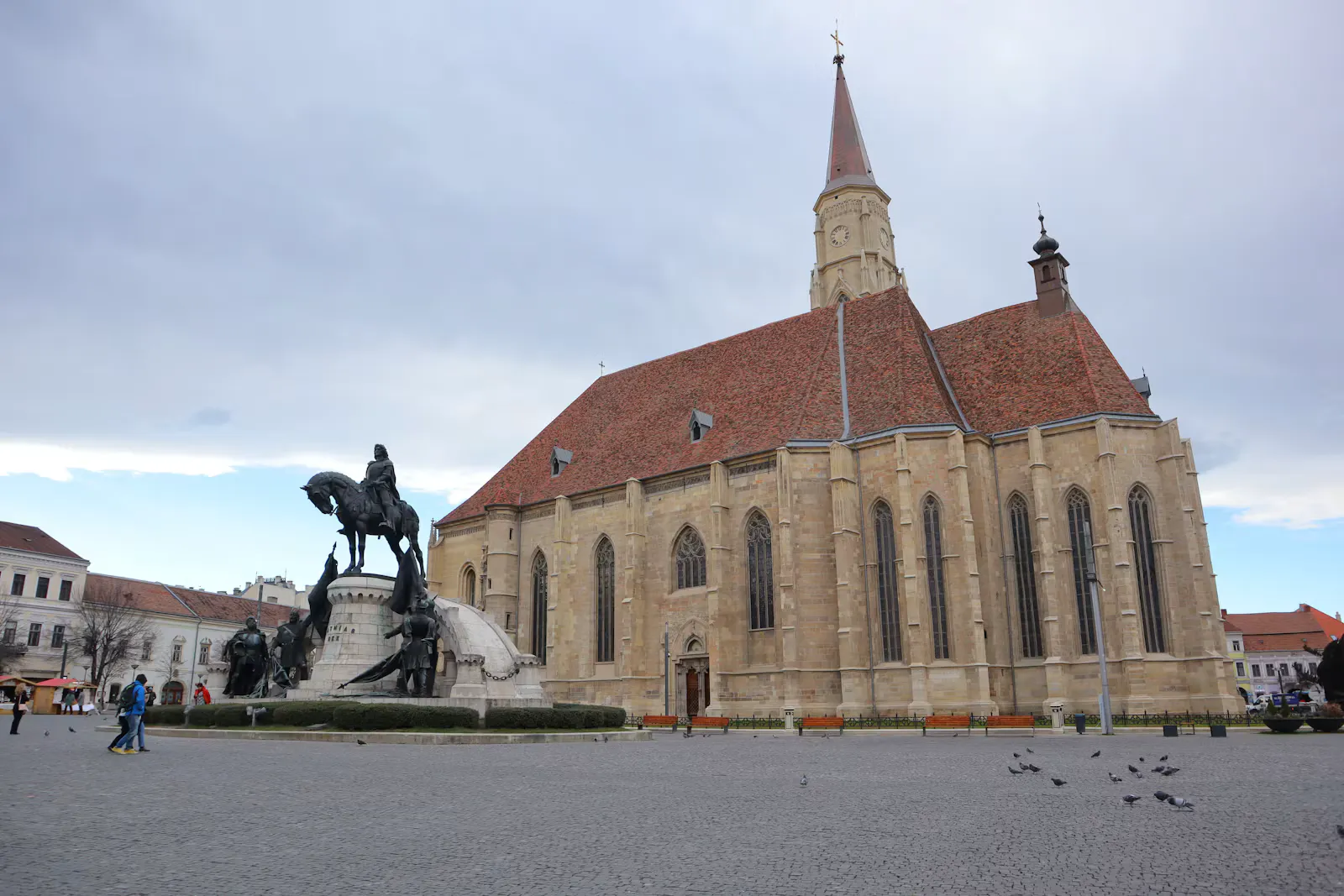
Our two Romanian partners are Iuliu Hațieganu University of Medicine and Pharmacy in Cluj-Napoca and Victor Babeș University of Medicine and Pharmacy in Timișoara. Both offer postgraduate training at costs below most Western European alternatives.
PG courses after MBBS in the Czech Republic
The Czech Republic is our largest single-country cluster, with five partner faculties: Charles University's faculties in Prague and Pilsen, its Third Faculty of Medicine, Masaryk University in Brno (known for its SIMU medical-simulation centre) and Palacký University in Olomouc. See the full list of our 22 partner universities for every country's options side by side.
Want the whole journey in one place, from MBBS through licensing to practising in Europe? See our complete PG roadmap in Europe.
What is the eligibility criteria for PG courses after MBBS abroad?
Eligibility for PG abroad rests on three pillars nearly every destination shares: a recognised MBBS degree, proof of language ability, and (for many students) a qualifying entrance assessment. The exact mix depends on the country and university you target.
Complete an MBBS degree, including your internship, from a college in India or a course abroad that meets NMC rules.
Meet the university's minimum aggregate marks requirement (varies by country, commonly around 50%).
Demonstrate English proficiency through IELTS or TOEFL where the programme is English-taught.
Clear any country-specific entrance interview or written assessment the university requires.
Where relevant, hold a valid FMGE or (in future) NExT eligibility status if you plan to eventually practise in India.
How much do PG courses after MBBS abroad cost?
PG costs abroad depend on the route. A salaried hospital residency, open to doctors licensed in that country, pays you a salary instead of charging fees. Self-funded specialist courses for international doctors charge fees that each university sets per programme, so costs differ by country and by speciality.
Is PG after MBBS available outside Europe too?
Yes. Postgraduate medical training exists worldwide, including in the USA (residency via USMLE), the UK (via UKMLA/PLAB) and Australia or Canada, and Indian graduates do pursue all of these paths. futureMBBS's admission and placement support, though, is built around our nine confirmed EU partner countries. If a non-EU route interests you, treat this section as general orientation rather than a service we can arrange, and ask our counsellors how it compares with the EU options.
What are the key benefits of pursuing PG courses abroad?
International exposure that strengthens your CV for global hospital networks and research roles.
Access to modern clinical facilities and simulation-based training not always available in crowded Indian PG wards.
Lower competition for seats compared with India's NEET-PG cycle, where over 2.73 lakh doctors registered in 2026 for 57,503 PG medical seats (2025-26).
A globally recognised qualification that widens your career options beyond India.
Exposure to sub-specialities, like intensive care medicine or advanced internal medicine, that may have limited Indian seats.
How does PG abroad compare with staying in India for NEET-PG?
India had 57,503 PG medical seats in 2025-26, according to the NMC. Set that against the more than 2.73 lakh doctors who registered for NEET PG 2026. That scale of competition is exactly why many graduates look at our EU partner countries, where PG admission is typically transcript- and interview-based rather than a single high-stakes national exam.
Sources
National Medical Commission PG seat figures for 2025-26, as reported by Medical Dialogues
National Medical Commission, Foreign Medical Graduate Licentiate Regulations and NExT status
European Commission, Directive 2005/36/EC on the recognition of professional qualifications, as amended by Directive 2013/55/EU
World Directory of Medical Schools (WFME/FAIMER)
World Federation for Medical Education, global accreditation standards referenced by WDOMS
Related Topics
- PG courses after MBBS
- MBBS abroad
- PG in Europe
- Indian students
- NEET-PG
Related Articles
 Career30 Sept 202610 min read
How to Become a Forensic Doctor in India (2026 Guide)
Learn how to become a forensic doctor in India: MD Forensic Medicine via NEET-PG, NMC rules, B.Sc/M.Sc pathways, careers, and real salary data for 2026.
 Career30 Sept 20268 min read
Doctor vs IAS: Which Career Is Better? 2026 Comparison
Doctor vs IAS compared in detail: entry pay, UPSC exam stages, age limits, and long-term earnings for MBBS graduates weighing medicine against civil services.
 Career29 Sept 202615 min read
Working in the UK After MBBS: GMC, PLAB and the Real Route
Working in the UK after MBBS means GMC registration, the PLAB test, IELTS 7.5 overall and a completed 12-month internship. Here is the full route, with the GMC fees from April 2026, the 2025 pass rates, the three two-year deadlines, and what changes in Chennai from February 2027.