Career
How to Become a Military Doctor in India: 2026 Guide
30 Sept 2026
8 min read
Find out how to become a military doctor in India via AFMC or Short Service Commission: NEET eligibility, NMC registration, ranks, and salary details.


A military doctor in India is an MBBS graduate, registered with the National Medical Commission (NMC) like any civilian doctor, who is additionally commissioned as an officer in the Army, Navy, or Air Force medical services. The main routes in are the Armed Forces Medical College (AFMC), Pune, which offers 145 MBBS seats a year, or a Short Service Commission taken up after MBBS from any NMC-recognised civilian medical college.
Key Takeaways
A military doctor must hold an MBBS degree registered with the National Medical Commission (NMC). There's no separate medical council for the armed forces.
AFMC Pune admits 145 MBBS students a year (115 men, 30 women, plus a few reserved/sponsored seats), all through NEET-UG plus AFMC's own ToELR, psychological, and interview rounds.
AFMC cadets sign a service bond of roughly ₹71 lakh, since tuition, training, and accommodation are heavily subsidised by the government in exchange for mandatory service.
Some AFMC medical graduates are granted a Permanent Commission on merit; the rest, and most doctors from civilian colleges, join through a Short Service Commission of 5 to 14 years.
You don't need to attend AFMC to become a military doctor. An MBBS from any NMC-recognised college qualifies you to apply for Short Service Commission.
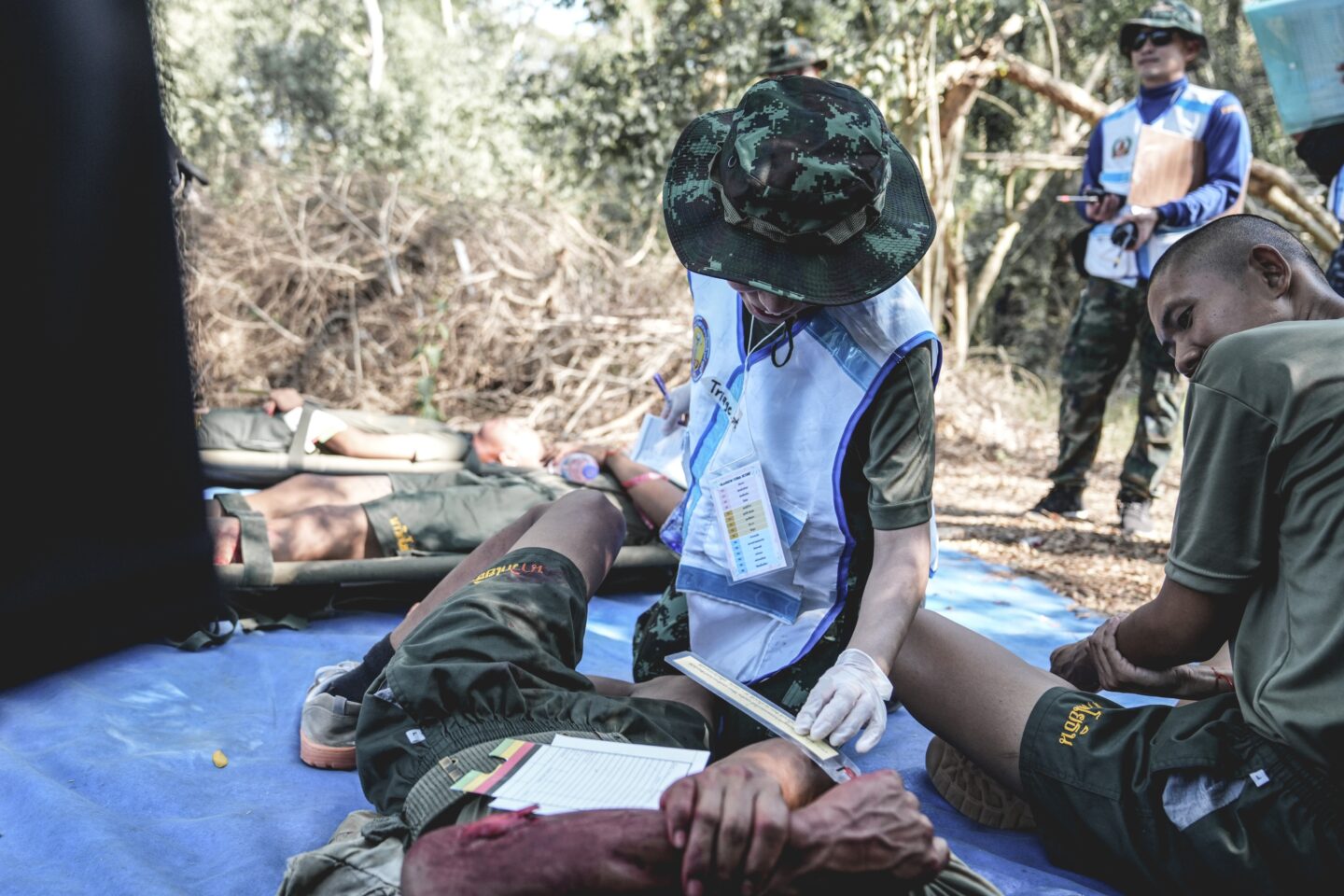
What Is a Military Doctor and Who Regulates the Medical Degree?
A military doctor is fundamentally a medical officer: an MBBS graduate who has met the same NMC registration requirements as every other doctor in India, then taken a commission in the Armed Forces Medical Services. There is no separate "military medical council". The NMC regulates the underlying MBBS degree and licence to practise, while the Army, Navy, and Air Force each run their own recruitment, training, and rank structures for the doctors they commission.
How Do You Become a Military Doctor in India?
There are two established routes into military medicine, and only one requires attending a specific college. Here's the sequence for the AFMC route:
Complete Class 12 with Physics, Chemistry, and Biology, scoring at least 60% aggregate in PCB and 50% in English.
Qualify NEET-UG with a competitive enough score to be shortlisted for AFMC's selection process.
Clear AFMC's Test of English Language, Comprehension, Logic and Reasoning (ToELR), Psychological Assessment Test, interview, and medical examination.
Complete the MBBS degree at AFMC (4.5 years plus a 1-year compulsory internship), alongside military training.
Register the MBBS with the NMC or a State Medical Council.
Get commissioned as an officer in the Army, Navy, or Air Force medical corps.
If you study MBBS at any other NMC-recognised college in India (or abroad, with the degree later recognised by the NMC), you can instead apply directly for a Short Service Commission after graduation, without going through AFMC at all.
Recruitment for Army, Navy and Air Force Doctors
Army, Navy and Air Force doctors are all recruited through the Armed Forces Medical Services (AFMS), so there is no separate application for each service. The service a doctor joins is decided at commissioning. There are three entry routes, and the table below sets out how each one works.
Route | Who it is for | Eligibility | Selection | Service commitment |
|---|---|---|---|---|
MBBS at AFMC Pune | Class 12 students | Unmarried, aged 17 to 24, 60% in Physics, Chemistry and Biology, 50% in English, NEET UG qualified | NEET UG score, then AFMC screening test (ToELR), psychological test, interview and medical exam | 7 years after MBBS |
Short Service Commission (MBBS) | Doctors from any NMC-recognised college | MBBS passed in no more than two attempts, internship complete, permanent registration, under 30 years of age | NEET PG score plus an interview at Army Hospital (Research and Referral), Delhi | 5 years, extendable up to 14 |
Short Service Commission (postgraduate) | Doctors with MD, MS or DNB | Same as above, under 35 years of age | Same as above | 5 years, extendable up to 14 |
AFMC admission details are published each year on the Armed Forces Medical College website, and the Short Service Commission notification opens once a year, with 100 vacancies (75 men, 25 women) in the February 2026 notification.
Eligibility Criteria for Military Doctors
Military doctor eligibility has medical and personal conditions on top of the degree. These apply to all three services:
Nationality: Indian citizens can apply for both AFMC and Short Service Commission entry.
Medical fitness: every candidate passes a full armed forces medical examination before commissioning, covering eyesight, hearing and general fitness.
Registration: a permanent registration with the NMC or a State Medical Council is needed before a Short Service Commission.
Age: 17 to 24 for AFMC MBBS, under 30 for Short Service Commission with MBBS, and under 35 with a postgraduate degree.
Permanent Commission vs Short Service Commission
Doctors join the Armed Forces Medical Services through one of two commission types, and the choice affects both career length and benefits. A Permanent Commission is a career appointment lasting until retirement, offered to a share of AFMC's medical graduates based on merit and choice. A Short Service Commission runs 5 years, extendable to 14, and is the standard route for doctors from civilian medical colleges; SSC officers can apply to convert to a Permanent Commission later if they want to continue serving.
What Does a Military Doctor Do?
Day-to-day duties depend heavily on posting and branch of service. Typical responsibilities include:
Providing routine and emergency healthcare to soldiers, officers, and their families at military and field hospitals.
Serving as Regimental Medical Officers with field units, stabilising injuries during operations and in forward areas.
Serving aboard naval ships or at air bases, managing the specific medical demands of each environment.
Training and mentoring junior medical officers in military-specific clinical practice.
Pursuing postgraduate specialisation in cardiology, orthopaedics, radiology, and more, often government-funded.
Rank, Salary, and Benefits of Military Doctors in India
Newly commissioned MBBS graduates typically enter as Captain (Army), Flight Lieutenant (Air Force), or Surgeon Lieutenant (Navy), moving up to Major/Squadron Leader/Lieutenant Commander with experience or a postgraduate qualification. A fresh medical officer starts at Level 10B, a basic pay of ₹61,300 a month plus Military Service Pay of ₹15,500 and 20% NPA, alongside subsidised housing, free family healthcare, and a pension after full service. Those benefits go well beyond typical entry-level civilian pay scales.
Life After Service as a Military Doctor
Life after service depends on the type of commission. A Permanent Commission officer serves until retirement age and then draws a pension, with many moving into hospital administration or private practice. A Short Service Commission doctor leaves after the agreed term, usually between 5 and 14 years, without a pension.
The NMC registration a military doctor holds stays valid after release, so the doctor can join a civilian hospital, open a clinic, sit NEET PG for a specialisation or apply for government health jobs. Years spent treating patients in field and base hospitals count as real clinical experience when applying for these roles. Our guide to government jobs after MBBS covers the civilian options in detail.
Not every aspiring doctor wants a military career, and MBBS seats in India are extremely limited relative to demand. futureMBBS helps Indian students study MBBS at 22 partner universities across our 9 EU countries, with NMC-recognised degrees you can bring back to India for NEET-PG, private practice, or even a Short Service Commission later. Book a free consultation to explore your options.
Related Topics
- military doctor
- AFMC
- futureMBBS
- Short Service Commission
- NEET UG
Related Articles
 Career30 Sept 20269 min read
Government Jobs After MBBS: UPSC, AFMS & PSC Guide 2026
Government jobs after MBBS in 2026: UPSC CMS, Armed Forces Medical Services, state PSC and PSU doctor posts, with real eligibility rules and pay-scale figures.
 Career30 Sept 202612 min read
After BSc Nursing, How to Become a Doctor (2026)
After BSc Nursing, you become a doctor only through NEET UG and a full MBBS from year one. No lateral entry exists. See eligibility, age rules and the route.
 Career30 Sept 202615 min read
How to Become a Registered Medical Practitioner in India
How to become a registered medical practitioner (RMP) in India: MBBS, 12-month internship, State Medical Council registration, documents, fees and the NMR ID.