Free Webinar: MBBS in India

Sat, December 5, 2026 | 8:30 PM

Reserve my seat
futureMBBS by futuredoctor

Free Webinar: MBBS in India

Sat, December 5, 2026 | 8:30 PM

Reserve my seat
futureMBBS by futuredoctor
Italy

Study MBBS in Italy

Italy offered 1,362 places to non-EU students on English-taught medicine for 2026/27, and its public universities charge Indian students from about €400 a year. Entry is through the IMAT, which can be taken at a centre in India.

  • MBBS student
  • MBBS student
  • MBBS student
  • MBBS student
  • MBBS student

1,500+ Students trust us

Italian

Spoken Language

Rome

Capital

€1 = ₹106

Currency Value

35th (2026)

Global Peace Index

Top Universities

Medical Universities in Italy

Twenty-three Italian universities run 28 English-taught medicine courses, with 1,362 places for non-EU students living abroad in 2026/27. The six below are the ones Indian students most often shortlist. Fees run from about €400 a year at a public university to €23,206 at private Humanitas (about ₹42,700 to ₹24.7 lakh, at about ₹106 to the euro, October 2026).

For Indian Students

Can Indian students study MBBS in Italy?

Short answer: Yes, Indian students can study medicine in Italy. No, the Italian degree does not currently meet the NMC rules, so it does not lead to the FMGE or an Indian licence.

Admission is open to Indian students

Indian students apply for the non-EU places at public universities through the IMAT, which can be sat in India, while Humanitas University runs its own admission test. A qualified NEET UG result is still required before taking up a medical seat abroad.

Why the degree is not NMC compliant

The NMC Foreign Medical Graduate Licentiate Regulations 2021 ask for a separate internship of at least twelve months after the course, in the same foreign institution. The Italian degree includes three months of practical training inside the course and no separate internship, so it does not meet this rule.

What this means if you want to work in India

As things stand, an Italian medical degree does not lead to an Indian licence through the FMGE (NExT deferred and not in force). Italy is the right choice if you plan to practise in Italy, the EU or the UK, or to take the USMLE route.

Introduction

Studying Medicine in Italy

Italy offered 1,362 places to non-EU students on English-taught six-year medicine degrees for 2026/27. At public universities an Indian student usually pays between about €400 and €2,990 a year (roughly ₹42,700 to ₹3.2 lakh, at about ₹106 to the euro, October 2026). Entry is through the national IMAT, and the degree awarded is the Laurea Magistrale in Medicina e Chirurgia, which also licenses the graduate to practise in Italy.

  • Popular course:Laurea Magistrale in Medicina e Chirurgia (LM-41), MBBS equivalent
  • Language of study:English, with Italian at B2 needed for clinical years
  • Course duration:6 Years (360 CFU)
  • Intake:October (one intake a year)
  • Approx. tuition/year:About €400 to €2,990 at public universities (about ₹42,700 to ₹3.2 lakh, October 2026)
  • No. of medical universities:23 universities, 28 English-taught courses
  • NEET requirement:Qualified NEET UG result required, valid for three years
  • Living cost/month:About €600 to €1,000 (about ₹64,000 to ₹1.06 lakh, October 2026)

Public tuition is low because of how Italian universities charge. Fees normally follow family income, but income earned abroad cannot be assessed in Italy, so each country is placed in a fee band. India sits in the lowest band at the University of Milan, Sapienza and Pavia. Nobody has to apply for a scholarship to get it. At Milan an Indian student pays about €402 a year (€146 plus €256). At Sapienza it is €300 plus €156 in regional tax and stamp duty, about €456. At Pavia it is €390 plus €206, about €596. Bologna charges about €1,157 under its reduced fee for non-OECD countries, and Padua charges a fixed €2,990. Humanitas University is private, charges €23,206 and runs its own admission test instead of the IMAT. Getting there is simple. Air India flies nonstop from Delhi to Milan Malpensa, and restarted its Delhi to Rome Fiumicino service on 25 March 2026 with four flights a week. The IMAT itself can be sat in India, so a student does not travel to Italy until a place is won. Plan for one practical point from day one: lectures are in English, but hospital work is in Italian. The University of Milan, for example, asks students to reach Italian at B2 level before clinical training starts in year three, and runs Italian courses to get them there.

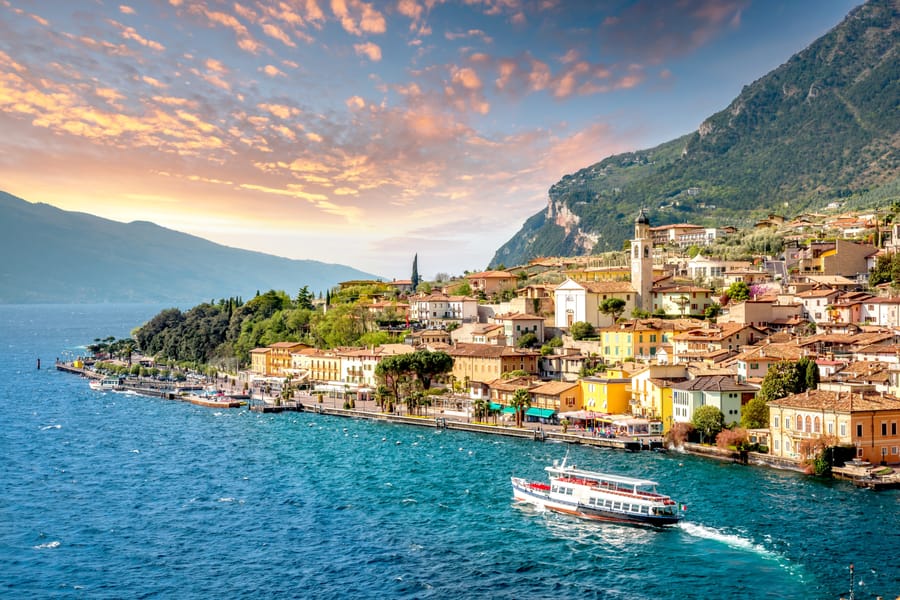
Limone sul Garda on the shore of Lake Garda at sunset, with a ferry crossing
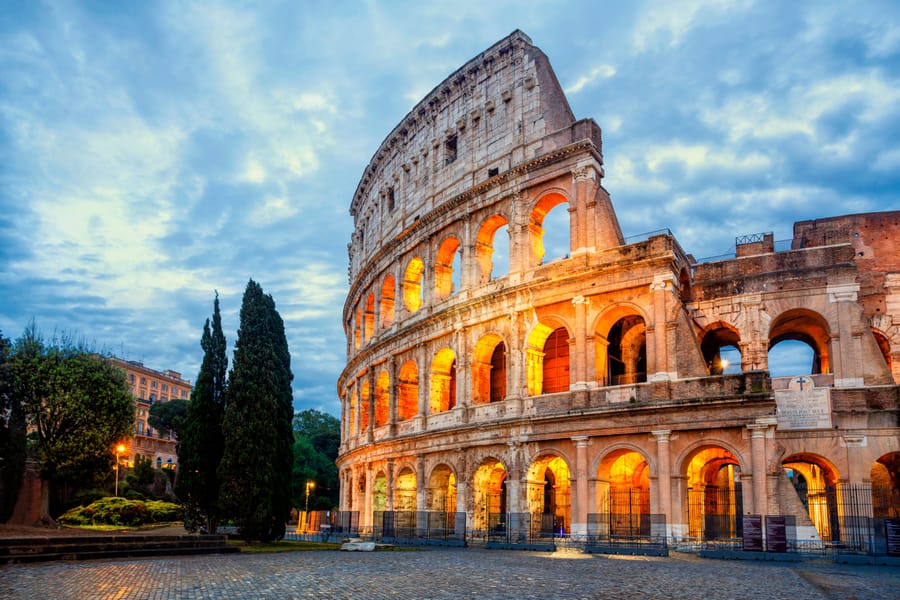
The Colosseum in Rome floodlit at dusk
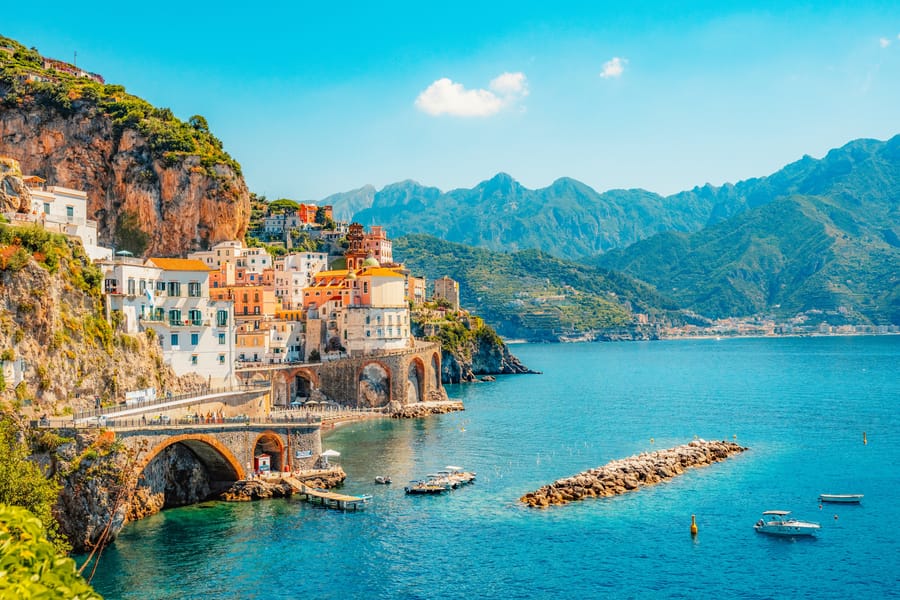
The cliffside village of Atrani on the Amalfi Coast above a turquoise sea
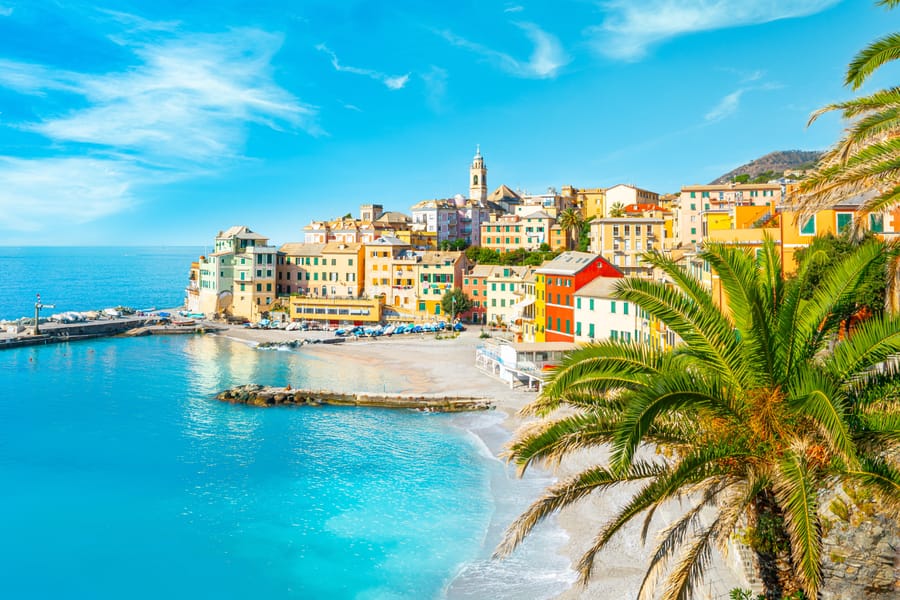
A pastel-coloured village and beach on the Ligurian coast, framed by a palm
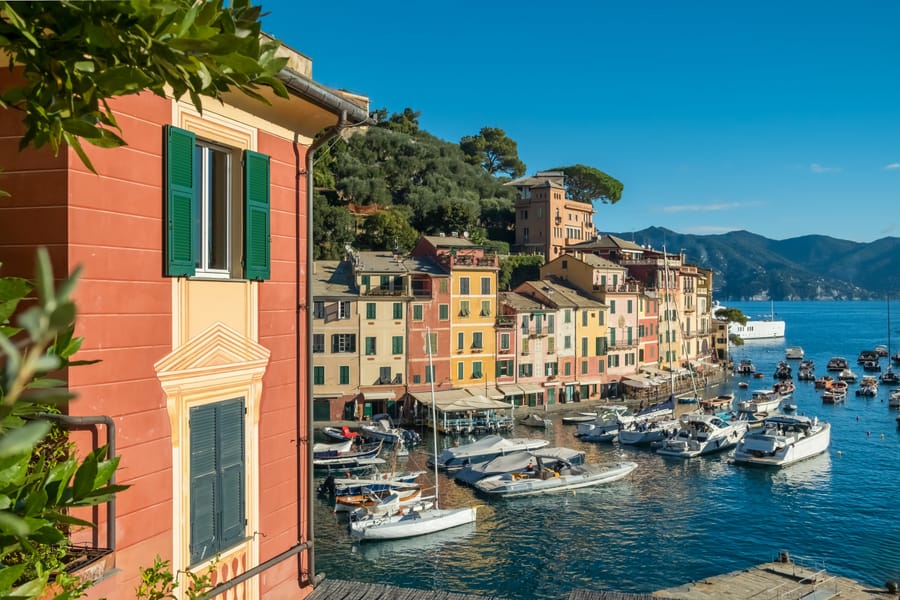
Yachts moored below the painted houses of Portofino harbour, Liguria
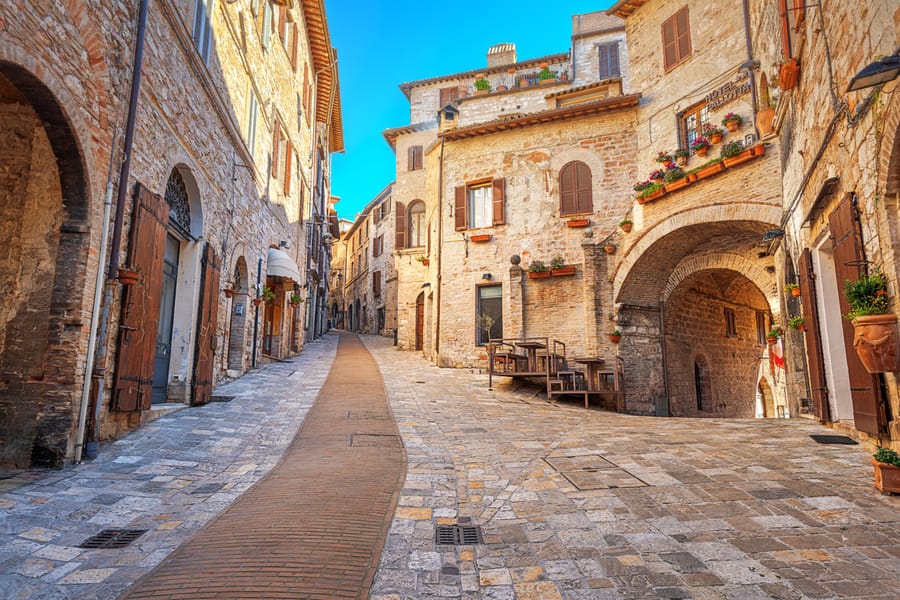
A quiet cobbled street between medieval stone houses in Assisi, Umbria

Limone sul Garda on the shore of Lake Garda at sunset, with a ferry crossing

Get all information about MBBS in Italy

Download our free brochure for tuition, living costs, eligibility and the complete application process.

Academic Excellence

Why Study MBBS in Italy?

More than a thousand English-taught places for non-EU students, public tuition of a few hundred euros, an entrance test you can sit in India, and a degree that licenses you to practise in Italy.

1,362 Places for Non-EU Students

Ministerial Decree 1005 of 6 August 2026 gives 1,362 first-year places to non-EU candidates living abroad, across 28 English-taught medicine courses at 23 universities. A further 2,430 places go to EU candidates and non-EU candidates already living in Italy. Places range from 13 at Sapienza to 320 at Tor Vergata's campus in Tirana.

Public Fees From €402 a Year

Public universities band fees for non-EU students by country, and India sits in the lowest band at Milan, Sapienza and Pavia. An Indian student pays about €402 a year at the University of Milan, €456 at Sapienza and €596 at Pavia, including regional tax and stamp duty. That is roughly ₹42,700 to ₹63,300 a year (at about ₹106 to the euro, October 2026).

Universities Older Than Most Countries

The University of Bologna was founded in 1088, Padua in 1222 and Sapienza in Rome in 1303. Padua still has the anatomical theatre it opened in 1595. Clinical training runs in large teaching hospitals such as Policlinico Umberto I in Rome, Sant'Orsola in Bologna, Niguarda in Milan and San Matteo in Pavia.

Sit the IMAT in India

India is one of the countries where the IMAT is held, so a student sits the entrance test at home and only travels once a place is won. When it is time to go, Air India flies nonstop from Delhi to Milan Malpensa and, since 25 March 2026, to Rome Fiumicino.

A Means-Tested Grant Open to Non-EU Students

Italy's regional borsa di studio is based on family means, not marks, and is open to non-EU students. For 2026/27 the national minimum for a student living away from home is €7,171.11 a year (about ₹7.6 lakh), and grant holders are also exempt from university tuition. The Italian Government MAECI scholarships do not cover single-cycle degrees such as medicine.

A Degree That Licenses You in Italy

Since 2020 the Italian medicine degree, with its built-in practical training, is itself the licence to practise in Italy, with no separate state exam. Graduates can also take the USMLE route to the United States, or apply to the UK General Medical Council without PLAB. For India, read the Career Pathways section, because the Italian degree does not include the twelve-month internship NMC rules ask for.

Get all information about MBBS abroad

Read on to find out how you can fulfil your dream of studying medicine in Italy.

Where You'll Study

Top Student Cities in Italy

Five cities hold the English-taught courses Indian students most often shortlist, and the cost of living between them differs a lot. A room in Pavia costs about €300 to €450 a month, against €600 to €1,100 for a private single room in Milan.

Rome

Rome has five universities running English-taught medicine: Sapienza, Tor Vergata, UniCamillus, Campus Bio-Medico and Cattolica's Rome campus. Sapienza, founded in 1303, has 52 places for EU candidates and 13 for non-EU candidates living abroad in 2026/27, so it is one of the most competitive entries in Italy despite the low fee. India sits in Sapienza's Band A, which means €300 a year plus €140 regional tax and €16 stamp duty, about €456 in all (about ₹48,500, at about ₹106 to the euro, October 2026). Sapienza's clinical teaching runs at Policlinico Umberto I. Tor Vergata's medical school puts a typical student budget at €600 to €900 a month, with a room in a shared flat at €300 to €500. Air India flies nonstop between Rome Fiumicino and Delhi.

Milan

Milan has the largest cluster of English-taught medicine in Italy. The University of Milan's International Medical School has 60 EU and 15 non-EU places, and it is the cheapest option for an Indian student at about €402 a year, because India is in the university's Group A. Years one and two are taught at the LITA campus in Segrate, and clinical training from year three runs at Niguarda hospital and other affiliated hospitals. Italian at B2 level is needed before that clinical training starts. Humanitas University at Pieve Emanuele is private, has 90 non-EU places across its two courses, charges €23,206 and sets its own test. San Raffaele and Milano-Bicocca (in Bergamo) also teach medicine in English. Milan is the most expensive city here: a private single room runs about €600 to €1,100 a month, while the student transport pass is €22 a month for under-27s. Malpensa has nonstop flights to Delhi.

Bologna

The University of Bologna, founded in 1088, has 140 EU and 20 non-EU places on its English-taught medicine course in 2026/27. India is on the university's list of non-OECD countries, so an Indian student pays the reduced fixed fee of €1,000 a year plus a first instalment of €157.04, which covers the €140 regional tax, stamp duty and insurance. That comes to about €1,157 a year (about ₹1.23 lakh, at about ₹106 to the euro, October 2026). Clinical teaching runs through the Sant'Orsola hospital. Bologna is in Emilia-Romagna, where the regional agency ER.GO runs the means-tested borsa di studio and student residences.

Padua

Padua is a compact university town in the Veneto, a short train ride from Venice, and home to Italy's second-oldest university, founded in 1222. The University of Padua runs two English-taught medicine courses: a MedTech course in Padua with 70 EU and 15 non-EU places, and a course based in Venice with 75 EU and 25 non-EU places. Padua charges non-EU students a fixed €2,990 a year (about ₹3.18 lakh, at about ₹106 to the euro, October 2026), because India is not on the list of countries that get the reduced rate. Living costs are moderate. The university's own figures put a single room at €300 to €600 a month plus bills, a double room at €250 to €400, a week's supermarket shopping at about €60 and an annual bus and tram pass at €247.50.

Pavia

Pavia is the value choice, and for a family looking at the full six-year cost it deserves a close look. It is a small university town in Lombardy, about 35 kilometres south of Milan, and the train to Milan costs about €4. The Harvey Course in Medicine and Surgery has 103 EU and 40 non-EU places, one of the larger non-EU quotas among public universities. India is in Pavia's lowest flat-rate bracket, so tuition is €390 plus €190 regional tax and €16 stamp duty, about €596 a year (about ₹63,300, at about ₹106 to the euro, October 2026). Clinical teaching runs at the San Matteo hospital. The university puts a room in one of Pavia's residential colleges at €250 to €350 a month, a room in a private flat at €300 to €450, food at €150 to €200, and a full monthly budget at €600 to €1,000.

Which Italian city suits you best?

Get a personalised recommendation based on your budget, course and lifestyle.

Programme Structure

MBBS Curriculum in Italy

Italian medical faculties teach a six-year single-cycle degree worth 360 CFU (European credits) across 12 semesters, in English on the courses on this page. Since 2020 the degree itself is the licence to practise medicine in Italy, so there is no separate state exam after graduation.

General Medicine Course

  • Total Duration:

    6 Years, 360 CFU, 12 semesters

  • Degree:

    Laurea Magistrale in Medicina e Chirurgia (LM-41), MBBS equivalent

  • Entrance Exam:

    IMAT (29 September 2026 for the 2026/27 intake); Humanitas sets its own test in March

Structure of the Medical Programme

  • Years 1 to 2

    Pre-Clinical Foundations

    Basic biomedical sciences covering the structure and function of the healthy body, alongside Italian language teaching, which matters because clinical years are spent with Italian-speaking patients:

    Human AnatomyHistology and EmbryologyBiochemistryMolecular Biology
    PhysiologyMedical PhysicsMedical StatisticsGeneticsMicrobiologyImmunologyHistory of MedicineMedical EthicsItalian Language
  • Years 3 to 4

    Paraclinical and Clinical Transition

    Paraclinical sciences and the beginning of structured patient contact, bridging laboratory medicine and the bedside:

    PathologyPathophysiologyPharmacologyClinical Methodology
    Internal MedicineGeneral SurgeryDiagnostic Imaging and RadiotherapyClinical Laboratory MedicineHygiene and Public HealthNeurologyPsychiatryDermatologyInfectious Diseases
  • Years 5 to 6

    Clinical Years and the Tirocinio

    Full clinical disciplines plus the compulsory tirocinio, three one-month placements that start no earlier than year five once the first four years' exams are passed, ending with the graduation thesis:

    PaediatricsObstetrics and GynaecologyAnaesthesiology and Intensive CareOrthopaedics
    OphthalmologyOtorhinolaryngologyUrologyEmergency MedicineClinical OncologyLegal MedicineTirocinio Area MedicaTirocinio Area ChirurgicaTirocinio Medicina GeneraleGraduation Thesis

Important: The tirocinio is Italy's built-in practical training: one month in medicine, one month in surgery and one month with a family doctor, three months in total, done inside the degree. Once it is passed and the degree is complete, the graduate is licensed to practise in Italy. NMC rules for practising in India ask for something different: a separate internship of at least twelve months after the course, in the same institution. The Italian degree does not include this, so read the Career Pathways section before choosing Italy if you plan to work in India.

Get the full curriculum

Download a free brochure to see detailed subjects, the course structure and everything you need to plan your studies.

Recognition and Prestige

Recognition of Italian Medical Universities

Italian medical schools are listed in the World Directory of Medical Schools (WDOMS), the Italian medical degree is named in EU law, and since 2020 the degree itself is the licence to practise in Italy.

Accreditations and Recognition

  • World Directory of Medical Schools emblem

    WDOMS

    Italian medical schools are listed in the World Directory of Medical Schools

  • World Federation for Medical Education emblem

    WFME

    Courses accredited by ANVUR, Italy's national agency, which is recognised by the World Federation for Medical Education

  • European Union emblem

    EU

    Italian medical qualification listed in Annex V 5.1.1 of Directive 2005/36/EC; degree confers the Italian licence to practise since 2020

Is an Italian medical degree right for you?

Get complete recognition, licensing and career details for Indian students from our experts.

Admissions

Eligibility Criteria

Indian students can apply directly after Class 12 with Physics, Chemistry and Biology, a qualified NEET UG result, proof of English, pre-enrolment on Universitaly and a place won in the IMAT.

Academic Qualification

The student must have passed Class 12 or equivalent with Physics, Chemistry and Biology, after at least twelve years of schooling, in a qualification that gives access to university in India. The certificate must be backed by a CIMEA statement of comparability or a Declaration of Value from the Italian Embassy or Consulate, arranged before enrolment.

Subjects:

BiologyChemistryPhysics

Minimum Grades (PCB)

Minimum aggregate percentage required in Physics, Chemistry and Biology.

CategoryMin. %
General / EWS50%
OBC / SC / ST40%
PwBD45%

Age Requirement

Candidates must be at least 17 years old by 31 December of the admission year.

  • Minimum 17 yearsRequired age at the time of admission

Entrance and English Requirements

Admission runs through the IMAT, the national test for English-taught medicine. One rule matters most for Indian applicants: a non-EU candidate living abroad competes only in the ranking of the single university named at pre-enrolment.

  • The IMAT

    Sixty multiple-choice questions with five options each, in 100 minutes: 4 reading, 5 logical reasoning, 23 biology, 15 chemistry and 13 physics and mathematics. A correct answer earns 1.5 marks, a wrong answer loses 0.4 and a blank scores zero, to a maximum of 90. For 2026/27 the test was on 29 September 2026, with registration on Universitaly from 26 August to 9 September 2026, and India was one of the test countries. Humanitas University sets its own test instead.

  • English Proficiency

    Universities need proof of English at pre-enrolment. The IMAT decree's list counts IELTS 5.5 to 6.5, TOEFL 87 to 109 and Cambridge First as B2 level, and a year at an English-medium school counts in its own right. Italian is not needed to enrol, but it is needed for hospital work: Milan, for example, asks for Italian at B2 before clinical training in year three. Start Italian in year one.

Important: A qualified NEET UG result is required before an Indian student takes up a medical seat abroad. This NMC rule has applied since 2018, and the NEET result stays valid for three years from the date it is declared. Admission in Italy itself is then decided by the IMAT.

Check your eligibility for free

Share your marks and we'll help you pick the university where your IMAT score actually wins a place.

Affordable Education

Cost of Living in Italy

In Italy the living cost, not the tuition, is the main expense, and it varies a lot between cities. The table gives a typical monthly range from university figures for Pavia, Padua, Rome and Milan, converted at about ₹106 to the euro, October 2026 (ECB reference rate €1 = ₹106.25). Most students spend about €600 to €1,000 a month, with Milan at the top.

Monthly Living Cost

Cost ComponentApproximate Amount
Accommodation (room, Pavia to Milan)₹26,600 to ₹1.17 lakh (€250 to €1,100)
Groceries/meals₹15,900 to ₹27,600 (€150 to €260)
Utilities/internet₹3,200 to ₹7,400 (€30 to €70)
Public transport₹2,200 to ₹2,700 (€21 to €25)
Miscellaneous (books, etc.)₹5,300 to ₹10,600 (€50 to €100)
Get free MBBS guide

Average monthly living cost

₹64,000 to ₹1.06 lakh (€600 to €1,000)

How to Apply

Admission Process for MBBS in Italy

Admission runs through the IMAT, not NEET, although a qualified NEET result is a separate requirement for Indian students. The step that decides most is pre-enrolment on Universitaly: a non-EU candidate living abroad names one university there and then competes only in that university's ranking, so choose it with care.

Pre-enrol on the Universitaly portal and name the one university you want, because non-EU candidates living abroad compete only in the ranking of that university. From 2026/27 each university can validate pre-enrolments only up to its non-EU places plus 20%, so apply early once the portal opens. Then register for the IMAT on Universitaly (for 2026/27 this ran from 26 August to 9 September 2026) and choose India as your test country. Alongside this, arrange a CIMEA statement of comparability or a Declaration of Value for your Class 12 certificate, and gather your passport, NEET result and English certificate. Weigh the non-EU quota against the fee: Pavia has 40 non-EU places at about €596 a year, while Sapienza has 13 at about €456, so the cheapest university is not always the best bet.

Admission Guidance and Document Checklist

Get the complete document checklist or step-by-step admission guidance from our experts.

Scholarships

Scholarships for International Students in Italy

Government Scholarships

The Italian Government scholarships run by the Ministry of Foreign Affairs (MAECI) are worth €10,800 over nine months, but they do not fund medicine. The 2026/27 call excludes single-cycle degrees, and Medicina e Chirurgia is a single-cycle degree. The related "Costruiamo il futuro" scholarships, which do cover single-cycle degrees, are open only as renewals to students who already held one, so a new applicant cannot enter that way. The 2026/27 call closed on 26 March 2026 on studyinitaly.esteri.it, and MAECI remains useful later for a master's degree or a doctorate in Italy.

The Regional Borsa di Studio, and Why It Matters Most

This is the scheme that actually cuts the cost for an Indian family, and it is based on family means, not marks. Each region runs it through its own agency: DiSCo in Lazio for Rome, ER.GO in Emilia-Romagna for Bologna, ESU in Padua, EDiSU in Pavia, and the universities themselves in Lombardy for Milan. One means test brings two benefits: a grant, with a national minimum for 2026/27 of €7,171.11 a year (about ₹7.6 lakh) for a student living away from home, and full exemption from university tuition for grant holders. Both are open to non-EU students. An Indian family shows its means through an ISEE Parificato, prepared in Italy from family income and property documents certified by the Italian consulate, so collect those papers before leaving India.

University Scholarships and Fee Waivers

Humanitas University offers three partial scholarships of €18,000 a year to non-EU students entering Medicine and Surgery in 2026/27, renewed each year until graduation if the conditions are met. With the scholarship, the yearly fee falls from €23,206 to €5,206 (about ₹5.5 lakh, at about ₹106 to the euro, October 2026). At the public universities, India's low fee band already keeps tuition to a few hundred euros, and Bologna applies its reduced fee for non-OECD countries. There, the borsa di studio matters most, because it pays towards living costs, which is where most of the money goes.

Get all information in our free brochure

Discover how you can fulfil your dream of studying medicine in Italy.

Accommodation

Accommodation

On-Campus Accommodation

Italian universities do not house most of their students, which is the biggest practical difference from many other destinations. University residences are mainly allocated by the regional student agencies, the same bodies that award the borsa di studio, so a residence place usually comes with that means-tested application rather than with admission. Apply for the grant and the residence in the same cycle, as soon as the call opens. Pavia is the exception worth knowing: its residential colleges house many students, at about €250 to €350 a month for a room. A visa application needs proof of accommodation, so plan the first year's housing before you apply.

Off-Campus Accommodation

Most students rent a single or double room in a shared flat rather than a studio. University figures put a room at about €300 to €450 a month in Pavia, €300 to €600 plus bills for a single room in Padua (€250 to €400 for a double), €300 to €500 in a shared flat in Rome, and €600 to €1,100 for a private single room in Milan. Bills add about €30 to €70 a month where they are not included. Milan and Rome are the hardest markets, so start looking well before September. Pavia and Padua are easier, and Pavia's lower rents are the main reason its six-year total sits well below Milan's.

Get all information in our free brochure

Read on to find out how you can build your medical career from Italy.

Your Roadmap to Success

Residency and Career Opportunities After MBBS

Your Opportunities

Italy is unusual here, and in a good way. Since a 2020 law (Decree-Law 18 of 17 March 2020, Article 102), the six-year degree in Medicine and Surgery, with its practical training completed, is itself the licence to practise as a doctor in Italy. There is no separate state exam after graduation. The qualification is also listed for Italy in Annex V, point 5.1.1 of EU Directive 2005/36/EC.

Residency for Students

To practise or enter specialist training in Italy, graduates must:

  • Medical Registration

    Register with the Ordine dei Medici, the provincial medical council. Since 2020 the degree itself is the licence to practise, so registration follows the degree with no separate qualifying exam.

  • The National Concorso

    Sit the national competitive examination for the scuola di specializzazione. Places are allocated through a single national ranking against Italy's own workforce planning, not by application to individual hospitals.

  • Language Proficiency

    Italian is needed in practice. Clinical training, the tirocinio, work with patients and the specialty concorso all run in Italian, and Milan, for example, asks for Italian at B2 before year three. Begin Italian in year one.

  • Time Duration

    Specialty training typically runs four to five years depending on the specialty, is salaried, and concludes with the specialist qualification. A valid residence permit is required throughout for a non-EU national.

Understand the Medical Licensing Pathway

A clear overview of the exams and requirements after graduation.

Our Blog

Medical Education Insights

Articles that turn complex MBBS-abroad rules into simple, practical steps for students and parents.

Compare

Quick Comparison

Compare studying medicine at Sapienza University of Rome with AIIMS New Delhi, India's top-ranked government medical college.

Quick Comparison:

Sapienza University of Rome vs AIIMS New Delhi

University
Sapienza University of RomeRome, Italy
AIIMS New DelhiNew Delhi, India
University TypePublic, founded 1303Institute of National Importance (government)
MediumEnglish, with Italian for clinical workEnglish
Course Duration6 years, 360 CFU, including a 3-month tirocinio5.5 years, being 4.5 years plus a 12-month internship
AdmissionIMAT, 60 questions in 100 minutes, plus a qualified NEET resultNEET UG
RecognitionListed in WDOMS; EU Annex V 5.1.1; licenses in Italy; not NMC compliant (no 12-month internship)Listed in WDOMS
Non-EU places13 for 2026/27, from 1,362 nationwideAllocated through NEET UG counselling

Compare Top MBBS Universities for Me

See key differences in fees, ranking, eligibility and recognition.

FAQ

Frequently Asked Questions

Short answers to the questions students and parents ask most often about studying medicine in Italy.

Hero photo: Dan Novac on Unsplash.