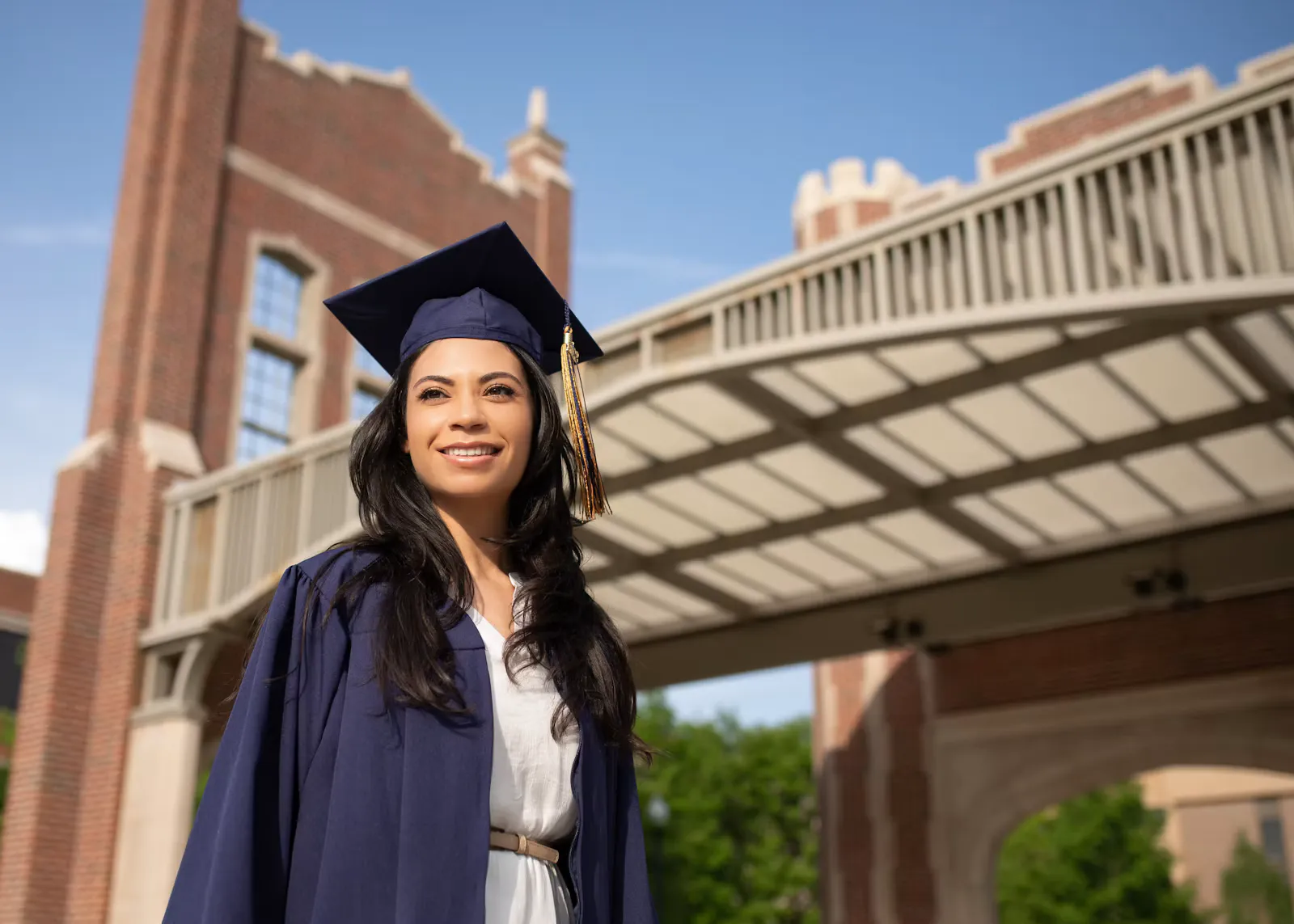
Professor Giovanni Molari
Rector of the University of Bologna for the 2021 to 2027 term.
Webinar: Pursuing MBBS in India Sat, December 5, 2026 | 8:30 PM IST FREE
Reserve free seatFree Webinar: MBBS in India
Sat, December 5, 2026 | 8:30 PM

Free Webinar: MBBS in India
Sat, December 5, 2026 | 8:30 PM
The university that dates itself to 1088, teaching a six-year medicine degree in English with clinical training at Policlinico Sant'Orsola-Malpighi.


1,500+ Students trust us
Italy
Country
Bologna
City
€1,157 a year
Tuition and taxes, about ₹1.23 lakh
English
Medium, with Italian at B1 from Year 2
For Indian Students
Short answer: Yes, Indian students can study medicine in Italy. No, the Italian degree does not currently meet the NMC rules, so it does not lead to the FMGE or an Indian licence.
Indian students apply for the non-EU places at public universities through the IMAT, which can be sat in India, while Humanitas University runs its own admission test. A qualified NEET UG result is still required before taking up a medical seat abroad.
The NMC Foreign Medical Graduate Licentiate Regulations 2021 ask for a separate internship of at least twelve months after the course, in the same foreign institution. The Italian degree includes three months of practical training inside the course and no separate internship, so it does not meet this rule.
As things stand, an Italian medical degree does not lead to an Indian licence through the FMGE (NExT deferred and not in force). Italy is the right choice if you plan to practise in Italy, the EU or the UK, or to take the USMLE route.
Introduction
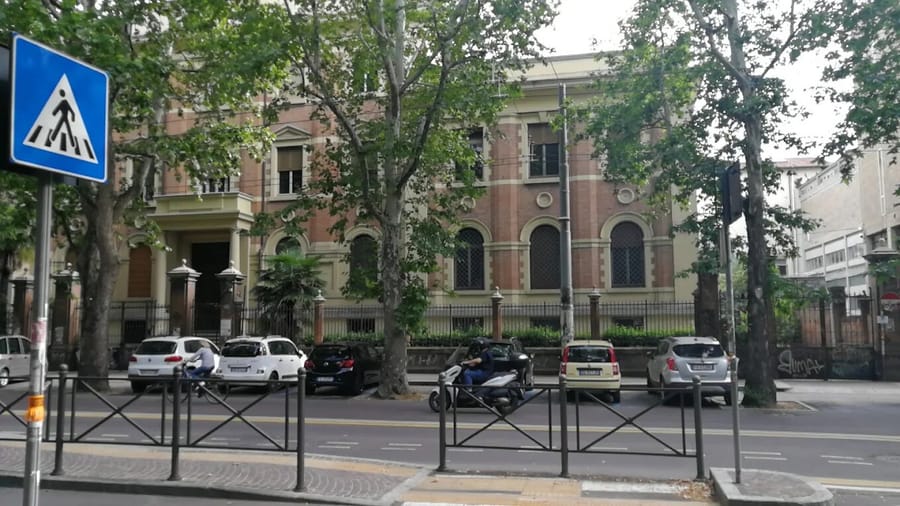
A University of Bologna building seen from the street, behind plane trees and railings
Download our free brochure for immediate information, or get personalised professional counselling from our experts.
Recognition & Prestige
The University of Bologna is placed 76th in the world for Medicine by QS and 95th for Clinical, Pre-clinical and Health by Times Higher Education. It is listed in the World Directory of Medical Schools (WDOMS), and its courses are accredited by ANVUR, which is recognised by the World Federation for Medical Education.
76
QS World University Rankings by Subject 2026, Medicine
95
Times Higher Education 2026, Clinical, Pre-clinical and Health
Clinical teaching for the English course runs at Policlinico Sant'Orsola-Malpighi on Via Massarenti, which has around 1,535 beds across thirty-two pavilions. EU Directive 2005/36/EC lists the Italian medical qualification at Annex V, point 5.1.1, and since 2020 the degree itself is the licence to practise in Italy. Because the school is listed in WDOMS, graduates can apply for ECFMG Certification and the USMLE. The GMC lists the Italian degree as a relevant European qualification, so UK registration is applied for directly, without PLAB. For India, the degree includes three months of practical training (the tirocinio) and no separate 12-month internship, so it does not currently meet the NMC rules for practising in India.
WDOMS
The University of Bologna's medical school is listed in the World Directory of Medical Schools
WFME
Courses accredited by ANVUR, Italy's national agency, which is recognised by the World Federation for Medical Education
EU
Italy is an EU member state, and the Italian medical qualification is listed in Annex V, point 5.1.1 of EU Directive 2005/36/EC
Complete Information About Bologna Medicine and Surgery
Get complete information about the programme, including tuition, living costs, the IMAT and recognition for Indian students.
Success stories
Hear directly from students who are studying medicine in Europe with futureMBBS.
Academic Excellence
Bologna pairs a strong medical subject ranking with a low fee, clinical training at one of Italy's largest hospitals and fast trains to Milan and Rome. Against that, Italian at B1 is required from Year 2, and the degree does not meet the NMC rules for practising in India. Both sides are set out below.
Read all about MBBS abroad in our free brochure
Know exactly what options exist for your MBBS-abroad success.
How to Apply
Admission runs through the IMAT into 20 places for non-EU candidates living abroad. NEET does not decide the Italian place, but a qualified NEET UG result is a separate Indian requirement before you take up a medical seat abroad.
Indian students need a qualified NEET UG result before taking up a medical seat abroad, and the result stays valid for three years from its declaration. This is an Indian requirement, separate from the Italian process.
Pre-enrol on the Universitaly portal and name Bologna, because a non-EU candidate living abroad competes only in the ranking of the one university named there. Arrange a CIMEA statement of comparability or a Declaration of Value for your Class 12 certificate at the same time.
For 2026/27, IMAT registration ran on Universitaly from 26 August to 9 September 2026, and India was one of the test countries. The 2025 reform that replaced the entrance test for Italian-language medicine with an open first semester did not apply to English-taught courses, which still admit through the IMAT.
Sixty multiple-choice questions in 100 minutes: 4 reading, 5 logical reasoning, 23 biology, 15 chemistry and 13 physics and mathematics. A correct answer earns 1.5 marks, a wrong answer loses 0.4 and a blank scores zero, to a maximum of 90.
Places go in rank order of IMAT score. An Indian applicant competes only for the 20 places for non-EU candidates living abroad, not for the 140 places for EU candidates and residents of Italy.
Enrol and pay, then apply for the Italian type D study visa, showing at least €10,179.85 a year (about ₹10.8 lakh) and proof of accommodation. After arriving, apply for the permesso di soggiorno, the residence permit. Non-EU students on a study permit also register with the Italian National Health Service, at €700 a year (about ₹74,200) for a student without dependants.
Applicants need Class 12 or equivalent with Physics, Chemistry and Biology, after at least twelve years of schooling, backed by a CIMEA statement of comparability or a Declaration of Value. Under Indian NMC rules an Indian applicant also needs Physics, Chemistry, Biology and English at Class 12, with at least 50% aggregate in Physics, Chemistry and Biology for the general category, 40% for SC, ST and OBC candidates and 45% for general-category candidates with benchmark disabilities, together with a qualified NEET UG result.
Subjects:
Under Indian NMC rules the candidate must be 17 years old by 31 December of the admission year, with no upper age limit.
Two things govern a Bologna application beyond the test.
Twenty Places for Non-EU Applicants
The non-EU quota for candidates living abroad is 20 of 160 for 2026/27. Because you compete only in the ranking of the university you name on Universitaly, weigh this quota when you choose.
Italian at B1 From Year 2
Italian is not needed to enrol, but the university requires B1 to attend clinical clerkships from Year 2. That leaves one academic year to reach it alongside first-year medicine.
Admission rests on the IMAT score against the non-EU quota.
| Component | Detail |
|---|---|
| Format | 100 minutes, 60 multiple-choice questions with five options each, maximum score 90 |
| Sections | Reading 4, logical reasoning 5, biology 23, chemistry 15, physics and mathematics 13 |
| Marking | Plus 1.5 for a correct answer, minus 0.4 for a wrong answer, zero for a blank |
| 2026/27 dates | Registration on Universitaly from 26 August to 9 September 2026; test on 29 September 2026 |
To apply, students need to submit essential academic and identification documents:
Admission Guidance & Document Checklist
Get the complete document checklist or admission guidance from our experts.
Programme Structure
Medicine and Surgery runs six years and 360 CFU, taught in English on the Bologna city campus, with clinical clerkships from Year 1. The tirocinio, three months of practical training required by Italian law, is taken in Year 6 in three four-week blocks. There is no separate internship after the degree, which is the point that matters for Indian students (see the FMGE section below).
Total Duration:
6 Years, 360 CFU, with clerkships from Year 1 and the 15-CFU tirocinio in Year 6
Degree:
Laurea Magistrale in Medicina e Chirurgia (equivalent to MBBS)
Year 1
Cellular and molecular science with morphology and the humanities, and a first clinical contact through Basic Life Support:
Year 2
Systems-based teaching with a clerkship in nursing and surgical skills and patient approach; Italian at B1 is needed from this year:
Year 3
Disease mechanisms and diagnostic technology, with hospital clerkships across four specialties:
Year 4
Specialty teaching with a further multi-specialty clerkship:
Years 5 to 6
The remaining clinical disciplines and extended clerkships, then the tirocinio in Year 6 and the degree exam:
Clinical training runs at the university's teaching hospital in Bologna:
| Clinical base | Role in training |
|---|---|
| Policlinico Sant'Orsola-Malpighi | The clinical base for the English course, on Via Massarenti, with around 1,535 beds across thirty-two pavilions |
| Clerkships from Year 1 | Basic Life Support in Year 1, skills and patient approach in Year 2, then specialty clerkships every year |
| The tirocinio | Fifteen CFU under Ministerial Decree 58 of 9 May 2018: one month in medicine, one in surgery and one with a family doctor, about three months in all, inside the degree |
Get the full curriculum
Download a free brochure to see detailed subjects, the course structure and everything you need to plan your studies.
European Framework
An Italian medical degree sits inside a national and European framework, and the terms are set nationally rather than by each university. The table sets out what that means for Bologna's Medicine and Surgery.
| Item | Detail |
|---|---|
| World Federation for Medical Education | Italian medical courses are accredited by ANVUR, Italy's national agency, which is recognised by the WFME |
| EU Directive 2005/36/EC | Italy is an EU member state, and the Italian medical qualification is listed at Annex V, point 5.1.1. Automatic recognition across the EU applies to EU nationals, so an Indian graduate moves to another EU country through that country's own process for non-EU graduates |
| Licence to practise in Italy | Since Decree-Law 18 of 17 March 2020 (Article 102), the degree with its practical training completed is itself the licence to practise in Italy, with no separate state exam |
| UK registration | The General Medical Council lists the Laurea in Medicina e Chirurgia as a relevant European qualification, so graduates apply to the GMC directly, without PLAB, with evidence of English such as IELTS or OET. The degree alone supports provisional registration; for full registration, graduates since March 2020 send the alternative evidence the GMC asks for, because the Diploma di abilitazione is no longer issued |
| WDOMS and the USMLE | The medical school is listed in WDOMS, which lets graduates apply for ECFMG Certification and take the USMLE |
| Health service registration | Non-EU students on a study residence permit register with the Italian National Health Service, at €700 a year for a student without dependants |
Understand the Recognition Framework
The table above sets out where an Italian medical qualification is recognised and on what basis.
Legacy
Bologna's medical lineage includes names an Indian student has already met in Class 11 biology and physics.
Rector of the University of Bologna for the 2021 to 2027 term.
A Bologna professor and a founder of microscopic anatomy, who was the first to see the capillaries and so completed Harvey's account of the circulation. Malpighian bodies and tubules carry his name.
Professor of anatomy at Bologna and the discoverer of bioelectricity, whose experiments on nerve and muscle gave the word galvanism to the language.
The first woman in the world to hold a university chair in a scientific field, appointed in physics at Bologna, where she taught for decades.
The University of Bologna teaches across five campuses, at Bologna, Cesena, Forlì, Ravenna and Rimini. Its English-taught Medicine and Surgery degree is taught in Bologna itself; the Ravenna and Forlì campuses run Italian-language medicine courses, which are separate programmes.
76th in the world for Medicine on QS 2026
95th for Clinical, Pre-clinical and Health on THE 2026
Policlinico Sant'Orsola-Malpighi, around 1,535 beds
Dating itself to 1088
Twenty non-EU places a year
Clerkships from Year 1
A published Italian requirement: B1 from Year 2
ER.GO regional support open to non-EU students
About University
Get all information about Bologna Medicine in our free brochure
Read on to find out how you can fulfil your dream of studying medicine in Italy.
Role in medicine
Get all information about Bologna Medicine in our free brochure
Read on to find out how you can fulfil your dream of studying medicine in Italy.
Cost of living
The table assumes a one-bedroom flat to yourself, from Numbeo's Bologna figures (August 2026), converted at about ₹106 to the euro (October 2026). Most students share a flat, which brings the rent down considerably.
| Cost Component | Approximate Amount |
|---|---|
| Accommodation (one-bedroom flat, outside the centre to city centre) | ₹82,600 to ₹1.08 lakh (€779 to €1,015) |
| Food | ₹38,200 to ₹48,800 (€360 to €460) |
| Public transport (monthly pass) | ₹4,100 (€39) |
| Utilities, internet, SIM and leisure | ₹31,800 to ₹42,400 (€300 to €400) |
Average monthly living cost (flat to yourself)
₹1.57 lakh to ₹2.03 lakh (€1,478 to €1,914)
Housing
Bologna's regional student agency, ER.GO, documents a route for non-EU applicants, and most students rent a room in a shared flat.
Need accommodation details?
Get a full overview of housing options with our university guide, or reach out to an expert.
Food & Dining
Emilia-Romagna has a long-established Punjabi community, and Bologna has a small set of Indian restaurants.
Bologna has a handful of Indian restaurants, and Milan, about an hour away by high-speed train, has many more.
The region has a long-established Punjabi Sikh community, closely tied to the dairy farms that make Parmigiano-Reggiano, with a well-known gurdwara at Novellara.
Numbeo puts an inexpensive restaurant meal in Bologna at about €20 (about ₹2,100). Bologna is a celebrated food city and eating out is not cheap, so most students cook, using EU-wide online spice and grocery suppliers.
Emilia-Romagna falls under the Consulate General of India in Milan, about an hour away by high-speed train.
Location
The English-taught Medicine and Surgery course is taught on the Bologna city campus, with clinical clerkships at Policlinico Sant'Orsola-Malpighi, Via Massarenti 9, 40138 Bologna, Italy.
Nearest Airport
Bologna Guglielmo Marconi (BLQ), with European routes and no flights to India
Realistic Routing From India
Fly nonstop from Delhi to Milan Malpensa or Rome Fiumicino with Air India, then take a high-speed train: about an hour from Milan and about two from Rome
Your Roadmap to Success
Graduates receive the Laurea Magistrale in Medicina e Chirurgia (LM-41), the Italian primary medical qualification and the equivalent of an Indian MBBS rather than an Indian postgraduate MD.
Since Decree-Law 18 of 17 March 2020 (Article 102), the degree with its practical training completed is itself the licence to practise in Italy, with no separate state exam. The graduate registers with the Ordine dei Medici, the provincial medical council. Specialist training is entered through a national competitive exam (concorso), is paid, and usually lasts four to five years.
The Italian medical qualification is listed at Annex V, point 5.1.1 of EU Directive 2005/36/EC. Automatic recognition applies to EU nationals, so an Indian national with an Italian degree moves to another EU country through that country's own process for non-EU graduates.
The General Medical Council lists the Laurea in Medicina e Chirurgia issued by an Italian university as a relevant European qualification, so graduates apply to the GMC directly, without PLAB, with evidence of English such as IELTS or OET. The degree alone supports provisional registration. For full registration the GMC also lists the Diploma di abilitazione, which Italy stopped issuing in March 2020, so graduates since then send the alternative evidence the GMC asks for.
The medical school is listed in the World Directory of Medical Schools (WDOMS), so its students and graduates can apply for ECFMG Certification and take the USMLE, the route to residency in the United States.
The NMC Foreign Medical Graduate Licentiate Regulations 2021 ask for a separate internship of at least twelve months after the course, in the same foreign institution. The Italian degree includes three months of practical training (the tirocinio) inside the course and no separate internship, so it does not currently meet the NMC rules for practising in India, and it does not lead to an Indian licence through the FMGE (NExT deferred and not in force). Choose Bologna if you plan to practise in Italy, the EU or the UK, or to take the USMLE route.
Understand the Medical Licensing Pathway
A clear overview of the exams and requirements after graduation.
Practising in India
To practise in India, a foreign medical degree must meet the NMC Foreign Medical Graduate Licentiate Regulations 2021 before its holder can take the FMGE (NExT is deferred and not in force). The Italian degree does not currently meet those rules, and the steps below explain why.
Step 1
The regulations ask for a course of at least 54 months and a separate internship of at least twelve months after it, in the same foreign institution. The six-year Italian degree clears the course length.
Step 2
The degree includes the tirocinio, three months of practical training inside the course (one month in medicine, one in surgery and one with a family doctor), and no separate internship. Since 2020 the degree itself is the Italian licence to practise, so Italy has no internship after graduation at all.
Step 3
The National Board of Examinations in Medical Sciences runs the FMGE twice a year, with a pass mark of 150 out of 300. In December 2025, 42,872 candidates appeared and 10,262 qualified, a pass rate of 23.95%. Because the Italian degree does not meet the NMC rules, it does not currently lead to an Indian licence through the FMGE.
Step 4
Bologna suits a student who plans to build a career in Italy, elsewhere in the EU, the UK or the USA. The degree licenses its holder in Italy, the GMC accepts it for UK registration without PLAB, and the WDOMS listing opens the USMLE route. If practising in India is your main goal, plan this with our counsellors before applying.
Student Life Style
Bologna is a compact, arcaded student city at the centre of Italy's rail network.
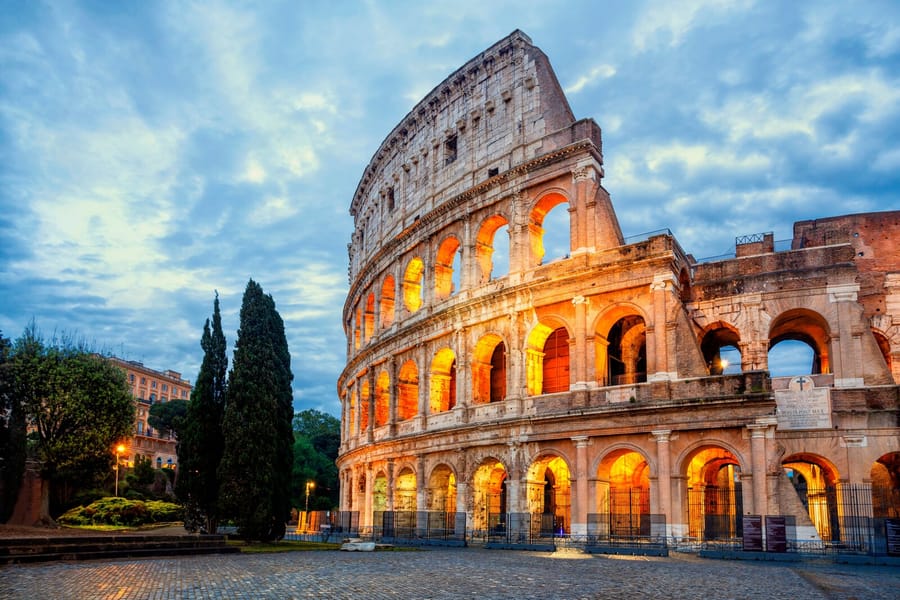
The Colosseum in Rome lit up at dusk, about two hours from Bologna by high-speed train
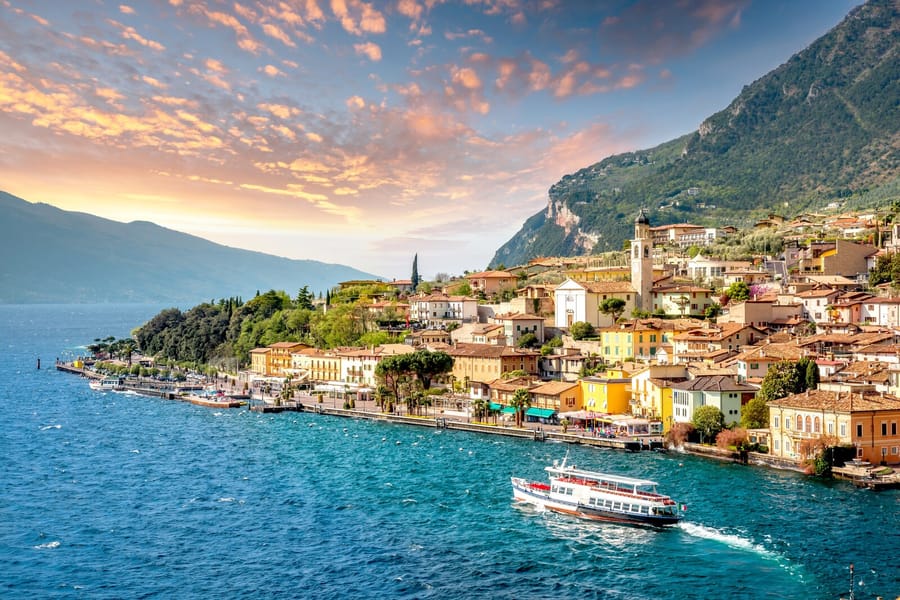
A town on the shore of Lake Garda in northern Italy with mountains behind
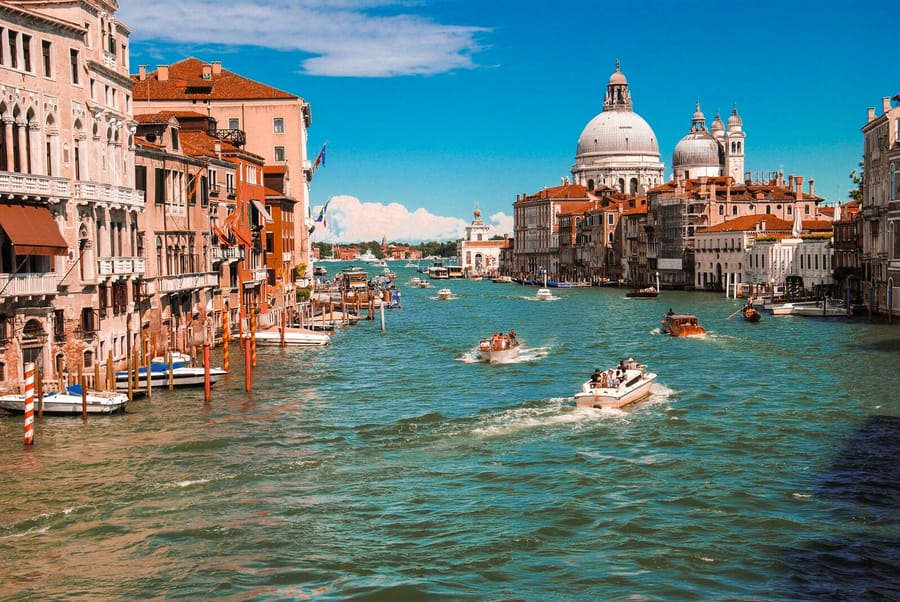
The Grand Canal in Venice with historic palazzi and the dome of Santa Maria della Salute
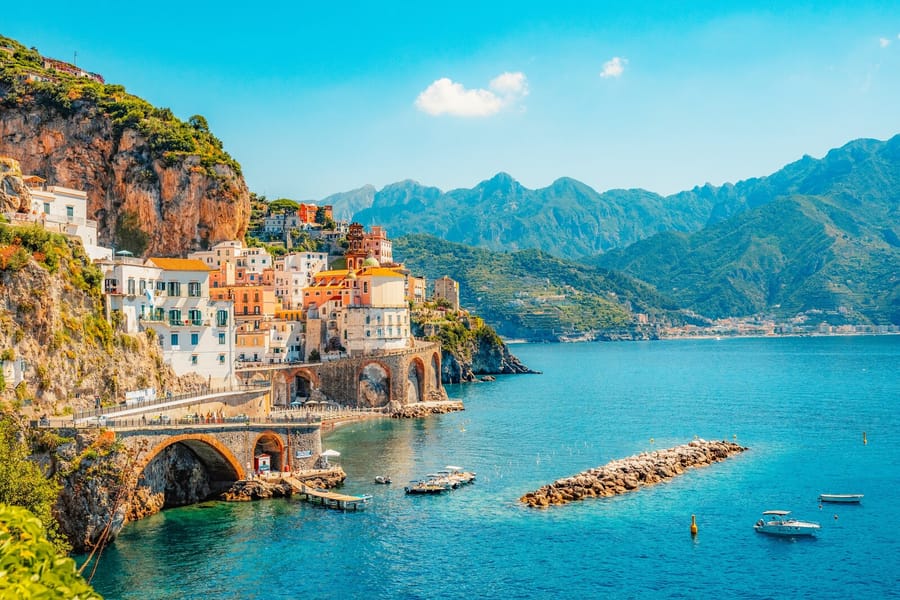
Pastel buildings above a turquoise bay on the Amalfi Coast in southern Italy
Scholarship & Financial
The fee is already reduced for Indian students, and ER.GO's means-tested borsa di studio is open to non-EU students.
India is on the university's non-OECD list, so the fee is €1,000 a year on normal credit progress, or €1,200 if the credit minimum is not met, plus a first instalment of €157.04 covering the €140 regional tax, €16 stamp duty and €1.04 accident insurance.
Italy's regional borsa di studio is based on family means, not marks, and is open to non-EU students. Here it is run by ER.GO, the Emilia-Romagna agency, which also refunds the €140 regional tax to grant holders. For 2026/27 the national minimum grant for a student living away from home is €7,171.11 a year (about ₹7.6 lakh), and grant holders are also exempt from university tuition. An Indian family shows its means through an ISEE Parificato, prepared from family income and property documents certified by the Italian consulate, so collect those papers before leaving India.
The Italian Government (MAECI) scholarships do not fund single-cycle degrees such as medicine, so a new medical student cannot enter that way.
Compare
Compare University of Bologna with AIIMS New Delhi, India's top-ranked government medical college.
Quick Comparison:
University of Bologna vs AIIMS New Delhi
| University | University of BolognaBologna, Italy | AIIMS New DelhiNew Delhi, India |
|---|---|---|
| University Type | Public, dating itself to 1088 | Institute of National Importance (government) |
| Medium | English, with Italian for clinical work | English |
| Course Duration | 6 years, 360 CFU, including a 3-month tirocinio | 5.5 years, being 4.5 years plus a 12-month internship |
| Admission | IMAT, 60 questions in 100 minutes, plus a qualified NEET result | NEET UG |
| Recognition | Listed in WDOMS; EU Annex V 5.1.1; licenses in Italy; not NMC compliant (no 12-month internship) | Listed in WDOMS |
| Non-EU places | 20 for 2026/27, from 1,362 nationwide | Allocated through NEET UG counselling |
| Global Ranking | QS Medicine 76 (2026); THE Clinical, Pre-clinical and Health 95 (2026) | NIRF Medical 1 (2025) |
Compare Top MBBS Universities for Me
See key differences in fees, ranking, eligibility and recognition.
Our blog
Articles that turn complex MBBS-abroad rules into simple, practical steps for students and parents.
FAQ
Short answers to the questions students and parents ask most often about studying medicine at the University of Bologna.
Venice photo: Dan Novac on Unsplash.