

Free Webinar: MBBS in India

Sat, September 5, 2026 | 7:00 PM

Reserve my Seat
futureMBBS

Free Webinar: MBBS in India

Sat, September 5, 2026 | 7:00 PM

Reserve my Seat
futureMBBS
Bulgaria

Study MBBS in Bulgaria

Seven Bulgarian faculties teach the six-year medical degree in English, in a country with the highest hospital-bed density in the European Union. Read the licensing section before you apply.

  • MBBS student
  • MBBS student
  • MBBS student
  • MBBS student

5000+ Students trust us

Bulgarian + English

Spoken Language

Sofia

Capital

1 EUR = 110 INR

Currency Value

26 rank

Global Peace Index

Top Universities

Medical Universities in Bulgaria

Seven Bulgarian faculties teach medicine in English and admit non-EU students. The four established medical universities below are the ones Indian students most often consider. Tuition runs from €9,000 to €10,000 a year, which is about ₹9.9 lakh to ₹11 lakh.

Introduction

Studying Medicine in Bulgaria

Bulgaria offers Indian students a six-year, English-taught medical degree at seven accredited faculties for €9,000 to €10,000 a year, which is about ₹9.9 lakh to ₹11 lakh at the European Central Bank reference rate of 3 August 2026. The qualification awarded is a single-cycle Master's with the professional title Магистър-лекар, or Master-Physician, listed for Bulgaria in Annex V of EU Directive 2005/36/EC.

  • Popular course:Medicine, Master-Physician (Магистър-лекар), MBBS equivalent
  • Language of study:English
  • Course duration:6 Years (10 semesters + 310-day internship)
  • Intake:October (February at Pleven)
  • Approx. tuition/year:₹9,90,000 – ₹11,00,000 (€9,000 – €10,000)
  • No. of medical universities:7 teaching medicine in English
  • NEET requirement:Mandatory before admission (NMC, since May 2018)
  • Living cost/month:₹56,000 – ₹1,28,000 (approx.)

Bulgaria joined the European Union on 1 January 2007, completed Schengen accession when land border controls were lifted on 1 January 2025, and adopted the euro on 1 January 2026 at a fixed rate of 1.95583 lev to the euro. Any guide still quoting Bulgarian fees or rents in lev is out of date. The country has a genuine clinical advantage: Eurostat records 870 hospital beds per 100,000 inhabitants for 2024, the highest ratio in the European Union against an EU average of 507. Teaching runs through large university hospitals including Aleksandrovska in Sofia with around 1,100 beds, St. Marina in Varna with more than 1,000, Dr Georgi Stranski in Pleven with more than 1,000, and St George in Plovdiv, which the university describes as the largest hospital in the country. Of the 16,157 foreign students in Bulgarian higher education in 2024/25, 61.5% were enrolled in health-related studies. Two facts have to be read before anything else on this page. First, the compulsory pre-graduation internship inside the Bulgarian degree runs 310 calendar days, approximately ten months, while the NMC Foreign Medical Graduate Licentiate Regulations 2021 require twelve months in the same institution. That gap is unresolved in public regulation and is set out in full in the licensing section below. Second, official NBEMS data for the two 2025 FMGE sessions records 21 passes from 73 Bulgaria-trained candidates, a combined rate of 28.8%. Bulgaria has real strengths, but a family should weigh those two numbers before the brochure photographs.

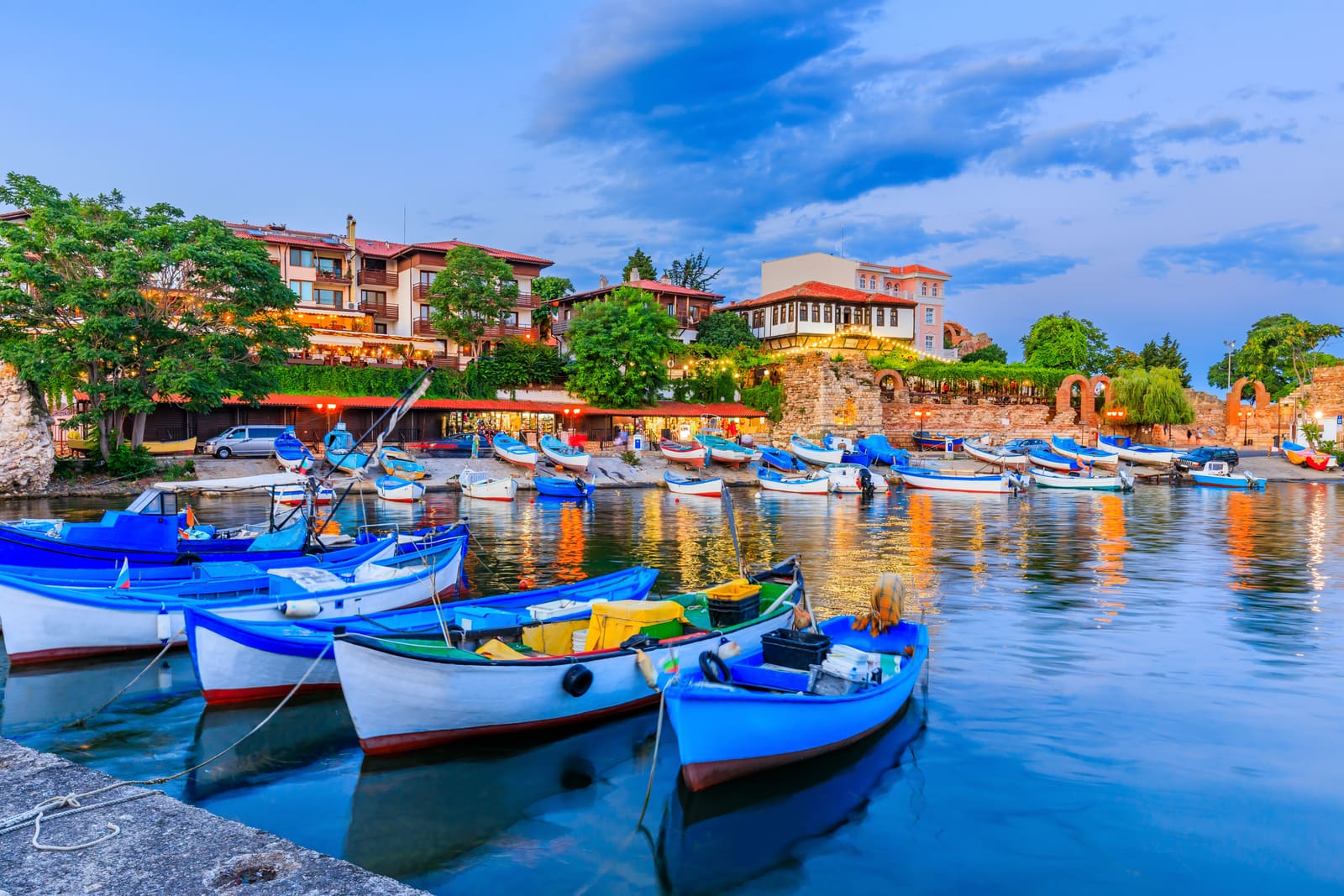
Blue fishing boats in the harbour of Nessebar old town at dusk, Bulgaria
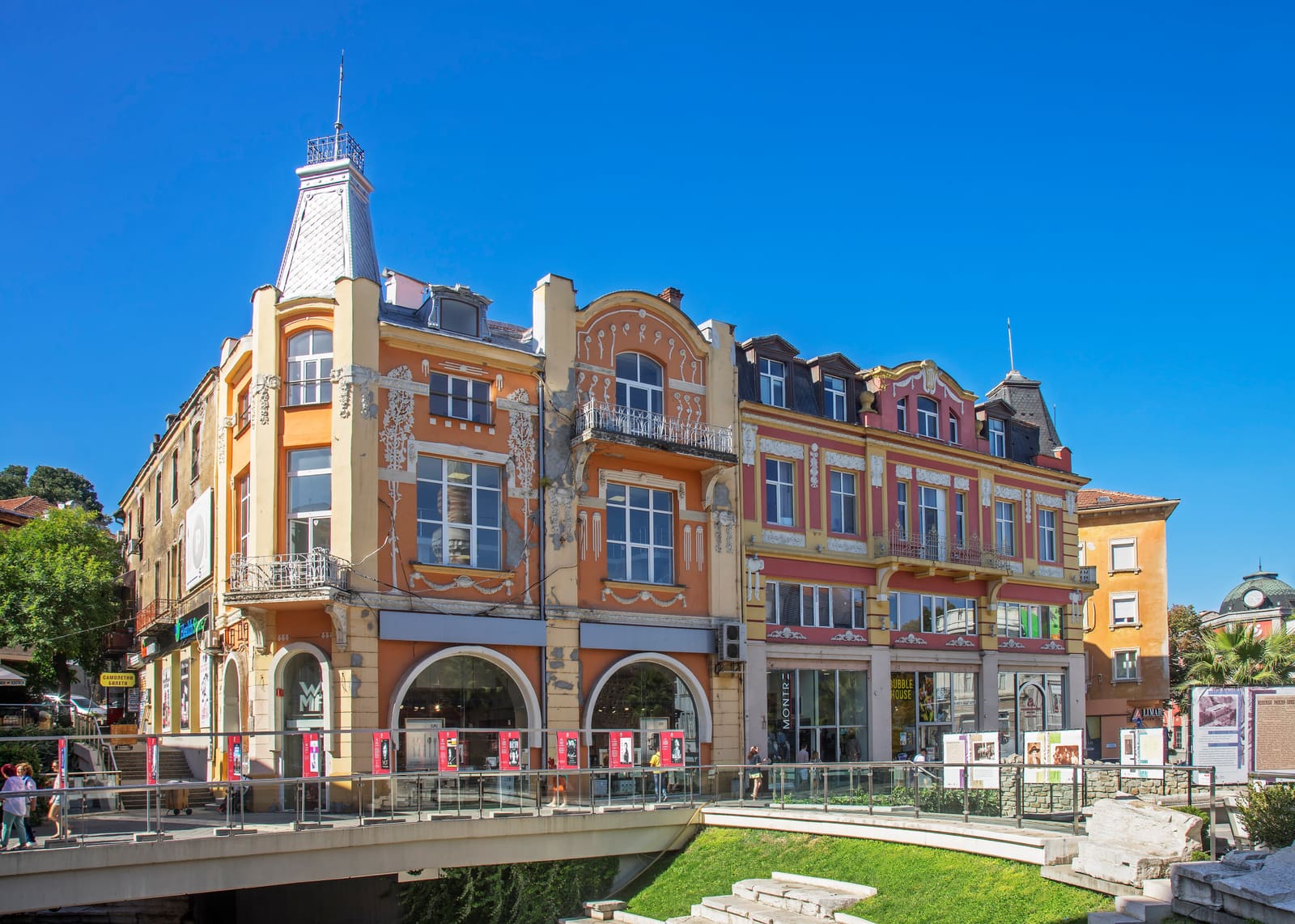
Ornate historic commercial building beside a river in a Bulgarian city
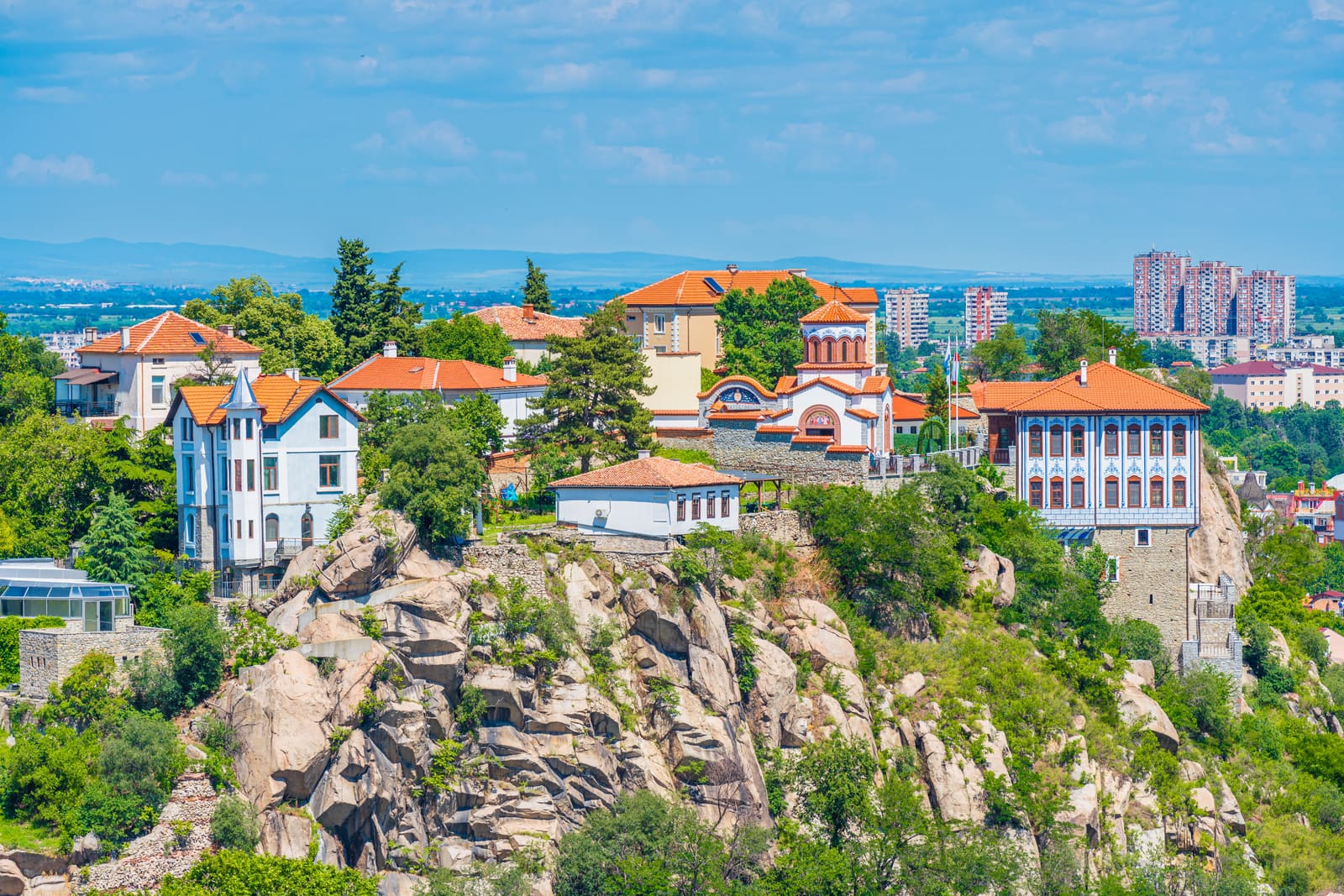
Old Town houses on the rocky hills of Plovdiv with the modern city behind
The Buzludzha Monument on its ridge in the Balkan Mountains, Bulgaria
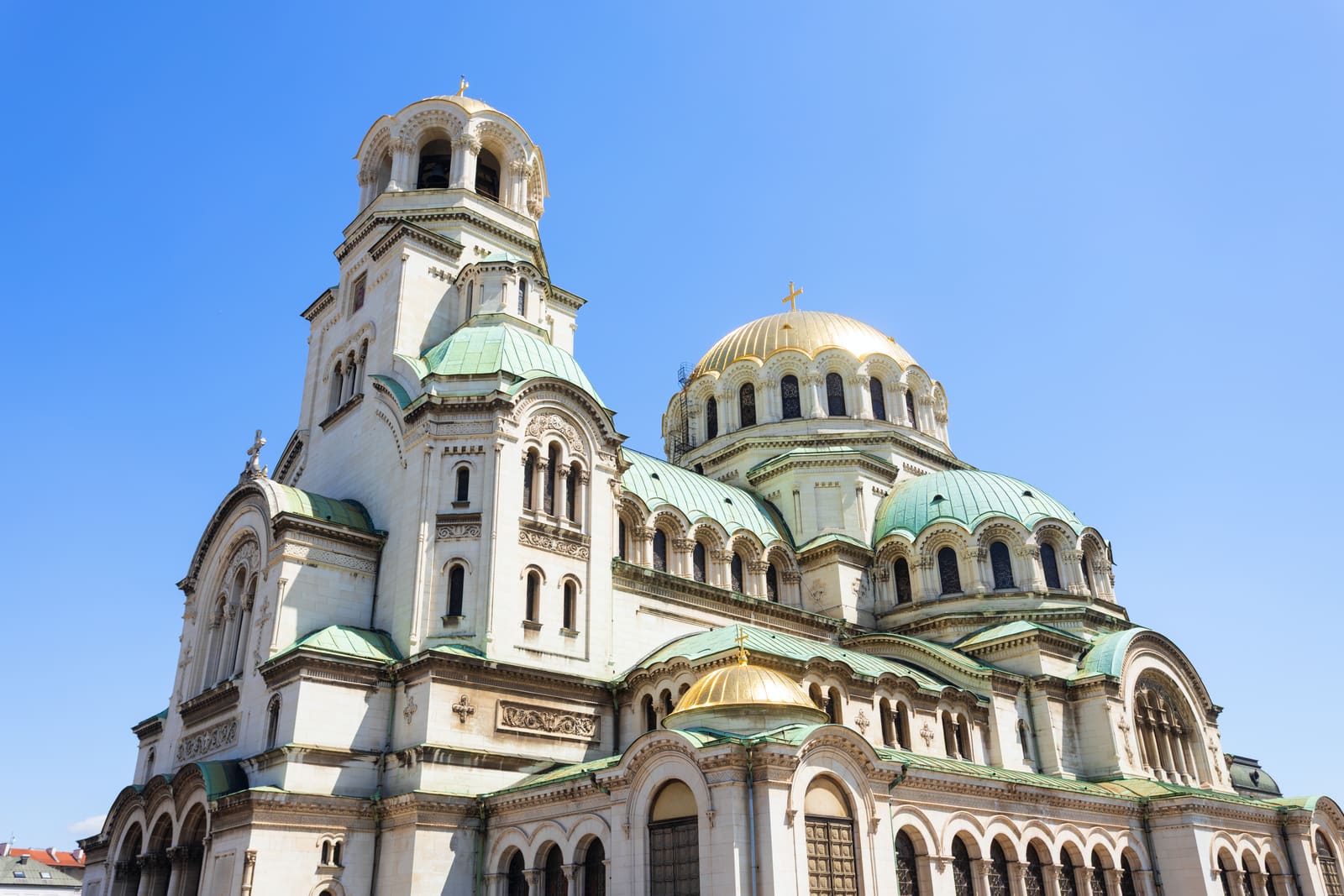
Domes of the Alexander Nevsky Cathedral in Sofia against a clear sky
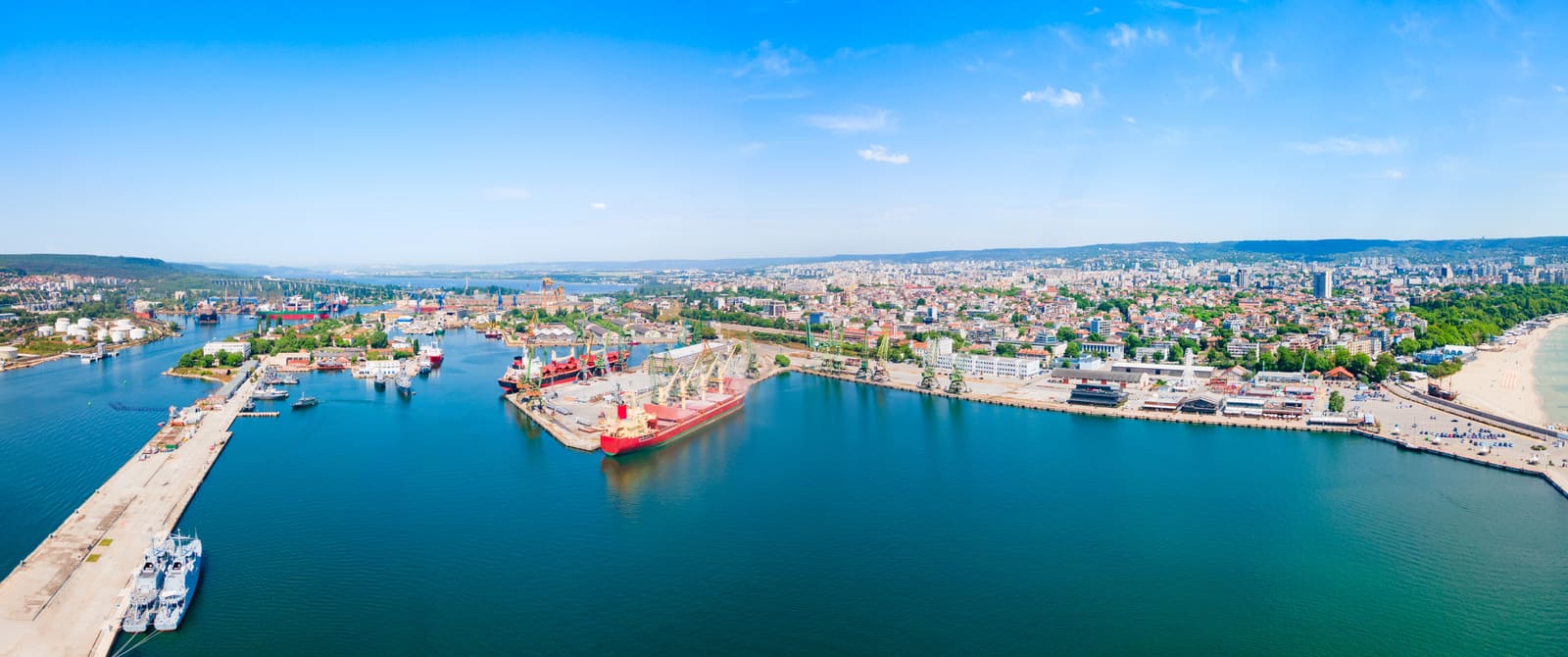
Aerial panorama of the port of Varna on the Black Sea

Blue fishing boats in the harbour of Nessebar old town at dusk, Bulgaria

Get all information about MBBS in Bulgaria

Download our free brochure for tuition, living costs, eligibility and the complete application process.

Academic Excellence

Why Study MBBS in Bulgaria?

An English-taught medical degree named in EU law, taught in a country with more hospital beds per head than anywhere else in the European Union, at the lower end of European tuition. Read alongside the licensing section.

Seven Faculties, Real Choice

Seven Bulgarian faculties teach medicine in English and accept non-EU applicants: the medical universities of Sofia, Plovdiv, Varna and Pleven, plus Trakia University in Stara Zagora, Sofia University St. Kliment Ohridski and Burgas. That is more English-medium choice than most European destinations offer, and it means more than one entrance-exam date each year.

Most Hospital Beds in the EU

Eurostat recorded 870 hospital beds per 100,000 inhabitants in Bulgaria for 2024, or 8.7 per 1,000, the highest ratio in the European Union against an EU average of 507. Clinical teaching runs through large university hospitals: Aleksandrovska Sofia at around 1,100 beds, St. Marina Varna and Dr Georgi Stranski Pleven both above 1,000, and St George Plovdiv, described by the university as the country's largest.

A Degree Named in EU Law

The Bulgarian qualification "Диплома за висше образование на образователно-квалификационна степен магистър по Медицина и професионална квалификация Магистър-лекар" is listed for Bulgaria in Annex V, point 5.1.1 of EU Directive 2005/36/EC, with a reference date of 1 January 2007, the date of Bulgaria's EU accession.

Tuition at the Lower End of Europe

Annual tuition is €9,000 at Pleven, €9,950 at Sofia, and €10,000 in the first year at Plovdiv and Varna, both of which then step down, Plovdiv to €9,200 in years two and three and €8,200 in years four to six. Sofia University charges €8,000 and Trakia falls to €7,000 in the final year. In rupees that is roughly ₹9.9 lakh to ₹11 lakh a year.

Safer Than the Comparison Suggests

Bulgaria ranks 26th of 163 countries on the Global Peace Index 2026 with a score of 1.628, against India's 127th place and 2.409. On the crowd-sourced Numbeo Safety Index for mid-2026 Bulgaria scores 64.8 against 55.8 for India. Bulgaria also placed 18th worldwide on the EF English Proficiency Index 2025 with a score of 594, in the High Proficiency band.

Read the Licensing Position First

The Bulgarian internship runs 310 days, roughly ten months, while the NMC requires twelve months in the same institution, and official NBEMS data shows 21 of 73 Bulgaria-trained candidates passing the 2025 FMGE sessions. We publish this because it decides whether a six-year investment ends in an Indian licence. Ask us for the written university and NMC positions before you apply.

Get all information about MBBS abroad

Read on to find out how you can fulfil your dream of studying medicine in Bulgaria.

Where You'll Study

Top Student Cities in Bulgaria

Four cities host the established medical universities Indian students most often apply to. They differ enormously in size, cost and everyday practicality, from a capital of 1.2 million to a town of under 90,000.

Domes of the Alexander Nevsky Cathedral in Sofia against a clear sky

Sofia

Sofia is the capital, with 1,221,785 residents at the 2021 census and a fifth of Bulgaria's population living in the wider district. The Medical University of Sofia was founded in 1917 and charges €9,950 a year, with a single non-EU entrance examination date and an academic year that begins on 19 October 2026. Its clinical network is the widest in the country, listing fourteen training facilities including Aleksandrovska University Hospital at around 1,100 beds, Pirogov emergency hospital, the Military Medical Academy and specialist hospitals in endocrinology, orthopaedics, paediatrics and infectious diseases. Sofia is also the only Bulgarian city with verifiable Indian food infrastructure, with Taj Mahal, Satsanga, India House and Kohinoor all listed for delivery on Glovo, and it holds the only airport with meaningful connections toward India via Istanbul, Dubai and Doha. A monthly city transport pass for under-25s costs €12.70. Sofia is the most expensive of the four, with a one-bedroom flat outside the centre at about €529 a month on Numbeo's crowd-sourced July 2026 data.
Old Town houses on the rocky hills of Plovdiv with the modern city behind

Plovdiv

Plovdiv is Bulgaria's second city, with 321,824 residents, one of the oldest continuously inhabited cities in Europe and the 2019 European Capital of Culture. The Medical University of Plovdiv was founded in 1945 and has trained over 37,700 students from 65 countries. It is the most transparent of the four on admissions: it publishes six entrance-examination dates between April and September, a fully specified online exam of 90 minutes covering Biology and Chemistry, a required average of at least 62% in Biology and Chemistry at school, and even its actual competitive cut-offs, which were 39.12 in May 2026 and 34.50 in June 2026. Clinical training runs through six university hospitals including St George, which the university calls the largest in the country, alongside what it describes as Bulgaria's largest medical simulation centre. Plovdiv is also the cheapest of the three cities with cost data, with a one-bedroom flat outside the centre at about €343 a month and restaurant meals roughly 44% below Sofia.

Aerial panorama of the port of Varna on the Black Sea

Varna

Varna is Bulgaria's Black Sea capital, with 310,664 residents, a major port and the site of the Varna Necropolis, which holds the oldest worked gold treasure yet found. The Medical University Prof. Dr. Paraskev Stoyanov began teaching in 1961 and its Faculty of Medicine was established in 2001, drawing students from more than 70 countries. It is the strictest of the four on English, requiring IELTS Academic 6.5 or TOEFL iBT 90, and it publishes the most detailed internship documentation in Bulgaria, itemising all 310 days by rotation and naming the hospital for each. Clinical teaching centres on University Hospital St. Marina, described by the hospital as the largest diagnostic and treatment complex in northern and eastern Bulgaria with more than 1,000 beds. Varna admitted 380 international students from 30 countries into its 2024/25 first year across Medicine and Dental Medicine, and named India among its largest cohorts. Costs sit between Sofia and Plovdiv, with a one-bedroom flat outside the centre at about €410 a month.

Which Bulgarian city suits you best?

Get a personalised recommendation based on your budget, course and lifestyle.

Program Structure

MBBS Curriculum in Bulgaria

Bulgarian medical faculties deliver a six-year single-cycle Master's programme taught entirely in English, built as ten taught semesters followed by a compulsory pre-graduation internship of 310 calendar days and five to six state examinations, leading to the professional qualification Магистър-лекар, or Master-Physician.

General Medicine Course

  • Total Duration:

    6 Years (10 semesters + 310-day internship)

  • Degree:

    Master's in Medicine, Магистър-лекар (Master-Physician), MBBS equivalent

  • Entrance Exam:

    University-specific (Biology and Chemistry, online)

Structure of the Medical Program

  • Years 1–2

    Pre-Clinical Foundations

    Basic sciences and the structure and function of the healthy body, with compulsory Bulgarian language classes from the first year because the clinical years are conducted with Bulgarian-speaking patients:

    Human AnatomyCytology, Histology & EmbryologyHuman BiologyMedical Physics & Biophysics
    Medical ChemistryBiochemistryPhysiologyLatin & Medical TerminologyMedical PsychologySocial MedicineDisaster MedicineBulgarian Language
  • Years 3–4

    Paraclinical and Clinical Transition

    Paraclinical sciences and the first structured patient contact, with summer clinical practice blocks in internal medicine and surgery between academic years:

    PathologyPathophysiologyPharmacologyMedical Microbiology & Parasitology
    Medical GeneticsClinical ImmunologyPropaedeutics of Internal DiseasesGeneral & Operative SurgeryImaging Diagnostics & RadiologyHygiene, Ecology & Occupational DiseasesNeurologyOtorhinolaryngologyOphthalmologyClinical Laboratory
  • Years 5–6

    Clinical Years, Internship and State Exams

    Full clinical disciplines, then the 310-day pre-graduation internship in the university's own hospitals across five to seven rotations, closing with the state examinations:

    Internal Diseases & TherapySurgical DiseasesObstetrics & GynaecologyPaediatrics
    PsychiatryDermatology & VenereologyEpidemiology & Infectious DiseasesClinical OncologyAnaesthesiology & Intensive CareOrthopaedics & TraumatologyUrologyForensic MedicineGeneral MedicineEmergency MedicinePre-Graduation InternshipState Examinations

Important: The internship is the detail that matters most for Indian students. Varna documents it as 310 calendar days: 85 in Internal Medicine, 75 in Surgery, 51 in Paediatrics, 50 in Obstetrics and Gynaecology, 35 in Infectious Diseases, Epidemiology, Hygiene and Social Medicine, 9 in General Medicine and 5 in Emergency Medicine. Sofia records 310 days and 30 ECTS plus a 50-day state examination session, and Plovdiv 329 calendar days and 63 credits. Read the licensing section before applying, because the NMC requires twelve months.

Get the full curriculum

Download a free brochure to see detailed subjects, the course structure and everything you need to plan your studies.

Recognition & Prestige

Recognition of Bulgarian Medical Universities

All seven Bulgarian medical faculties are listed in the World Directory of Medical Schools, the Bulgarian medical qualification is named in EU law, and every faculty holds current national accreditation from the Bulgarian NEAA.

Accreditations and Recognition

  • National Medical Commission (NMC) of India emblem

    NMC/MCI

    National Medical Commission (India). Graduates qualify through the Foreign Medical Graduate Licentiate route; see the licensing note on internship duration.

  • World Directory of Medical Schools emblem

    WDOMS

    All seven Bulgarian medical schools listed in the World Directory of Medical Schools as currently operational

  • World Federation for Medical Education emblem

    WFME

    Aligned with World Federation for Medical Education standards. Bulgaria's accrediting agency, NEAA, began a WFME Recognition procedure in 2024 and is still applying.

  • European Union emblem

    EU

    Магистър-лекар listed in Annex V 5.1.1 of Directive 2005/36/EC, within the European Higher Education Area

Is a Bulgarian medical degree right for you?

Get complete recognition, licensing and career details for Indian students from our experts.

Admissions

Eligibility Criteria

Indian students can apply for medicine in Bulgaria directly after Class 12, subject to a qualified NEET result, the university's Biology and Chemistry entrance examination, an English requirement and recognition of the school-leaving diploma by NACID.

Academic Qualification

The student must have passed Class 12 or equivalent with Physics, Chemistry and Biology, completing at least twelve years of schooling. The school-leaving diploma must be legalised, translated into Bulgarian and recognised by NACID, the Bulgarian national recognition centre, which takes about a month.

Subjects:

BiologyChemistryPhysics

Minimum Grades (PCB)

Minimum aggregate percentage required in Physics, Chemistry and Biology.

CategoryMin. %
General / EWS50%
OBC / SC / ST40%
PwBD45%

Age Requirement

Candidates must be at least 17 years old by 31 December of the admission year.

  • Minimum 17 yearsRequired age at the time of admission

Entrance & English Requirements

Every Bulgarian faculty sets its own competitive examination in Biology and Chemistry, taken in English, and its own English requirement. Universities also apply their own minimum school grades, which are stricter than the Indian category thresholds above.

  • Entrance Examination

    Sofia sets one online examination in English, Biology and Chemistry with a maximum score of 42, on 9 September 2026 for non-EU applicants. Plovdiv runs six online dates from April to September, with a 90-minute Biology and Chemistry paper and a 45-minute English test, and published cut-offs of 39.12 and 34.50 in 2026. Varna runs online Biology and Chemistry papers of 90 minutes each on three dates. Pleven examines Chemistry and Biology, face to face or online, for its February intake.

  • English Proficiency

    Requirements differ sharply, so check before choosing. Varna is strictest at IELTS Academic 6.5 or TOEFL iBT 90. Plovdiv requires B1 CEFR and accepts IELTS, TOEFL, Cambridge, PTE, MET or Trinity, or its own diagnostic test. Pleven requires B2 or above. Sofia requires no separate certificate and tests English as an examination component. Plovdiv additionally requires an average of at least 62% in Biology and Chemistry at school, Varna at least 65% in the school language grade and Pleven at least 62%.

Important: A qualified NEET result is mandatory before admission, not merely for licensing later. Under clause 8(iv) of the Eligibility Requirement Regulations 2002, inserted by the notification published on 1 March 2018, every Indian citizen or Overseas Citizen of India taking a primary medical qualification abroad on or after May 2018 must have qualified NEET, and the NEET result itself serves as the eligibility certificate. It is valid for three years from the date of declaration.

Check your eligibility for free

Share your marks and we'll tell you exactly which Bulgarian universities you qualify for.

Affordable Education

Cost of Living in Bulgaria

Bulgaria is among the cheapest places to live in the European Union, and Plovdiv, Varna and Pleven are cheaper again than Sofia. The table below converts at the European Central Bank reference rate of 3 August 2026, where one euro equals 109.97 rupees.

Monthly Living Cost

Cost ComponentApproximate Amount
Accommodation (shared to private flat)₹17,000 – ₹58,000
Groceries / meals₹16,500 – ₹27,500
Utilities / internet₹10,500 – ₹18,000
Public transport₹1,400 – ₹2,800
Miscellaneous (books, etc.)₹11,000 – ₹22,000
Get Free MBBS Guide

Average monthly living cost

₹56,000 – ₹1,28,000

How to Apply

Admission Process for MBBS in Bulgaria

Admission is through each university's own competitive examination in Biology and Chemistry, not NEET, although a qualified NEET result is a separate legal precondition for Indian students. The critical early step is NACID recognition of the school-leaving diploma, which takes about a month and gates everything after it. Most faculties start in October; Pleven starts in February.

Start with NACID recognition of your Class 12 diploma, because it takes around a month and no application completes without it. Legalise and translate the diploma into Bulgarian through a certified translator, then assemble the full set: application form, all-years transcripts, a university-eligibility certificate, passport copy, birth certificate, passport photographs, a medical fitness certificate and proof of fees. Note the submission rules differ: Sofia accepts documents in person only and rejects anything sent by post, fax or email, and requires non-EU applicants to supply paper originals plus a USB drive with each document as a separately named PDF. Plovdiv accepts post and courier. Application fees are €55 at Sofia, €40 at Pleven and €300 per examination date at Plovdiv.

Admission Guidance & Document Checklist

Get the complete document checklist or step-by-step admission guidance from our experts.

Scholarships

Scholarships for International Students in Bulgaria

Government Scholarships

No inbound Bulgarian government scholarship open to Indian nationals could be verified. The Ministry of Education and Science publishes a scholarship competition for Bulgarian citizens studying abroad, which runs in the opposite direction, and no inbound bilateral scheme or eligible-country list naming India was retrievable. The Indian Council for Cultural Relations scheme also runs the wrong way: the Indian Embassy in Sofia publicises ICCR scholarships funding Bulgarian nationals to study in India, allotted six slots, and one of those expressly excludes medicine.

University-Specific Scholarships

The Medical University of Pleven answers this directly on its own FAQ: there are no scholarships available to study there. The Medical University of Plovdiv does run a merit-based scholarship, but its published rules state that it is open to citizens of the European Union and European Economic Area, listing all thirty eligible countries, so Indian nationals are excluded by name. No scholarship or fee waiver for international students could be found at Sofia or Varna. What Plovdiv and Varna do offer instead is a tiered fee that falls in later years, which is a real saving worth planning around: Plovdiv drops from €10,000 to €9,200 and then €8,200, and Varna from €10,000 to €9,100 and then €9,000.

Exchange and Mobility Programs

Erasmus+ funds mobility, not degrees. It cannot pay Bulgarian tuition. What it can do, once you are enrolled at a Bulgarian university, is fund an exchange period abroad, and eligibility turns on enrolment rather than nationality, so an Indian national already studying in Bulgaria can apply. Single-cycle courses such as medicine allow up to 24 months of Erasmus+ mobility in total. CEEPUS is limited to its sixteen Central European member countries and India is not one of them. The realistic planning assumption is that the family funds the full fee for six years, which totals roughly €54,000 to €57,000 depending on the university, or about ₹59 lakh to ₹63 lakh.

Get all information in our free brochure

Discover how you can fulfil your dream of studying medicine in Bulgaria.

Accommodation

Accommodation

On-Campus Accommodation

All four universities operate student dormitories, and rooms are typically shared, furnished and heated with communal kitchen and laundry facilities. We are not publishing a monthly price, because none of the four publishes one. Every dormitory figure currently circulating for Bulgarian medical universities traces back to consultancy websites rather than to the universities themselves, and we will not repeat a number we cannot source. Ask the international office directly, in writing, and ask specifically whether the quoted rate applies to self-financing non-EU students, because subsidised rates in Bulgaria are generally reserved for students on state-funded places. Note also that the tuition fee at every one of these universities explicitly excludes accommodation, health insurance and textbooks.

Off-Campus Accommodation

Private renting is the fallback, and Bulgaria is genuinely inexpensive by European standards. Numbeo's crowd-sourced 2026 data puts a one-bedroom flat outside the city centre at about €343 in Plovdiv, €410 in Varna and €529 in Sofia, with city-centre equivalents at €476, €541 and €691. Sharing brings those figures down substantially. Two cautions: the Plovdiv and Varna samples rest on only 58 and 81 contributors, so treat them as indicative, and no cost data of any kind exists for Pleven, which is the town where most Indian students in Bulgaria actually live. Budget conservatively there and confirm with current students before signing anything.

Get all information in our free brochure

Read on to find out how you can build your medical career from Bulgaria.

Your Roadmap to Success

Residency & Career Opportunities After MBBS

Your Opportunities

Graduates receive the Bulgarian single-cycle Master's with the professional qualification Магистър-лекар, listed for Bulgaria in Annex V, point 5.1.1 of EU Directive 2005/36/EC with a reference date of 1 January 2007. Under Article 24(2) of that directive, basic medical training must comprise at least five years of study and at least 5,500 hours of theoretical and practical training, and the Bulgarian programmes run six years well above that hour threshold.

Residency for Students

To practise or enter specialist training in Bulgaria, graduates must:

  • Medical Registration

    Join the Bulgarian Medical Association and be entered in the register of the district collegium. Article 3(1) of the Act on the Professional Organisations of Physicians and Dentists makes membership compulsory for every doctor who practises in Bulgaria.

  • State Examinations

    Pass the five to six state examinations taken during the pre-graduation internship, covering Internal Medicine, Surgical Diseases, Paediatrics, Obstetrics and Gynaecology, and Infectious Diseases with Epidemiology, Hygiene and Social Medicine.

  • Language Proficiency

    Expect to need working Bulgarian. Registration, patient contact and clinical work are conducted in Bulgarian, which is why Bulgarian language is a compulsory subject in the English-track curricula. A specific CEFR level could not be verified from an official source, so start Bulgarian in year one rather than relying on a threshold.

  • Specialist Training

    Specialisation is governed by Ordinance No. 1 of 22 January 2015 on acquiring a specialty in the healthcare system. Typical durations could not be verified from the ordinance annexes, so confirm before planning.

Understand the Medical Licensing Pathway

A clear overview of the exams and requirements after graduation.

Our Blog

Medical Education Insights

Articles that turn complex MBBS-abroad rules into simple, practical steps for students and parents.

Ratings

Reviews & Ratings

Hear from students and alumni about their experience studying MBBS in Bulgaria.

4.5

112 reviews

Academics4.6
Infrastructure4.5
Hostel4.3
Campus Life4.4
Value for Money4.6
  • Genuine hospital exposure from the clinical years

    Student — Medicine 2022

    The university hospitals are large and busy, so the clinical years and the internship are real work rather than observation. Teaching is in English throughout and the fees are among the lowest in the EU.

  • Learn Bulgarian from the first week

    Student — Medicine 2021

    Lectures are in English but patients speak Bulgarian, so the compulsory language classes matter more than they look on the timetable. Take them seriously in years one to three and the clinical years become much easier.

Compare

Quick Comparison

Compare studying MBBS in Bulgaria with India's top-ranked government medical college.

Quick Comparison:

Medical University of Sofia vs AIIMS New Delhi

University
Medical University of SofiaSofia, Bulgaria
AIIMS New DelhiNew Delhi, India
University TypePublicInstitute of National Importance (government)
MediumEnglishEnglish
Course Duration6 years, 428 ECTS (Магистър-лекар)5.5 years including internship (MBBS)
Tuition (per year)€9,950, about ₹10.9 lakhNominal government fee; official figure pending verification
AdmissionUniversity exam in English, Biology, Chemistry, plus a qualified NEET resultNEET-UG
RecognitionWDOMS listed; EU Annex V 5.1.1; India via FMGE, subject to the internship-duration questionNMC recognised
Global RankingQS Medicine #601-650 (2026), decliningNIRF Medical #1 (2025); QS Medicine #=105 (2026)

Compare Top MBBS Universities for Me

See key differences in fees, ranking, eligibility and recognition.

FAQ

Frequently Asked Questions

Short answers to the questions students and parents ask most often about MBBS in Bulgaria.