

Study MBBS in Singapore
Study the five-year, English-medium MBBS at the NUS Yong Loo Lin School of Medicine or the NTU Lee Kong Chian School of Medicine, both registered with the Singapore Medical Council (SMC) and listed in WDOMS.


1,500+ Students trust us
SMC
Medical Regulator
UCAT + Interview
Admission Criteria
MBBS (5 Yrs)
Medical Programme
6 Years
Service Bond
Universities
Medical Universities for MBBS in Singapore
Singapore has two universities that award the MBBS: the NUS Yong Loo Lin School of Medicine (about 280 places a year) and the NTU Lee Kong Chian School of Medicine (about 190 places a year). Both accept international applicants, but priority goes to Singaporeans. Duke-NUS teaches a separate four-year, graduate-entry MD.



For Indian Students
Can Indian students study MBBS in Singapore?
Short answer: Yes, Indian students can study MBBS in Singapore. No, not as the rules stand: the NMC asks for the 12-month internship at the university that awards the degree, and Singapore's PGY1 year is arranged nationally.
Admission is open to Indian students
NUS and NTU both accept international applicants, but places are few, about 280 a year at NUS and 190 at NTU, and Singaporeans get priority. Entry is on excellent Class 12 science results, a UCAT score and an interview, and Indian students also need a qualified NEET UG result for India.
Why the degree does not meet the NMC rules
No, not as the rules stand. The NMC Foreign Medical Graduate Licentiate Regulations 2021 ask for a course of at least 54 months, a twelve-month internship in the same foreign institution, English-medium teaching and a licence to practise in the country of study. Singapore's five-year, English-medium MBBS meets the course length and language rules, but its twelve-month internship is the PGY1 year, a paid hospital job arranged by MOH Holdings rather than by NUS or NTU. So, as the rules stand, the degree does not meet them and does not lead to an Indian licence.
What this means if you want to work in India
The FMGE (NExT deferred and not in force) is the screening test for doctors with a foreign degree, but as the rules stand a Singapore MBBS does not lead to an Indian licence, and international students also serve a six-year bond in Singapore's public hospitals after PGY1. If India is your long-term plan, plan this with our counsellors before you apply.
Introduction
About Studying MBBS in Singapore
- Study programme:MBBS (Bachelor of Medicine, Bachelor of Surgery)
- Language:English
- Total duration:5 Years
- Service bond:6 years after PGY1
- Entrance exam:UCAT + interview (+ NEET-UG for Indian students)
- Regulator:Singapore Medical Council (SMC)
- Avg. tuition (per year):About ₹65 to 67.5 lakh (S$87,800 to S$91,250)
- Licensing:SMC registration; does not meet the NMC rules for India
Places are few and fees are high. NUS offers about 280 places a year and NTU about 190, with priority for Singaporeans. International students pay about ₹65 to 67.5 lakh a year and sign a six-year service bond to work in Singapore's public hospitals. Indian students need NEET-UG, but as the NMC rules stand the degree does not lead to an Indian licence.



Illuminated Supertrees at Gardens by the Bay at dusk, Singapore
Get all information about studying MBBS in Singapore
See what the two schools ask for, what the course costs and how the route back to India works.
Why Singapore
Why Study MBBS in Singapore
Singapore offers two highly ranked medical schools, English-medium teaching and training in large public teaching hospitals. Places are limited and fees are high, so plan early.
World-Leading Medical Schools
English-Medium MBBS
Built with Imperial College London
Large Teaching Hospitals
More Than a Century of Training
Safe, English-Speaking City
Read all about MBBS abroad in our free brochure
Get a clear picture of fees, entry rules and the route back to India for every country you are considering.
Programme Structure
MBBS Programme Structure in Singapore
The MBBS in Singapore is a five-year, English-medium degree. The first two years build the medical sciences with early patient contact, and the last three years are clinical postings in Singapore's public hospitals. A 12-month PGY1 hospital year follows graduation before full SMC registration.
Bachelor of Medicine, Bachelor of Surgery (MBBS)
Duration:
5 Years
Degree:
MBBS
Structure of the Medical Programme
Years 1 to 2
Pre-Clinical / Foundation
Integrated basic and clinical sciences with early patient contact and communication skills:
AnatomyPhysiologyBiochemistryPharmacologyPathologyClinical SkillsCommunicationYears 3 to 5
Clinical Years
Full-time clinical postings across Singapore's public healthcare clusters, with overseas electives in the final years:
Internal MedicineSurgeryObstetrics & GynaecologyPaediatricsPsychiatryFamily MedicineSpecialties
Important: The MBBS is a direct-entry degree after Class 12. After graduating, you work a 12-month PGY1 year, then serve a six-year bond in Singapore's public hospitals. In all, plan for about 12 years in Singapore from the first day of the course.
Get the full curriculum
Download a free brochure to see the subjects, the course structure and everything you need to plan your studies.
Admissions
Eligibility Criteria
Academic Qualification
You need excellent Class 12 results in Physics, Chemistry and Biology, a UCAT score from the 12 months before you apply, and a strong interview. NTU accepts Indian Standard 12 (CBSE, ISC and state boards) and does not accept predicted grades. Indian students also need to qualify NEET-UG.
Prerequisites:
Class 12 (10+2):
Admissions Test & Interview:
Minimum Requirements
What you need to be considered at NUS and NTU:
| Category | Requirement |
|---|---|
| Class 12 (PCB) | Final results, very high marks; NTU does not accept predicted grades |
| Admissions Test | UCAT taken within 12 months of applying (UCAT ANZ not accepted at NTU) |
| Interview | NUS Focused Skills Assessment; NTU Multiple Mini Interview (MMI), April |
| NEET-UG (for India return) | Qualified score |
Age Requirement
Candidates must meet the following criterion:
- Minimum age 17 (NEET-UG rule)To sit NEET-UG you must be at least 17 by 31 December of the admission year. NUS and NTU set no upper age limit, but NTU generally does not consider applicants who have already started a degree.
Entrance & Application Requirements
Applicants sit the UCAT, apply online between October and mid-March, and attend an assessment or interview in April.
UCAT and Interview
Both schools use the UCAT, a two-hour computer test. NTU invites shortlisted applicants to eight Multiple Mini Interview stations in April. NUS uses an in-person Focused Skills Assessment in April. Offers follow from April to June.
NEET-UG (for India)
National Eligibility cum Entrance Test, needed by every Indian student who wants to practise in India after an MBBS abroad, including later eligibility for FMGE (NExT deferred and not in force).
For Students Planning to Return to India: NMC rules ask for a 12-month internship in the same institution that awards the degree. In Singapore this internship is the PGY1 year, a paid hospital job arranged by MOH Holdings after graduation, so, as the rules stand, the degree does not meet the NMC rules. If India is your goal, plan this with our counsellors before applying.
Admission Guidance and Document Checklist
Get the complete document checklist or admission guidance from our experts.
Study Visa
Student Visa Overview
International students study in Singapore on a Student's Pass issued by the Immigration and Checkpoints Authority (ICA). After you accept your offer, the university registers you in ICA's SOLAR system, you apply online up to two months before the course starts, and you complete formalities in person after arriving.
Accept your place at the NUS or NTU medical school. The university then registers your details with ICA in the SOLAR system.
Log in to SOLAR and submit eForm 16 with your passport biodata page and a recent photo. Pay the S$45 processing fee (about ₹3,300).
Keep ready your passport, Class 10 and 12 marksheets, NEET-UG scorecard, offer letter and the ICA medical examination report, which you can complete in India.
With a visa requirement, ICA usually decides within two weeks. The IPA letter includes a single-entry visa for Indian nationals.
Upload the medical report, pay the S$60 issuance fee (plus S$30 if you need multiple-journey entry), then attend your booked ICA appointment.
ICA emails your digital Student's Pass within about seven working days. During term you may work up to 16 hours a week.
Get help with your Student's Pass
Our experts guide you through admission, SOLAR and the Student's Pass process end to end.
Cost
Cost of Living for Medical Students in Singapore
Singapore costs more to live in than most Asian cities. A student typically spends about S$1,200 to S$3,400 a month, depending on whether you live on campus. Rupee figures use about ₹74 to the Singapore dollar (October 2026).
Monthly Living Cost
| Category | Monthly Expense (approx.) |
|---|---|
| Accommodation (on campus to private room) | ₹37,000 to ₹1,33,000 (S$500 to S$1,800) |
| Food (three meals a day) | ₹22,000 to ₹59,000 (S$300 to S$800) |
| Public transport | ₹7,400 to ₹22,000 (S$100 to S$300) |
| Utilities | Usually included in hostel rent |
| University health service fee | About ₹1,000 (S$83.25 a semester) |
| Phone, toiletries, clothing | ₹22,000 to ₹37,000 (S$300 to S$500) |
Total Monthly
₹90,000 to ₹2,52,000
About the Country
History of Medical Education in Singapore
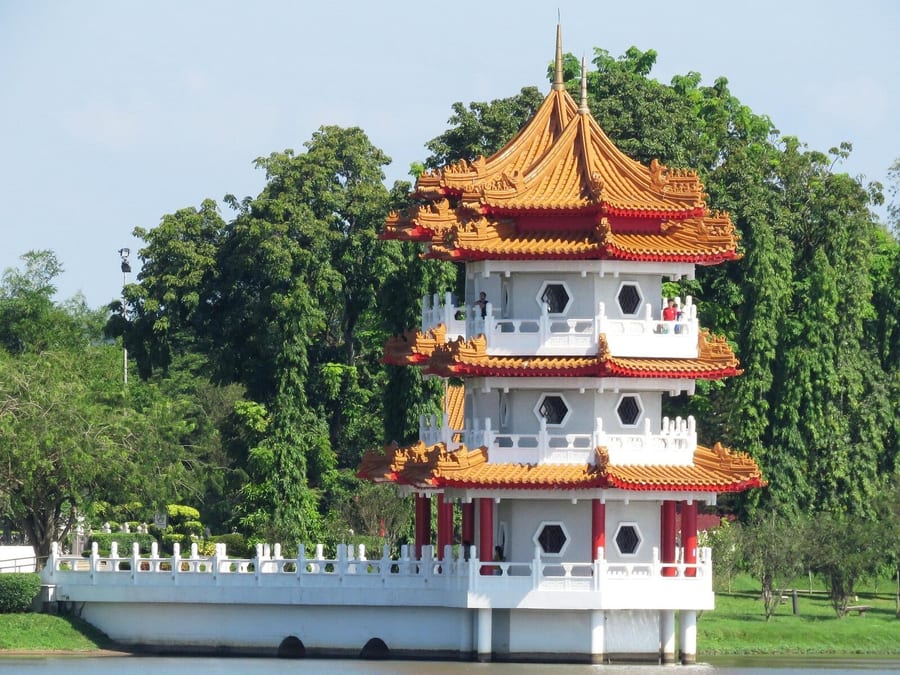
The twin pagoda at the Chinese Garden in Jurong, Singapore
More Than a Century of Medical Training
From One School to Three
Get all information about MBBS in Singapore in our free brochure
Find out how the two Singapore medical schools select students and what the course costs.
Role in Medicine
Singapore's Role in Global Medical Education
A Regional Medical Hub
SMC Registration and WDOMS Listing
Get all information about MBBS in Singapore in our free brochure
Find out how SMC registration, the service bond and the NMC position for India fit together.
How to Practise
Your Path After MBBS in Singapore
After MBBS
Finish the five-year MBBS at the NUS Yong Loo Lin School of Medicine or the NTU Lee Kong Chian School of Medicine.
Receive provisional registration from the Singapore Medical Council so you can be employed as a PGY1 doctor. PGY1 must start within two years of graduating.
Work 12 months as a PGY1 doctor employed by MOH Holdings, with at least 4 months in General Medicine and 4 in Surgery or Orthopaedics, then apply for full SMC registration.
Every medicine student signs the MOH Medical Undergraduate Agreement. International students then serve six years in Singapore's public healthcare sector, counted from after PGY1.
As the rules stand, a Singapore MBBS does not meet the NMC rules, because its 12-month internship is the nationally arranged PGY1 year, so it does not lead to the FMGE (NExT deferred and not in force) or an Indian licence.
Apply for residency through MOH Holdings with NUHS, SingHealth or NHG Health. Your WDOMS listing also opens the USMLE route.
Work as a medical officer, resident or specialist in Singapore, or follow the USMLE or PLAB route to practise abroad.
Duration of Residency
Training length after the MBBS depends on the pathway. Typical durations are:
| Pathway | Duration |
|---|---|
| First Postgraduate Year (PGY1) | 1 year |
| Service bond (international students) | 6 years |
| Residency (NUHS / SingHealth / NHG Health) | 3 years or more |
Understand the Singapore Pathway and the India Position
A clear overview of SMC registration, the PGY1 year, the six-year bond and why the degree does not meet the NMC rules for India.
Our blog
Medical Education Insights
Articles that turn complex MBBS-abroad rules into simple, practical steps for students and parents.





Compare
Compare Pathways
See how the Singapore MBBS pathway compares with the MBBS route in India.
Quick Comparison:
MBBS in Singapore vs MBBS in India
| Pathway | MBBS in SingaporeSingapore | MBBS in IndiaIndia |
|---|---|---|
| Entry Level | After Class 12 (10+2) | After Class 12 (10+2) |
| Entrance Exam | UCAT + interview (+ NEET-UG for India) | NEET-UG |
| Degree | MBBS | MBBS |
| Course Duration | 5 years + 1-year PGY1 | 4.5 years + 1-year internship |
| Medium | English | English |
| Licensing | SMC (Singapore); does not meet the NMC rules (India) | NMC registration after internship |
| Approx. Tuition (full course) | About ₹3.25 to 3.38 crore, with a six-year bond | Low at government colleges; set by state fee committees at private ones |
Compare Top MBBS Destinations for Me
See key differences in fees, duration, eligibility and the route back to India.
FAQ
Frequently Asked Questions
Short answers to the questions students and parents ask most often about studying medicine in Singapore.