
Free Webinar: MBBS in India

Sat, December 5, 2026 | 8:30 PM

Reserve my seat
futureMBBS by futuredoctor

Free Webinar: MBBS in India

Sat, December 5, 2026 | 8:30 PM

Reserve my seat
futureMBBS by futuredoctor
Singapore

NTU Lee Kong Chian School of Medicine

Singapore's newest medical school, founded in 2010, teaching through team-based learning at a university ranked 12th in the world.

  • MBBS student
  • MBBS student
  • MBBS student
  • MBBS student
  • MBBS student

1,500+ Students trust us

Singapore

Country

Novena

Clinical campus, Singapore

#12

QS World University Rankings 2027, Nanyang Technological University

English

Medium of instruction

For Indian Students

Can Indian students study MBBS in Singapore?

Short answer: Yes, Indian students can study MBBS in Singapore. No, not as the rules stand: the NMC asks for the 12-month internship at the university that awards the degree, and Singapore's PGY1 year is arranged nationally.

Admission is open to Indian students

NUS and NTU both accept international applicants, but places are few, about 280 a year at NUS and 190 at NTU, and Singaporeans get priority. Entry is on excellent Class 12 science results, a UCAT score and an interview, and Indian students also need a qualified NEET UG result for India.

Why the degree does not meet the NMC rules

No, not as the rules stand. The NMC Foreign Medical Graduate Licentiate Regulations 2021 ask for a course of at least 54 months, a twelve-month internship in the same foreign institution, English-medium teaching and a licence to practise in the country of study. Singapore's five-year, English-medium MBBS meets the course length and language rules, but its twelve-month internship is the PGY1 year, a paid hospital job arranged by MOH Holdings rather than by NUS or NTU. So, as the rules stand, the degree does not meet them and does not lead to an Indian licence.

What this means if you want to work in India

The FMGE (NExT deferred and not in force) is the screening test for doctors with a foreign degree, but as the rules stand a Singapore MBBS does not lead to an Indian licence, and international students also serve a six-year bond in Singapore's public hospitals after PGY1. If India is your long-term plan, plan this with our counsellors before you apply.

Introduction

NTU Lee Kong Chian School of Medicine

Founded in 2010 and admitting its first cohort in 2013, the Lee Kong Chian School of Medicine is Singapore's newest medical school and its second to award the MBBS. It takes about 190 students a year across two campuses, teaches the preclinical years through team-based learning rather than lectures, and uses Tan Tock Seng Hospital as its principal teaching hospital. It was set up with Imperial College London: students graduating up to 2028 receive a joint NTU and Imperial MBBS, and from 2029 NTU awards the degree on its own. Every medicine student signs a Ministry of Health service agreement, and the degree does not meet the NMC rules for practising in India as they stand, both explained below.

  • Study programme:MBBS (Bachelor of Medicine and Bachelor of Surgery), awarded by NTU alone from the 2029 graduating class
  • Language:English
  • Duration:5 years, followed by a 12-month PGY1 hospital year
  • University type:Public university, ranked 12th in the world (QS 2027)
  • Per academic year fees:S$91,250 · ₹67.5 lakh (approx.) for a non-ASEAN international student, AY2026/27
  • Entrance examination:UCAT, then eight Multiple Mini Interview stations at the Novena campus
  • Application deadline:Mid-March (applications open in October, interviews in April)
  • International seats:About 190 places a year in total, with priority for Singaporeans

Find out all about your MBBS-abroad options at NTU

Download our free brochure for immediate information, or get personalised professional counselling from our experts.

Recognition & Prestige

Rankings & Recognition

Nanyang Technological University, the school's parent university, ranks 12th in the world on the QS World University Rankings 2027, holding that place for a second year, and 31st on the Times Higher Education World University Rankings 2026. The Lee Kong Chian School of Medicine itself was founded in 2010 and graduated its first class in 2018.

  • #12

    QS World University Rankings 2027, Nanyang Technological University

  • #31

    Times Higher Education World University Rankings 2026, Nanyang Technological University (5th in Asia)

Clinical training runs through NHG Health, the school's primary clinical partner, with Tan Tock Seng Hospital as its principal teaching hospital, and the school also works with SingHealth and NUHS, so students train across all three of Singapore's public healthcare clusters. The MBBS is on the First Schedule of the Medical Registration Act, which gives graduates the local-graduate route to registration with the Singapore Medical Council (SMC), and the school is listed in WDOMS, so graduates can apply for ECFMG Certification and the USMLE. For India, the five-year English-medium MBBS meets the NMC's course-length and language rules, but the NMC asks for the 12-month internship at the university that awards the degree, while Singapore's PGY1 year is arranged nationally by MOH Holdings, so the degree does not meet the NMC rules as they stand.

Accreditations and Recognition

  • World Directory of Medical Schools emblem

    WDOMS

    The NTU Lee Kong Chian School of Medicine is listed in the World Directory of Medical Schools

Complete Information About NTU Lee Kong Chian School of Medicine

Get complete information about the Lee Kong Chian School of Medicine, including tuition, the service bond, living costs and recognition for Indian students.

Success stories

Student Success Stories

Hear directly from students who are studying medicine in Europe with futureMBBS.

Academic Excellence

Why Study Medicine at NTU

LKCMedicine offers a distinctive teaching method, a large principal teaching hospital and a university ranked 12th in the world, in a city that is safe, English-speaking and a direct flight from India. It also comes with a six-year service bond, very high fees and a degree that does not meet the NMC rules for practising in India. Both sides are set out below.

Team-Based Learning Instead of Lectures

The preclinical years run on team-based learning: students prepare independently before class, then apply the material to clinical scenarios in facilitated group sessions. It replaces lecture teaching rather than adding to it, and it is the school's defining feature.

A University Ranked 12th in the World

Nanyang Technological University holds 12th place on the QS World University Rankings 2027 for a second year, and 31st on the Times Higher Education World University Rankings 2026, fifth in Asia.

Training Across All Three Healthcare Clusters

NHG Health is the school's primary clinical partner, with Tan Tock Seng Hospital as its principal teaching hospital, and the school also works with SingHealth and NUHS. Students train across all three of Singapore's public healthcare clusters.

Taught Entirely in English

Singapore teaches in English and the MBBS is delivered in English throughout, so there is no local language to learn for lectures, examinations or the wards.

A Four to Six Hour Flight Home

Changi Airport has direct flights to Delhi, Mumbai, Chennai, Bengaluru, Hyderabad, Kolkata and other Indian cities, about four to six hours each.

A Small Cohort at a Young School

About 190 students a year, taught in small groups by design, at a school founded in 2010 within a highly ranked university.

Plan the Degree, the Cost, the Bond and the India Route

Students graduating up to 2028 receive a joint NTU and Imperial College London MBBS; from 2029 NTU awards the degree on its own. Tuition is S$91,250 a year, about ₹3.38 crore over five years, and international students serve a six-year bond in Singapore after the PGY1 year. The NMC asks for the 12-month internship at the university that awards the degree, and Singapore's PGY1 is arranged nationally by MOH Holdings, so, as the rules stand, the degree does not meet the NMC rules; a student aiming for India should plan this with our counsellors before applying.

Read all about MBBS abroad in our free brochure

Know exactly what options exist for your MBBS-abroad success.

How to Apply

Admission Process for MBBS

Admission to LKCMedicine runs through the UCAT, an online application with a personal statement and two referee reports and, for shortlisted candidates, eight Multiple Mini Interview stations at the Novena campus, for about 190 places a year with priority for Singaporeans. NEET does not decide admission, but a qualified NEET-UG result is a separate Indian requirement a student must hold before going abroad. Read the service bond in the timeline below before you apply.

Admission Timeline

  1. 1
    Before applyingQualify NEET-UG

    Indian nationals must qualify NEET-UG before taking admission abroad; under NMC rules the NEET result serves as the eligibility certificate. This is an Indian requirement, entirely separate from the university's own selection.

  2. 2
    Before applyingUnderstand the service bond

    Every student accepted into medicine in Singapore signs the Ministry of Health (MOH) Medical Undergraduate Agreement, whatever their nationality. International students then serve six years in Singapore's public healthcare sector, against five for Singapore citizens, counted from after the PGY1 year. Understand this before you start an application, not after an offer arrives.

  3. 3
    Within 12 months of applyingSit the UCAT

    The UCAT is required, and only a result from the 12 months before applying counts; the UCAT ANZ is not accepted. NTU accepts Indian Standard 12 (CBSE, ISC and state boards) on final results, not predicted grades.

  4. 4
    October to mid-MarchApply online

    Applications open in October of the year before intake and close in mid-March. The application carries a personal statement of up to 300 words and two referee reports. An Aptitude-Based Admissions scheme runs alongside standard admissions for candidates with exceptional talent.

  5. 5
    AprilMultiple Mini Interviews

    Shortlisted candidates attend eight one-to-one interview stations over about two hours at the Novena campus, run by faculty and healthcare professionals. This is a very different test from a written paper, so prepare for it well in advance.

  6. 6
    After acceptanceHealth screening and Student's Pass

    Admitted students complete health screening and vaccinations to Ministry of Health requirements and a criminal record declaration, then apply for a digital Student's Pass through ICA's SOLAR system, with a S$45 processing fee (about ₹3,300), a S$60 issuance fee (about ₹4,400) and a further S$30 (about ₹2,200) if a multiple-journey visa is needed.

Eligibility Criteria

Academic Qualification

An applicant with Indian Standard 12 (CBSE, ISC or a state board) needs excellent final results in Physics, Chemistry and Biology, plus a UCAT score; NTU does not accept predicted grades. Under Indian NMC rules an Indian applicant additionally needs Physics, Chemistry, Biology and English at Class 12, with a minimum of 50% aggregate in Physics, Chemistry and Biology for the general category, 40% for SC, ST and OBC candidates and 45% for general-category candidates with benchmark disabilities, together with a qualifying NEET-UG score.

Subjects:

PhysicsChemistryBiologyEnglish

Age Requirement

Under Indian NMC rules the candidate must be 17 years old by 31 December of the admission year, with no upper age limit. NTU sets no upper age limit of its own, but generally does not consider applicants who have already started a degree.

  • Minimum 17 yearsAge to be completed by 31 December of the admission year, under Indian NMC rules

Requirements

Two things govern an LKCMedicine application, and neither of them is marks.

  • About 190 Places, Planned for Singapore

    LKCMedicine admits about 190 medicine students a year in total. Singaporeans get priority, and NTU does not publish a separate number of places for international students. Treat a seat here as one possible outcome, not as your only plan.

  • The UCAT and Eight Interview Stations

    The UCAT must have been taken within the 12 months before applying, and shortlisted candidates then face eight Multiple Mini Interview stations over about two hours at Novena. Together these carry far more weight than school marks, and both need preparing for well in advance.

Entrance Examination

Admission rests on an aptitude test and a structured interview rather than on category-wise minimum marks.

ComponentRequirement
UCATRequired; only a result from the 12 months before applying counts, and the UCAT ANZ is not accepted
Personal statement and refereesA personal statement of up to 300 words together with two referee reports
Multiple Mini InterviewsEight one-to-one stations over about two hours at the Novena campus, in April, for shortlisted candidates
Application windowOpens in October of the year before intake and closes in mid-March
NEET-UG (for India)A qualified score, needed by every Indian student who plans to practise in India

Required Documents

To apply, students need to submit essential academic and identification documents:

  • Final Class 12 results (CBSE, ISC or state board; predicted grades are not accepted)
  • UCAT result from the 12 months before applying
  • Personal statement of up to 300 words and two referee reports
  • Health screening and vaccination records, plus a criminal record declaration, after an offer
  • NEET-UG scorecard, required separately of Indian nationals
  • + More

Admission Guidance & Document Checklist

Get the complete document checklist or admission guidance from our experts.

Programme Structure

MBBS Curriculum & Internship Structure

The LKCMedicine MBBS runs for five years, taught in English across two campuses. The preclinical years use team-based learning in place of lectures, and Year 5 ends with an overseas Elective, a home Selective and the Student Assistantship Programme, all part of the degree course. Singapore's 12-month internship year, PGY1, comes after graduation and is arranged nationally by MOH Holdings rather than by NTU, which is why the degree does not meet the NMC rule that the internship be done at the university that awards the degree.

MBBS Course

  • Total Duration:

    5 Years, then a 12-month PGY1 year after graduation

  • Degree:

    MBBS (Bachelor of Medicine and Bachelor of Surgery), joint NTU and Imperial up to the 2028 graduating class, NTU alone from 2029

Curriculum Phases at LKCMedicine

  • Years 1 to 2

    Integrated Science in Medical Context

    The preclinical years run on team-based learning at the Experimental Medicine Building on the Yunnan Garden campus. Students prepare material independently before class, then apply it to clinical scenarios in facilitated group sessions:

    Team-Based LearningIntegrated Medical SciencesLong-Term Patient ProjectMedical Humanities
    Precision MedicineAI in Healthcare
  • Year 3

    Core Clinical Medicine in Practice

    The first sustained clinical year, with ward-based teaching at Tan Tock Seng Hospital and partner sites, supported by designated Core Tutors:

    Internal MedicineSurgeryCore Specialties
  • Year 4

    Medicine Across Life Stages and Settings

    Clinical postings across the life course and the settings in which medicine is practised, together with a six-week research project:

    ObstetricsPaediatricsGeriatricsPsychiatry
    Palliative MedicineRehabilitationEmergency MedicinePrimary CareScholarly Project
  • Year 5

    Preparing for Medical Practice

    The final year combines an overseas placement, a home placement and a capstone assistantship that prepares students for the work of a junior doctor:

    Overseas ElectiveHome SelectiveStudent Assistantship Programme

Clinical Rotations

Clinical training runs through Singapore's public healthcare clusters, led by NHG Health:

Clinical baseRole in training
Tan Tock Seng HospitalThe school's principal teaching hospital, beside the Novena campus in the HealthCity Novena precinct
NHG HealthThe school's primary clinical partner, providing sites for clinical postings, Selectives, Electives, Scholarly Projects and the Student Assistantship Programme
SingHealth and NUHSSingapore's other two public healthcare clusters, which the school also works with, so students train more widely than in one cluster
MOH HoldingsThe national body that employs PGY1 doctors after graduation and posts them across the public hospital clusters; it is not part of NTU

Get the full curriculum

Download a free brochure to see detailed subjects, the course structure and everything you need to plan your studies.

The Singapore Framework

The Imperial Partnership, the Bond and the Singapore Framework

Two frameworks govern this school. One is the partnership with Imperial College London it was founded on, which is ending. The other is Singapore's national system for training doctors, which applies to international students in full.

ItemDetail
The Imperial College London partnershipThe school was set up in 2010 with Imperial College London. Students graduating up to 2028 receive a joint NTU and Imperial MBBS
From 2029NTU awards the MBBS on its own, so a student starting the five-year course now receives the NTU MBBS
Total intakeAbout 190 places a year in total, with priority for Singaporeans
MOH Medical Undergraduate AgreementSigned by every medicine student; the service obligation is six years for international students and five years for Singapore citizens
When the bond beginsAfter the 12-month PGY1 year, not on graduation day
Liquidated damagesPayable under the agreement if the bond is broken
Singapore Medical CouncilThe LKCMedicine MBBS is on the First Schedule of the Medical Registration Act, giving graduates the local-graduate route to provisional and then full registration with the SMC
WDOMSThe NTU Lee Kong Chian School of Medicine is listed in the World Directory of Medical Schools, so graduates can apply for ECFMG Certification and the USMLE

Understand the Recognition Framework

The table above sets out which degree a student receives and what the Singapore system asks of them.

Legacy

The People and the Lineage

This is Singapore's newest medical school and its first class graduated in 2018, so this section introduces the people who lead it rather than a long alumni record.

Professor Joseph Sung

Dean of the Lee Kong Chian School of Medicine since 2021 and NTU's Senior Vice-President for Health and Life Sciences. A gastroenterologist by training, he was Vice-Chancellor and President of the Chinese University of Hong Kong from 2010 to 2017.

Professor James Best

Dean before Professor Sung, he led the school through its early years, from its first cohort in 2013 to its first graduation in 2018.

Professor Ho Teck Hua

President of Nanyang Technological University since 2023, the university's fifth. He joined from the National University of Singapore, where he had been Senior Deputy President and Provost.

Faculty

The school teaches about 190 students a year across two campuses: the Clinical Sciences Building at Novena, a twenty-storey building opened in March 2017 in the HealthCity Novena precinct next to Tan Tock Seng Hospital, and the Experimental Medicine Building on NTU's Yunnan Garden campus in Jurong West, opened in August 2015. Nanyang Technological University as a whole ranks 12th in the world on QS 2027 and 31st on Times Higher Education for 2026.

Academic Expertise

  • NTU 12th in the world on QS 2027 and 31st on THE 2026

  • Team-based learning in place of lectures in the preclinical years

  • Clinical training across all three of Singapore's healthcare clusters

  • Tan Tock Seng Hospital as principal teaching hospital

Student Support & Mentorship

  • About 190 students a year, taught in small groups

  • Taught entirely in English, with no local language requirement

  • Two purpose-built campuses, Novena and Yunnan Garden

  • Eight-station Multiple Mini Interviews instead of a written entrance paper

About University

History Information

Founded in 2010 with Imperial College London

The Lee Kong Chian School of Medicine was established in 2010 by Nanyang Technological University together with Imperial College London, as Singapore's second school to award the MBBS.

First Cohort in 2013, First Graduation in 2018

The first cohort was admitted in August 2013. The Experimental Medicine Building at Yunnan Garden opened in August 2015 and the Clinical Sciences Building at Novena in March 2017. The first class graduated in August 2018.

The Joint Degree Ends with the 2028 Graduating Class

Students graduating up to 2028 receive a joint NTU and Imperial College London MBBS. From 2029 NTU awards the degree on its own, so anyone starting the five-year course today will receive the NTU MBBS.

An NTU Degree and a Revised Curriculum

Alongside the move to its own degree, the school added themes in precision medicine and artificial intelligence in healthcare and expanded its medical humanities teaching.

Get all information about LKCMedicine in our free brochure

Read on to find out how you can fulfil your dream of studying medicine.

Role in medicine

Role in medical education

Singapore's Newest Medical School

Established in 2010 and admitting its first cohort in 2013, LKCMedicine was created to expand Singapore's capacity to train doctors. It now teaches about 190 students a year.

Teaching by Team-Based Learning

The preclinical years replace lectures with team-based learning: independent preparation followed by applying the material to clinical scenarios in facilitated groups. The school uses the method across its whole preclinical curriculum rather than as an occasional session, and its approach has been the subject of published research.

Part of a National System

Singapore plans its medical school places around the country's own workforce needs. Every medicine student, of any nationality, signs the same Ministry of Health service agreement, and graduates enter the same MOH Holdings PGY1 year and the same public healthcare system. The school is one route into a single national pipeline, and that shapes what it offers an international applicant.

Get all information about LKCMedicine in our free brochure

Read on to find out how you can fulfil your dream of studying medicine.

Cost of living

Living Cost in Singapore

Singapore is one of the most expensive cities in the world to live in. A student typically spends about S$1,200 to S$3,400 a month, and a hall place against a private room is the largest single variable in the budget. Rupee figures use about ₹74 to the Singapore dollar (October 2026).

Monthly Living Cost

Cost ComponentApproximate Amount
Accommodation (hall of residence to private room)₹37,000 to ₹1,33,000 (S$500 to S$1,800)
Food (three meals a day)₹22,000 to ₹59,000 (S$300 to S$800)
Public transport₹7,400 to ₹22,000 (S$100 to S$300)
UtilitiesUsually included in hall rent
Phone, toiletries, clothing₹22,000 to ₹37,000 (S$300 to S$500)
Get free MBBS guide

Average monthly living cost

₹90,000 to ₹2,52,000 (S$1,200 to S$3,400)

Housing

Accommodation

NTU's halls of residence are on the Yunnan Garden campus in the far west of Singapore, which suits the preclinical years. From Year 3 teaching moves to Novena in the centre, so plan where you will live for the clinical years before you arrive.

NTU Halls of Residence

NTU's halls are on the Yunnan Garden campus in Jurong West, where the preclinical years are taught, and hall fees are billed by semester. A hall place is by far the cheapest way to live in Singapore.

Two Campuses, Two Bases

Clinical teaching from Year 3 is centred on Novena and Tan Tock Seng Hospital, roughly 20 to 25 kilometres from the halls at Yunnan Garden. Plan accommodation for the clinical years with our counsellors before you accept an offer.

The Private Market Costs Far More

Numbeo puts a one-bedroom flat outside the city centre at about S$2,662 (about ₹1,97,000) a month and one in the centre at about S$3,752 (about ₹2,78,000), far more than a hall place. Securing campus accommodation is the biggest saving available.

Applying for a Place

Apply for hall accommodation through NTU as soon as you accept your offer, so that the room and the Student's Pass timeline line up.

Getting Around

A monthly public transport pass costs about S$128 (about ₹9,500). Singapore's public transport is excellent, but the Yunnan Garden campus is at the western end of the network, so the commute to Novena is a real daily consideration in the clinical years.

Need accommodation details?

Get a full overview of housing options with our university guide, or reach out to an expert.

Food & Dining

Indian Food and Daily Life in Singapore

Singapore has one of the largest and longest-established Indian communities outside India, and Indian food here is part of ordinary daily life rather than something to search for.

The Little India district has restaurants, groceries, temples, mosques and shops serving a wide range of Indian regional cuisines, and is reachable by MRT from anywhere in the city, including the Novena campus.

Location

How to Reach NTU Lee Kong Chian School of Medicine

Address

The school runs from two campuses. The Clinical Sciences Building at 11 Mandalay Road in Novena, central Singapore, sits in the HealthCity Novena precinct beside Tan Tock Seng Hospital and hosts the clinical years and the admissions interviews. The Experimental Medicine Building at 59 Nanyang Drive, on NTU's Yunnan Garden campus in Jurong West in the far west of the island, hosts the preclinical years.

  • Nearest Airport

    Changi Airport (SIN), with direct flights to Delhi, Mumbai, Chennai, Bengaluru, Hyderabad, Kolkata and other Indian cities

  • Flight Time From India

    About four to six hours direct from the main Indian cities

  • Between the Two Campuses

    Novena and Yunnan Garden are roughly 20 to 25 kilometres apart, linked by MRT and bus

Your Roadmap to Success

Career Pathways After MBBS at NTU

Graduates receive the MBBS (Bachelor of Medicine and Bachelor of Surgery), the equivalent of an Indian MBBS rather than an Indian postgraduate MD. Students graduating up to 2028 receive a joint NTU and Imperial College London MBBS; from 2029 NTU awards the degree on its own.

Understand the Medical Licensing Pathway

A clear overview of the exams and requirements after graduation.

Practising in India

FMGE (NExT Deferred and Not in Force)

To practise medicine in India after graduating abroad, an Indian student qualifies NEET-UG before admission, completes the course abroad, clears the NMC screening examination (the FMGE; NExT is deferred and not in force), completes an internship in India, and registers with the NMC or a State Medical Council. For an NTU graduate this route is not open as the rules stand, because the internship year does not meet the NMC rules, and the six-year service bond comes first in any case.

  1. Step 1

    The Bond Comes First

    International graduates serve six years in Singapore's public healthcare sector under the MOH Medical Undergraduate Agreement, starting after the PGY1 year. Leaving earlier means paying liquidated damages under the agreement. Counting five years of study, the PGY1 year and the bond, a family should plan for about 12 years in Singapore from the first day of the course.

  2. Step 2

    Course Length and Internship

    The NMC Foreign Medical Graduate Licentiate Regulations 2021 ask for a course of at least 54 months, a 12-month internship in the same foreign institution, and a licence to practise in the country of study. The five-year NTU MBBS clears the course length. Its 12-month internship, though, is the PGY1 year after graduation, a paid hospital job arranged nationally by MOH Holdings rather than by NTU, and the final-year Student Assistantship Programme is part of the degree course itself. That is why, as the rules stand, the Singapore degree does not meet the NMC rules and does not lead to an Indian licence.

  3. Step 3

    Teaching in English

    The regulations require the course to be taught in English. NTU delivers the MBBS in English throughout, so this condition is met.

  4. Step 4

    FMGE (NExT deferred and not in force)

    The National Board of Examinations in Medical Sciences conducts the FMGE twice a year with a pass mark of 150 out of 300. In the December 2025 session 42,872 candidates appeared and 10,262 qualified, a pass rate of 23.95%. In June 2025, 36,034 appeared and 6,707 qualified, 18.61%. The National Exit Test (NExT), intended to replace the FMGE, is deferred and not in force.

  5. Step 5

    Clinical Internship in India (CRMI)

    After clearing the FMGE, graduates complete a Compulsory Rotating Medical Internship (CRMI) in India, normally twelve months, and then register with the NMC or a State Medical Council.

Student Life Style

Student life at NTU

Singapore is a city-state of around six million people: equatorial, English-speaking, very safe and very expensive. Student life at LKCMedicine happens in two places: a large campus in the far west for two years, then the centre of the city for three.

The Helix Bridge lit in purple at night with Marina Bay Sands and the ArtScience Museum behind

The Helix Bridge lit in purple at night with Marina Bay Sands and the ArtScience Museum behind

The Bond Shapes the Decade

Six years of service in Singapore after the PGY1 year shapes a graduate's twenties. A student who enrols at eighteen graduates at twenty-three at the earliest, completes PGY1 at twenty-four and completes the bond at thirty. Returning to India sooner means paying liquidated damages under the agreement.

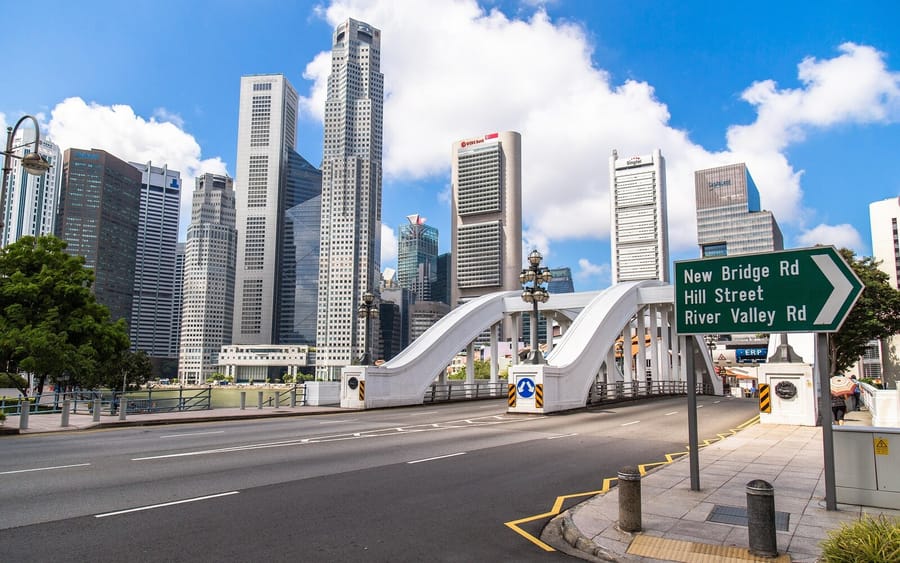
Bridge over the Singapore River with a road sign and the central business district towers behind

Bridge over the Singapore River with a road sign and the central business district towers behind

Two Campuses, Two Lives

The first two years are at Yunnan Garden in Jurong West, a large residential campus at the western end of the island. From Year 3 daily life moves to Novena in central Singapore and Tan Tock Seng Hospital, a bigger change than most medical courses involve.

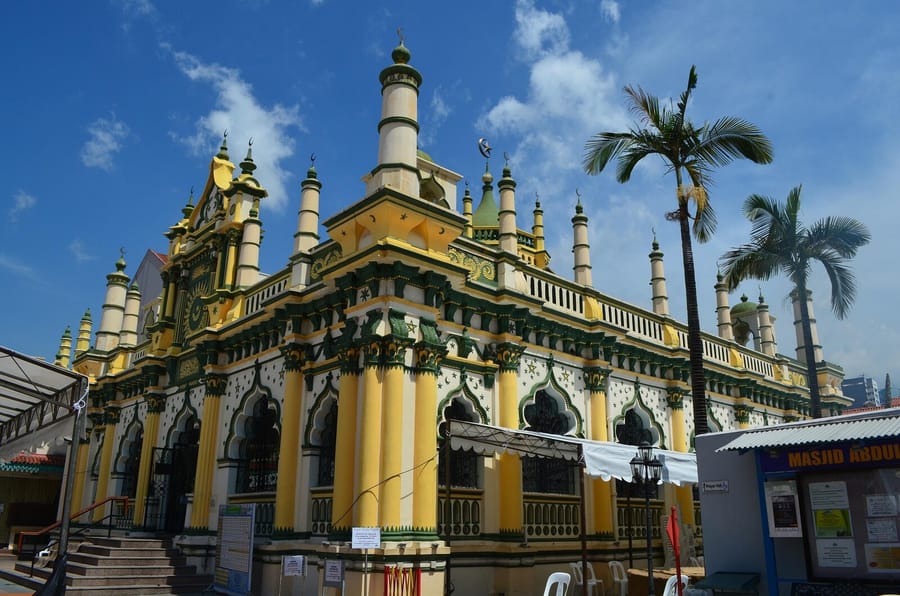
Mosque in Singapore's Little India district, with minarets and palm trees against a blue sky

Mosque in Singapore's Little India district, with minarets and palm trees against a blue sky

An Equatorial Climate

Singapore sits just north of the equator, with temperatures of roughly 26 to 31 degrees all year, high humidity and rain spread through the year. There is no winter and no cold-weather clothing to budget for.

The Cost, and How to Plan for It

Tuition is S$91,250 a year for a non-ASEAN international student, about ₹67.5 lakh, or about S$456,250 (about ₹3.38 crore) across five years, and living costs are high too. A family should work out the full five-year figure before going further.

Safety

Singapore ranks 6th in the world on the Global Peace Index 2025 and is consistently among the lowest-crime countries in the world.

Language and Familiarity

English is the working language of the country, Tamil is one of four official languages, and people of Indian origin are about 9 per cent of the resident population, so the daily adjustment for an Indian student is small.

Getting Home

Changi Airport has direct flights to at least six Indian cities, about four to six hours each, with no transfer and no onward journey by road.

Scholarship & Financial

Scholarship & Financial Aid

Funding for international medicine students at NTU is limited, so plan the full fee from the start. Read all three cards together.

Tuition for AY2026/27 is S$91,250 a year (about ₹67.5 lakh) for a non-ASEAN international student and S$80,850 (about ₹60 lakh) for an ASEAN international student. Across five years the non-ASEAN figure is about S$456,250, about ₹3.38 crore.

  • S$91,250 a year × 5 = about S$456,250, about ₹3.38 crore
  • ASEAN international students: S$80,850 a year, about ₹60 lakh

Compare

Compare Colleges

Compare the NTU Lee Kong Chian School of Medicine with India's top-ranked government medical college.

Quick Comparison:

NTU Lee Kong Chian School of Medicine vs AIIMS New Delhi

University
NTU Lee Kong Chian School of MedicineSingapore
AIIMS New DelhiNew Delhi, India
University TypePublic, founded 2010Institute of National Importance (government)
MediumEnglishEnglish
Course Duration5 years, then a 12-month PGY1 year in Singapore5.5 years, being 4.5 years plus a 12-month internship
Tuition (per year)S$91,250, about ₹67.5 lakh, for a non-ASEAN international student (AY2026/27)About ₹1,628 in academic fees for the whole course, including ₹1,350 tuition
AdmissionUCAT and Multiple Mini Interviews, plus a qualified NEET UG resultNEET UG
RecognitionListed in WDOMS; SMC registration; does not meet the NMC internship rule (PGY1 is arranged nationally)Listed in WDOMS
Global RankingNanyang Technological University: QS 12 (2027), THE 31 (2026)NIRF Medical 1 (2025)

Compare Top MBBS Universities for Me

See key differences in fees, ranking, eligibility and recognition.

Our blog

Medical Education Insights

Articles that turn complex MBBS-abroad rules into simple, practical steps for students and parents.

FAQ

Frequently Asked Questions

Short answers to the questions students and parents ask most often about studying medicine at NTU.