
Free Webinar: MBBS in India

Sat, December 5, 2026 | 8:30 PM

Reserve my seat
futureMBBS by futuredoctor

Free Webinar: MBBS in India

Sat, December 5, 2026 | 8:30 PM

Reserve my seat
futureMBBS by futuredoctor
Davangere, Karnataka

JJM Medical College, Davangere

A 245-seat private medical college founded in 1965, where KEA fills 98 seats a year as government quota at ₹1,53,571 and students train across a 1,930-bed hospital network

  • MBBS student
  • MBBS student
  • MBBS student
  • MBBS student
  • MBBS student

5,000+ Students trust us

Recognised by the NMC

Status

Private (non-minority)

Ownership Type

Bapuji Hospital

Associated Hospital

Established 1965

History

Introduction

JJM Medical College, Davangere

JJM Medical College is a private medical college in Davangere, central Karnataka, established in 1965 by Bapuji Educational Association, a trust founded in the city in 1958. It admits 245 MBBS students a year, and every one of those seats is allotted through NEET UG and Karnataka Examinations Authority (KEA) counselling under college code M061. Because it is a non-minority college, 40% of its seats are filled as government quota at a fee close to that of a government college. The MBBS course is recognised by the National Medical Commission (NMC), and the degree is awarded by the Rajiv Gandhi University of Health Sciences (RGUHS). Students train across 1,930 beds in the college's attached hospitals: Bapuji Hospital on the campus, Chigateri General Hospital (the government district hospital), S.S. General Hospital, the Women and Child Hospital at Mandipet, and rural units at Channagiri and Kukkavada. The college also holds 246 postgraduate seats across 21 specialties, so MBBS students learn on wards staffed by residents at every level.

  • MBBS Entrance Exam:NEET UG, then KEA counselling
  • MBBS Fees₹1,53,571 (government quota) or ₹12,00,117 (private quota) a year, 2026-27
  • Eligibility Criteria:10+2 with Physics, Chemistry, Biology and English, plus NEET UG
  • MBBS Seats245
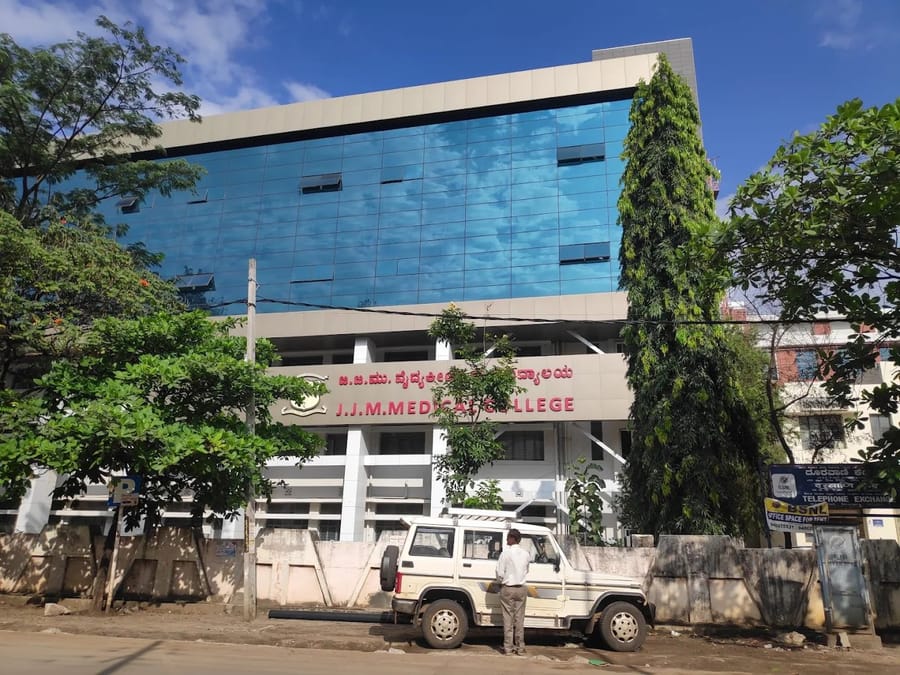
The blue glass frontage of JJM Medical College, Davangere, with the college name board in Kannada and English below the glazing and tall trees along the boundary wall
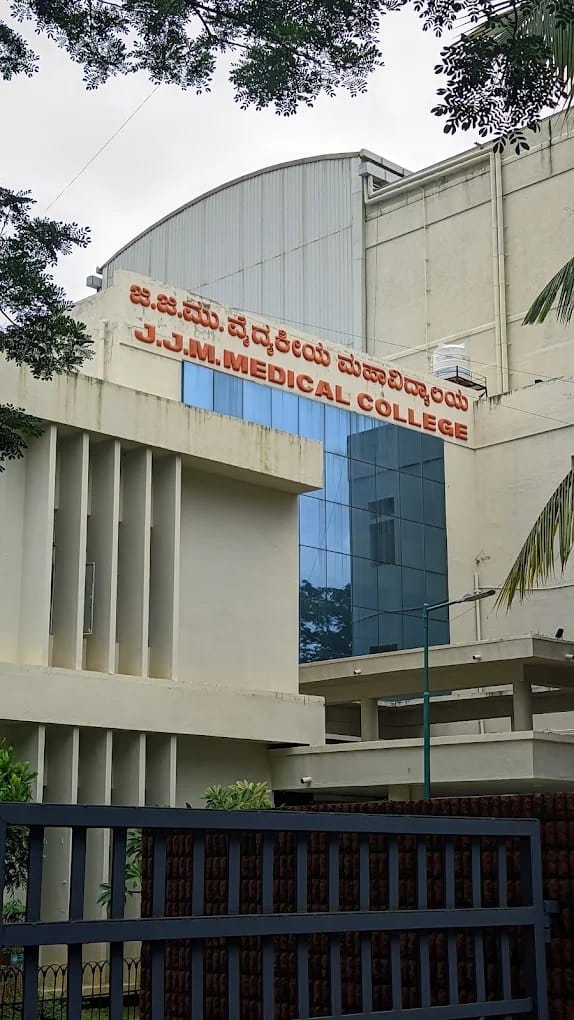
A barrel-vaulted college building at JJM Medical College, Davangere, its name board reading J.J.M. Medical College in Kannada and English, seen past the dark metal boundary gate

The blue glass frontage of JJM Medical College, Davangere, with the college name board in Kannada and English below the glazing and tall trees along the boundary wall

Find out which seat block your NEET rank can reach

At JJM Medical College the same classroom holds students paying ₹1,53,571 and ₹12,00,117 a year, and the KEA list your rank reaches decides which. Get our free guide for the essentials, or talk to our experts about the government, private and NRI routes.

Recognition

Recognition and affiliation

The MBBS course at JJM Medical College is recognised by the National Medical Commission, with 245 seats renewed for 2024-25 and again for 2025-26, and the degree is awarded by the Rajiv Gandhi University of Health Sciences. The college has taught medicine continuously since 1965.

  • Recognised

    NMC status, MBBS (245 seats)

  • RGUHS

    Affiliating university, Karnataka

The NMC register lists the college under code KA/027/P/3 with 245 approved MBBS seats. RGUHS continued its affiliation for 245 seats by notification of 30 May 2019.

The two bodies behind the degree

  • National Medical Commission emblem

    NMC

    National Medical Commission, the regulator under which the college's MBBS course is recognised, with 245 seats

  • University Grants Commission emblem

    RGUHS

    Rajiv Gandhi University of Health Sciences, Bengaluru, the UGC-recognised state university that sets the examinations and awards the MBBS degree

Complete information about JJM Medical College

Get the full picture of courses, admission routes and facilities at JJM Medical College in our free guide.

Why This College

Why Choose JJM Medical College for MBBS?

A large block of low-fee seats, a hospital network anchored on the district hospital, and almost one postgraduate seat for every MBBS seat. Each point below rests on a published figure.

98 seats a year at ₹1,53,571

KEA fills 40% of the seats at a private non-minority college as government quota. On a 245-seat intake that came to 98 government quota seats in 2026, at ₹1,53,571 a year. That is a larger block of low-fee seats than many government medical colleges in Karnataka have in total, so this college deserves a high place on a Karnataka preference list.

1,930 beds, with the district hospital close by

The college lists 1,930 beds across its attached hospitals. Bapuji Hospital on the campus has 720 sanctioned beds, and Chigateri General Hospital, the Government of Karnataka district hospital, is about 600 metres from the college. Students see a high volume of public hospital patients from their first clinical posting.

246 postgraduate seats across 21 specialties

The college holds 246 MD and MS seats, including 28 in General Medicine, 25 in Obstetrics and Gynaecology and 24 in Pathology. That is close to one postgraduate seat for every MBBS seat, so every ward and clinic has residents who teach, and procedures are demonstrated by doctors only a few years ahead.

A two-floor library open late before exams

The library covers 6,171 square metres on two floors of the Bapuji outpatient block, with 10 air-conditioned reading rooms, 34,904 books and 134 current journal subscriptions. It stays open until 10pm on weekdays and until midnight for the two months before examinations.

A tertiary neonatal unit

The Neonatology department runs a tertiary referral unit for newborns up to four weeks old, cares for babies from 24 weeks of gestation and offers therapeutic cooling. Paediatrics also has its own teaching hospital, Bapuji Child Health Institute and Research Centre, and RGUHS runs a fellowship in Perinatal Medicine here.

Two languages cover most patients

Census 2011 puts Kannada at about 66% of mother tongues in Davangere city and Urdu at about 24%, so the two together cover roughly nine patients in ten. The Urdu spoken here is close to Hindi, which gives a student from north India a head start in taking histories.

Read all about MBBS in our free brochure

Know exactly what options exist for your MBBS admission in Karnataka.

Programme Structure

MBBS Curriculum and Internship at JJM Medical College

The MBBS is the RGUHS degree, taught to the NMC competency based medical education curriculum over four and a half academic years, followed by a twelve-month compulsory rotating internship across the college's attached hospitals.

MBBS Course

  • Total Duration:

    5.5 Years

  • Internship Duration:

    1 Year

  • Academic Duration:

    4.5 Years (+ 1 Year Internship)

  • Course Type:

    Full-time

  • Mode of study:

    On campus

  • Degree:

    Bachelor of Medicine, Bachelor of Surgery

MBBS Fee Structure

  • Government quota:

    ₹1,53,571 a year (2026-27)

  • Private quota:

    ₹12,00,117 a year (2026-27)

  • Management and NRI:

    ₹39,11,950 a year (2026-27)

MBBS Syllabus and Departments at JJM Medical College

  • Phase I, 12 months

    Pre-clinical phase

    Structure and function of the normal body, taught in a separate pre-clinical block on the main campus, alongside early clinical exposure and the AETCOM module on attitude, ethics and communication.

    AnatomyPhysiologyBiochemistryFoundation Course
    Early Clinical ExposureAETCOM
  • Phase II, 12 months

    Para-clinical phase

    How disease develops, how drugs act and how infection spreads. Pathology runs histopathology, cytology, immunohistochemistry and frozen section, and Microbiology uses automated culture and identification systems.

    PathologyPharmacologyMicrobiologyForensic Medicine and Toxicology
    Community Medicine
  • Phase III, 30 months

    Clinical phase

    Ward, theatre, outpatient and community postings across the whole hospital network, from Bapuji Hospital and Chigateri General Hospital to the rural hospital at Channagiri. The case mix follows the district: high-volume obstetrics, child health, anaemia, tuberculosis and trauma.

    General MedicineGeneral SurgeryObstetrics and GynaecologyPaediatrics
    OrthopaedicsOphthalmologyENTDermatologyPsychiatryPulmonary MedicineAnaesthesiologyRadio-DiagnosisEmergency MedicineCommunity Medicine

Compulsory Rotating Internship

The internship follows the NMC Compulsory Rotating Medical Internship schedule and is served across the attached hospitals, with the community medicine posting at S.T.J. Rural Hospital, Channagiri and the community health centre at Kukkavada. The college declares an intern stipend of ₹30,000 a month to the NMC.

DurationPosting
2 MonthsCommunity Medicine, including the rural posting at Channagiri and Kukkavada
2 MonthsGeneral Medicine, including Psychiatry
2 MonthsGeneral Surgery, including Anaesthesiology
2 MonthsObstetrics and Gynaecology, including the Women and Child Hospital, Mandipet
1 MonthPaediatrics, at Bapuji Child Health Institute and Research Centre
1 MonthOrthopaedics, including physical medicine and rehabilitation
15 DaysOphthalmology
15 DaysENT
1 MonthCasualty and emergency, plus an elective posting

Get the full MBBS syllabus

Download a free brochure to see the subjects, course structure and key information you need to plan your studies.

How to Apply

Admission Process for MBBS at JJM Medical College

Every one of the 245 seats is allotted by KEA under college code M061. There is no college entrance test, and as a private college it contributes no seats to the MCC All India Quota, so you must register for Karnataka counselling to be considered. KEA splits the intake of a private non-minority college 40% government quota, 40% private quota, 15% NRI and 5% other seats. In 2026 that came to 98 government quota seats, 98 private quota seats (45 on All India open merit, 45 for Karnataka candidates and 8 for Karnataka candidates with a disability) and 49 management and NRI seats. So 151 of the 245 seats are filled from Karnataka lists, which makes Karnataka eligibility the most valuable document in this admission.

Admission Timeline

  1. 1
    February to MayApply for and sit NEET UG, naming Karnataka as a state of choice
  2. 2
    After the resultRegister with KEA and claim your category and Karnataka eligibility clause
  3. 3
    Counselling roundsAttend document verification, enter options for code M061 in each block you qualify for, and receive your allotment
  4. 4
    After allotmentPay the fee and report at the Principal's office with original documents

Eligibility Criteria

Academic Qualification

A pass in Class 12 or equivalent with Physics, Chemistry, Biology or Biotechnology and English, and a NEET UG score at or above the qualifying percentile for your category. Government quota and Karnataka private seats also need a KEA Karnataka eligibility clause, which usually rests on years of schooling in Karnataka. NRI seats need NRI documents.

Required Class 12 subjects

PhysicsChemistryBiology / BiotechnologyEnglish

Minimum Qualifying Marks

The NMC requires 50% in Physics, Chemistry and Biology together in Class 12 for General and EWS candidates, 45% for General candidates with a benchmark disability, and 40% for SC, ST and OBC candidates.

CategoryMinimum PCB aggregate
General and EWS50%
General with a benchmark disability45%
OBC, SC and ST40%

Age Requirement

You must be at least 17 years old by 31 December of the admission year. There is no upper age limit for NEET UG.

  • Minimum 17 yearsCompleted by 31 December of the admission year

The routes into this college

Which seat blocks you are considered for is fixed by the eligibility you claim in the KEA application form. A claim left out there cannot be added later.

  • Government quota seats

    98 seats in 2026 for candidates eligible under a KEA Karnataka clause, with the state's category reservation. Fee ₹1,53,571 a year for 2026-27.

  • Karnataka private seats

    53 private quota seats in 2026, including 8 for candidates with a disability, filled from the Karnataka merit list at ₹12,00,117 a year for 2026-27.

  • All India open merit seats

    45 private quota seats in 2026, open to candidates from any state on All India Rank, at ₹12,00,117 a year for 2026-27.

  • Management and NRI seats

    49 seats in 2026 for NRI candidates and an other category, at ₹39,11,950 a year for 2026-27. NRI candidates submit an NRI ward certificate at admission.

Required Documents

Carry originals and copies to KEA document verification and again to the college at reporting. At reporting the college also collects a one-time college fee of ₹50,000 and three affidavits on ₹100 stamp paper, including the rural service bond and the parents' anti-ragging undertaking.

  • KEA registration printout, verification slip and allotment order
  • NEET UG admit card and score card, with a valid photo ID
  • Class 10 and Class 12 marks cards, study certificates and transfer certificate
  • Claim documents: caste and income certificates or the NRI ward certificate, plus the three affidavits

Admission guidance and document checklist

Get the complete document checklist or admission guidance from our admission experts.

Important dates

Waiting for NEET 2027? Here Are the Expected Dates

NTA has not announced the NEET 2027 dates yet. These are the expected dates, based on the last three NEET cycles. We will update them as soon as the official dates are out.

Expected NEET 2027 Timeline

  1. 1

    February 2027

    NEET 2027 Registration Opens

    Expected in the first or second week of February, open for about a month

  2. 2

    April 2027

    Admit Card Release

    Expected about a week before the exam, on the NTA portal

  3. 3

    May 2027

    NEET 2027 Exam Day

    Expected on the first Sunday of May (likely 2 May 2027)

  4. 4

    June 2027

    Result Announcement

    Expected four to six weeks after the exam

  5. 5

    July to August 2027

    Counselling Begins

    AIQ and state counselling rounds expected to start

Discuss all Dates and Requirements with our Experts

Text or call with our experts to get to know about document requirements, submission deadlines and much more.

NEET cutoffs

NEET-UG Cut-off

Closing All India Ranks in KEA counselling for the main seat blocks at JJM Medical College. In 2024 the government quota seat closed only 2,422 ranks ahead of the All India open merit private seat, for a fee about ₹10.47 lakh a year lower.

Seat block2024 (round 1)2025 (round 1)2026 (round 2)
Government quota, general merit37,06724,25538,439
Private quota, All India open merit39,48943,64050,595
Private quota, Karnataka candidates87,07480,6871,05,013
Private quota, Karnataka candidates with a disability1,05,95799,1801,25,472
Management and NRI4,70,2363,62,0528,24,113

Check which colleges your NEET score could reach in our NEET College Predictor.

Check Your Chances

Not sure which block your rank reaches? Get personalised admission guidance from our experts.

Cost of study

MBBS Fees at JJM Medical College, Davangere

Tuition at private medical colleges in Karnataka is fixed by Government of Karnataka order and published by KEA, so it is the same for every student in a given seat block. The 2026-27 rates are per year. Hostel and mess charges are billed by the college separately.

MBBS Fee Breakdown (2026-27)

Cost ComponentFrequencyAmount
Tuition, government quota seat (98 seats)Yearly₹1,53,571
Tuition, private quota seat (98 seats)Yearly₹12,00,117
Tuition, management or NRI seat (49 seats)Yearly₹39,11,950
College fee at reportingOne time₹50,000
Tuition over 4.5 academic years, government quotaCourse totalAbout ₹6.9 lakh
Tuition over 4.5 academic years, private quotaCourse totalAbout ₹54 lakh
Tuition over 4.5 academic years, management or NRICourse totalAbout ₹1.76 crore
Get free MBBS guide

Government quota tuition, full course

About ₹6.9 lakh (₹1,53,571 a year, 2026-27)

Campus and Facilities

Infrastructure at JJM Medical College

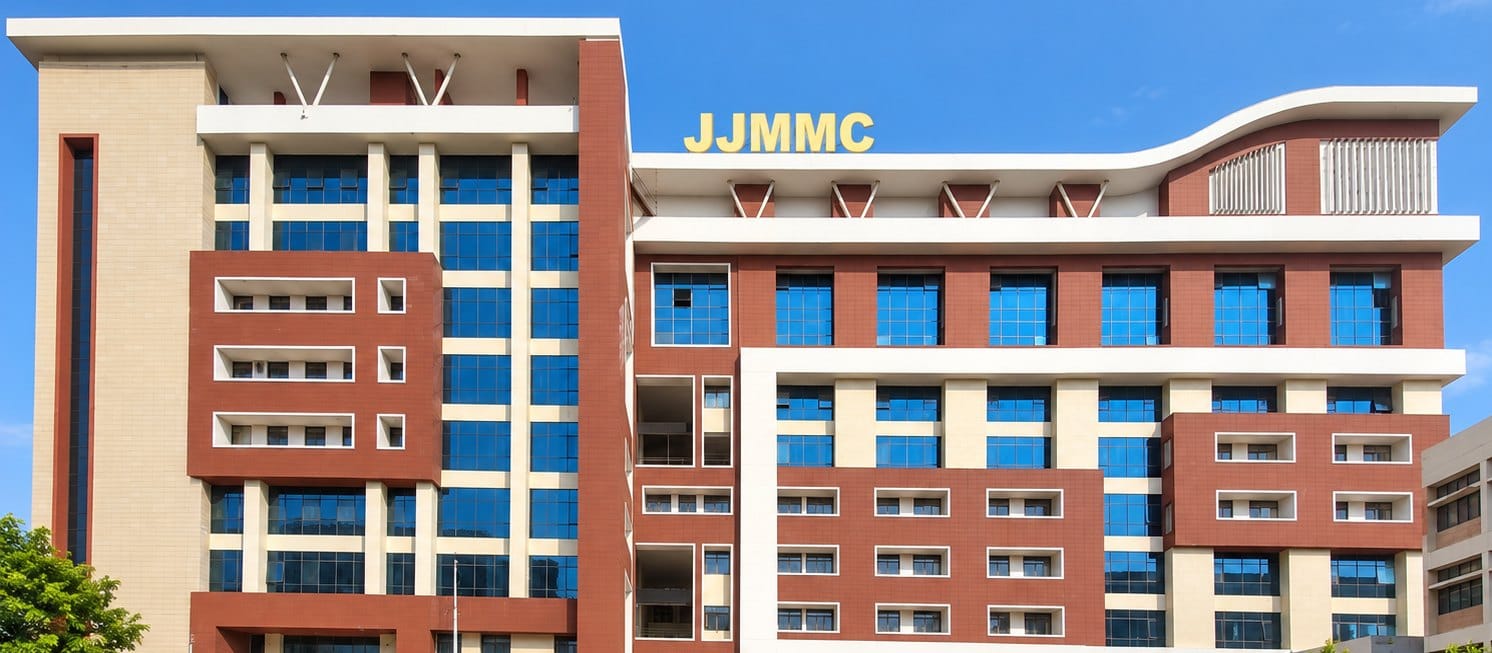
The campus in M.C.C. B Block holds the pre-clinical and para-clinical blocks, the administrative building, a newer glass-fronted academic block and Bapuji Hospital, with Chigateri General Hospital a short walk away.

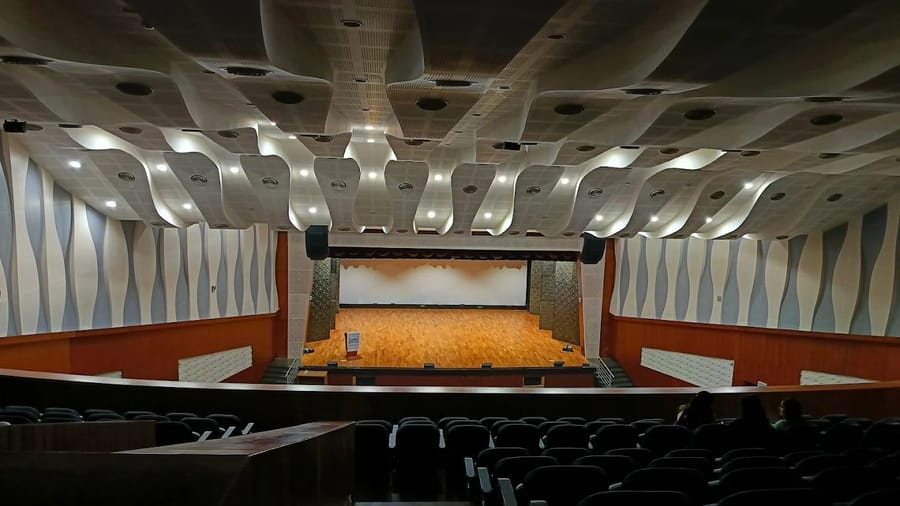
The auditorium at JJM Medical College, Davangere, looking from the rear over rows of tiered seating towards a lit stage and projection screen under a sculpted ceiling
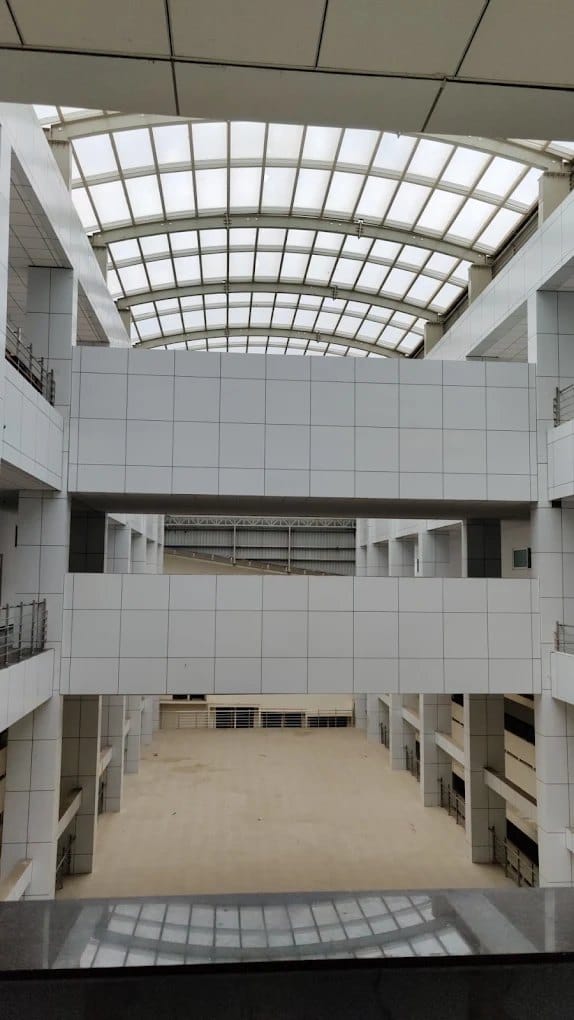
A multi-level atrium inside a JJM Medical College building at Davangere, with open galleries on three floors rising to a curved translucent skylight

The auditorium at JJM Medical College, Davangere, looking from the rear over rows of tiered seating towards a lit stage and projection screen under a sculpted ceiling

The college's own hospital sits on the main campus with 720 sanctioned beds, 700 of them operational, intensive care included. Imaging includes a 1.5 Tesla MRI scanner and a 128-slice CT scanner, and casualty, dialysis, laboratory, pharmacy and radiology services run 24 hours.

History

History of JJM Medical College

1958: Bapuji Educational Association

Bapuji Educational Association was founded in Davangere in 1958 by a group of the city's philanthropists to widen access to education in the region. The trust now runs more than 50 institutions in the city, including two medical colleges, dental colleges and an engineering college.

1965: the medical college opens

JJM Medical College was established in 1965, with permission from the Government of Karnataka, the Medical Council of India and the Central Government. Its first Letter of Permission for MBBS is dated 22 October 1965, and Bapuji Hospital was set up the same year as its teaching hospital.

1973 to 1985: building the postgraduate school

Postgraduate teaching began in 1973 with nine courses at once, including General Medicine, General Surgery, Paediatrics and Obstetrics and Gynaecology. Courses in Dermatology, ENT, Orthopaedics, Anaesthesia, Biochemistry, Radiology, Community Medicine, Microbiology, Forensic Medicine and Psychiatry followed by 1985, with Pulmonary Medicine added in 2012 and Emergency Medicine in 2014.

2019: diplomas become degrees

From the 2019-20 session the college's postgraduate diplomas were converted into MD and MS degree seats, adding 63 degree seats. The college now holds 246 postgraduate seats against its 245 MBBS seats.

Download Complete MBBS Admission Guide

Get detailed information about medical colleges, fees, eligibility, and admission process.

Campus Life

Hostel Facilities at JJM Medical College

The college declares 567 rooms for 650 residents in its men's hostels and 620 rooms for 519 residents in its women's hostels, with separate blocks for undergraduates, interns and postgraduates. Hostel and mess charges are billed by the college, separately from the KEA tuition fee.

JJMMC Boys Hostel

The largest block houses undergraduates, interns and postgraduates: 239 double rooms for undergraduates, 57 single rooms for interns and 180 single rooms for postgraduates, with a mess, a reading room, indoor games and round-the-clock water and power.

Kaveri Women's Hostel

A 138-room block for women postgraduates, with a reading room, newspapers, television and a security guard. On the women's side there are more rooms than residents, so single rooms are common.

International Hostel, girls' wing

96 rooms, each with an attached bathroom, plus air conditioning, high-speed wifi, a gymnasium, indoor sports, a canteen and parking.

International Hostel, boys' wing

88 double rooms with attached bathrooms, sharing the same facilities as the girls' wing: air conditioning, wifi, a gymnasium, indoor sports and a canteen.

A walkable campus quarter

The college sits in M.C.C. B Block, an institutional quarter with colleges and hospitals within walking distance. The college runs four buses, two of them air-conditioned, for hostel commuting and community field visits.

Need more detail?

Get a full overview with our university guide or reach out to an expert for quick and helpful advice.

Leadership

Leadership and Faculty

The college is led by its Principal, with 22 departments covering the pre-clinical, para-clinical and clinical subjects and the postgraduate courses alongside MBBS.

Dr. Shukla S. Shetty

Principal, and Professor and Head of Obstetrics and Gynaecology

Dr. Harisha E. J.

Professor and Head of General Medicine

Dr. Guruprasad G.

Professor and Head of Neonatology

Dr. Santhosh C. S.

Professor and Head of Forensic Medicine

How the departments are organised

The 22 departments follow the three phases of the MBBS course, with Neonatology, Pulmonary Medicine and Emergency Medicine running alongside the core clinical departments.

Pre-clinical and para-clinical

  • Anatomy, Physiology and Biochemistry

  • Pathology and Microbiology

  • Pharmacology

  • Forensic Medicine and Community Medicine

Clinical

  • General Medicine and General Surgery, with allied specialities

  • Obstetrics and Gynaecology, Paediatrics and Neonatology

  • Pulmonary Medicine, Emergency Medicine and Psychiatry

  • Radio-Diagnosis and Anaesthesiology

Location

How to Reach JJM Medical College, Davangere

Campus address

J.J.M. Medical College, M.C.C. B Block, P.J. Extension, Davanagere 577004, Karnataka. Both spellings, Davanagere and Davangere, are in official use.

  • By rail

    Davangere station (DVG) is about 2.7 km from the campus; the Vande Bharat reaches Bengaluru in about 4 hours 10 minutes

  • Nearest Airport

    Shivamogga (RQY), about 100 km by road; Hubballi (HBX) is about 159 km and Bengaluru (BLR) about 282 km

  • By road

    On National Highway 48, about 263 km from Bengaluru; the KSRTC bus stand is about 1.9 km from the campus

After MBBS

Career Pathways After MBBS at JJM Medical College

After the final MBBS examination comes the one-year compulsory rotating internship. A graduate of an Indian medical college then registers with a State Medical Council or the NMC to practise. There is no separate licensing exam of the kind foreign graduates sit.

Understand the medical licensing pathway

A clear overview of exams and requirements after graduation.

Alumni

University Rank Holders

JJM Medical College publishes its RGUHS university rank holders by name. In 2018 alone its postgraduates took four first ranks, in Pulmonary Medicine, Orthopaedics, Radio-Diagnosis and Psychiatry.

Dr. Abhishek G. U.

First rank in Obstetrics and Gynaecology, RGUHS MBBS examinations, 2018

Dr. Huma Tamkin

First rank in MS Obstetrics and Gynaecology, RGUHS, 2017

Dr. Harsha Jain

First rank in MD Pulmonary Medicine, RGUHS, 2018

Dr. Buddharaju Verma

First rank in MS Orthopaedics, RGUHS, 2018

Dr. Sachin L.

First rank in MD Radio-Diagnosis, RGUHS, 2018

Dr. Karan Dhawan

First rank in MD Psychiatry, RGUHS, 2018

Financial Support

Scholarships and Fee Support

The largest saving at this college is the government quota seat itself, about ₹10.47 lakh a year below the private quota fee. On top of that, students can use a trust scholarship and the state and central scholarship schemes.

  • Dr. Shamanur Shivashankarappa Janakalyana Trust

    A trust set up by the college chairman pays scholarships from the interest on its deposits to students of the Bapuji institutions, irrespective of caste or creed. The chairman has also instituted gold medals and cash prizes for rank holders and toppers.

  • Karnataka post-matric scholarships

    The State Scholarship Portal runs post-matric scholarships and fee reimbursement for SC, ST, OBC and minority students through the state welfare departments, and the Vidyasiri food and accommodation allowance for eligible students not in a government hostel. Students apply after admission, every year of the course.

  • Central schemes on the National Scholarship Portal

    Central government scholarships for professional courses, including SC, ST, OBC and disability schemes, are applied for on the National Scholarship Portal. This is the main route for students admitted on All India open merit seats from outside Karnataka.

Application Process

Before counselling

Get the caste, income and Karnataka study certificates you need well before KEA document verification.

In the KEA application

Claim your category and the correct eligibility clause. KEA only gives benefits that are claimed in the form.

After admission

Apply on the State Scholarship Portal and, where a central scheme applies, the National Scholarship Portal. Both repeat every year of the course, and the college certifies each application.

Get free MBBS guide

Compare

Compare Colleges

Compare JJM Medical College with another private medical college in central Karnataka

Quick Comparison:

JJM Medical College, Davangere vs Basaveshwara Medical College, Chitradurga

University
JJM Medical CollegeDavangere, Karnataka
Basaveshwara Medical College and HospitalChitradurga, Karnataka
College TypePrivate (non-minority)Private (society-run)
Annual Fee₹1,53,571 (government quota) to ₹39,11,950 (management), 2026-27₹1,56,621 (government quota) to ₹34,65,000 (management), 2026-27
Established19652001
MBBS Seats245200
NMC RecognitionYesYes
AffiliationRGUHS, KarnatakaRGUHS, Karnataka
CounsellingKEA (government, private and management seats)KEA (government, private and management seats)

Compare the colleges your rank can reach

We can build your shortlist from KEA allotment data for your category and rank.

FAQ

JJM Medical College, Davangere: FAQs

Short answers to the questions students and parents ask most often about MBBS at JJM Medical College.