Guides & Tips
Winter in Europe: A Survival Guide for Indian MBBS Students
6 Oct 2026
14 min read
Winter in Europe for Indian MBBS students: short days, the clock change, vitamin D, flu season and winter blues. See what to expect and plan your first winter.
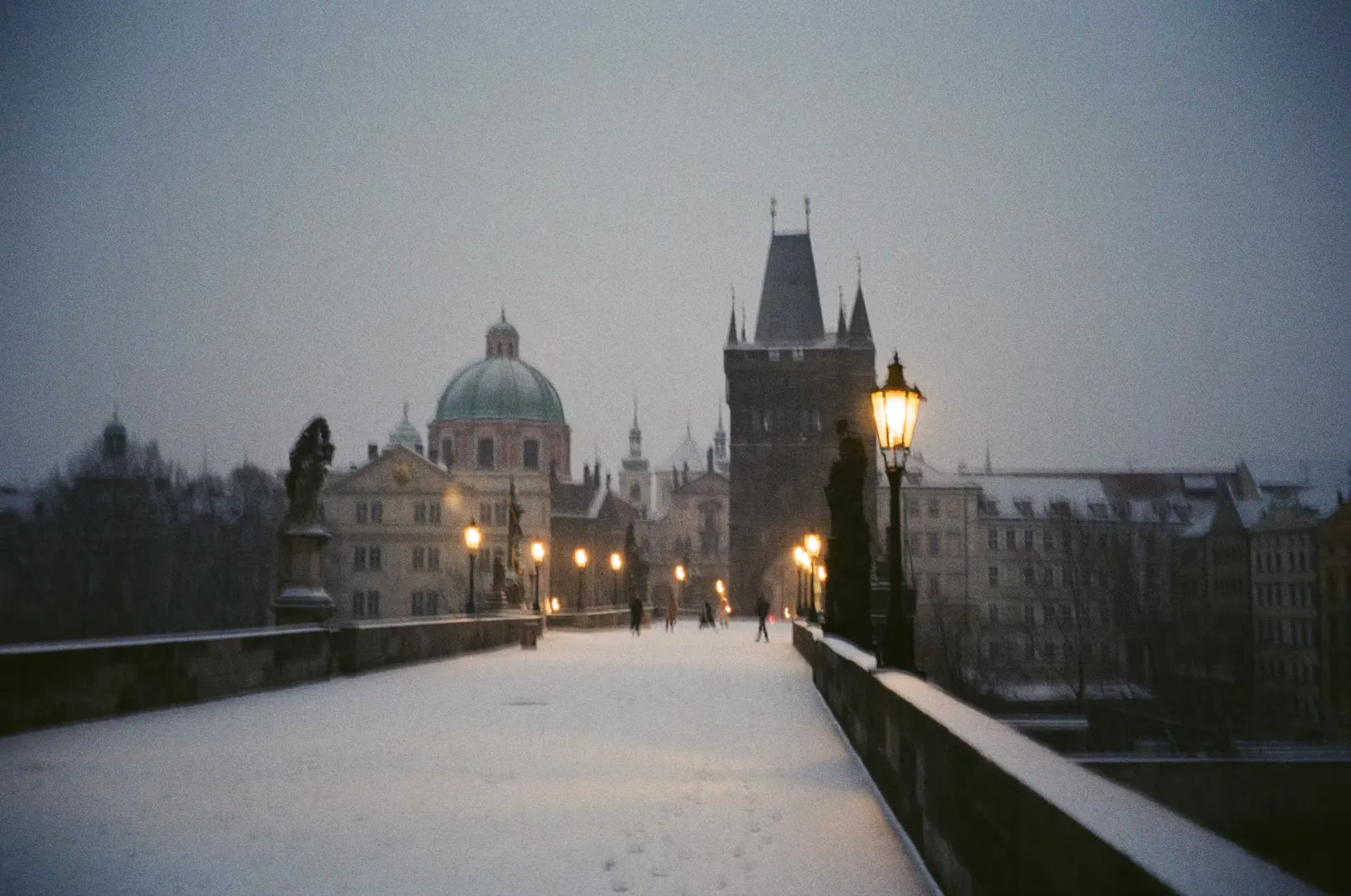
Winter in Europe is the long, dark stretch from about November to March, and for an Indian MBBS student it is usually the hardest part of the first year. The cold is the obvious change. The bigger one is the light: on 21 December 2026 the sun will be up for just 8 hours 3 minutes in Prague and 6 hours 43 minutes in Riga, against 10 hours 20 minutes in New Delhi. Add the clock change, the flu season and your first exam session, and it helps to know what is coming. This guide covers all of it, with a short plan at the end.
Key Takeaways
- The days get very short. On 21 December 2026 Riga gets 6 hours 43 minutes of daylight and Prague 8 hours 3 minutes, against 10 hours 20 minutes in New Delhi (US Naval Observatory data).
- The clocks go back on Sunday 25 October 2026. EU law ends summer time on the last Sunday in October, so the gap to India grows by one hour, to 4 hours 30 minutes from Central European cities.
- Vitamin D needs a plan. The NHS says that between October and early March we do not make enough vitamin D from sunlight, and people with a south Asian background may not make enough even in summer.
- Flu season is long. ECDC says seasonal influenza in the northern hemisphere usually comes in epidemics between November and April.
- Low winter mood is real and treatable. Daylight, exercise, a fixed routine and an early chat with a doctor help much more than waiting for spring.
How dark does winter in Europe get?
Darker than most Indian students expect. India sits close to the tropics, so even in December Delhi still gets more than ten hours of sun. Most European medical cities lie 15 to 28 degrees of latitude further north, and every degree north takes more light away in December.
The US Naval Observatory publishes official sunrise and sunset times for any point on Earth. Here is what it gives for the shortest day of 2026 in the cities where many Indian students study medicine.
In Riga the sun rises at 9:00 and sets at 15:43 that day. In Poznań it is 8:00 to 15:40, in Budapest 7:29 to 15:55. In practice that means you walk to your morning lecture in the dark or at dawn, and you leave the anatomy hall after sunset. On a cloudy day, which is common in a Central European winter, the sky can feel grey from start to finish.
Cyprus is the gentle exception to the dark side of winter in Europe. Nicosia still gets almost ten hours of daylight in December, which is closer to what you know from home.
When do the clocks go back in 2026?
On Sunday 25 October 2026, and for many students it is the first real sign that winter in Europe is coming. The EU's summer-time directive says summer time ends "in every Member State, at 1.00 a.m., Greenwich Mean Time, on the last Sunday in October". In Prague, Budapest or Poznań the clock jumps from 3:00 back to 2:00. In Riga, Kaunas, Nicosia and Cluj it jumps from 4:00 back to 3:00.
India does not change its clocks, so the time difference with home grows by one hour:
| You study in | Gap to India until 24 October | Gap to India from 25 October |
|---|---|---|
| Czech Republic, Slovakia, Hungary, Poland, Croatia | 3 hours 30 minutes | 4 hours 30 minutes |
| Latvia, Lithuania, Cyprus, Romania | 2 hours 30 minutes | 3 hours 30 minutes |
Tell your family before the weekend. A daily 8 pm video call in Delhi now lands at 3:30 pm in Prague, often in the middle of a practical. Move it before it becomes a source of stress at both ends. The clocks go forward again on the last Sunday in March.
Do Indian students need vitamin D during winter in Europe?
Many do, and it is worth asking a doctor early instead of waiting until you feel run down. The UK's NHS explains that between October and early March we do not make enough vitamin D from sunlight, and it advises everyone to consider a daily 10 microgram supplement in autumn and winter. The same page says people with dark skin, for example from a south Asian background, may not make enough vitamin D from sunlight at all, and should consider the supplement all year round.
That is UK guidance, but the reason behind it is the low winter sun, and most partner cities lie between about 43 and 57 degrees north, the same band as the UK itself. Cyprus, at 35 degrees, is the exception. Two safety points from the same NHS page matter:
- Do not overdo it. The NHS warns not to take more than 100 micrograms (4,000 IU) a day, as it could be harmful.
- Ask before you start. A GP or the university's student health service can tell you whether you need a blood test first, especially if you were already treated for low vitamin D in India.
Food helps a little too. Eggs, oily fish and fortified foods contain some vitamin D, and a vegetarian student should ask about fortified options in the local supermarket.
What should you pack, and what should you buy there?
Pack light for winter in Europe and buy the heavy things locally. Shops in Prague, Budapest or Riga sell coats and boots made for that exact climate, often in end-of-season sales, and your baggage allowance is better spent on books and things you can't get abroad.
What actually makes a difference in winter in Europe:
- Layers, not one huge jacket. Lecture halls, trams and hospitals are heated. A thermal base layer, a sweater and a windproof jacket you can open are easier than a heavy coat you overheat in.
- Shoes with grip. Pavements can freeze overnight, and a fall on the ice is a classic first-winter injury. Waterproof boots with a ridged sole beat fashion shoes.
- Hat, gloves and a scarf. Cold ears and numb fingers are what first-years complain about most.
- Lip balm and moisturiser. Cold air outside and dry heated air inside crack skin fast.
Our pre-departure checklist covers the rest of your packing, from documents to medicines.
How does winter in Europe change your monthly budget?
It can push it up, mainly through heating. Before you sign a rental contract, ask one direct question: are heating and hot water included in the rent, or billed separately? If they are billed, ask what the last tenant paid in January, not in July.
Energy prices differ a lot between countries. Our guide to the cost of living in Europe compares price levels across the partner countries using Eurostat data, including household energy. A university dormitory usually includes utilities in the fee, which makes the first winter far more predictable.
Keep a small buffer for the extras winter brings: a proper coat and boots in the first month, more food delivery when it is dark at 4 pm, and maybe a flight home over the winter break, which is worth booking early.
How do you stay healthy through flu season?
Plan for a long season. ECDC, the EU's disease agency, says seasonal influenza in the northern hemisphere usually comes in epidemics between November and April. WHO adds that in temperate climates flu epidemics come mainly in winter, while in tropical regions it can circulate all year. So winter in Europe brings a sharper, more seasonal flu wave than many Indian students are used to, and WHO lists health workers among the groups for whom yearly vaccination is advised. Medical students are around patients from early on, so you will meet the virus more often than most students do.
Four habits do most of the work:
- Ask about the flu vaccine at your student health service in October or November. Our post on vaccinations for MBBS in Europe explains which vaccines universities ask for before clinical work.
- Check your insurance now, not when you have a fever. Know which clinic or doctor your health insurance covers and what you pay up front.
- Save the emergency number. The EU's 112 works everywhere in the EU and is free, and operators in many countries can answer in English.
- Learn a few pharmacy words in the local language. Our guide to the local language for MBBS in Europe explains why even basic phrases make daily life easier.
Is the winter blues the same as depression?
Not always, but they can overlap. The NHS describes seasonal affective disorder (SAD) as a type of depression that usually happens in the winter. Signs include low mood, losing interest in things you usually enjoy, sleeping and eating more, and struggling to concentrate.
For an Indian student, the first winter in Europe piles several things on top of the dark: homesickness, missing Diwali or a wedding at home, a new language and the pressure of the first exams. Feeling flat in December doesn't mean something is wrong with you. Feeling that way for weeks, with sleep and studies slipping, is a reason to talk to someone.
What helps, in line with the NHS advice:
- Get outside in daylight every day, even for 20 minutes between lectures. Midday is the brightest window.
- Move. Gyms, university sports clubs and simple walks all count.
- Keep fixed sleep and meal times. Dark mornings make it easy to drift into a night-owl routine.
- Stay connected, with classmates here and family at home.
- See a doctor if low mood lasts, or use the university's counselling service. Psychiatry is a real medical speciality, as you'll see if you read how psychiatrists in India train, and asking for help is part of looking after yourself, not a weakness.
How do you keep studying when it's dark at 4 pm?
Treat the light as a resource. Many first-years face their first exam session in the middle of winter in Europe, and the oral exams at European universities reward steady daily revision more than last-minute cramming.
A fixed timetable helps more in winter than at any other time of year, because your body no longer gets clear signals from the sun. The method in NEETsheet's guide to building a study timetable works just as well for anatomy and biochemistry: fixed blocks, planned breaks and revision built into each week. Put your hardest topic in the morning, use daylight breaks for a walk, and keep the evening for lighter review and calls home.
Your first winter in Europe: a 7-step plan
- Before 25 October, tell your family about the clock change and move your regular call time.
- In October, ask the student health service about the flu vaccine and whether you should take vitamin D.
- In your first weeks, buy waterproof boots with grip, gloves, a hat and a windproof jacket locally.
- Before signing or renewing a rental contract, confirm in writing whether heating is included.
- Save 112 and the address of your nearest covered clinic in your phone.
- Build a fixed weekly study timetable with one daylight walk every day.
- If low mood lasts for weeks, book a doctor or counselling appointment instead of waiting for spring.
Planning your MBBS in Europe
Your first winter in Europe is a real adjustment, and it gets easier once you know what to expect and have a routine that works in the dark months. If you're still preparing for the exam, check the expected NEET 2027 exam date and plan backwards from there. If you're deciding where to study, talk to us and we'll help you choose a university that fits your marks, your budget and the kind of life you want to live there.
Sources
- US Naval Observatory, Astronomical Applications Department, Sun and Moon Data for One Day, queried 6 October 2026 for 21 December 2026 (New Delhi, Nicosia, Split, Cluj-Napoca, Budapest, Bratislava, Prague, Poznań, Kaunas, Riga; standard time).
- European Parliament and Council, Directive 2000/84/EC on summer-time arrangements, read 6 October 2026: Articles 2 and 3 (summer time begins and ends at 1.00 a.m. GMT on the last Sunday in March and October).
- NHS, Vitamins and minerals: Vitamin D, read 6 October 2026: October to early March advice, 10 microgram supplement, people with dark skin, 100 microgram (4,000 IU) daily maximum.
- NHS, Seasonal affective disorder (SAD), read 6 October 2026: definition, symptoms, self-help and when to see a GP.
- European Centre for Disease Prevention and Control, Factsheet about seasonal influenza, read 6 October 2026: epidemics between November and April in the northern hemisphere.
- World Health Organization, Influenza (seasonal) fact sheet, 28 February 2025, read 6 October 2026: epidemics mainly in winter in temperate climates, year-round circulation possible in the tropics, vaccination advised for health workers.
- European Commission, 112: the European emergency number, read 6 October 2026: free everywhere in the EU, operators in many countries answer in English or French.
Related Topics
- MBBS in Europe
- Student life
- Winter
- Health
- Indian students abroad
- Vitamin D
Related Articles
 Guides & Tips5 Oct 202613 min read
District Residency Programme: Rules, Stipend, Postings
Every MD and MS student does three months in a district hospital, and cannot sit the final PG exam without it. Who it applies to, which semester, where you are posted, who pays your stipend, and the interstate posting rule that now needs NMC approval.
 Guides & Tips5 Oct 202614 min read
Oral Exams in MBBS in Europe: How They Work and How to Pass
Oral exams decide most subjects in a European MBBS. How they run, how many attempts you get, how grading works and how an MCQ-trained NEET student can prepare.
 Guides & Tips2 Oct 202613 min read
MADAD Portal: How Indian Students in Europe Register (2026)
MADAD portal guide for Indian MBBS students in Europe: what it is, how to register, what MADAD 2.0 changed and which embassy helps you. Register in week one.