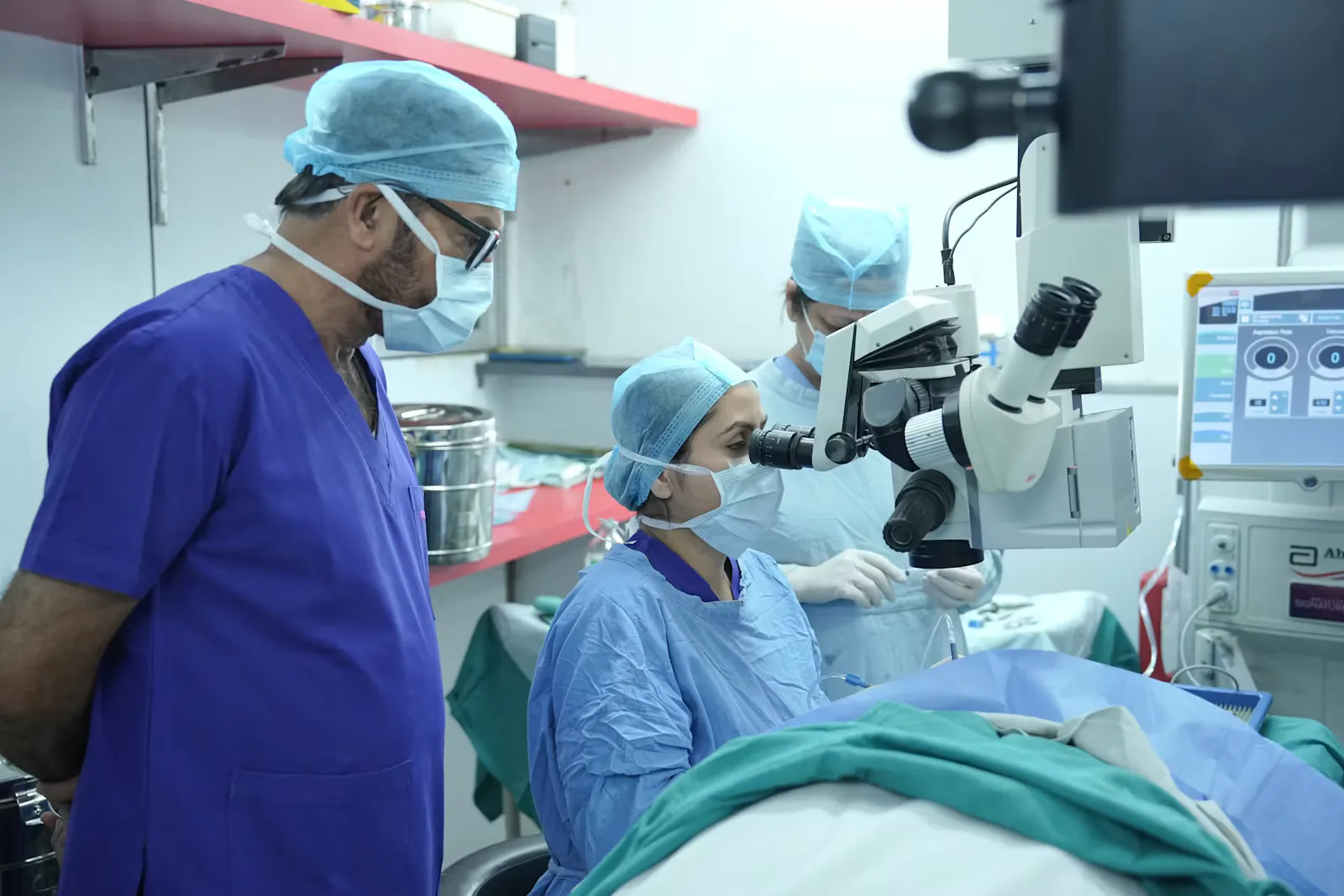
Guides & Tips
Why MBBS Abroad? The Real Reasons and Our 9 EU Countries
27 Jul 2026
8 min read
Why MBBS abroad makes sense for NEET-qualified Indian students: the seat shortage, real EU costs, NMC recognition, and why we work in only 9 countries.


Why MBBS abroad comes up for so many NEET-qualified Indian families is simple arithmetic: India has roughly 1.18 lakh MBBS seats against more than 13 lakh students who clear NEET's qualifying cutoff each year, leaving most qualified students without an Indian seat regardless of how hard they worked. futureMBBS answers that question specifically through 9 EU countries (Czech Republic, Hungary, Slovakia, Poland, Croatia, Latvia, Lithuania, Cyprus, and Romania) rather than the wider, less regulated list of destinations often mentioned online. Below is why that narrower choice matters, what it actually costs, and how the safety and recognition trade-offs compare.
Key Takeaways
India's roughly 1.18 lakh MBBS seats cannot absorb the more than 13 lakh students who qualify NEET-UG each year, which is the core reason MBBS abroad exists as an option at all.
futureMBBS works only with 22 partner universities across 9 EU countries, all regulated externally by EU-member-state accreditation systems rather than by a university alone.
A six-year MBBS abroad in these 9 countries typically costs INR 40-90 lakh all-in, close to or below a private Indian seat, which commonly runs INR 50-90 lakh or more.
NEET-UG remains mandatory for every Indian student choosing MBBS abroad, in every country, under NMC's FMGL 2021 regulations. No country and no university skips NEET.
Countries outside the EU with weaker regulatory oversight have produced real, documented problems for Indian students, including entire batches expelled from unrecognised Russian universities.
Why MBBS Abroad Appeals to So Many NEET-Qualified Students
Why MBBS abroad appeals to most NEET-qualified Indian students comes down to one fact: clearing NEET's qualifying percentile is not the same as securing a seat. India's roughly 1.18 lakh MBBS seats, split across government and private colleges, sit far below the more than 13 lakh candidates who meet the qualifying cutoff most years, and government-college cutoffs at competitive colleges can run as high as 600-650 out of 720. A student who qualifies NEET but cannot reach that cutoff has three realistic paths: a private Indian seat at a substantially higher fee, a drop year with no guaranteed improvement, or an NMC-recognised MBBS abroad programme evaluated on the university's own entrance criteria rather than an unmet Indian rank.
Why Does futureMBBS Only Work With 9 EU Countries?
futureMBBS restricts its partner network to 9 EU countries (Czech Republic, Hungary, Slovakia, Poland, Croatia, Latvia, Lithuania, Cyprus, and Romania) because every university in an EU member state is regulated externally through that country's own higher-education and medical-accreditation authorities, not by the university alone. This external oversight is exactly what has been missing in some of the destinations that get promoted more loosely online: Indian students at unrecognised universities in Russia have faced entire-batch expulsions, and our own coverage of the disadvantages of studying MBBS in Russia and MBBS in Bangladesh walks through similar recognition and safety gaps students have hit in destinations outside our network.
What Does Each of the 9 EU Countries Offer?
Each of futureMBBS's 9 EU partner countries trades cost, university reputation, and student life differently:
Czech Republic: home to Charles University and some of Central Europe's oldest medical faculties, with English-medium programmes and strong research infrastructure.
Hungary: Semmelweis University, Debrecen, and Pécs run long-established English-medium medical programmes with large international student populations.
Slovakia: Comenius University Bratislava offers strong EU-standard training at some of the lowest living costs of any EU capital.
Poland: Poznań, Łódź, and Białystok medical universities combine EU-standard facilities with mid-range tuition.
Croatia: University of Split and Zagreb offer compact, affordable coastal student cities.
Latvia: Riga Stradiņš University admits primarily on academic record rather than a separate entrance exam.
Lithuania: Lithuanian University of Health Sciences in Kaunas has the lowest verified tuition across our network.
Cyprus: University of Nicosia offers English-speaking, Mediterranean campus life with a compact international cohort.
Romania: University of Medicine and Pharmacy, Cluj, provides an affordable, EU-recognised programme with a well-established international intake.
How Does the Cost Compare to a Private Seat in India?
A six-year MBBS abroad across futureMBBS's 9 EU partner countries typically costs INR 40-90 lakh all-in, including tuition and living expenses, against INR 50-90 lakh or more for a private or deemed Indian medical college seat over the same six years, often with additional donation-linked charges MBBS abroad in these countries does not carry. Tuition alone ranges roughly EUR 12,600 to USD 19,900 a year depending on the university, and Baltic or Central European cities such as Riga, Kaunas, and Bratislava run noticeably cheaper on living costs than Prague or Nicosia. Because currency movement and annual fee revisions do shift these numbers, always confirm any specific figure against the university's current fee schedule; see our full fees breakdown by country for country-level detail.
Is NEET Still Required If You Choose MBBS Abroad?
Yes, without exception. A valid NEET-UG qualifying score is mandatory for every Indian student pursuing MBBS abroad, in every country, under the National Medical Commission's Foreign Medical Graduate Licentiate (FMGL) Regulations, 2021, which govern how any foreign medical degree converts into Indian registration; there is no country or university that removes this requirement. Your NEET score does not need to clear any Indian college's cutoff. It only needs to meet NTA's qualifying percentile, which is exactly the profile MBBS abroad exists for. Use our marks-required guide to check whether your score realistically clears an Indian government cutoff before deciding. For a degree to count in India, the World Directory of Medical Schools must list the university, the course must run at least 54 months in English plus a 12-month internship at the same institution, and the graduate must clear the FMGE screening test; NMC's official rules on this are published at https://nmc.org.in/page/rules-regulations-rules-regulations-nmc.
How Do You Actually Apply Once You've Decided Why MBBS Abroad Makes Sense?
Once the reasons why MBBS abroad makes sense for your situation are clear, the admission process itself is straightforward:
Confirm your NEET-UG qualifying score and shortlist two to three universities from the 9 EU countries based on budget and entrance-exam readiness.
Sit the university's own entrance assessment where required, since most Czech, Hungarian, and Slovak universities test Biology and Chemistry, while Latvia's Riga Stradiņš admits mainly on academic record.
Submit 12th-grade marksheets, your NEET scorecard, passport, and passport photographs once you receive an offer.
Apply for a student visa with your admission letter and proof of funds.
Complete the 54-month English-medium course plus a compulsory 12-month internship at the same institution, per NMC's FMGL 2021 norms.
What Happens After Graduating From an EU Medical University?
Graduates of an NMC-recognised MBBS abroad programme in one of futureMBBS's 9 EU countries can return to India and clear the FMGE screening test for state medical council registration, or remain in the EU to pursue specialisation and a European medical career. FMGE remains the operative screening route for foreign graduates as of mid-2026; NMC's proposed National Exit Test (NExT) has not yet replaced it for this purpose, so check NMC's current-year notices before planning your return.
Related Topics
- why MBBS abroad
- MBBS abroad EU countries
- MBBS abroad NEET
- NMC recognised universities
Related Articles
 Guides & Tips27 Jul 20267 min read
Why Study in Europe for MBBS? 9 Reasons That Matter
Why study in Europe for MBBS: affordable public universities, NMC-recognised degrees, and 9 EU countries futureMBBS partners with. Full comparison inside.
 Guides & Tips9 Oct 202610 min read
CBSE Class 12 Date Sheet 2027 and Your NEET Timeline
The CBSE Class 12 date sheet 2027 is not out yet. The LOC circular of 17 September 2026 confirms the Main Examinations 2027 are on. This guide covers what CBSE has confirmed, how to use the gaps between papers for NEET revision, and how to handle registration while boards are running.
 Guides & Tips9 Oct 202611 min read
Domicile Certificate for State Quota MBBS: Rules and Risks
A domicile certificate decides whether you qualify for a state’s 85% MBBS quota. The rules are set by each state, not by MCC. This guide covers who issues it, what states ask for, where it is checked during counselling, and what happens when it fails verification.