
Free Webinar: MBBS in India

Sat, September 5, 2026 | 7:00 PM

Reserve my Seat
futureMBBS

Free Webinar: MBBS in India

Sat, September 5, 2026 | 7:00 PM

Reserve my Seat
futureMBBS
Stanford, USA

Stanford University School of Medicine

A research-driven medical school at the heart of Silicon Valley, part of one of the world's top-ranked universities.

  • MBBS student
  • MBBS student
  • MBBS student
  • MBBS student

5000+ Students trust us

United States

Country

Stanford

City

#3 in the World

Ranking

English

Medium of instruction

Introduction

Stanford University School of Medicine

Stanford University School of Medicine sits at the heart of Silicon Valley in Stanford, California, and is part of Stanford University, ranked #3 in the world in the QS World University Rankings 2026. It awards the MD (Doctor of Medicine), the US equivalent of the MBBS, and is known for a deeply research-driven education, the Discovery Curriculum, and its proximity to the world's leading technology and biotech ecosystem. The school traces its roots to 1858, was adopted as Stanford's School of Medicine in 1908, and moved to the Stanford campus in 1959. It is important for Indian families to understand how this route differs from a typical MBBS abroad. The MD is a graduate-entry degree: students must first complete a bachelor's degree and pre-medical coursework, then sit the MCAT, before applying through the AMCAS system. There is no direct entry after Class 12, and international admission is extremely limited. In a recent cycle, about 717 international students applied and only 7 matriculated. International applicants generally need substantial prior study in the United States.

  • Study program:Doctor of Medicine (MD, equivalent to MBBS)
  • Language:English
  • Duration:4–5 Years (flexible Discovery Curriculum)
  • University type:Private, non-profit
  • Per academic year fees:$69,663 · ₹66.9 Lakh (approx.)
  • Entrance examination:MCAT (no separate university exam)
  • Application deadline:AMCAS cycle (typically late October)
  • International seats:Extremely limited (~7 in a recent cycle)
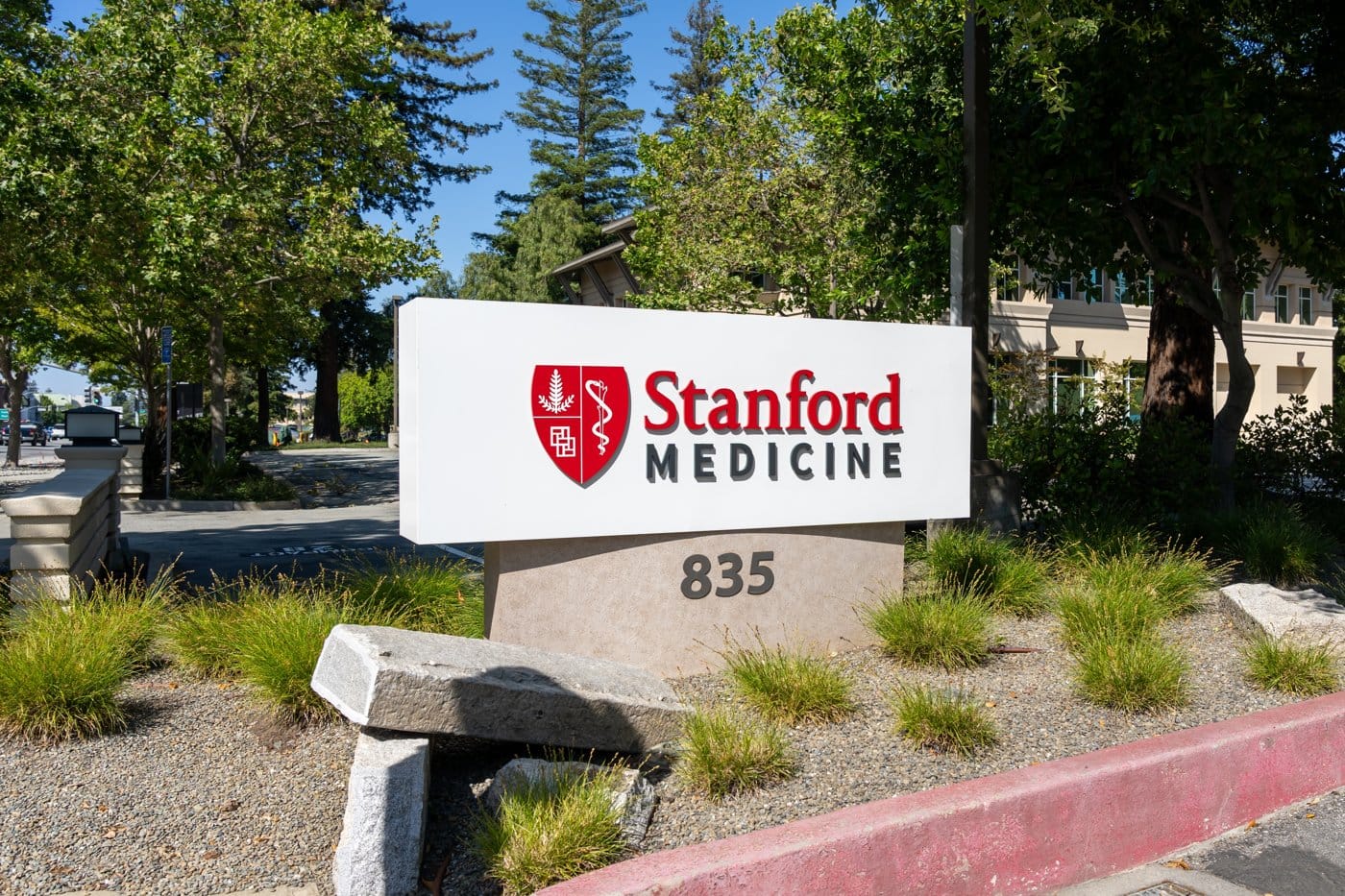
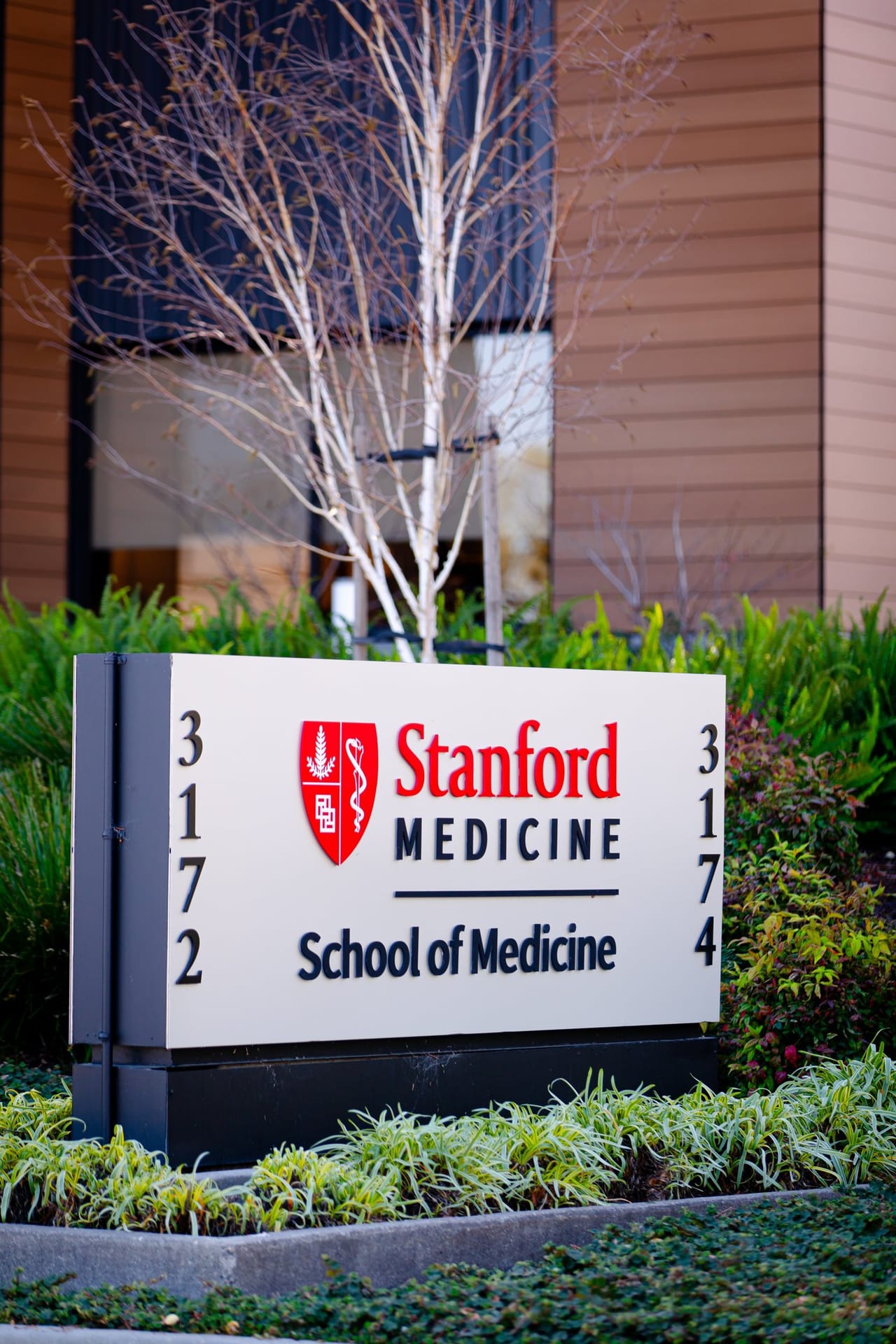
The Stanford Medicine School of Medicine sign on the Stanford campus
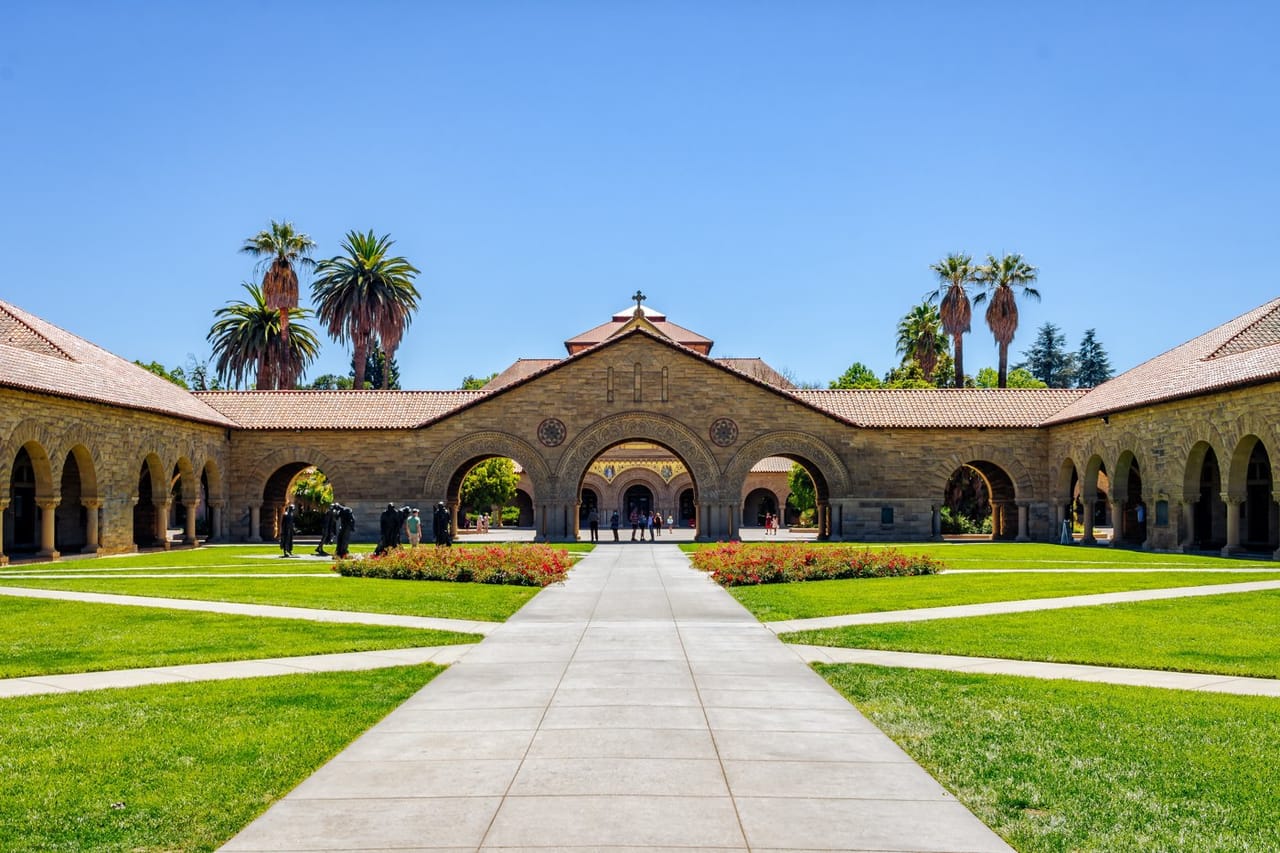
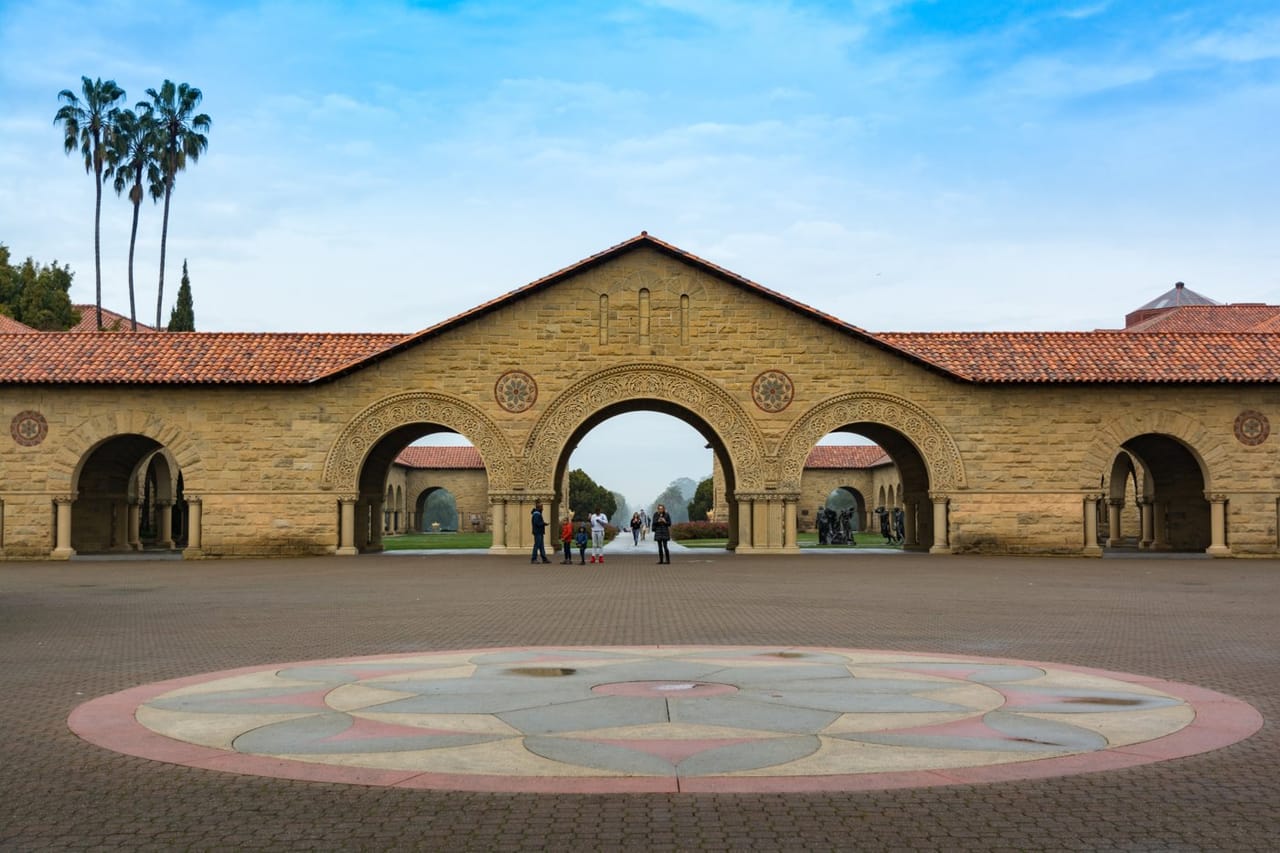
The Main Quad and Memorial Church walkway at Stanford University
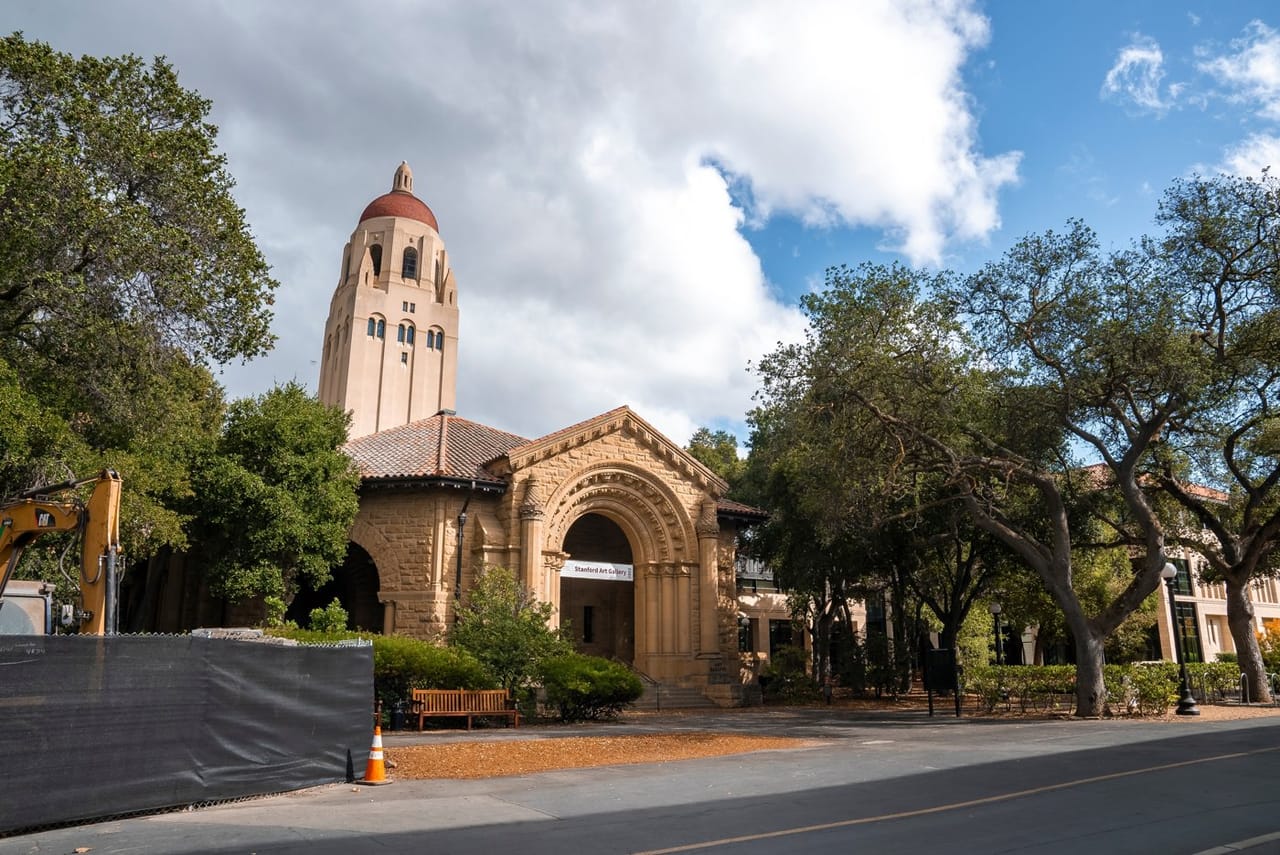
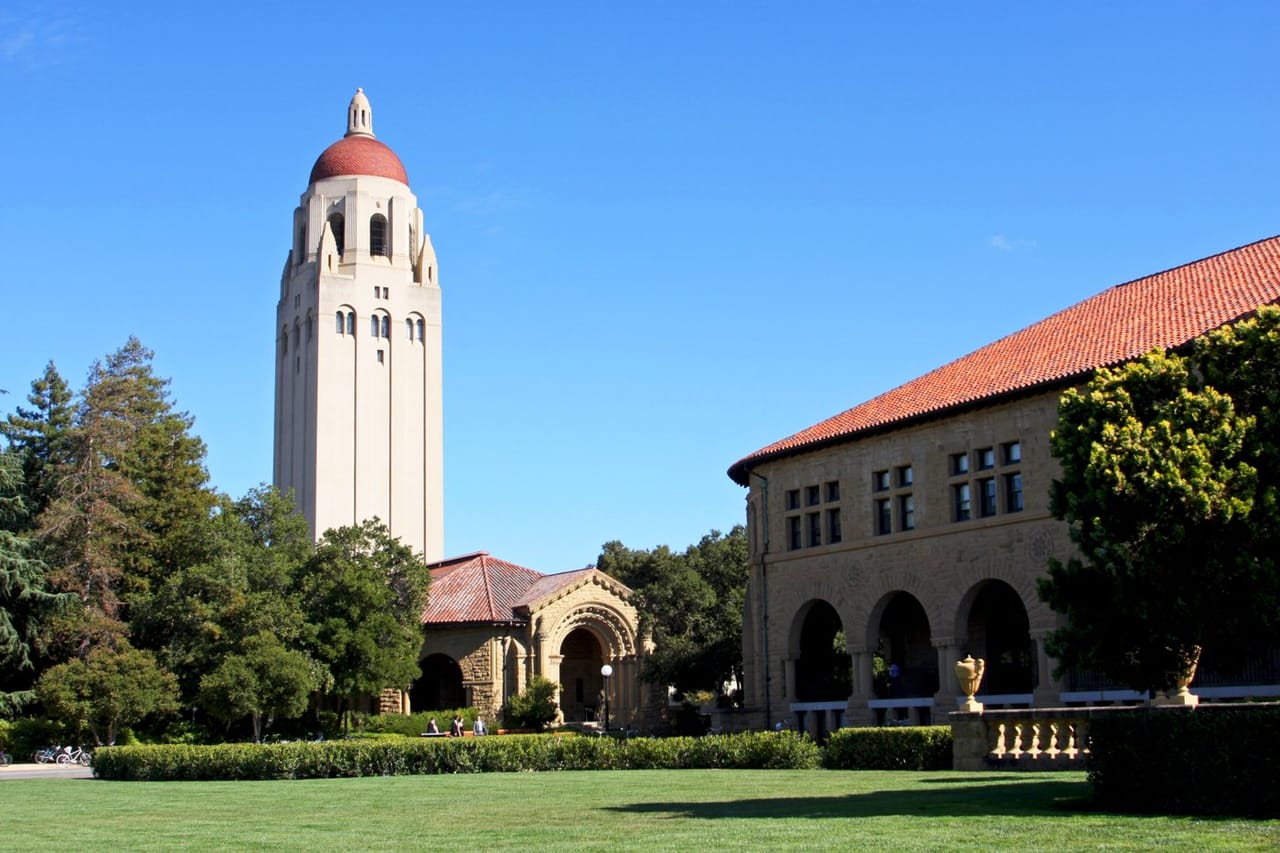
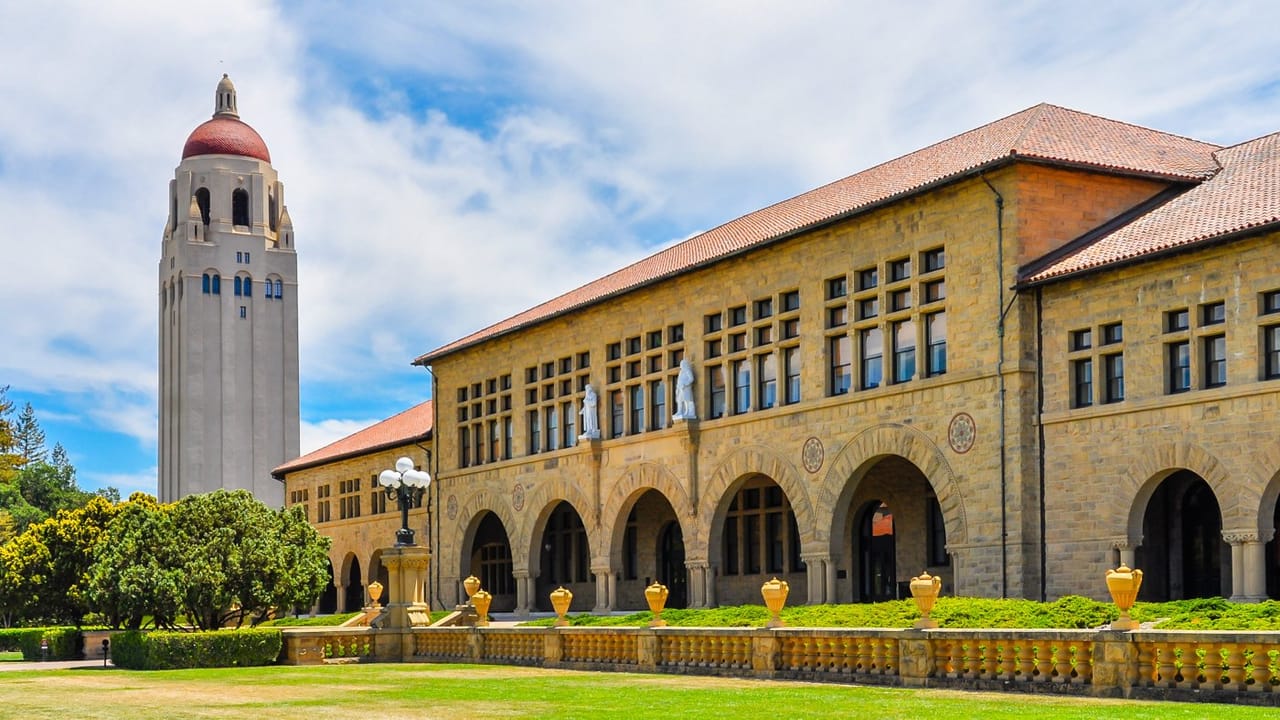
Hoover Tower and a sandstone building at Stanford University
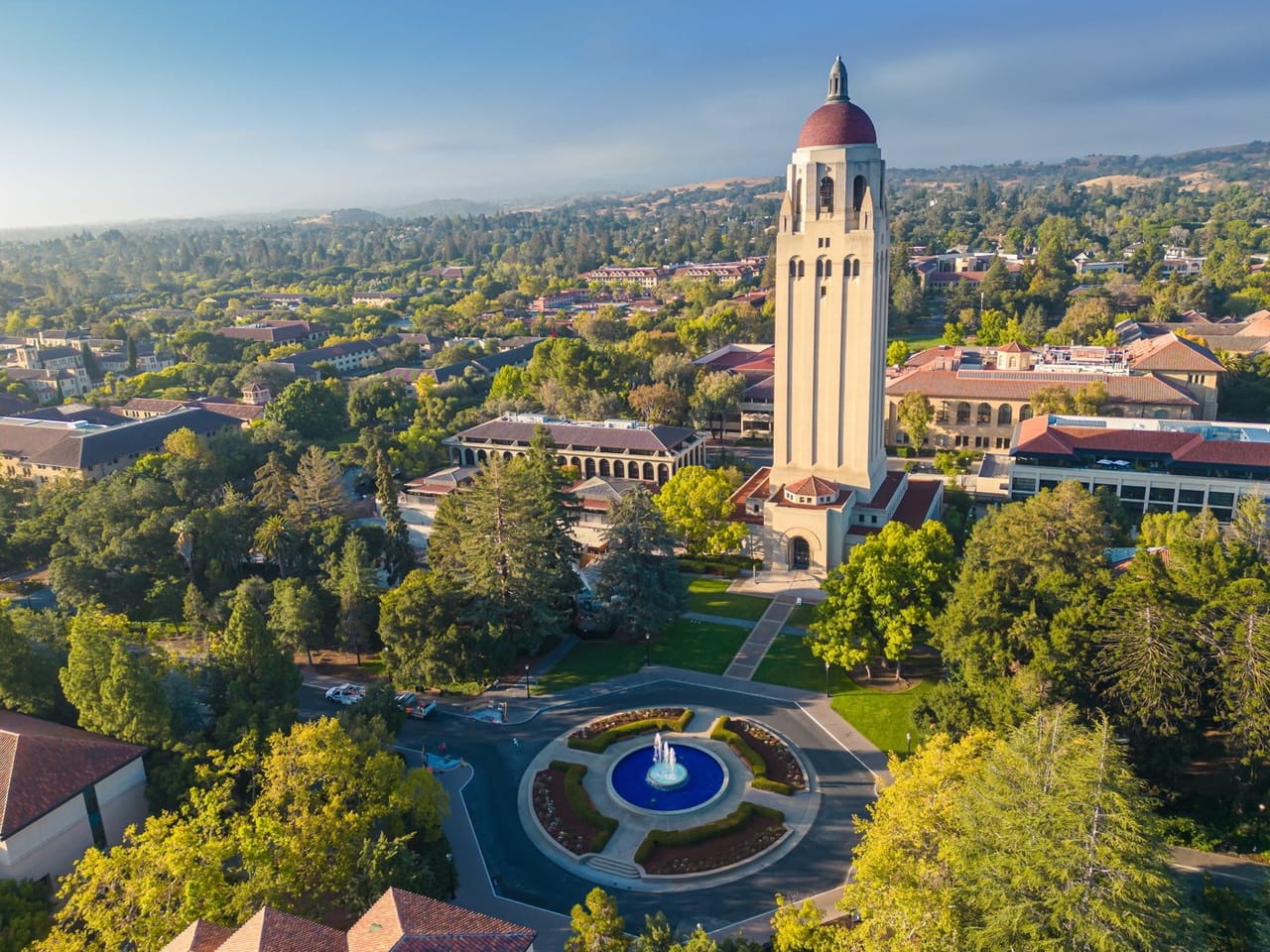
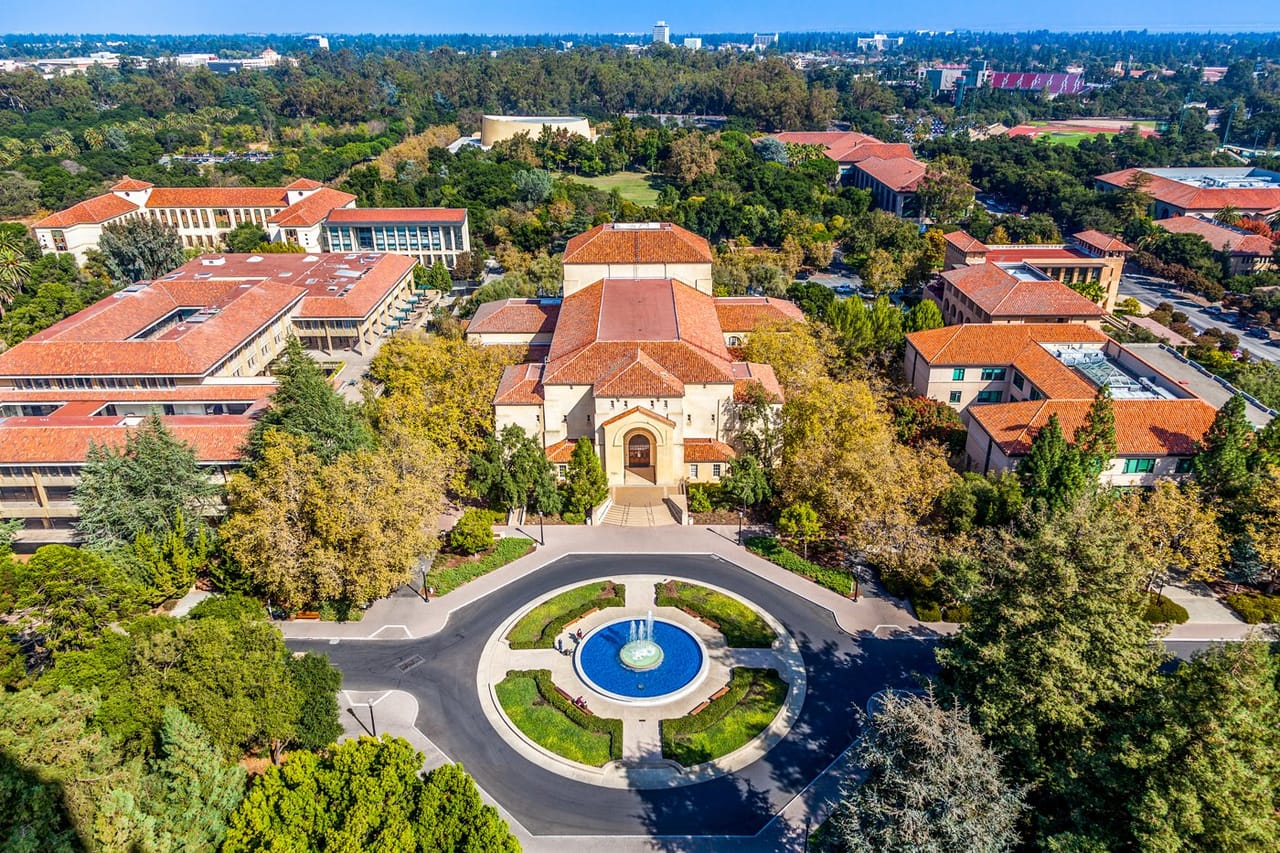
Aerial view of the Stanford University campus and Main Quad
Hoover Tower rising above the Stanford Main Quad buildings

The Stanford Medicine School of Medicine sign on the Stanford campus

Find out all about studying an MD abroad at Stanford University School of Medicine

Download our free guide for immediate information, or get personalised professional counselling from our experts.

Recognition & Prestige

Rankings & Recognition

Stanford University School of Medicine is part of one of the world's top three universities and a leader in US medical research. Its recognition rests on independent global rankings, a deep research culture, and its position at the centre of the world's biomedical innovation hub.

  • #3

    QS World University Rankings 2026 (Stanford University)

  • Top 5

    among US medical schools for research

The medical degree is recognised internationally. Stanford University School of Medicine's MD programme is accredited by the Liaison Committee on Medical Education (LCME), Stanford University is institutionally accredited by the WASC Senior College and University Commission (WSCUC), and the school is listed in the World Directory of Medical Schools (WDOMS). An LCME-accredited MD makes graduates eligible to sit the Indian screening examination (FMGE/NExT) for licensing.

Complete Information About Stanford University School of Medicine

Get complete information about Stanford University School of Medicine, including tuition, living costs, admissions and the licensing route for Indian students.

Success stories

Student Success Stories

Hear directly from students who are studying medicine in Europe with futureMBBS.

Academic Excellence

Why Study Medicine at Stanford University School of Medicine

Stanford pairs a top-three global university with a research-first medical education and a location at the centre of Silicon Valley, taught entirely in English.

Among the World's Best Universities

Stanford University is ranked #3 in the world in the QS World University Rankings 2026, and its School of Medicine is one of the most research-intensive and selective in the United States.

Silicon Valley Innovation Hub

Stanford sits at the heart of Silicon Valley, next to the world's leading technology and biotech companies. Programmes such as Stanford Byers Center for Biodesign connect medicine with engineering and entrepreneurship.

Research-Driven Discovery Curriculum

The Discovery Curriculum is built around scientific discovery and a required scholarly concentration, giving students the flexibility to pursue research deeply, which is why many take five years to complete the MD.

World-Class Teaching Hospitals

Students train at Stanford Health Care and Lucile Packard Children's Hospital Stanford, among the top-ranked hospitals in the United States, alongside the VA Palo Alto and Santa Clara Valley Medical Center.

Nobel-Level Faculty

Stanford Medicine's faculty and research community include Nobel laureates whose work spans recombinant DNA, RNA interference, the structure of drug-target receptors and the biology of nerve-cell communication.

Small, Highly Selective Class

Stanford admits a small MD class each year and is one of the most selective medical schools in the world, which supports close mentorship and strong faculty relationships.

Global Licensing Reach

The Stanford MD supports US residency through ECFMG certification and the USMLE, is a recognised route to licensing in many countries, and keeps Indian students eligible to practise in India after clearing the NMC screening examination.

Read all about studying medicine abroad in our free guide

Know exactly what options exist for your medical-education-abroad success.

How to Apply

Admission Process for the MD

Admission to the MD at Stanford University School of Medicine is through the American Medical College Application Service (AMCAS), based on a completed bachelor's degree, the MCAT and a holistic review, followed by a secondary application and interview. The MD is graduate-entry, so there is no NEET requirement and no direct entry after Class 12.

Admission Timeline

  1. 1
    May 2026AMCAS Opens

    The AMCAS application for the entering MD class opens for submission.

  2. 2
    Late Oct 2026Application Deadline

    Final date to submit the AMCAS application to Stanford for the cycle.

  3. 3
    November 2026Secondary Application

    Applicants complete the Stanford supplemental application and essays.

  4. 4
    Dec 2026 – Feb 2027Interviews

    Invited candidates complete Stanford interviews.

  5. 5
    Through Spring 2027Admission Decisions

    Offers of admission are released on a rolling basis.

  6. 6
    August 2027Classes Begin

    The new MD class matriculates and orientation begins.

Eligibility Criteria

Academic Qualification

Applicants must hold a baccalaureate (bachelor's) degree from an accredited institution before matriculation, together with the required pre-medical coursework. International applicants generally must supplement their studies with substantial work at an accredited university in the United States, and English proficiency is expected of all applicants.

Subjects:

BiologyChemistry (general & organic)BiochemistryPhysicsQuantitative reasoningHumanities / social sciences

Prior Degree & Age

The MD is graduate-entry, so applicants must have completed a bachelor's degree before matriculation. Most matriculants are therefore 21 or older. There is no separate upper age limit.

  • Bachelor's degree requiredCompleted baccalaureate before matriculation

Requirements

Applicants must submit the AMCAS application with MCAT scores, then complete the Stanford secondary application and interview. Selection is holistic, with strong weight on academics, research experience, character and motivation.

  • Entrance Exam

    The MCAT is required for all applicants. The median matriculant score is 520; there is no published minimum cutoff and no separate university entrance exam.

  • English Proficiency

    Full fluency in English is expected, as the entire MD programme is taught in English.

Entrance Examination

Admission is based on the MCAT and a holistic review of the whole application, not on category-wise minimum marks.

ComponentRequirement
MCAT (Medical College Admission Test)Required for all applicants. Median matriculant score 520/528 (typical range 514–525). No fixed minimum — reviewed holistically.
Undergraduate GPAMedian matriculant GPA is about 3.95–3.96 out of 4.00, with strong performance expected in the pre-medical sciences.

Required Documents

To apply, students submit essential academic, testing and identification documents:

  • Completed AMCAS application
  • MCAT scores (submitted through AMCAS)
  • Official undergraduate transcripts (substantial study at an accredited US university for international applicants)
  • Letters of recommendation
  • + More

Admission Guidance & Document Checklist

Get the complete document checklist or admission guidance from our experts.

Program Structure

MD Curriculum & Clinical Structure

Students follow the Discovery Curriculum, a flexible, research-driven MD structure that combines biomedical, clinical and social-behavioural science with a required scholarly concentration, taught entirely in English.

Doctor of Medicine (MD) Program — Discovery Curriculum

  • Total Duration:

    4–5 Years (flexible; many include a research year)

  • Degree:

    MD (Doctor of Medicine, equivalent to MBBS)

Curriculum Phases at Stanford (Discovery Curriculum)

  • Pre-clerkship (2–3 years)

    Foundations & Learning Pathways

    Foundational biomedical, clinical and social-behavioural science with flexible learning pathways, which students can complete at a full pace in two years or a slower pace in three:

    Molecular & cellular foundationsHuman anatomy & physiologyGeneticsPharmacology
    PathologyEarly clinical skills
  • Clerkships (2 years)

    Clinical Clerkships

    Core clinical clerkships across the specialties at Stanford's teaching hospitals, giving hands-on patient care experience:

    Internal MedicineSurgeryPaediatricsObstetrics & Gynaecology
    PsychiatryNeurologyFamily & Community Medicine
  • Throughout the MD

    Scholarly Concentration & Discovery

    A required scholarly concentration and dedicated research time run through the programme, reflecting Stanford's discovery-driven mission; students may add dual degrees or a research year:

    Scholarly concentration / research projectAdvanced electivesSub-internshipsLicensing-exam preparation

Clinical Rotations

Clinical training takes place at Stanford Health Care, Lucile Packard Children's Hospital Stanford and other affiliated hospitals, beginning with early clinical skills and building to full core clerkships and advanced electives.

PhaseFocus
Pre-clerkshipFoundational science and early clinical skills, with flexible learning pathways.
Clinical ClerkshipsCore clerkships in internal medicine, surgery, paediatrics, obstetrics-gynaecology, psychiatry and neurology at Stanford hospitals.
Scholarly ConcentrationRequired research or scholarly project and advanced electives, running throughout the MD.

Get the full curriculum

Download a free guide to see detailed subjects, the course structure and everything you need to plan your studies.

Clinical Network

Stanford Medicine Clinical Network & Affiliated Institutions

Stanford is a US school and does not run the EU Erasmus+ exchange programme. Instead, it teaches through Stanford Medicine's hospitals and research institutes, where students complete their clinical training. The institutions below are among the principal members of that network.

InstitutionFocus / Role
Stanford Health Care (Stanford Hospital)Flagship adult teaching hospital; broad clinical training and research
Lucile Packard Children's Hospital StanfordPaediatrics, obstetrics and women's health
VA Palo Alto Health Care SystemVeterans' care and clinical training
Santa Clara Valley Medical CenterCommunity and safety-net clinical training
Stanford Cancer InstituteOncology teaching and research
Stanford Byers Center for BiodesignMedical technology innovation and entrepreneurship
Stanford Bio-XInterdisciplinary biosciences research
Stanford Neurosciences InstituteNeuroscience research and teaching
Wu Tsai Human Performance AllianceHuman performance and health research
Chan Zuckerberg Biohub (partner)Collaborative biomedical research

Explore the Stanford Medicine Network

The list above highlights selected hospitals and institutes where Stanford medical students train. Get the full picture from our experts.

Legacy

Prominent Figures of Stanford University School of Medicine

Stanford Medicine has been home to some of the most influential figures in modern medicine and science, including Nobel-winning researchers and pioneering clinicians.

Arthur Kornberg (Faculty, Nobel 1959)

Founded the biochemistry department at Stanford School of Medicine and won the 1959 Nobel Prize in Physiology or Medicine for discovering how DNA is synthesised by DNA polymerase — foundational to modern molecular biology.
Paul Berg (Faculty, Nobel 1980)

A Stanford biochemist who won the 1980 Nobel Prize in Chemistry as a pioneer of recombinant DNA technology. His discovery launched the biotechnology industry and remains central to modern genetics and medicine.

Norman Shumway (Faculty & Surgeon)

Pioneered heart transplantation at Stanford and performed the first adult human heart transplant in the United States in 1968, developing the techniques that made it a life-saving standard treatment.

Henry Kaplan (Faculty & Physician)

A Stanford radiation oncologist who co-developed the medical linear accelerator and used it to transform Hodgkin's lymphoma from a fatal disease into a largely curable one.

Andrew Fire (Faculty, Nobel 2006)

Shared the 2006 Nobel Prize in Physiology or Medicine for the co-discovery of RNA interference, a mechanism cells use to switch genes off — now a powerful research tool and a new class of medicines.

Brian Kobilka (Faculty, Nobel 2012)

Shared the 2012 Nobel Prize in Chemistry for revealing the structure and workings of G-protein-coupled receptors, the targets of a large share of modern drugs.

Thomas C. Südhof (Faculty, Nobel 2013)

A Stanford neuroscientist who shared the 2013 Nobel Prize in Physiology or Medicine for uncovering how nerve cells communicate — central to understanding the brain and disorders such as autism.

Faculty

Stanford medicine is taught by a large faculty spread across its teaching hospitals and research institutes, including practising physicians and surgeons, basic scientists and Nobel-laureate researchers. This blend of world-class research and hospital-based clinical teaching is central to the Stanford MD.

Academic Expertise

  • Nobel-laureate researchers

  • Physicians and surgeons at top US hospitals

  • Faculty with major international publications

  • Leaders in biomedical innovation and Biodesign

Student Support & Mentorship

  • Small, mentored MD class

  • Faculty advising and mentorship

  • Clinical supervision during clerkships

  • Research mentorship through the scholarly concentration

About University

History Information

The Memorial Arch entrance to the Stanford University Main Quad

The Memorial Arch entrance to the Stanford University Main Quad

Roots on the Pacific Coast (1858)

Stanford Medicine traces its roots to 1858, when the first medical school on the Pacific Coast was founded in San Francisco. This early school, later known as Cooper Medical College, became the foundation of medical education in California.

Becoming Stanford Medicine

In 1908, Stanford University's trustees adopted Cooper Medical College as the University's School of Medicine. The school operated in San Francisco for decades before moving to the main Stanford campus in 1959, bringing medicine into the heart of the university.

Aerial view of Stanford University with Hoover Tower

Aerial view of Stanford University with Hoover Tower

A Culture of Discovery

On the Stanford campus, the school built a powerful research culture, home to scientists who pioneered DNA biochemistry, recombinant DNA and heart transplantation. Several of its researchers went on to win Nobel Prizes.

A World Leader Today

Today Stanford teaches the MD through its research-driven Discovery Curriculum, is part of one of the top three universities in the world, and sits at the centre of the Silicon Valley biomedical innovation ecosystem.

Get all information about Stanford Medicine in our free guide

Read on to find out how the Stanford MD pathway works and what it realistically takes for Indian students.

Role in medicine

Role in medical education

Hoover Tower beside a sandstone arched building at Stanford University

Hoover Tower beside a sandstone arched building at Stanford University

Where Medicine Meets Technology

Stanford has shaped a model of medical education in which research, engineering and entrepreneurship sit alongside clinical training. Its position in Silicon Valley makes it a leader in medical technology, digital health and biodesign.

Research from Bench to Bedside

Stanford laboratories produced landmark discoveries, including recombinant DNA and RNA interference, and pioneered heart transplantation in the United States. Several Stanford Medicine researchers have won Nobel Prizes, and this research feeds directly into teaching and patient care.

An International Medical Community

Stanford attracts students and researchers from around the world. It is important to be realistic, however: international admission to the MD is extremely limited, and international applicants generally need substantial prior study in the United States.

Get all information about Stanford Medicine in our free guide

Read on to understand the Stanford MD pathway and how it fits an Indian student's plans.

Cost of studying

MD Living Cost in the Bay Area

The San Francisco Bay Area is one of the most expensive places to live in the United States, so living costs are high, well above typical MBBS destinations in Europe or Asia. Here is an approximate monthly breakdown for an MD student, quoted in Indian rupees.

Monthly Living Cost

Cost ComponentApproximate Amount (per month)
Accommodation (rent, Stanford / Palo Alto area)₹1,60,000 – ₹3,00,000
Food₹50,000 – ₹75,000
Transportation (Marguerite shuttle / Caltrain)₹5,000 – ₹15,000
Health Insurance & Other (utilities, internet, personal)₹50,000 – ₹85,000
Get Free MBBS Guide

Average monthly living cost

₹2,80,000 – ₹4,70,000

Housing

Accommodation

Stanford offers on-campus graduate and professional housing as well as off-campus options in the surrounding Bay Area. On-campus housing places students close to classes, the library and the teaching hospitals, which is valuable in an area where private rents are very high.

On-Campus Graduate Housing

Stanford offers on-campus graduate and professional housing, including the Escondido Village Graduate Residences, within easy reach of the medical school and campus facilities.

Close to Campus

Living on campus keeps commutes short and gives easy access to libraries, labs and the hospitals, which many first-year students value in a high-cost, spread-out region.

Furnished & Unfurnished Options

Students can choose from a range of studio and shared apartment layouts, furnished or unfurnished, depending on budget and preference.

Kitchens & Shared Spaces

Most apartments include kitchens and shared common areas, making it easy and economical for students to cook their own meals, including Indian food.

Cost

Housing costs in the Bay Area are high. On-campus rates are set by Stanford; confirm current housing charges with the Stanford housing office when planning your budget.

How to Apply

On-campus housing is requested through Stanford after admission. Demand is high, so students should apply as early as possible once they receive an offer.

Getting Around

The free Stanford Marguerite shuttle and nearby Caltrain connect the campus with Palo Alto and the wider Bay Area, helping students manage transport without a car.

Off-Campus Neighbourhoods

Many students rent in Palo Alto, Menlo Park, Mountain View and Redwood City. Rents are among the highest in the US, so use university housing listings and reputable local platforms and begin the search early.

Need accommodation details?

Get a full overview of housing options with our guide, or reach out to an expert.

Food & Dining

100% Veg Options and Indian Food, Always Available

Indian and vegetarian food is exceptionally easy to find in the Bay Area, which has one of the largest Indian communities in the United States.

Stanford and the medical campus have dining halls and cafes serving affordable daily meals near classes. Vegetarian and vegan options are widely available.

Location

How to Reach Stanford University School of Medicine

Address

291 Campus Drive, Stanford, CA 94305, United States

  • Nearest Airport

    San Francisco International Airport (SFO); San Jose International (SJC) also nearby

  • Local Transport

    The free Stanford Marguerite shuttle and Caltrain (Palo Alto station) connect the campus with the wider Bay Area

Your Roadmap to Success

Career Pathways After the MD at Stanford

On completing the programme, graduates earn the MD (Doctor of Medicine) from one of the world's leading universities, a degree recognised internationally and equivalent to the MBBS.

Understand the Medical Licensing Pathway

A clear overview of the exams and requirements after graduation.

Practising in India

FMGE & NExT Details

To practise medicine in India after earning the Stanford MD, Indian students follow a clear licensing path set by the National Medical Commission. An MD from an LCME-accredited US school is accepted for this route, provided the graduate meets the NMC's foreign medical graduate criteria.

  1. Step 1

    Screening Examination (FMGE / NExT)

    Graduates must clear the qualifying examination that licenses foreign medical graduates to practise in India. This is currently the Foreign Medical Graduate Examination (FMGE), which is transitioning to the National Exit Test (NExT).

  2. Step 2

    Clinical Internship (CRRI)

    After qualifying, students complete a one-year Compulsory Rotatory Residential Internship (CRRI) in India, gaining supervised clinical experience across the major departments.

  3. Step 3

    Medical Registration

    The final step is registration with the National Medical Commission (NMC) or the relevant State Medical Council, after which the graduate can practise as a doctor in India.

Student Life Style

Student life at Stanford University School of Medicine

Studying for the MD is a mix of intensive academics, clinical exposure and personal growth, set on a beautiful California campus. With a strong research culture and Silicon Valley on the doorstep, Stanford offers a rich and distinctive student experience.

An open green field with hills in the distance near the Stanford campus

An open green field with hills in the distance near the Stanford campus

Academics

The Discovery Curriculum is flexible, research-driven and aligned with the highest international standards. Students learn from leading physicians and scientists and can shape their own path through the programme.

Campus and Facilities

The Stanford campus offers modern laboratories, the Lane Medical Library and simulation facilities, set in a large, sunny campus with excellent sport and recreation, close to the teaching hospitals.

Challenges and Growth

The programme is demanding, but it builds vital skills like time management, resilience and teamwork. The main challenge is the high cost of living in the Bay Area, so careful budgeting matters.

Social Life

Student life extends well beyond the classroom. Student groups, interest societies and community-service programmes are active year-round, and the Bay Area offers the outdoors, San Francisco, sport and a strong Indian community.

Overall Experience

Studying for the MD is about growing as a professional and as a person, building lifelong friendships and gaining exposure to some of the best medicine and biomedical innovation in the world.

Scholarship & Financial

Scholarship & Financial Aid

Stanford offers substantial need-based financial aid to MD students, and students who take part in approved research may qualify for reduced tuition.

Stanford School of Medicine provides need-based scholarships and grants to help eligible MD students meet the cost of the programme, reducing the amount students must borrow.

  • Need-based scholarships and grants
  • Aim to reduce student debt
  • Awarded on assessed financial need

Ratings

Reviews & Ratings

Hear from students and alumni about their experience at Stanford University School of Medicine.

4.9

120 reviews

Academics5
Infrastructure4.9
Housing4.5
Campus Life4.9
Value for Money4.3
  • Research from day one

    Student — MD 2022

    The Discovery Curriculum lets you go deep into research while still getting outstanding clinical training. Being surrounded by Nobel-level science and Silicon Valley innovation is genuinely inspiring.

  • Incredible mentorship

    Student — MD 2021

    The class is small and the faculty really invest in you. The teaching hospitals are excellent and the flexibility to shape your own path is unmatched.

Compare

Compare Colleges

Compare Stanford University School of Medicine with a leading Indian medical college.

Quick Comparison:

Stanford University School of Medicine vs AIIMS Delhi

University
Stanford School of MedicineStanford, California, USA
AIIMS DelhiNew Delhi, India
University TypePrivate, non-profitPublic (Institute of National Importance)
MediumEnglishEnglish
Course Duration4–5 years (MD, graduate-entry)5.5 years (MBBS, incl. internship)
Tuition (per year)~₹66.9 lakh ($69,663)~₹1,600 (nominal government fees)
AdmissionBachelor's + MCAT + AMCAS (no NEET)NEET-UG
RecognitionLCME / WDOMS; NMC-eligible via screeningNMC-recognised
Global RankingQS World #3 (2026)India's top government medical college

Compare Top Medical Universities for Me

See key differences in fees, ranking, eligibility and recognition.

Our blog

Medical Education Insights

Articles that turn complex medical-education-abroad rules into simple, practical steps for students and parents.

FAQ

Frequently Asked Questions

Short answers to the questions students and parents ask most often about studying the MD at Stanford University School of Medicine.