Professor Evgeniy Sergeevich Kulikov
Rector of Siberian State Medical University, listed on the university's own leadership pages and by the Russian Council of Rectors, leading the university through the federal Priority 2030 programme.
Webinar: Pursuing MBBS in India Sat, December 5, 2026 | 8:30 PM IST FREE
Reserve free seatFree Webinar: MBBS in India
Sat, December 5, 2026 | 8:30 PM

Free Webinar: MBBS in India
Sat, December 5, 2026 | 8:30 PM
Siberia's oldest medical school, teaching in Tomsk since 1888, with its own university clinics and ranked 11th in Russia for Medicine by RAEX.


1,500+ Students trust us
Russia
Country
Tomsk
City
#11 in Russia
RAEX Medicine ranking 2025
English and Russian
Bilingual medium
For Indian Students
Short answer: Yes, Indian students can study MBBS in Russia. Yes, the degree is eligible for the FMGE, as long as the programme is taught in English throughout and its internship is completed at the same university; a programme taught in Russian, or partly in Russian, does not qualify.
Russian universities admit Indian students directly after Class 12 with Physics, Chemistry, Biology and English, on Class 12 marks and a qualifying NEET UG result, with no separate entrance test and no IELTS or TOEFL. Indian students also obtain the NMC Eligibility Certificate before starting the course.
Yes, when the whole programme is taught in English and the internship is completed at the same university. The NMC Foreign Medical Graduate Licentiate Regulations 2021 ask for a course of at least 54 months taught in English, an internship of at least twelve months in the same foreign institution, and a degree that entitles the holder to practise in Russia. The Russian programme is a six-year integrated Specialist degree with clinical rotations and internship in the later years, and at most universities on this page Russian is learned alongside for talking to patients. A few universities teach General Medicine in Russian or bilingually, and the NMC requires English for the whole course, so the internship arrangement and English medium of your programme are what count.
Graduates of a programme that meets these rules sit the FMGE (NExT deferred and not in force), complete any required internship in India and register with the NMC and their State Medical Council. The degree can also support the USMLE or PLAB routes for eligible graduates.
Introduction
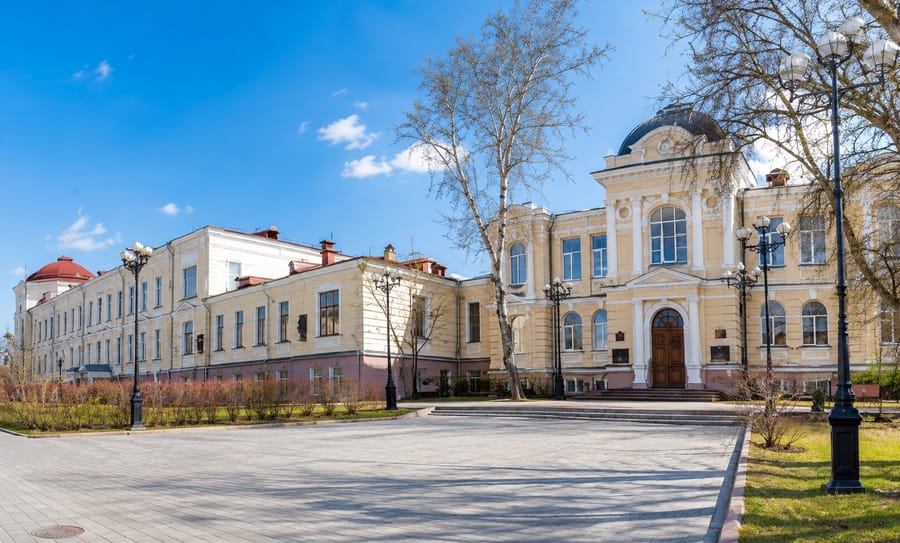
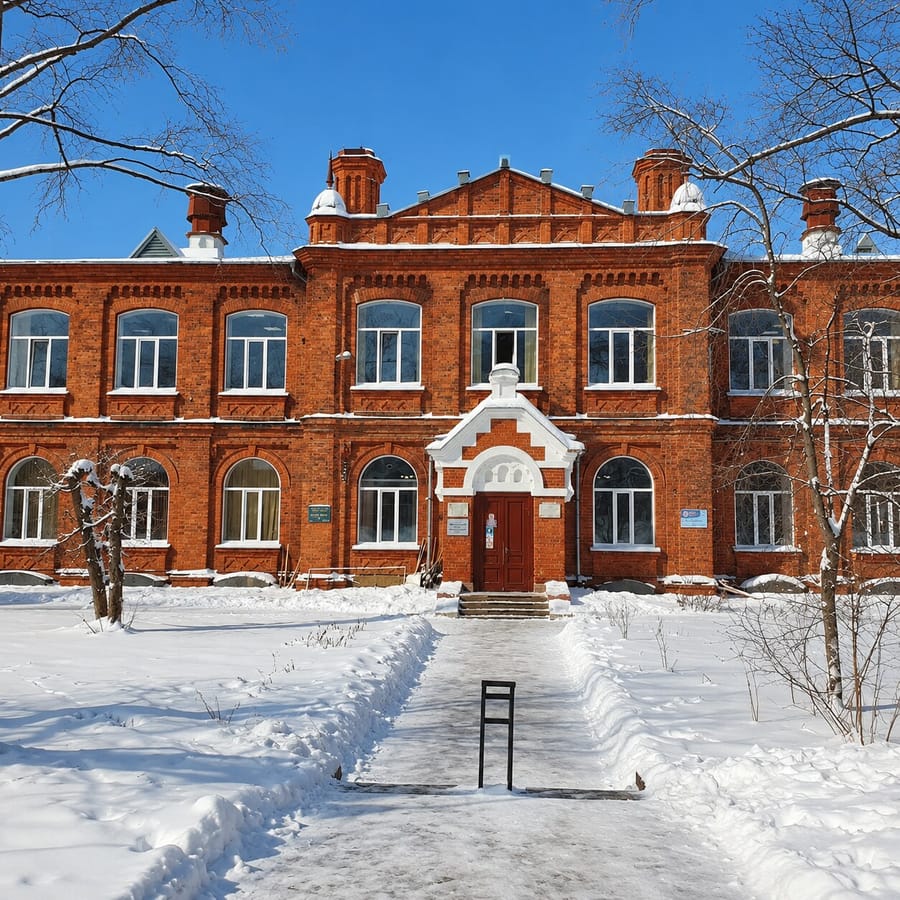
Historic university building in Tomsk with a classical facade, seen across an open forecourt in spring
Download our free brochure for immediate information, or get personalised professional counselling from our experts.
Recognition & Prestige
RAEX ranks Siberian State Medical University 11th in Russia for Medicine for 2025 and 70th among all Russian universities. It has taken part in Russia's federal Priority 2030 development programme since 2021, and its simulation centre holds Level III accreditation from ROSOMED, the highest Russian level. It does not appear in the QS or Times Higher Education world rankings.
#11
RAEX Medicine subject ranking, Russia, 2025
#70
RAEX-100, all Russian universities, 2025
Siberian State Medical University is a federal state budgetary educational institution under the Ministry of Health of the Russian Federation, holding Russian state accreditation and an educational licence. Its Multiprofile Accreditation and Simulation Centre is accredited at Level III by ROSOMED, the Russian Society for Simulation Education in Medicine. The university is listed in the World Directory of Medical Schools. For India, the six-year degree opens the FMGE route when the programme meets the NMC's FMGL 2021 rules on duration, internship and an English medium of teaching.
WDOMS
Siberian State Medical University is listed in the World Directory of Medical Schools
Complete Information About Siberian State Medical University
Get complete information about Siberian State Medical University, Tomsk, including tuition, living costs, admission and recognition for Indian students.
Success stories
Hear directly from students who are studying medicine in Europe with futureMBBS.
Academic Excellence
Siberian State Medical University is the oldest medical school east of the Urals, ranked 11th in Russia for Medicine, with its own clinical hospital, in a city where more than 100,000 students live among about 544,000 residents. The Siberian winter and the housing position are part of the same decision.
Read all about MBBS abroad in our free brochure
Know exactly what options exist for your MBBS-abroad success.
How to Apply
Admission to General Medicine runs through the university's own written examinations in Biology, Chemistry and English, with the English paper waived for holders of an accepted international English certificate. A qualifying NEET UG result and the NMC Eligibility Certificate are separate Indian requirements completed before going abroad.
Indian citizens need a qualifying NEET UG result before joining a medical course abroad, valid for three years from its declaration, and the NMC Eligibility Certificate before starting the course.
Application form, colour passport scans, legalised and apostilled educational documents with transcripts, personal data consent, and name-change documents where they apply.
The university asks for a tracking number showing that educational documents have been lodged with GlavExpertCentre, the Russian federal credential-recognition agency. The service costs RUB 6,500 (about ₹7,350) and takes up to 45 days, so start it early.
Written entrance examinations in Biology, Chemistry and English, set by the university, with the English paper waived for holders of an accepted international English certificate.
The university issues an invitation letter for the student visa, which needs a passport valid at least six months beyond the visa with two blank pages, the original invitation letter, the academic certificate, proof of tuition payment and an HIV test certificate dated within the last three months.
Migration registration is completed on arrival. The university states that registration is cancelled every time a student leaves Russia and must be redone within three working days of every re-entry.
The applicant needs legalised and apostilled educational documents with transcripts, lodged with GlavExpertCentre for Russian recognition, and must pass the university's written entrance examinations. Under Indian NMC rules an Indian applicant also needs Physics, Chemistry, Biology and English at Class 12, with at least 50% aggregate in Physics, Chemistry and Biology for the general category, 40% for SC, ST and OBC candidates and 45% for general-category candidates with benchmark disabilities, together with a qualifying NEET UG result.
Subjects:
Under Indian NMC rules the candidate must be 17 years old by 31 December of the admission year, with no upper age limit. The university publishes no separate age condition.
Two requirements stand between an applicant and enrolment, and one of them takes up to 45 days.
University Entrance Examinations
Written papers in Biology, Chemistry and English, set and marked by the university, with the English paper waived for holders of an accepted international English certificate. NEET is not part of the university's own assessment.
GlavExpertCentre Recognition
Educational documents are lodged with GlavExpertCentre, the Russian federal recognition agency, and the application needs the tracking number. The service costs RUB 6,500 and takes up to 45 days, so begin as soon as the Class 12 certificate is apostilled.
Admission rests on the university's own written examinations rather than on category-wise minimum marks.
| Component | Requirement |
|---|---|
| Biology | Written entrance examination set by the university |
| Chemistry | Written entrance examination set by the university |
| English | Written entrance examination set by the university, waived for holders of an accepted international English certificate |
To apply, students need to submit essential academic and identification documents:
Admission Guidance & Document Checklist
Get the complete document checklist or admission guidance from our experts.
Programme Structure
General Medicine (code 31.05.01, Lechebnoe Delo) is a six-year integrated Specialist degree leading to the professional title of Doctor. Foreign students follow an adapted trajectory with additional Russian study and subject consultations. Clinical rotations and practical training run through the later years, and since Russia's 2016 to 2017 reform there has been no separate internship year after graduation: the course ends in the state Primary Accreditation examination, which licenses the graduate to practise in Russia.
Total Duration:
6 Years, ending in the state Primary Accreditation examination
Degree:
Specialist in General Medicine (Vrach, equivalent to MBBS)
Years 1 to 2
The structure and function of the healthy human body, with compulsory Russian study under the adapted trajectory for foreign students:
Year 3
Disease mechanisms alongside the first systematic patient examination teaching:
Years 4 to 5
Teaching across the clinical specialties, with practical training at the University Clinical Hospital and the simulation centre:
Year 6
Supervised practice, concluding in the state Primary Accreditation examination that licenses practice in Russia:
Clinical training runs through the university's own facilities in Tomsk:
| Facility | Role in clinical training |
|---|---|
| University Clinical Hospital | The university's own hospital, used for practical and emergency-care training and providing emergency services to the Tomsk region |
| Multiprofile Accreditation and Simulation Centre | Mannequin and phantom-based skills training, accredited at Level III by ROSOMED |
| Dental Clinic | Opened in 2009 and used for combined practical and theoretical teaching |
| Department of General Medicine | The university's oldest department and the home of the six-year programme, with more than 400 teaching staff |
Get the full curriculum
Download a free brochure to see detailed subjects, the course structure and everything you need to plan your studies.
Clinical Network
Siberian State Medical University publishes no student exchange programme for its international track. What it has is an unusual concentration of its own clinical facilities, which is where a medical student actually trains.
| Facility | Detail |
|---|---|
| University Clinical Hospital | The university's own hospital in Tomsk, providing emergency services to the Tomsk region |
| Multiprofile Accreditation and Simulation Centre | Accredited at Level III by ROSOMED, the Russian Society for Simulation Education in Medicine |
| Dental Clinic | Opened in 2009 |
| Department of General Medicine | The oldest department of the university and the home of the six-year programme, with more than 400 teaching staff |
| International Students Association | An official university body for international students |
Explore the Clinical Training Network
The table above lists the university's own facilities where medical students train.
Legacy
The institution began as the medical faculty of the first university in Siberia and is led today by a physician and researcher.
Rector of Siberian State Medical University, listed on the university's own leadership pages and by the Russian Council of Rectors, leading the university through the federal Priority 2030 programme.
The Department of General Medicine, which delivers the six-year programme, is the university's oldest department, with more than 400 teaching staff. Teaching runs from the main building at Moskovsky Trakt 2 across the University Clinical Hospital, the simulation centre and the Dental Clinic.
11th in Russia for Medicine, RAEX 2025
Priority 2030 participant since 2021
Simulation centre accredited at ROSOMED Level III
Department of General Medicine with 400+ teaching staff
Official International Students Association
Six-week preparatory course for the English track
Additional Russian study and subject consultations for foreign students
University-run migration registration support
About University
Get all information about Siberian State Medical University in our free brochure
Read on to find out how you can fulfil your dream of studying medicine at Siberian State Medical University.
Role in medicine
Get all information about Siberian State Medical University in our free brochure
Read on to find out how you can fulfil your dream of studying medicine at Siberian State Medical University.
Cost of living
Tomsk costs far less than Moscow. Because the university gives fee-paying international students no dormitory place, the rows below assume a private one-bedroom flat; sharing a flat brings the rent and bills down substantially. Figures are monthly approximations in rupees from Numbeo (Tomsk, July 2026) and the city's transport fares.
| Cost Component | Approximate Amount |
|---|---|
| Rent, one-bedroom flat, outside the centre to city centre (RUB 27,000 to RUB 43,714) | ₹30,500 to ₹49,400 |
| Utilities and broadband for a flat (RUB 11,318) | ₹12,800 |
| Food | ₹28,000 to ₹36,000 |
| Transport (RUB 22 a ride; monthly pass about RUB 700) | ₹800 to ₹1,700 |
Rent, bills, food and transport, living alone
₹72,100 to ₹99,900
Housing
Housing is where this university differs most from what Indian families expect of a Russian medical school: the university states that it gives commercial-track international students no dormitory place.
Need accommodation details?
Get a full overview of housing options with our university guide, or reach out to an expert.
Food & Dining
Tomsk has very little Indian food, so an Indian student here cooks for themselves.
Cooking is the main way to eat Indian food in Tomsk. Bringing a spice supply from India and restocking through bulk orders is standard practice.
TripAdvisor lists a single Indian restaurant in Tomsk, so eating Indian food out is occasional rather than routine.
Large Russian supermarkets carry a limited range of spices, rice and lentils, and the national marketplaces Ozon and Wildberries ship Indian and Asian brands across the country.
An inexpensive restaurant meal in Tomsk costs about RUB 700 (about ₹790), with restaurant prices 62.2% below Moscow and groceries 18.3% below.
Tomsk has a historic mosque, the Red Mosque on Tatarskaya Street, serving the city's Tatar Muslim community and reopened after reconstruction in 2015.
Location
Siberian State Medical University, Moskovsky Trakt 2, Tomsk, 634050, Tomsk Oblast, Russia. Tomsk runs on UTC+7, four hours ahead of Moscow and one and a half hours ahead of India.
Nearest Airport
Bogashevo Airport, Tomsk (TOF), about 20 km from the city centre, with domestic flights including Moscow. There is no direct flight from India: the route runs through Moscow, with a domestic flight of about four hours
Local Transport
Buses, trams and marshrutkas at a flat RUB 22 a ride, with a monthly pass at about RUB 700; taxis RUB 100 to RUB 150 across town
Your Roadmap to Success
Graduates receive the Russian Specialist diploma in General Medicine (code 31.05.01) with the professional qualification of Doctor, the Russian primary medical qualification and the equivalent of an Indian MBBS, not an Indian postgraduate MD.
The six-year degree opens the FMGE route to India when the programme meets the NMC's FMGL 2021 rules on duration, internship and an English medium of teaching. The international track is bilingual, so the language plan and internship arrangement of your programme are what count; plan this with our counsellors. Graduates of a programme that meets the rules sit the FMGE (NExT deferred and not in force), complete any required internship in India and register with the NMC and their State Medical Council.
The six years end in the state Primary Accreditation examination, which tests theory and practical skills and licenses a graduate to work as a doctor in Russia. Specialisation then runs through ordinatura.
Graduates can specialise in India through NEET PG after clearing the FMGE and the Indian internship, or in Russia through ordinatura.
Siberian State Medical University is listed in the World Directory of Medical Schools (WDOMS), so its graduates can apply for ECFMG Certification and sit the USMLE. ECFMG's accreditation policy is for information only and does not affect an individual graduate's eligibility for ECFMG Certification.
A Russian medical degree is not a European qualification for UK purposes, so a graduate applies to the General Medical Council through the PLAB route.
Understand the Medical Licensing Pathway
A clear overview of the exams and requirements after graduation.
Practising in India
To practise in India after graduating abroad, an Indian student qualifies NEET UG before admission, completes a programme that meets the NMC's FMGL 2021 rules, clears the FMGE (NExT is deferred and not in force), completes any required internship in India and registers with the NMC or a State Medical Council.
Step 1
The NMC Foreign Medical Graduate Licentiate Regulations 2021 ask for a course of at least 54 months and an internship of at least twelve months in the same foreign institution. The six-year degree clears the course length. It is an integrated Specialist degree with clinical training in the later years and no separate internship year after graduation, so the internship arrangement of your programme is what counts.
Step 2
The regulations ask for the whole course to be taught in English. The university's fee orders describe the international track as a bilingual programme delivered with additional Russian study, so the language plan of your programme is the second thing that counts. Plan this with our counsellors before applying.
Step 3
The National Board of Examinations in Medical Sciences conducts the FMGE twice a year with a pass mark of 150 out of 300. In the December 2025 session 42,872 candidates appeared and 10,262 qualified, a pass rate of 23.95%. In June 2025, 36,034 appeared and 6,707 qualified, 18.61%. The National Exit Test (NExT), intended to replace the FMGE, is deferred and not in force. NBEMS publishes no pass rate by university or by country.
Step 4
After clearing the FMGE, a foreign graduate completes a twelve-month Compulsory Rotating Medical Internship in India, the same twelve months an Indian MBBS graduate completes.
Step 5
The final step is registration with the National Medical Commission or a State Medical Council, with the Russian degree apostilled for use in India. A registered graduate can practise anywhere in India.
Student Life Style
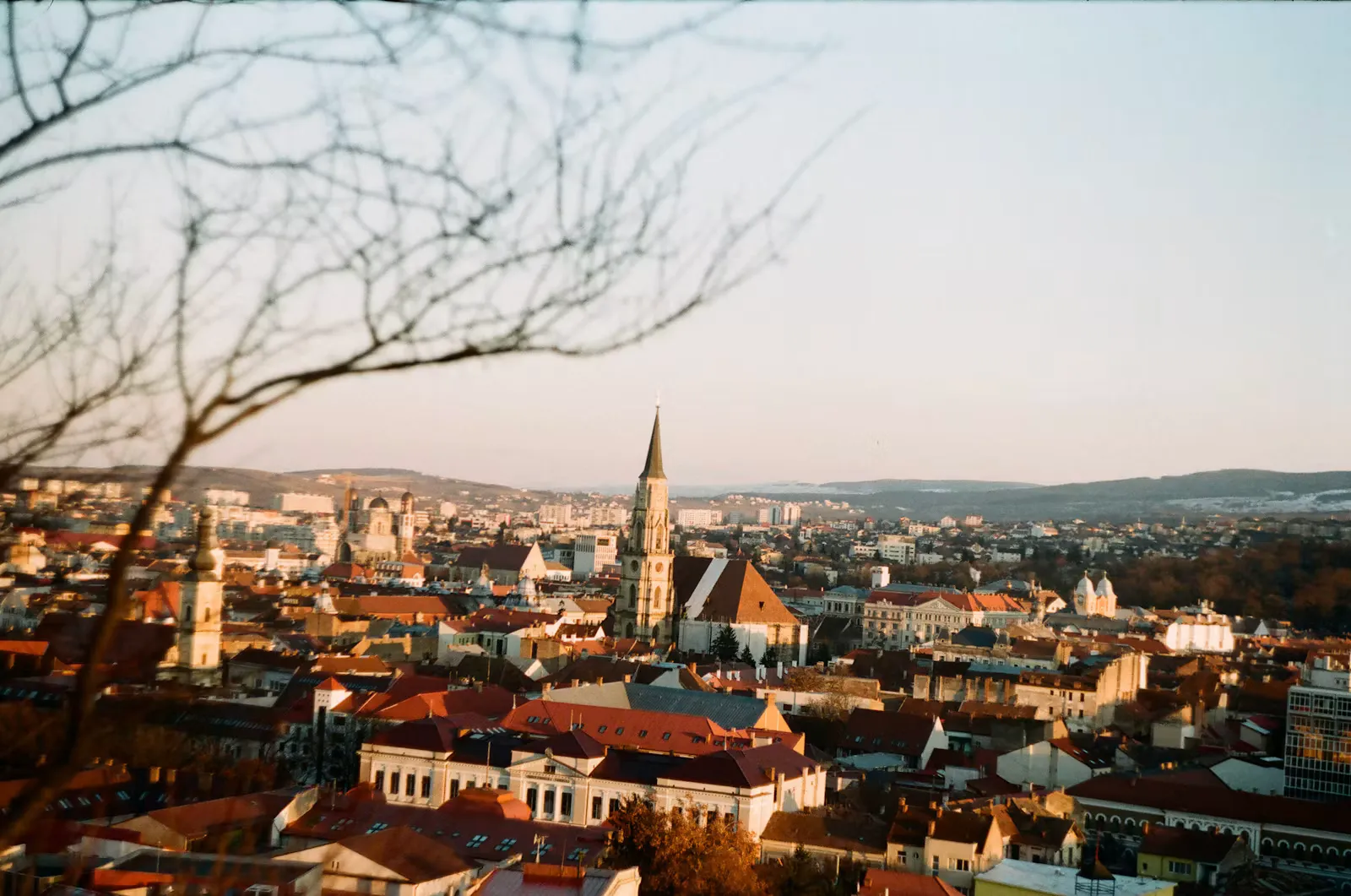
Tomsk is a city of about 544,000 people with six universities and more than 100,000 students, known in Russia as the Siberian Athens. The winter is the largest single adjustment.
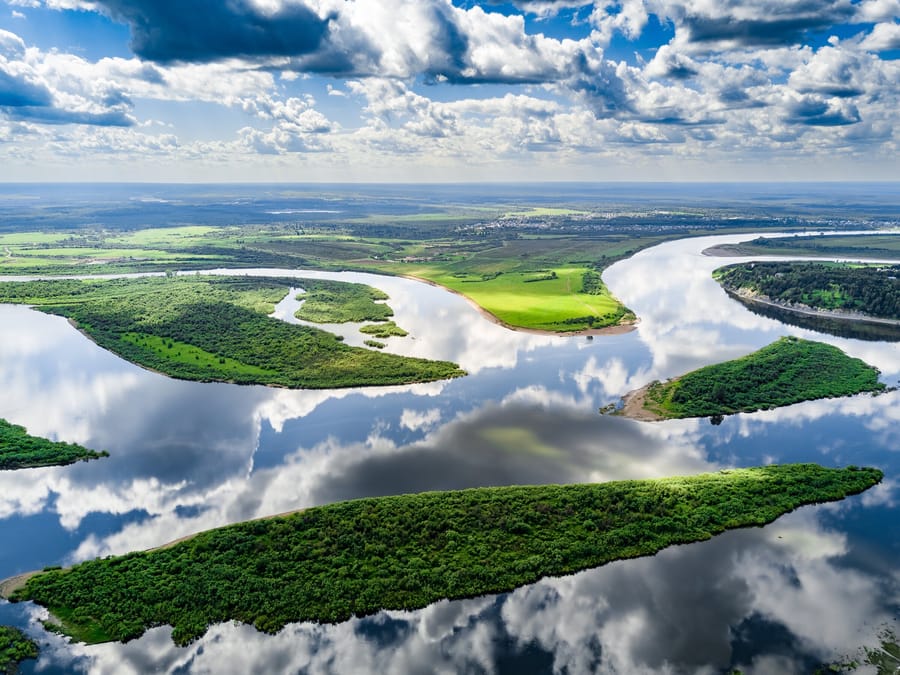
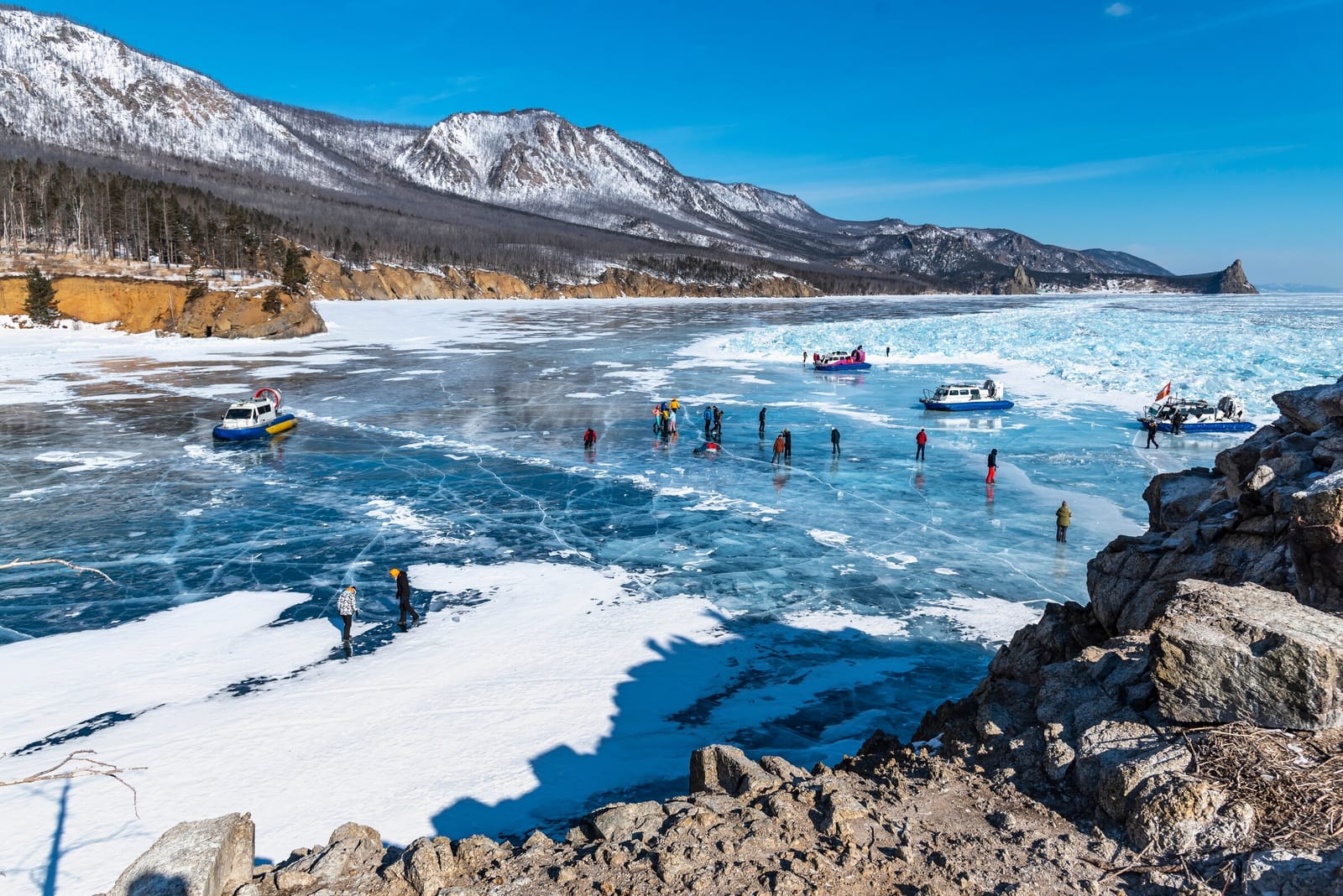
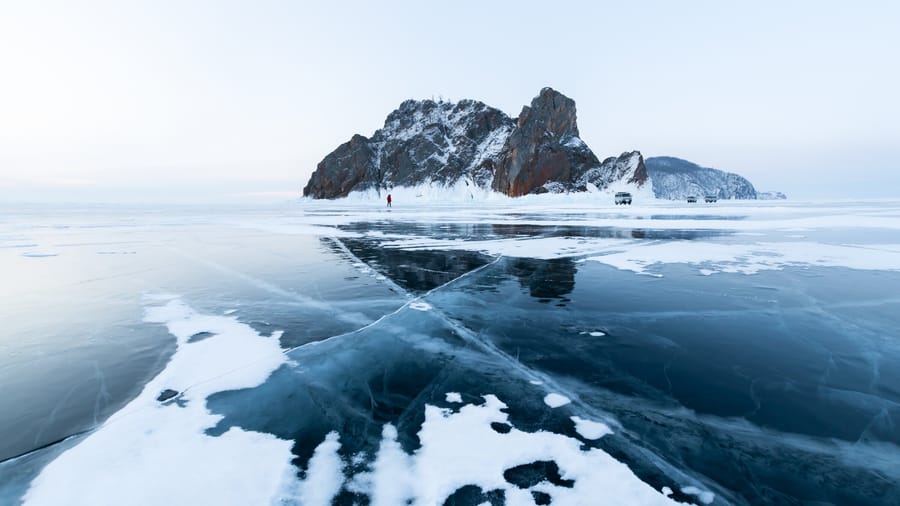
Visitors walking on the frozen surface of Lake Baikal in Siberia, Russia, in winter
Aerial view of a meandering river across the Russian countryside in summer
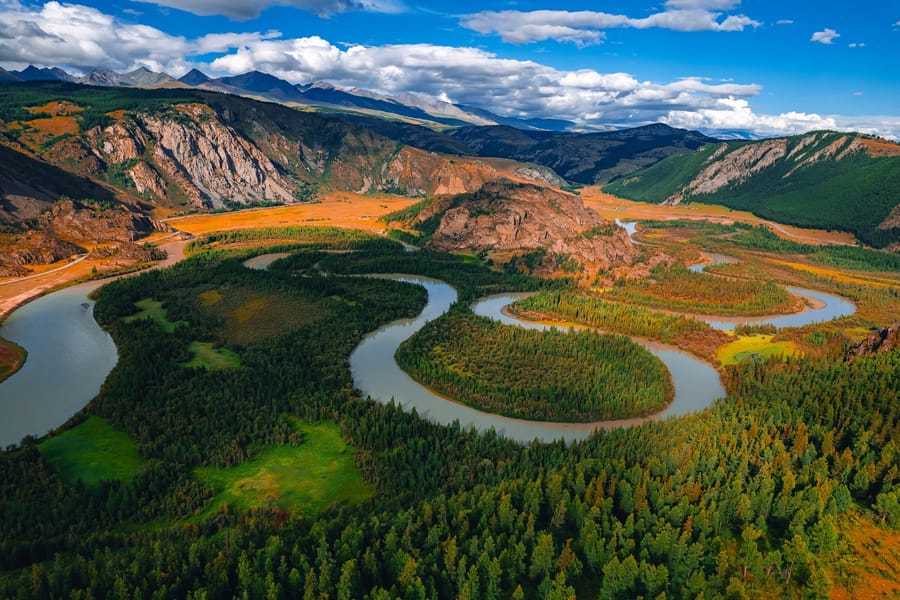
Aerial view of a river valley between forested hills in autumn, Russia
Road leading towards the snow-capped peak of Mount Elbrus in the Caucasus, Russia
Scholarship & Financial
The university offers no scholarship of its own for international students. The funded route is the Russian government quota rather than a university award.
The Russian government offers scholarship places to Indian students each year, covering medicine among other fields at most Russian universities. Selection is by academic record and portfolio with no entrance examination, Russian is not required at application, and candidates rank up to six universities, each of which makes its own final decision.
Under Rector's Order No. 203 of 30 April 2026 the bilingual programme costs RUB 410,000 in Year 1, RUB 401,020 in Years 2 and 3 and RUB 386,250 in Years 4 to 6, a total of RUB 2,370,790 over six years, about ₹26.8 lakh. The 2025-26 first year was RUB 385,600, so plan for fees to keep rising.
The Russian-medium General Medicine track for non-CIS foreign citizens costs RUB 384,000 in Year 1, falling to RUB 329,050 in Years 4 to 6. For India, the NMC rules ask for an English medium, so the bilingual track is the one Indian students take.
Compare
Compare Siberian State Medical University with India's top-ranked government medical college.
Quick Comparison:
Siberian State Medical University vs AIIMS New Delhi
| University | Siberian State Medical UniversityTomsk, Russia | AIIMS New DelhiNew Delhi, India |
|---|---|---|
| University Type | Public, Ministry of Health, medical teaching since 1888 | Institute of National Importance (government) |
| Medium | Bilingual: English with compulsory Russian | English |
| Course Duration | 6 years, with clinical training built into the later years | 5.5 years, being 4.5 years plus a 12-month internship |
| Tuition (per year) | ₹4.63 lakh (RUB 410,000) in Year 1 of 2026-27 | About ₹1,628 in academic fees for the whole course, including ₹1,350 tuition |
| Admission | University tests in Biology, Chemistry and English, plus a qualifying NEET UG result | NEET UG |
| Recognition | Listed in WDOMS; FMGE route when the programme meets the NMC rules | Listed in WDOMS |
| Ranking | RAEX Medicine #11 (2025); RAEX-100 #70 (2025) | NIRF Medical 1 (2025) |
Compare Top MBBS Universities for Me
See key differences in fees, ranking, eligibility and recognition.
Our blog
Articles that turn complex MBBS-abroad rules into simple, practical steps for students and parents.
FAQ
Short answers to the questions students and parents ask most often about studying medicine at Siberian State Medical University.