
Free Webinar: MBBS in India

Sat, September 5, 2026 | 7:00 PM

Reserve my Seat
futureMBBS

Free Webinar: MBBS in India

Sat, September 5, 2026 | 7:00 PM

Reserve my Seat
futureMBBS
Dublin, Ireland

Royal College of Surgeons in Ireland (RCSI)

Ireland's specialist health-sciences university, training doctors and surgeons at St Stephen's Green, Dublin since 1784.

  • MBBS student
  • MBBS student
  • MBBS student
  • MBBS student

5000+ Students trust us

Ireland

Country

Dublin

City

Top 250 for Medicine (THE 2026)

Ranking

English

Medium of instruction

Introduction

Royal College of Surgeons in Ireland (RCSI)

RCSI was founded by royal charter in 1784 as Ireland's national training body for surgery and has taught medicine at 123 St Stephen's Green since 1810. In 2019 it became Ireland's first independent, not-for-profit university, now styled RCSI University of Medicine and Health Sciences, and it remains the country's only specialist health-sciences university. Around 4,000 students from some 90 countries study at the Dublin campus, over 60% of them international, and the undergraduate Medicine programme (MB BCh BAO, equivalent to MBBS) runs over five years, or six with a Foundation Year, taught fully in English. Clinical training is anchored at Beaumont Hospital, Connolly Hospital and the Rotunda, the world's oldest continuously operating maternity hospital, and RCSI is ranked in THE's top 250 worldwide for Medical & Health subjects (2026).

  • Study program:General Medicine (MB BCh BAO)
  • Language:English
  • Duration:5 Years (6 with Foundation Year)
  • University type:Private, not-for-profit university
  • Per academic year fees:€61,000 · ₹67,00,000 (approx.)
  • Entrance examination:Direct application — academic review + interview (no HPAT or NEET for admission)
  • Application deadline:15 January 2027 (September 2027 intake)
  • International seats:225 non-EU places
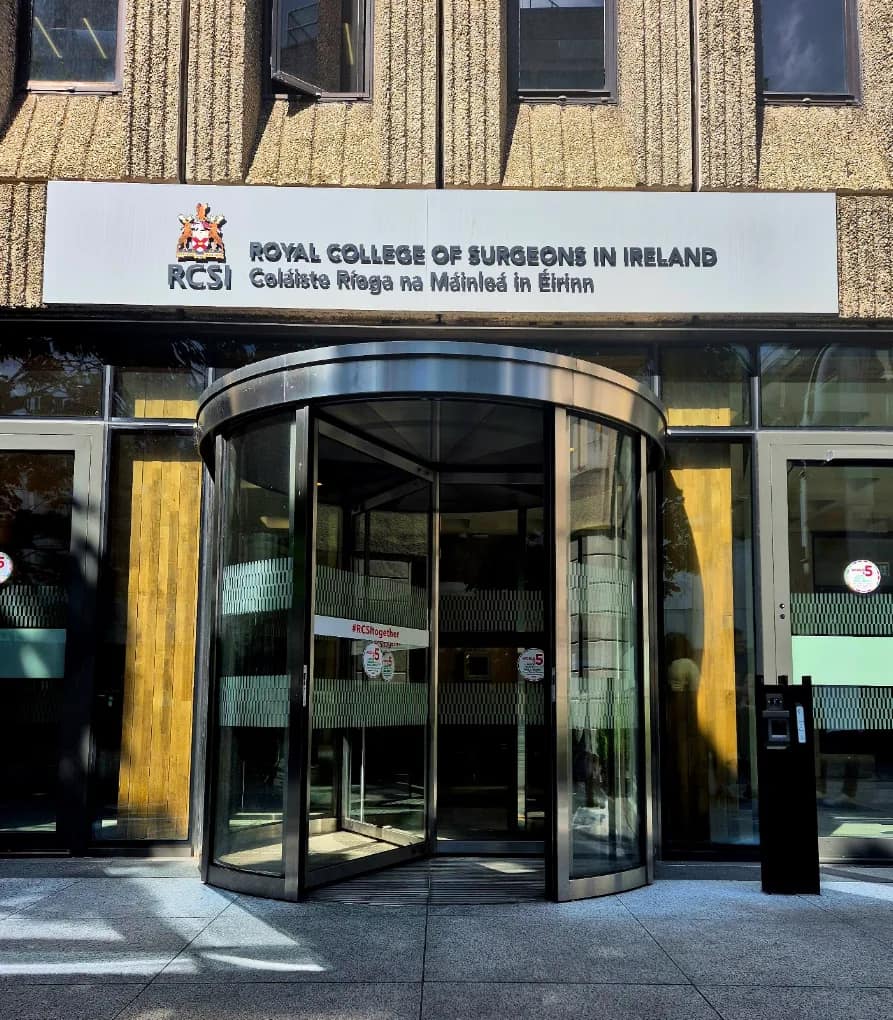
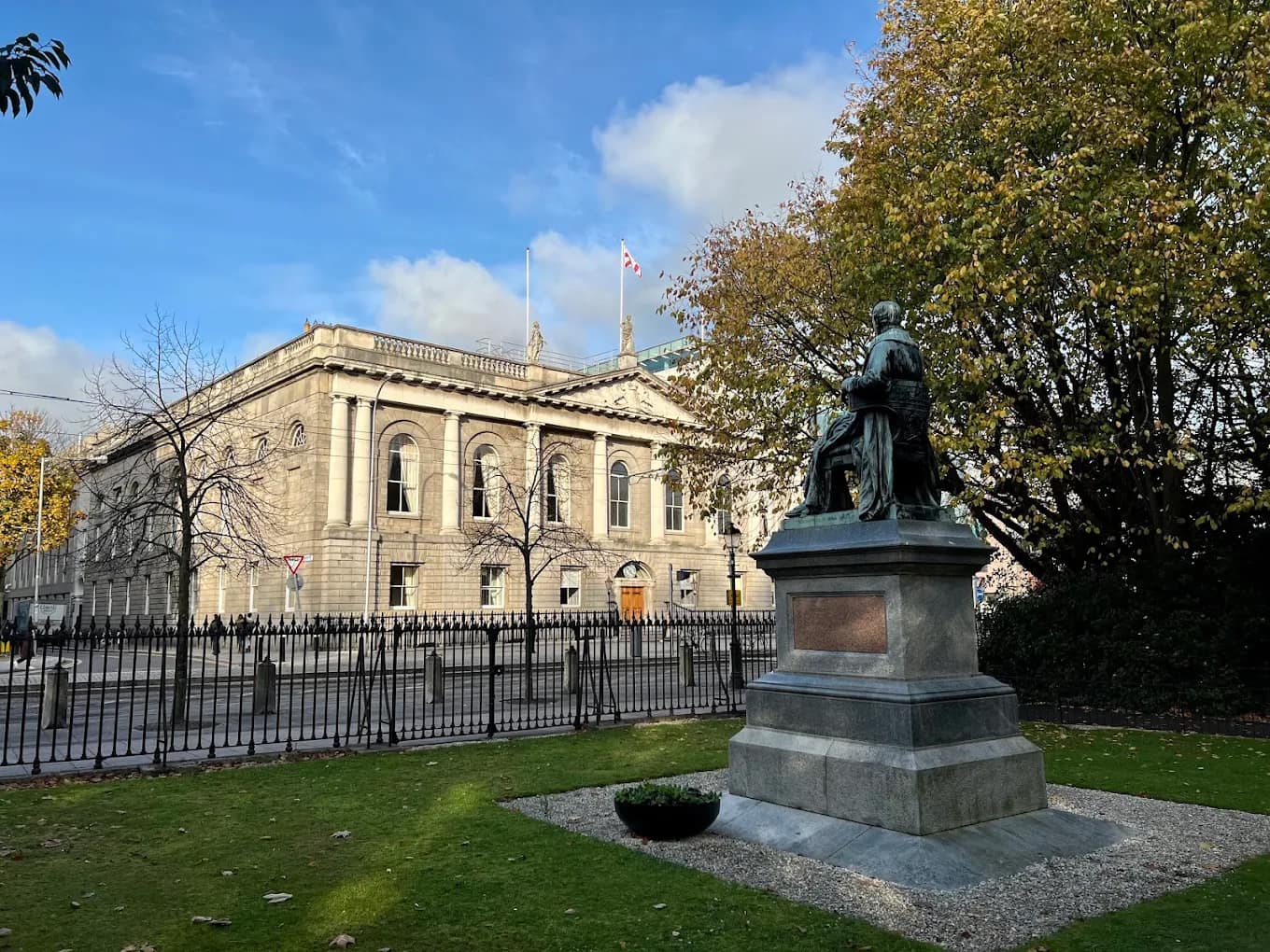
Historic granite building of the Royal College of Surgeons in Ireland with a commemorative statue
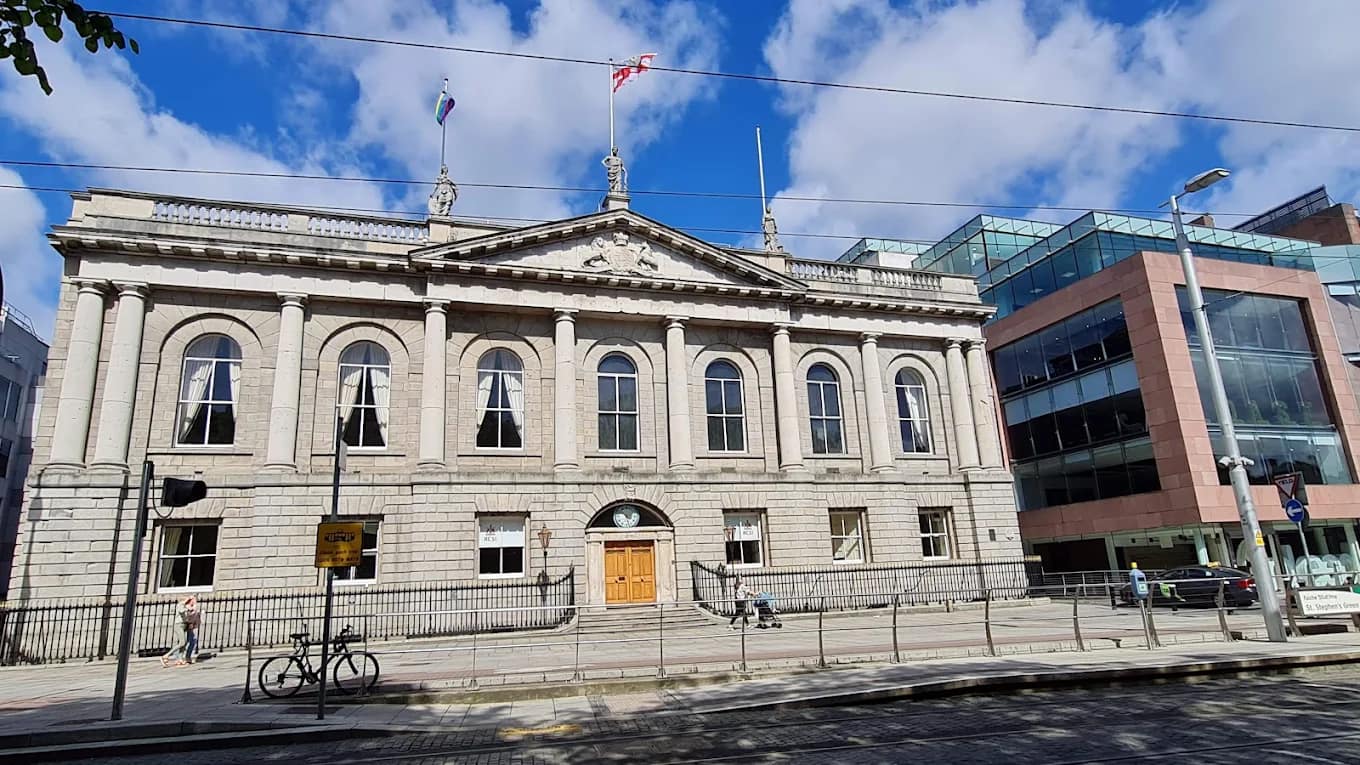
RCSI's 1810 facade at 123 St Stephen's Green beside its modern extension
A Georgian medical college building in central Dublin

Historic granite building of the Royal College of Surgeons in Ireland with a commemorative statue

Find out all about your MBBS-abroad options at RCSI

Download our free brochure for immediate information, or get personalised professional counselling from our experts.

Recognition & Prestige

Rankings & Recognition

RCSI is a specialist health-sciences university: it ranks in the world's top 300 overall and top 250 for Medical & Health subjects in THE 2026, and THE's Impact Rankings placed it #1 in the world for Good Health and Well-being (SDG 3) in 2025.

  • 251–300

    THE World University Rankings 2026

  • 201–250

    THE World Rankings 2026 — Medical & Health

  • #161

    QS World Rankings by Subject 2026 — Medicine

  • #1

    Worldwide for Good Health & Well-being (THE Impact 2025, SDG 3)

The medical degree is recognised internationally. RCSI is listed in the World Directory of Medical Schools (WDOMS), the MB BCh BAO is accredited by the Medical Council of Ireland (a WFME-recognised accreditor to 2030) and the National University of Ireland, and graduates are eligible to qualify for practice in India through the NMC screening/exit examination.

Accreditations and Recognition

  • National Medical Commission (NMC) of India emblem

    NMC / MCI

    National Medical Commission / Medical Council of India — eligible graduates can sit the FMGE/NExT screening examination for licensing in India.

  • World Directory of Medical Schools emblem

    WDOMS

    Listed in the World Directory of Medical Schools (WDOMS).

  • World Federation for Medical Education emblem

    WFME

    Accredited by the Medical Council of Ireland, a WFME-recognised agency (recognition status to 2030).

  • European Union emblem

    European Union

    Within the European Higher Education Area; degree recognised EU-wide under Directive 2005/36/EC.

Complete Information About RCSI

Get complete information about the Royal College of Surgeons in Ireland, including tuition, living costs, admission process and recognition for Indian students.

Success stories

Student Success Stories

Hear directly from students who are studying medicine in Europe with futureMBBS.

Academic Excellence

Why Study Medicine at RCSI

RCSI pairs 240 years of surgical tradition with one of Europe's most advanced simulation campuses, in the safest English-speaking capital in the EU.

Safe & Welcoming

Ireland ranks 2nd on the Global Peace Index 2025, behind only Iceland. The campus sits on St Stephen's Green in the heart of Dublin 2, with 24/7 security and the city's best-connected transport on the doorstep.

English at the Bedside

Ireland is the EU's principal English-speaking country. Unlike most of continental Europe, students take patient histories in English from their first hospital attachment, with no local-language barrier in the wards.

A Health-Sciences Specialist

RCSI is Ireland's only specialist health-sciences university. Its 26 York Street building houses one of Europe's most advanced clinical simulation centres, including the 12,000 sq ft National Surgical and Clinical Skills Centre, the first of its kind outside the United States.

Indian-Friendly Community

Indians are the third-largest non-Irish community in Ireland (Census 2022). RCSI's own PIBS Society (Pakistan, India, Bangladesh & Sri Lanka) celebrates Diwali and Holi on campus, and Dublin has well over 100 Indian restaurants and several Indian supermarkets.

240 Years of Surgical Tradition

Founded by royal charter in 1784, RCSI gave the world Abraham Colles (the Colles fracture) and opened its Fellowship to women in 1885, with Emily Winifred Dickson becoming the first female Fellow of any surgical royal college in 1893.

Global Recognition

RCSI ranks in THE's top 250 worldwide for Medical & Health (2026) and was #1 in the world for Good Health and Well-being in THE's 2025 Impact Rankings. Over 60% of students are international, and its 32,000+ alumni practise in 103 countries, supported by sister campuses in Bahrain and Malaysia.

Clinical Training

Hospital immersion begins in Year 3 across the RCSI network: Beaumont Hospital (national centre for neurosurgery and renal transplantation), Connolly Hospital, the Rotunda maternity hospital and CHI at Crumlin for paediatrics, with structured US and Canadian residency pathways that start up to 40 months before graduation.

Read all about MBBS abroad in our free brochure

Know exactly what options exist for your MBBS-abroad success.

How to Apply

Admission Process for MBBS

Admission to Medicine at RCSI is by direct online application to the university, not NEET, not Ireland's CAO and not the HPAT test (those apply to Irish/EU school-leavers only). Indian students apply directly on rcsi.com with a €75 application fee; shortlisted candidates are invited to an online interview. Applicants must turn 18 by 31 December of the entry year.

Admission Timeline

  1. 1
    November 1, 2026Application Opens

    The online application window for the September 2027 intake opens on rcsi.com.

  2. 2
    January 15, 2027Application Deadline

    Final date to submit the completed Medicine application with the €75 fee.

  3. 3
    January–March 2027Shortlisting & Interview

    Applications are reviewed on transcripts, references, personal statement and extracurriculars; shortlisted candidates complete a Zoom interview.

  4. 4
    Within weeks of interviewOffers Released

    Admission decisions are released on a rolling basis; offers must be accepted within 21 days.

  5. 5
    Per offer letterAcceptance Deposit & Visa

    Accept by paying the deposit (€6,500 per RCSI's published documents), then apply for the Irish long-stay (D) study visa with proof of at least €10,000 living funds.

  6. 6
    September 2027Classes Begin

    The academic year begins at the St Stephen's Green campus.

Eligibility Criteria

Academic Qualification

Indian applicants must hold a bona-fide CBSE or CISCE completion certificate. For the 5-year track (no Foundation Year), RCSI asks for a minimum 90% average across five Class 12 subjects with at least 75% in Chemistry, Biology and either Physics or Mathematics. For the 6-year track (with Foundation Year), the average requirement drops to 80% with the same 75% subject minimums. These are 2026-entry criteria and are reviewed annually.

Subjects:

ChemistryBiologyPhysics or Mathematics

Age Requirement

Applicants must be at least 18 years old by 31 December of the year of entry; RCSI states applications are otherwise not considered.

  • Minimum 18 yearsBy 31 December of the entry year (official RCSI rule)

Requirements

Selection is based on academic record and a holistic review; there is no entrance exam for direct international applicants. Applications may be submitted directly or through an official international representative.

  • Shortlisting & Interview

    Stage 1 reviews transcripts, predicted grades, references, personal statement and extracurricular achievements; Stage 2 is a Zoom interview for shortlisted candidates.

  • English Proficiency

    IELTS 6.5 overall with no band below 6.0, in a single sitting taken within two years; equivalent TOEFL scores accepted. CBSE/ISC students are not explicitly exempt, so plan for IELTS.

Entrance Examination

RCSI holds no written entrance exam for direct international applicants. Selection rests on the published academic thresholds, holistic shortlisting and the interview.

ComponentRequirement
Academic record90% average (5-year track) or 80% (6-year track) across five Class 12 subjects, with 75% in Chemistry, Biology and Physics/Mathematics.
Holistic shortlistingPersonal statement, references and extracurricular/volunteering record are formally assessed.
InterviewOnline (Zoom) interview for shortlisted candidates.

Required Documents

To apply, students need to submit essential academic and identification documents:

  • Completed online application form
  • Application fee payment of €75
  • Certified Class 10 and 12 transcripts, IELTS certificate (if applicable), personal statement, referee details and a passport photo
  • Valid passport
  • + More

Admission Guidance & Document Checklist

Get the complete document checklist or admission guidance from our experts.

Program Structure

MBBS Curriculum & Internship Structure

RCSI's curriculum is built on three pillars — knowledge, skills, and personal and professional identity — and taught through case-based learning in small groups of up to 12, with every student assigned a personal tutor and one of six learning communities. It runs over five years, or six with a Foundation Year, entirely in English, and leads to the MB BCh BAO degree.

Medicine (General Medicine) Course

  • Total Duration:

    5 Years (6 with Foundation Year)

  • Degree:

    MB BCh BAO (Bachelor of Medicine, Surgery and Obstetrics — equivalent to MBBS)

Curriculum Phases at RCSI

  • Years 1–2

    Foundation of Practice

    Systems-based medical sciences taught through case-based learning, with cadaveric dissection led by surgeons and early exposure to community and hospital settings (6-year-track students first complete a Foundation Year of physics, chemistry and human biology):

    The Body: Movement & FunctionCardiovascular SystemRespiratory SystemGastrointestinal & Hepatology
    Central Nervous SystemEndocrine & BreastRenal SystemGlobal Epidemiology & PreventionStudent Choice modulesPreparation for Clinical Placement
  • Year 3

    Integration into Practice

    Full hospital immersion begins with clinical attachments across the RCSI teaching-hospital network, alongside simulation-based training and an individual research project:

    Clinical Medicine & Surgery AttachmentsNew Horizons & SimulationStudent Selected ProjectClinical Attachment Academies
  • Years 4–5

    Preparation for Practice

    Students work full-time within clinical teams across the specialties, complete electives (options outside Ireland) and finish with a sub-internship that prepares them for practice:

    Obstetrics & GynaecologyPaediatricsPsychiatryGeneral Practice
    MedicineSurgeryElectivesPreparation for Intern Practice

Clinical Rotations

Clinical training takes place across the RCSI Hospitals Group and affiliated sites: Beaumont Hospital (RCSI's principal teaching hospital since 1988), Connolly Hospital Blanchardstown, the Rotunda maternity hospital, Our Lady of Lourdes Drogheda, CHI at Crumlin for paediatrics and regional and specialist hospitals nationwide. An indicative pattern:

PhaseFocus
Year 3Clinical medicine and surgery attachments at RCSI teaching hospitals.
Year 4Obstetrics & Gynaecology, Paediatrics, Psychiatry, General Practice and elective.
Year 5Medicine, Surgery, elective (options abroad) and the pre-intern sub-internship.

Get the full curriculum

Download a free brochure to see detailed subjects, the course structure and everything you need to plan your studies.

Global Exchange

Global Partner Universities & Clinical Electives

RCSI runs an elective-based model of international mobility: formal elective modules in Years 4 and 5 can be taken abroad through RCSI's network of international partnerships, it holds an Erasmus Charter for elective and research placements across the 33 Erasmus programme countries, and its Research Summer School spans the Dublin, Bahrain and Penang campuses.

CountryPartner Universities / Networks
United StatesBaystate Medical Center (Massachusetts); Pennsylvania Hospital (Philadelphia)
CanadaSt Michael's Hospital, Toronto; Li Ka Shing Knowledge Institute, Toronto
BahrainRCSI Medical University of Bahrain (sister campus)
MalaysiaRCSI & UCD Malaysia Campus, Penang (sister campus)
EuropeErasmus+ elective and research mobility across the 33 programme countries

Explore Your Exchange Options

The table above highlights elective destinations and exchange networks available to RCSI medical students.

Legacy

Prominent Graduates of RCSI

For 240 years RCSI has produced surgeons and physicians whose names are still spoken on ward rounds around the world.

Abraham Colles

Abraham Colles trained at RCSI, became its President in 1802 at just 29, and served as Professor of Anatomy, Physic and Surgery from 1804. His 1814 description of the distal radius fracture — known ever since as the Colles fracture — remains one of the most cited eponyms in orthopaedics, and every medical student in the world still learns his name.
William Dease

William Dease was a co-founder of RCSI in 1784 and its first Professor of Surgery. A pioneering Dublin surgeon and author of influential surgical texts, he shaped the college's founding mission of turning surgery from a trade into a learned profession, and RCSI still honours him with a medal bearing his name.

Arthur Jacob

Arthur Jacob was Professor of Anatomy at RCSI for 41 years and twice its President. In 1819 he described the layer of rods and cones in the retina, known as Jacob's membrane, a foundational discovery in ophthalmology, and he founded one of Ireland's first eye hospitals and the Irish medical press.

Emily Winifred Dickson

Emily Winifred Dickson became the first female Fellow of RCSI in 1893, making her the first woman Fellow of any royal surgical college in Britain or Ireland. She achieved this within a decade of RCSI opening its examinations to women in 1885, and went on to practise as a gynaecologist, blazing a trail for women in surgery.

Francis Rynd

Francis Rynd, a Fellow of RCSI and surgeon at Dublin's Meath Hospital, administered the world's first subcutaneous injection with a hypodermic device of his own design in June 1844. Every injection given anywhere today traces its lineage to that Dublin invention.

Robert William Smith

Robert William Smith took his Licentiate of RCSI in 1832 and became a Fellow in 1844, later serving as the college's Vice-President. In 1847 he described the wrist injury now known worldwide as Smith's fracture, and he wrote the first major treatise on neurofibromatosis, years before von Recklinghausen.

Eilis McGovern

Eilis McGovern, a cardiothoracic surgeon, was elected President of RCSI in 2010, becoming the first woman to lead any surgical royal college in the world. Her election, 117 years after Emily Winifred Dickson's Fellowship, symbolised RCSI's long arc of opening surgery to women.

Faculty

The university is led by Vice Chancellor Professor Cathal Kelly, with Professor Arnold Hill as Dean of Medical Programmes and Professor Gerry McElvaney as Head of the School of Medicine, supported by deputy deans for student engagement, positive education and international curriculum development. Teaching combines campus academics with the consultants of the RCSI Hospitals Group, at a student-to-staff ratio of roughly 24:1 (THE 2026).

Academic Expertise

  • Experienced physicians and surgeons

  • Faculty with international publications

  • Medical researchers and scientists

  • Active involvement in medical research

Student Support & Mentorship

  • Personal tutor for every student

  • Six cross-year learning communities

  • Clinical supervision during rotations

  • Continuous development of practical skills

About University

History Information

Founded by Royal Charter in 1784

RCSI was established by royal charter on 11 February 1784 as the national training body for surgery in Ireland, and in 1810 opened Surgeon's Hall at 123 St Stephen's Green — the same address where students study today.

Opening Medicine, and Opening It to Women

A Chair of Medicine followed in 1813, and in 1885 a supplemental charter opened RCSI's medical school, Licence and Fellowship to women. Emily Winifred Dickson became the first female Fellow of any royal surgical college in 1893.

Through Revolution to Recognition

During the 1916 Easter Rising the college building was occupied by insurgents under Michael Mallin and Countess Markievicz, and bullet marks remain on its facade. In 1978 RCSI became a recognised college of the National University of Ireland, and in 2010 it activated its own degree-awarding powers.

Ireland's First Independent University

In 2019 RCSI was authorised to use the title of university, becoming Ireland's first independent, not-for-profit university. Today, as RCSI University of Medicine and Health Sciences, it teaches about 4,000 students from 90 countries in Dublin, over 60% of them international, with sister campuses in Bahrain and Malaysia.

Get all information about RCSI in our free brochure

Read on to find out how you can fulfil your dream of studying medicine at the Royal College of Surgeons in Ireland.

Role in medicine

Role in medical education

Ireland's Home of Surgery Since 1784

RCSI is both a medical school and the body that trains and examines Ireland's surgeons — its Fellowship (FRCSI) has been a mark of surgical excellence for over two centuries. Beaumont Hospital has been its principal teaching hospital since 1988, anchoring a network that includes Connolly Hospital, the Rotunda and specialist national centres.

Research That Reaches the Clinic

RCSI hosts FutureNeuro, the national research centre for chronic and rare neurological diseases that grew into a €44 million programme, and organises its research around themes from biomaterials and regenerative medicine to cancer, vascular biology and surgical science.

An International Medical Community

Over 60% of RCSI's students are international and its 32,000+ alumni span 103 countries. Structured Pathway to Residency programmes for the United States and Canada begin up to 40 months before graduation, and the Research Summer School connects students across the Dublin, Bahrain and Penang campuses.

Get all information about RCSI in our free brochure

Read on to find out how you can fulfil your dream of studying medicine at the Royal College of Surgeons in Ireland.

Cost of living

MBBS Living Cost at RCSI, Dublin

Dublin is safe and English-speaking, but it is one of Europe's more expensive student cities, and RCSI's campus is in the city centre where rents are highest. Here is the monthly breakdown.

Monthly Living Cost

Cost ComponentApproximate Amount
Accommodation₹66,000 – ₹1,58,000
Food₹38,000 – ₹54,000
Transportation₹6,600 – ₹8,500
Other Expenses (utilities, internet, leisure)₹33,000 – ₹45,000
Get Free MBBS Guide

Average monthly living cost

₹1,45,000 – ₹2,65,000

Housing

Accommodation

RCSI runs its own small city-centre residence two minutes from campus, and its student services team supports students renting privately across Dublin.

Mercer Court — RCSI's Own Residence

RCSI operates Mercer Court, comprising Millin House and the Mercer Court Apartments, just a two-minute walk from the St Stephen's Green campus, with 24/7 security, a dedicated residence manager, games room and laundry.

Rooms and Apartments

Millin House offers single and twin en-suite rooms, while the Mercer Court Apartments house students in four-person apartments with single and twin bedrooms — all fully furnished.

Limited Places — Apply Immediately

Capacity is small (roughly 100 beds for the whole university), so demand far exceeds supply. Students should email accommodation@rcsi.ie the moment they accept their offer.

Monthly Cost at Mercer Court

For 2026/27, single rooms cost €322–€332 per week on a 41-week lease (€13,202–€13,612 for the year, about ₹14.5–15 lakh); twin rooms are cheaper at €220–€244 per week.

Private Student Residences

Purpose-built student accommodation within reach of campus includes Binary Hub, Aparto Dorset Point, Kavanagh Court, LIV Student and Yugo residences, typically €1,100–€1,600 per month depending on room and provider.

House-Shares and Digs

The most economical option is a room in a shared house (about €600–€1,000 per month) or digs with a host family; RCSI student services advises on all categories and links students to Threshold for tenant rights.

How to Search Safely

Use Daft.ie and reputable providers, start searching in early summer for September, and follow RCSI's own warning: never pay a deposit for accommodation you have not viewed in person or by verified video.

City-Centre Convenience

Living near St Stephen's Green means lectures, the 26 York Street library and gym, Grafton Street and the Luas Green Line are all within a few minutes on foot — many RCSI students live without any daily commute.

Need accommodation details?

Get a full overview of housing options with our university guide, or reach out to an expert.

Food & Dining

100% Veg Options and Indian Food, Always Available

Indian and vegetarian food is easily available in cafeterias, restaurants and grocery stores across central Dublin.

The Dispensary café on the ground floor of 26 York Street serves students through the day, and the campus sits in Dublin's densest food district — hundreds of restaurants and lunch spots within ten minutes' walk, with vegetarian options everywhere.

Location

How to Reach RCSI, Dublin

Address

RCSI University of Medicine and Health Sciences, 123 St Stephen's Green, Dublin 2, D02 YN77, Ireland

  • Nearest Airport

    Dublin Airport (DUB), around 30–40 minutes by Aircoach or Dublin Express to the city centre

  • Local Transport

    The Luas Green Line St Stephen's Green stop is directly across from campus, dense Dublin Bus coverage serves the Green, and the whole city core is walkable; the TFI 90-minute fare costs €1 with a Student Leap Card

Your Roadmap to Success

Career Pathways After Medicine at RCSI

Graduates earn the MB BCh BAO, Ireland's primary medical qualification and the equivalent of MBBS, accredited by the Medical Council of Ireland and the National University of Ireland. RCSI is WDOMS-listed, keeping doors open in India, the US, the UK and across the EU.

Understand the Medical Licensing Pathway

A clear overview of the exams and requirements after graduation.

Practising in India

FMGE & NExT Details

To practise medicine in India after graduating from RCSI, Indian students follow a clear licensing pathway set by the National Medical Commission (NMC). The programme is an English-taught degree at a WDOMS-listed school, and students should qualify NEET-UG before joining to protect their future eligibility.

  1. Step 1

    National Exit Test (NExT)

    Graduates must clear the qualifying examination that licenses foreign medical graduates to practise in India. At present this is the Foreign Medical Graduate Examination (FMGE), which the NMC plans to replace with the National Exit Test (NExT).

  2. Step 2

    Clinical Internship (CRRI)

    After qualifying, students complete the required internship in India — a paid, hospital-based internship that builds hands-on experience in Indian clinical settings. In Ireland the 12-month internship happens after the degree through the HSE scheme, so Indian students should confirm with the NMC how the Irish pathway maps to the internship requirement.

  3. Step 3

    Medical Registration

    The final step is registration with the National Medical Commission (NMC) or the relevant State Medical Council. Once registered, the graduate holds a full licence to practise medicine in India.

Student Life Style

Student life at RCSI

Being a medical student at RCSI means an intense, close-knit campus in the middle of Dublin — and weekends exploring Ireland. With over 60% international students from some 90 countries, it is one of the most diverse medical campuses in Europe.

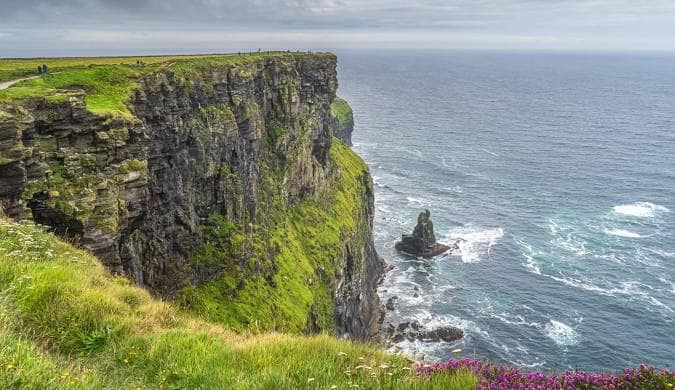
The Cliffs of Moher on Ireland's Atlantic coast, a popular student weekend trip

The Cliffs of Moher on Ireland's Atlantic coast, a popular student weekend trip

Academics

Teaching is case-based in groups of up to 12, every student has a personal tutor and belongs to one of six cross-year learning communities, and simulation training runs from the first years in one of Europe's most advanced clinical simulation centres.

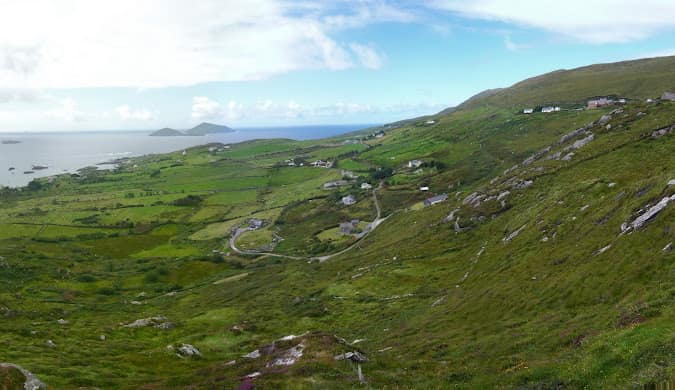
Green coastal countryside along Ireland's Atlantic coast

Green coastal countryside along Ireland's Atlantic coast

Campus and Facilities

The 26 York Street building holds a three-floor health-sciences library with over 500 study spaces, a large gym with 40+ cardio machines, a ladies-only gym and fitness classes, and the mock operating theatres of the National Surgical and Clinical Skills Centre — with St Stephen's Green and Grafton Street on the doorstep.

Challenges and Growth

The course is demanding and central Dublin requires honest budgeting, but students graduate with time management, resilience and teamwork skills that last a career.

Basalt columns of the Giant's Causeway on the north coast of Ireland

Basalt columns of the Giant's Causeway on the north coast of Ireland

Social Life

More than 50 student societies run everything from the Surgical Society to drama, music and the DIVERCSITY student newspaper. The PIBS Society (Pakistan, India, Bangladesh & Sri Lanka) celebrates Diwali and Holi on campus, and Dublin's cafés, music and sport are steps away.

Overall Experience

Studying medicine at RCSI is about growing as a professional and as a person, building lifelong friendships across 90 nationalities, and gaining global exposure in an English-speaking healthcare system.

Scholarship & Financial

Scholarship & Financial Aid

Honest note first: scholarship support for international medicine students at RCSI is limited to one merit award, so families should plan as fully self-funded.

RCSI's merit scholarship for self-funding non-EU medicine offer-holders, worth €25,000 in total spread across the programme (€5,000 per year on the 5-year track, €4,167 per year on the 6-year track). Eligible offer-holders are invited to apply in July, applications close in early September, and shortlisted candidates are interviewed in the first semester.

Ratings

Reviews & Ratings

Hear from students and alumni about their experience at RCSI.

4.6

84 reviews

Academics4.8
Infrastructure4.8
Hostel4.4
Campus Life4.7
Value for Money4
  • Simulation training like nowhere else

    Student — Medicine 2022

    The mock theatres and clinical skills wards at York Street mean you practise everything before you touch a real patient. Small-group teaching keeps you known by name.

  • A truly international campus

    Student — Medicine 2021

    Over half my classmates are from outside Ireland, and the PIBS Society made Diwali away from home actually feel like Diwali. Beaumont rotations are hands-on from day one.

Compare

Compare Colleges

Compare RCSI, Dublin with a leading Indian medical college.

Quick Comparison:

RCSI, Dublin vs CMC Vellore

University
RCSIDublin, Ireland
CMC VelloreTamil Nadu, India
University TypePrivate, not-for-profitPrivate (minority)
MediumEnglishEnglish
Course Duration5–6 years (MB BCh BAO)5.5 years (MBBS)
Tuition (per year)~₹67 lakh (€61,000)~₹3–4 lakh
AdmissionDirect application — academics + interviewNEET-UG
RecognitionWDOMS / EU; NMC-eligible via screeningNMC-recognised
Global RankingTHE 251–300 (2026); QS Medicine #161Not in QS top 500

Compare Top MBBS Universities for Me

See key differences in fees, ranking, eligibility and recognition.

Our blog

Medical Education Insights

Articles that turn complex MBBS-abroad rules into simple, practical steps for students and parents.

FAQ

Frequently Asked Questions

Short answers to the questions students and parents ask most often about MBBS at RCSI.