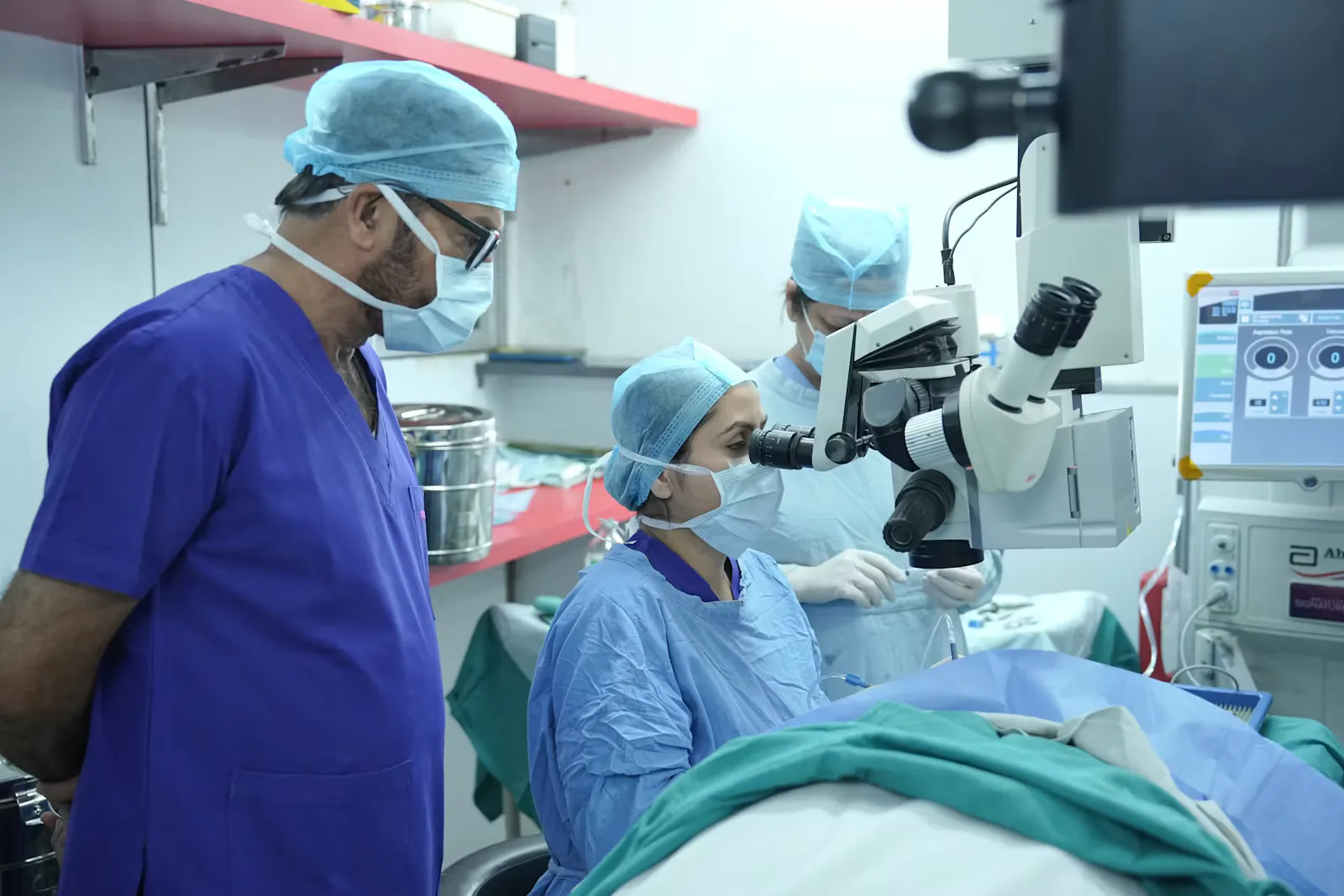
Prof. Dr. Mohan Raj Sharma
Dean of the Institute of Medicine and a senior neurosurgeon of Tribhuvan University, leading the institute across its medical, nursing and allied campuses and its teaching hospitals.
Webinar: Pursuing MBBS in India Thu, November 5, 2026 | 8:30 PM IST FREE
Reserve free seatFree Webinar: MBBS in India
Thu, November 5, 2026 | 8:30 PM

Free Webinar: MBBS in India
Thu, November 5, 2026 | 8:30 PM
Nepal's first and most prestigious medical institution, founded in 1972, offering an English-medium MBBS at the Maharajgunj Medical Campus with the Tribhuvan University Teaching Hospital.


5000+ Students trust us
Nepal
Country
Kathmandu
City
Est. 1972 · Nepal's premier
Heritage & Standing
English
Medium of instruction
Introduction
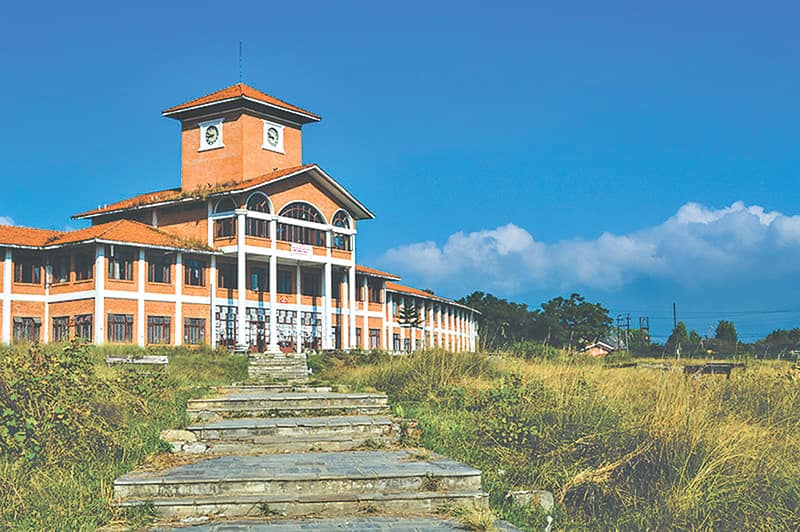
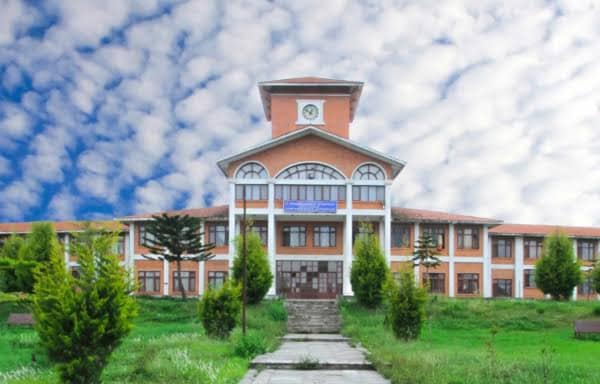
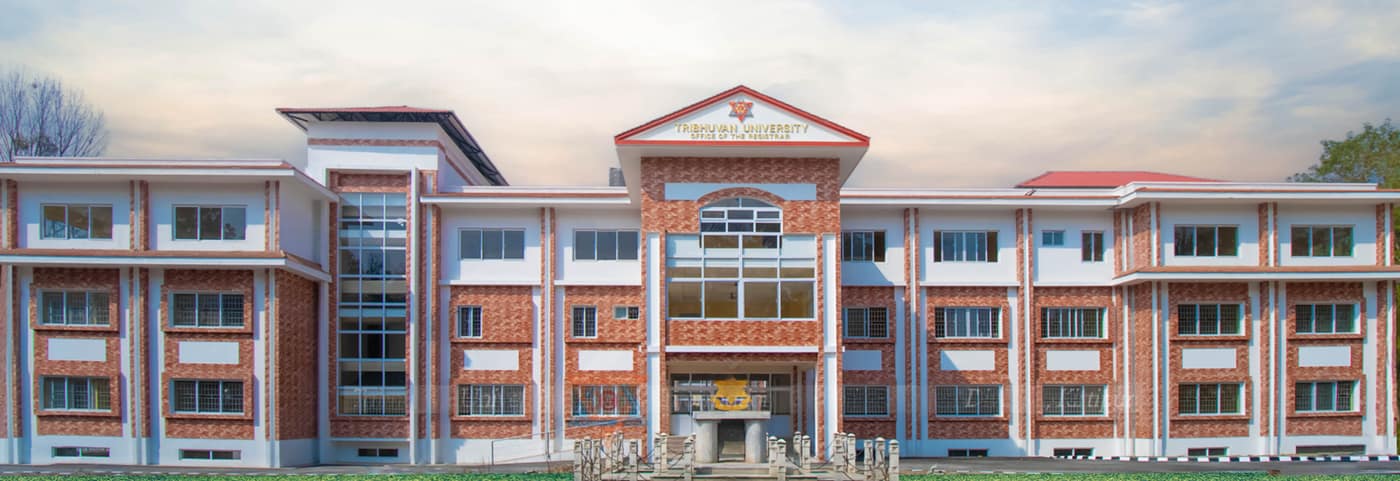
A building of the Institute of Medicine, Tribhuvan University
Download our free brochure for immediate information, or get personalised professional counselling from our experts.
Recognition & Prestige
The Institute of Medicine is Nepal's first and most prestigious medical institution, part of Tribhuvan University, recognised by the Nepal Medical Council and listed in the World Directory of Medical Schools. As a specialist institute it is not separately ranked in the QS or THE world tables; its standing rests on its national pre-eminence and international recognition.
Nepal's First
First and premier medical institution in Nepal (est. 1972)
WDOMS
Listed in the World Directory of Medical Schools
NMC-eligible
Indian licensing route via FMGE
~700-bed
Tribhuvan University Teaching Hospital
The medical degree is recognised internationally. The Institute of Medicine is a public institute of Tribhuvan University, recognised by the Nepal Medical Council (NMC Nepal) and operating under Nepal's Medical Education Commission, and it is listed in the World Directory of Medical Schools (WDOMS). Graduates are eligible to pursue ECFMG certification for the USMLE, and Indian graduates can qualify for practice in India through the NMC screening/exit examination (FMGE, transitioning to NExT), having qualified NEET. Nepal is not an EU member, so there is no automatic EU-wide recognition.
NMC compliant
Follows NMC rules for Indian students: a course of at least 54 months, a 12-month internship at the university and teaching in English. Graduates sit the FMGE to practise in India.
WDOMS
Listed in WDOMS, the World Directory of Medical Schools.
Nepal Medical Council / MEC
Recognised by the Nepal Medical Council and operating under Nepal's Medical Education Commission (which runs the MECEE-BL entrance exam)
Complete Information About the Institute of Medicine
Get complete information about the Institute of Medicine, Tribhuvan University, including tuition, living costs, MECEE-BL admission, recognition and the FMGE route for Indian students.
Success stories
Hear directly from students who are studying medicine in Europe with futureMBBS.
Academic Excellence
The Institute of Medicine offers a genuine, English-medium MBBS at Nepal's premier medical institution, with a national teaching hospital, close cultural ties to India and one of the shortest journeys home of any MBBS-abroad destination.
Read all about MBBS abroad in our free brochure
Know exactly what options exist for your MBBS-abroad success.
How to Apply
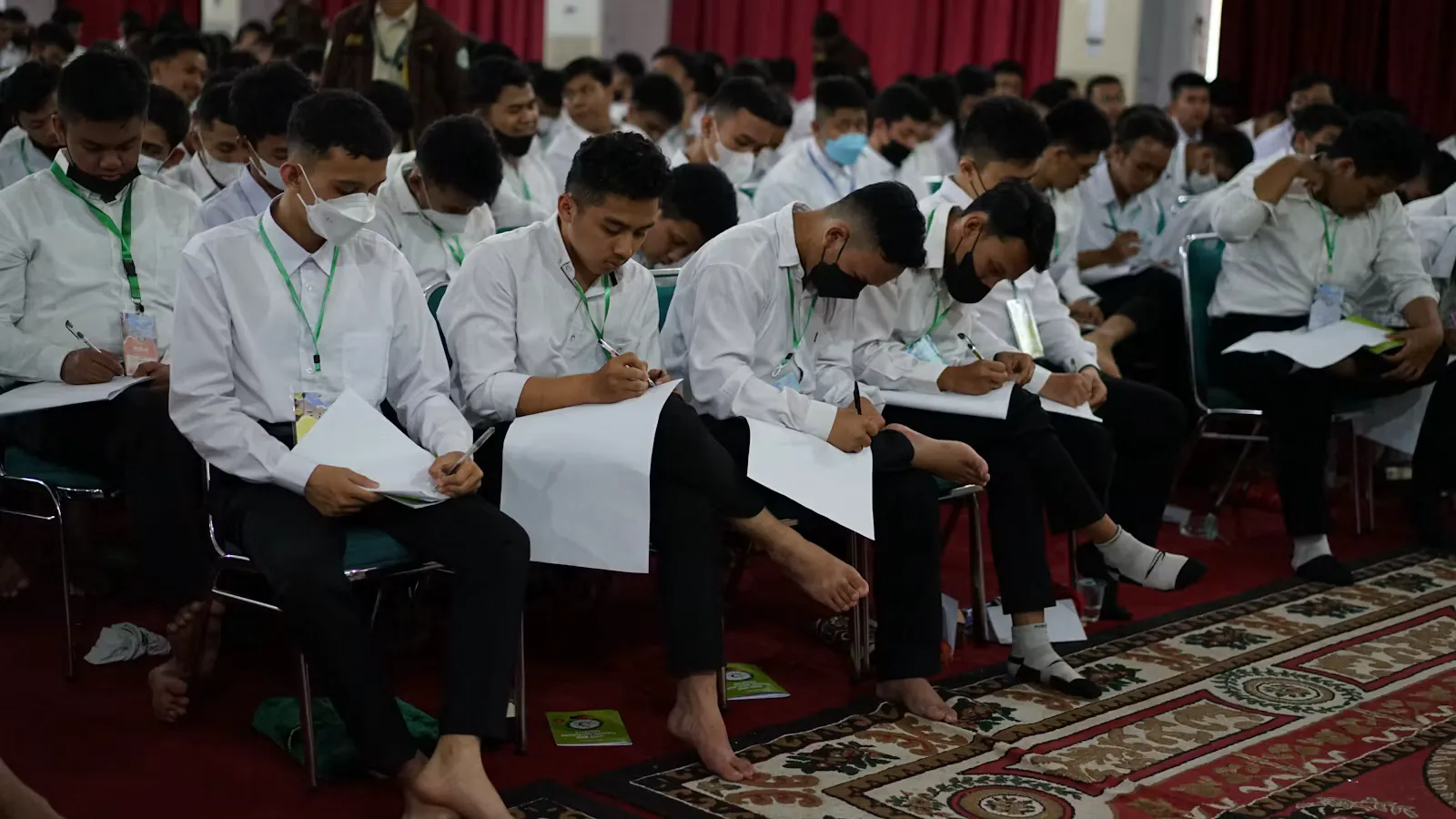
Admission to the MBBS is through Nepal's single common entrance examination, the MECEE-BL, run by the Medical Education Commission, followed by centralised seat matching. Indian students should hold a valid NEET qualification for future licensing in India, and can either sit the MECEE-BL in Nepal or qualify on their NEET result, depending on the category.
Applicants must have completed Class 12 with Physics, Chemistry and Biology and at least a 50% aggregate, and be at least 17 years old, in line with Nepal and NMC rules.
Indian applicants should hold a valid NEET-UG qualification, required by India's NMC for licensing after a foreign medical degree, and useful for the MECEE-BL foreign-candidate route.
Applicants register with the Medical Education Commission and sit the MECEE-BL common entrance exam (200 MCQs, must reach at least the 50th percentile); Indian students may sit it in Nepal, or qualify on a 50th-percentile NEET result under the foreign-candidate category.
Qualified candidates take part in the Medical Education Commission's open counselling / matching to choose a college and seat category (scholarship, Nepali-paying or foreign-paying).
Selected students confirm their seat at IOM, pay the fees and submit their documents (Class 12 records, passport, NEET scorecard) for enrolment.
Students begin the MBBS at the Maharajgunj Medical Campus in Kathmandu.
Applicants must have completed Class 12 (or equivalent) with Physics, Chemistry and Biology and at least a 50% aggregate. For Indian students, the NMC requires a minimum aggregate of 50% in Physics, Chemistry and Biology (40% for reserved categories) plus English, and a valid NEET qualification, for licensing in India.
Subjects:
Candidates should be at least 17 years old by 31 December of the admission year, in line with NMC rules for studying medicine abroad.
Selection is through the MECEE-BL common entrance exam and centralised matching. Indian students also need a valid NEET result for future Indian licensing. Applications and matching are handled by the Medical Education Commission.
MECEE-BL Entrance Exam
The Medical Education Common Entrance Examination (Bachelor Level) is the single national MBBS entrance exam in Nepal: 200 MCQs, with at least the 50th percentile required, followed by open counselling to match a college and seat.
NEET (Indian Students)
Indian students need a valid NEET qualification for future Indian licensing, and a 50th-percentile NEET result can qualify them for the MECEE-BL foreign-candidate category; the programme is taught in English.
Admission to the MBBS requires the MECEE-BL common entrance exam run by Nepal's Medical Education Commission, followed by centralised seat matching.
| Component | Requirement |
|---|---|
| Class 12 | Physics, Chemistry, Biology and English, with at least 50% aggregate |
| MECEE-BL | 200 MCQs; at least the 50th percentile; run by the Medical Education Commission |
| Seat matching | Open counselling to choose college and seat category (scholarship / Nepali-paying / foreign-paying) |
| NEET (Indian students) | Valid NEET-UG qualification for future licensing in India |
To apply, students need to submit essential academic and identification documents:
Admission Guidance & Document Checklist
Get the complete document checklist or admission guidance from our experts.
Programme Structure
The Institute of Medicine teaches an integrated, community-oriented MBBS over 4.5 years plus a 1-year rotatory internship, moving from the basic sciences to full clinical training in the Tribhuvan University Teaching Hospital, taught in English and awarded by Tribhuvan University.
Total Duration:
5.5 Years (4.5 years academic + 1-year rotatory internship)
Degree:
MBBS, awarded by Tribhuvan University
Years 1–2
The first years cover the basic and para-clinical sciences through an integrated, community-oriented and problem-based approach, with early clinical and community exposure:
Years 3–4
The middle years move into the clinical disciplines with hospital-based teaching across the specialties:
Year 5 (to 4.5 yrs)
The senior clinical period completes the specialties (including anaesthesiology, radiology and emergency and family practice) with community and clinical postings, ending in the final professional examinations:
Internship (1 year)
After the academic course, graduates complete a compulsory 1-year rotatory internship in Nepal across the major departments before full registration:
Clinical training is based at the Tribhuvan University Teaching Hospital (TUTH) in Maharajgunj, with specialist centres for cardiothoracic surgery (Manmohan Cardiothoracic Vascular and Transplant Center) and ophthalmology (BP Koirala Lions Center for Ophthalmic Studies). An indicative pattern:
| Phase | Focus |
|---|---|
| Years 1–2 | Basic and para-clinical sciences with early clinical and community exposure |
| Years 3–4.5 | Clinical rotations across Internal Medicine, Surgery, Paediatrics, Obstetrics and Gynaecology and the specialties |
| Internship (1 year) | Rotatory internship in Nepal across the major departments before registration |
Get the full curriculum
Download a free brochure to see detailed subjects, the course structure and everything you need to plan your studies.
Legacy
The Institute of Medicine has trained and been served by many of Nepal's leading doctors and health leaders, and is led today by senior clinicians of Tribhuvan University.
Dean of the Institute of Medicine and a senior neurosurgeon of Tribhuvan University, leading the institute across its medical, nursing and allied campuses and its teaching hospitals.
One of Nepal's most eminent doctors: a pioneering cardiothoracic surgeon who led the country's first open-heart surgery at TUTH in 1997, a former Executive Director of TUTH and Chairman of the Nepal Medical Council. Associated with IOM/TUTH; completed his MBBS abroad.
A renowned orthopaedic surgeon at the Institute of Medicine and TUTH, widely respected in Nepal for his advocacy for medical-education reform. He began his training at IOM before earning his MBBS abroad.
Since 1978 the Institute of Medicine has trained a large share of Nepal's doctors, specialists and public-health leaders, and its graduates practise across Nepal and around the world.
The Institute of Medicine is led by its Dean, Professor Dr. Mohan Raj Sharma, with the Maharajgunj Medical Campus headed by its Campus Chief. Teaching is delivered by experienced physicians, surgeons and scientists of Tribhuvan University across the Tribhuvan University Teaching Hospital and specialist centres, combining a strong clinical tradition with community-oriented education to prepare students for the FMGE, NExT, USMLE and practice.
Nepal's first medical institution (1972)
Part of Tribhuvan University
National teaching hospital (TUTH)
Specialist cardiothoracic and ophthalmic centres
English-taught MBBS
Community-oriented, problem-based curriculum
Clinical supervision at TUTH
International elective community
About University
Get all information about the Institute of Medicine in our free brochure
Read on to find out how you can study MBBS at the Institute of Medicine, Tribhuvan University.
Role in medicine
Get all information about the Institute of Medicine in our free brochure
Read on to find out how you can study MBBS at the Institute of Medicine, Tribhuvan University.
Cost of living
Kathmandu is an affordable city for students, with costs close to Indian levels (the Nepali rupee is roughly 1.6 to the Indian rupee). Here is the approximate monthly breakdown for an Indian student.
| Cost Component | Approximate Amount |
|---|---|
| Accommodation (hostel / shared flat) | ₹10,000 – ₹22,000 |
| Food | ₹9,000 – ₹15,000 |
| Transportation | ₹1,500 – ₹3,000 |
| Other Expenses (Utilities, Internet, Leisure) | ₹4,000 – ₹8,000 |
Average monthly living cost
₹25,000 – ₹45,000
Housing
The Institute of Medicine provides hostel accommodation at the Maharajgunj Medical Campus, and students also rent private flats in the surrounding areas of Kathmandu.
Need accommodation details?
Get a full overview of housing options with our university guide, or reach out to an expert.
Food & Dining
As a Hindu-majority country with deep ties to India, Nepal makes vegetarian and Indian food genuinely easy to find in Kathmandu, in restaurants, grocery stores and student kitchens.
Kathmandu has abundant affordable eateries, and Nepali cuisine (dal bhat, momos, roti-sabzi) is close to Indian food, with vegetarian options everywhere, so Indian students eat familiar meals from day one.
Kathmandu has many Indian and South-Asian restaurants across the city, serving North and South Indian dishes with extensive vegetarian menus, alongside Nepali restaurants that already suit Indian tastes.
Indian staples (atta, dal, basmati rice, spices and ready mixes) are widely stocked in Kathmandu's grocery stores and supermarkets, so students can cook their own Indian meals easily.
IOM's hostel provides a mess with largely vegetarian-friendly Nepali food, and shared kitchens let students cook, which many Indian students use to prepare familiar dishes on a budget.
Kathmandu is served by food and grocery delivery apps such as Foodmandu and Pathao, which deliver from restaurants and stores across the city.
Location
Institute of Medicine (Maharajgunj Medical Campus), Maharajgunj, Kathmandu, Nepal
Nearest Airport
Tribhuvan International Airport (KTM), Kathmandu: with frequent direct flights from Delhi, Kolkata, Varanasi, Mumbai and other Indian cities (about 1.5–2.5 hours); Nepal also has an open land border with India
Local Transport
Kathmandu is served by local buses, taxis and ride-hailing apps (Pathao, inDrive), and the Maharajgunj campus and teaching hospital are in the north of the city
Your Roadmap to Success
Graduates who wish to return home appear for the Indian screening examination, currently the FMGE and transitioning to the NExT, complete the required internship and register with the NMC or a State Medical Council. A valid NEET qualification at admission is required under the NMC's 2021 FMG regulations, and Nepal's 5.5-year MBBS meets the structural rules.
IOM is WDOMS-listed, so graduates are eligible to pursue ECFMG certification and the USMLE for residency and practice in the United States.
Graduates can register with the UK's General Medical Council through the PLAB/UKMLA route and enter UK training, a common path for international medical graduates.
Graduates can register with the Nepal Medical Council after their internship and licensing, and practise in Nepal, where IOM graduates are highly regarded.
After licensing, graduates can pursue postgraduate (MD/MS) training at IOM or abroad in fields such as internal medicine, surgery, paediatrics or public health, building on IOM's specialist centres.
With an English-language MBBS from Nepal's premier medical institution, graduates build careers across India, the US, the UK and beyond after clearing the relevant licensing examinations.
Understand the Medical Licensing Pathway
A clear overview of the exams and requirements after graduation.
Practising in India
To practise medicine in India after graduating from the Institute of Medicine, Indian students follow the licensing pathway set by the National Medical Commission (NMC). IOM teaches an English-medium MBBS with the internship completed in Nepal, meeting the NMC's structural rules, and students should qualify NEET-UG before joining.
Step 1
Graduates must clear the qualifying examination that licenses foreign medical graduates to practise in India. At present this is the Foreign Medical Graduate Examination (FMGE), which the NMC plans to replace with the National Exit Test (NExT).
Step 2
After qualifying, students complete the required one-year Compulsory Rotatory Residential Internship (CRRI) in India, which builds hands-on experience in Indian clinical settings under the NMC's framework.
Step 3
The final step is registration with the National Medical Commission (NMC) or the relevant State Medical Council. Once registered, the graduate holds a full licence to practise medicine in India.
Student Life Style
Life at the Institute of Medicine combines a demanding, English-taught MBBS with life in Kathmandu, a friendly, culturally familiar capital in the shadow of the Himalaya, close to home for Indian students.
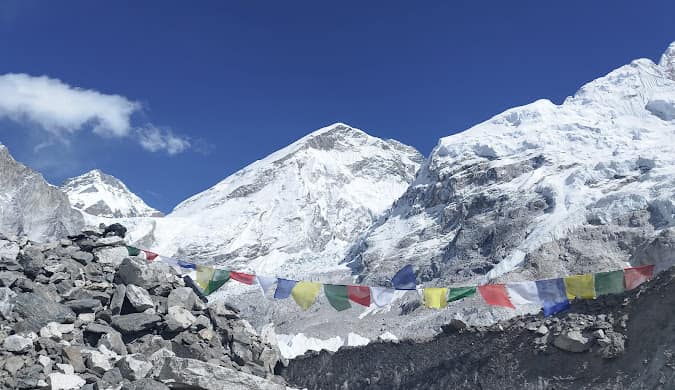
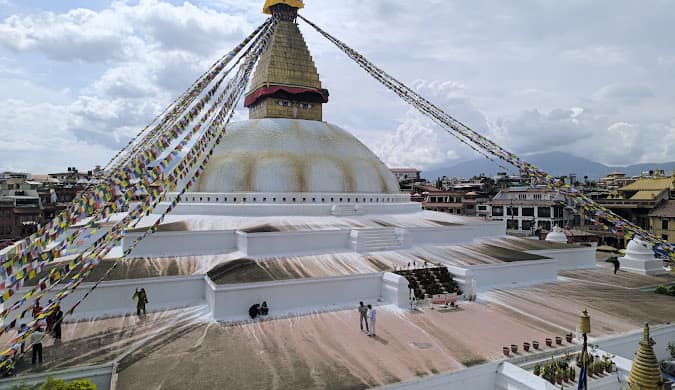
Prayer flags and the Everest region of the Nepal Himalaya
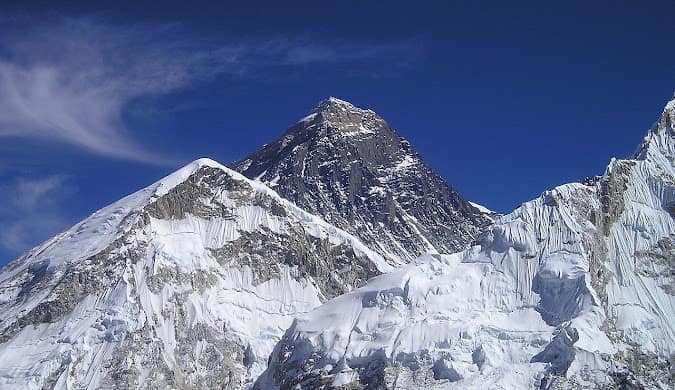
The peak of Mount Everest in the Nepal Himalaya
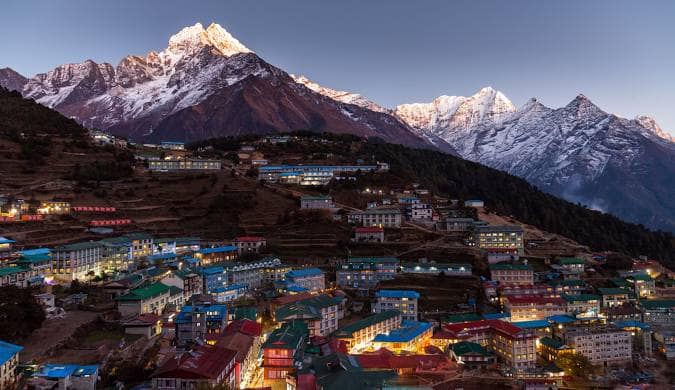
A Nepali mountain town in the hills below the Himalaya
Scholarship & Financial
Honest note first: IOM's free/scholarship MBBS seats are extremely competitive and largely reserved for Nepali students, so most Indian students should plan as fully self-funded on a foreign-paying seat.
A share of IOM's MBBS seats are government scholarship (free) seats, exempt from tuition and deposits, allocated through the MECEE-BL merit ranking; these are highly competitive and mainly for Nepali students, with a small number under bilateral arrangements.
A limited number of seats in Nepal may be available to Indian students under India–Nepal bilateral or Indian government (e.g. ICCR) scholarship arrangements; these are separate from IOM and highly competitive: check with the relevant authorities.
For most Indian students, IOM is a foreign-paying seat with no broad tuition waiver. A scholarship is official only when IOM confirms it in writing, so get that letter before any money is paid.
Compare
Compare the Institute of Medicine, Tribhuvan University with a leading Indian medical college.
Quick Comparison:
Institute of Medicine (Nepal) vs CMC Vellore
| University | Institute of Medicine, TUKathmandu, Nepal | CMC VelloreTamil Nadu, India |
|---|---|---|
| University Type | Public (Tribhuvan University) | Private (minority) |
| Medium | English | English |
| Course Duration | 5.5 years (4.5 + 1-year internship) | 5.5 years (MBBS) |
| Tuition (total) | ~₹72 lakh (US$75,000, SAARC, published) | ~₹17–22 lakh (5.5 years) |
| Admission | MECEE-BL entrance (+ NEET for Indians) | NEET-UG |
| Recognition | Nepal Medical Council; WDOMS; NMC-eligible via FMGE | NMC-recognised |
| Standing | Nepal's premier (no QS/THE world rank) | Top Indian medical college |
Compare Top MBBS Universities for Me
See key differences in fees, eligibility and recognition.
Our blog
Articles that turn complex MBBS-abroad rules into simple, practical steps for students and parents.
FAQ
Short answers to the questions students and parents ask most often about MBBS at the Institute of Medicine, Tribhuvan University.