Free Webinar: MBBS in India

Sat, September 5, 2026 | 7:00 PM

Reserve my Seat
futureMBBS

Free Webinar: MBBS in India

Sat, September 5, 2026 | 7:00 PM

Reserve my Seat
futureMBBS
Bishkek, Kyrgyzstan

International School of Medicine

One of Kyrgyzstan's largest and best-known private medical schools, training doctors in Bishkek since 2003 with an English-medium, internationally oriented programme.

  • MBBS student
  • MBBS student
  • MBBS student
  • MBBS student

5000+ Students trust us

Kyrgyzstan

Country

Bishkek

City

#2 for General Medicine in Kyrgyzstan

Ranking (EdNet 2025)

English

Medium of instruction

Introduction

International School of Medicine (IHSM), Bishkek

The International School of Medicine (ISM), legally the International Higher School of Medicine (IHSM), was founded in Bishkek in 2003 and is one of Kyrgyzstan's largest and best-known private medical schools, with more than 4,000 graduates and around 3,500 current students from many countries, a large share of them Indian. Its General Medicine (MD) programme is taught in English through an integrated, block-modular curriculum and runs over five and a half years for international students who completed twelve years of schooling, with six-year tracks aligned to India's NMC rules. Clinical training uses the school's own Vedanta medical clinics in Bishkek and at Issyk-Kul, alongside city hospitals, and in the 2025 EdNet national ranking ISM placed second in Kyrgyzstan for General Medicine.

  • Study program:General Medicine (MD)
  • Language:English (also Russian)
  • Duration:5.5 Years (6-year track for NMC alignment)
  • University type:Private medical school
  • Per academic year fees:US$6,000 tuition (Year 1: US$7,500) · ≈₹5.2 Lakh (approx.)
  • Entrance examination:Interview + verbal test (Biology, Chemistry, English); NEET mandatory for Indian students
  • Intakes:Summer (1 Aug – 1 Dec) and Winter (20 Dec – 20 Mar)
  • Enrolment:~3,500 students; 4,000+ graduates
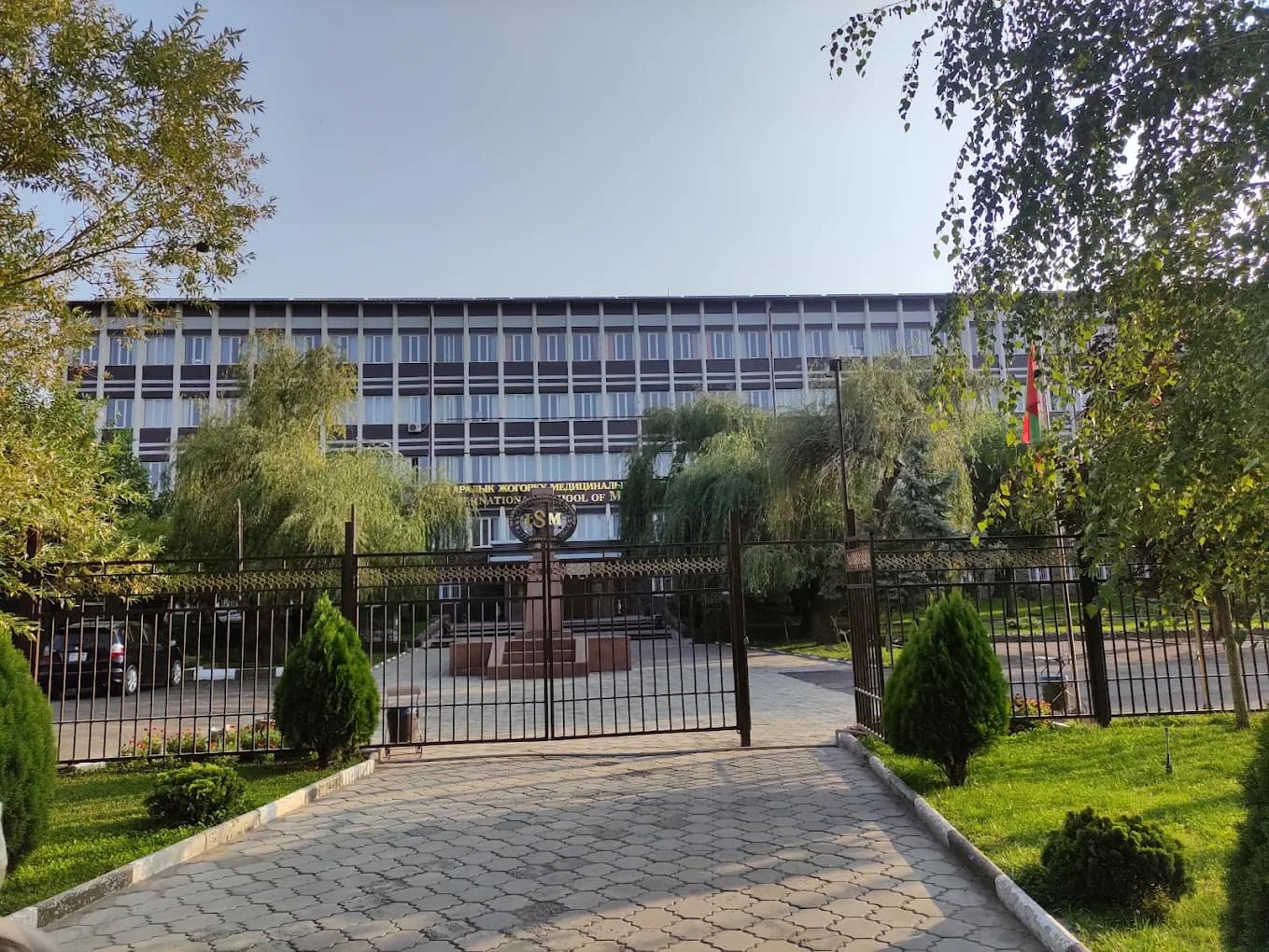
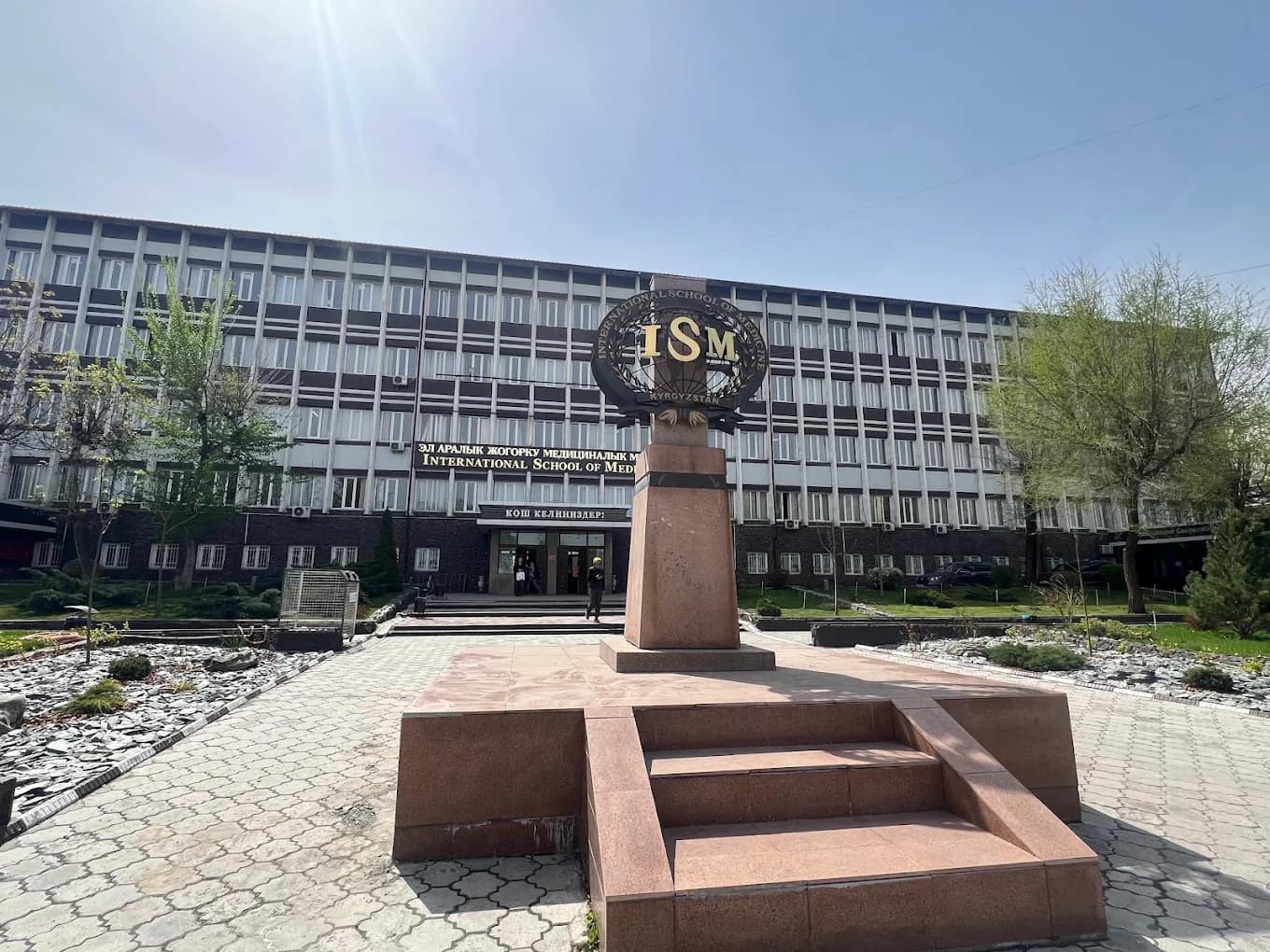
The International School of Medicine main building with the ISM globe monument in front
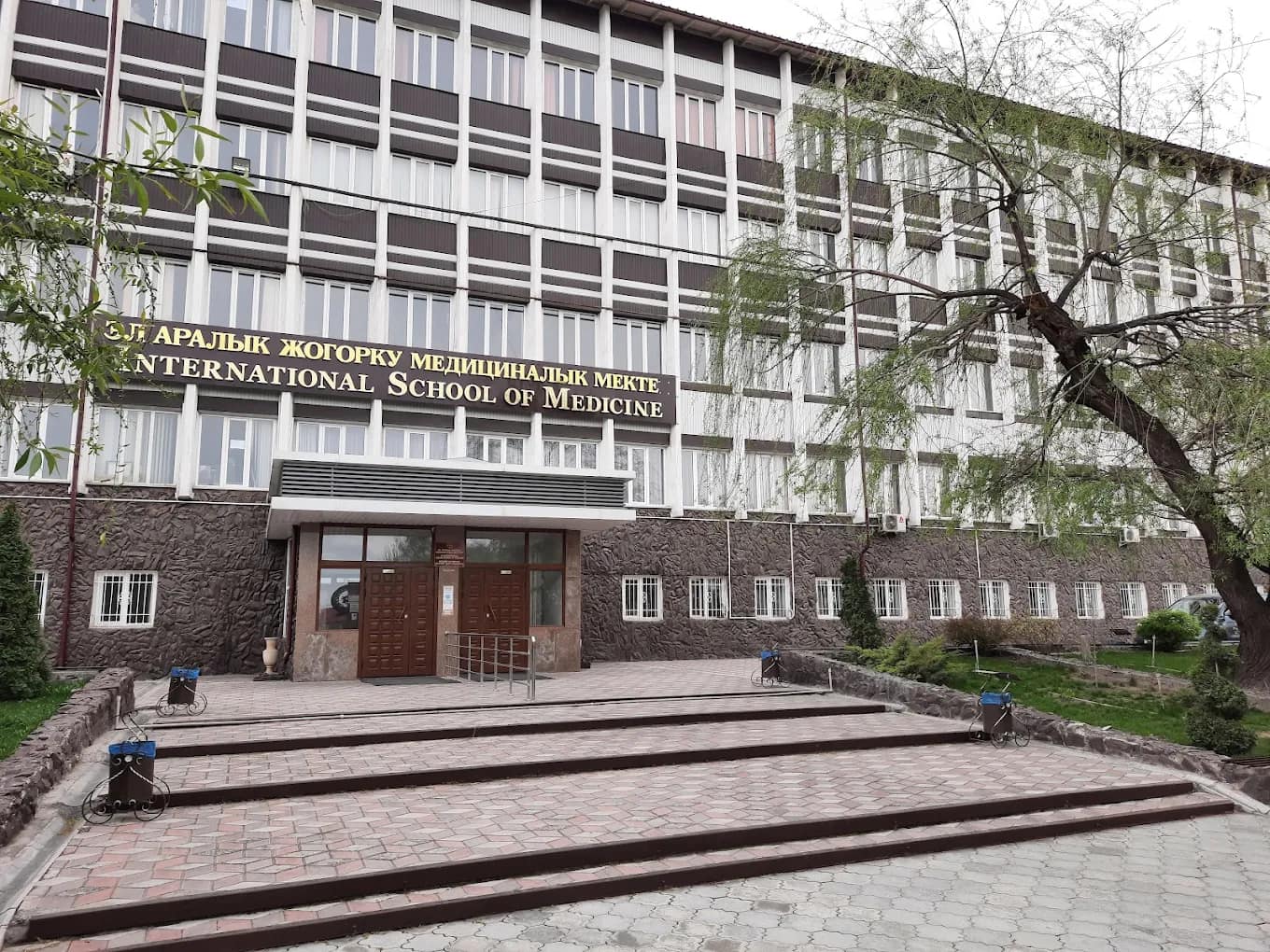
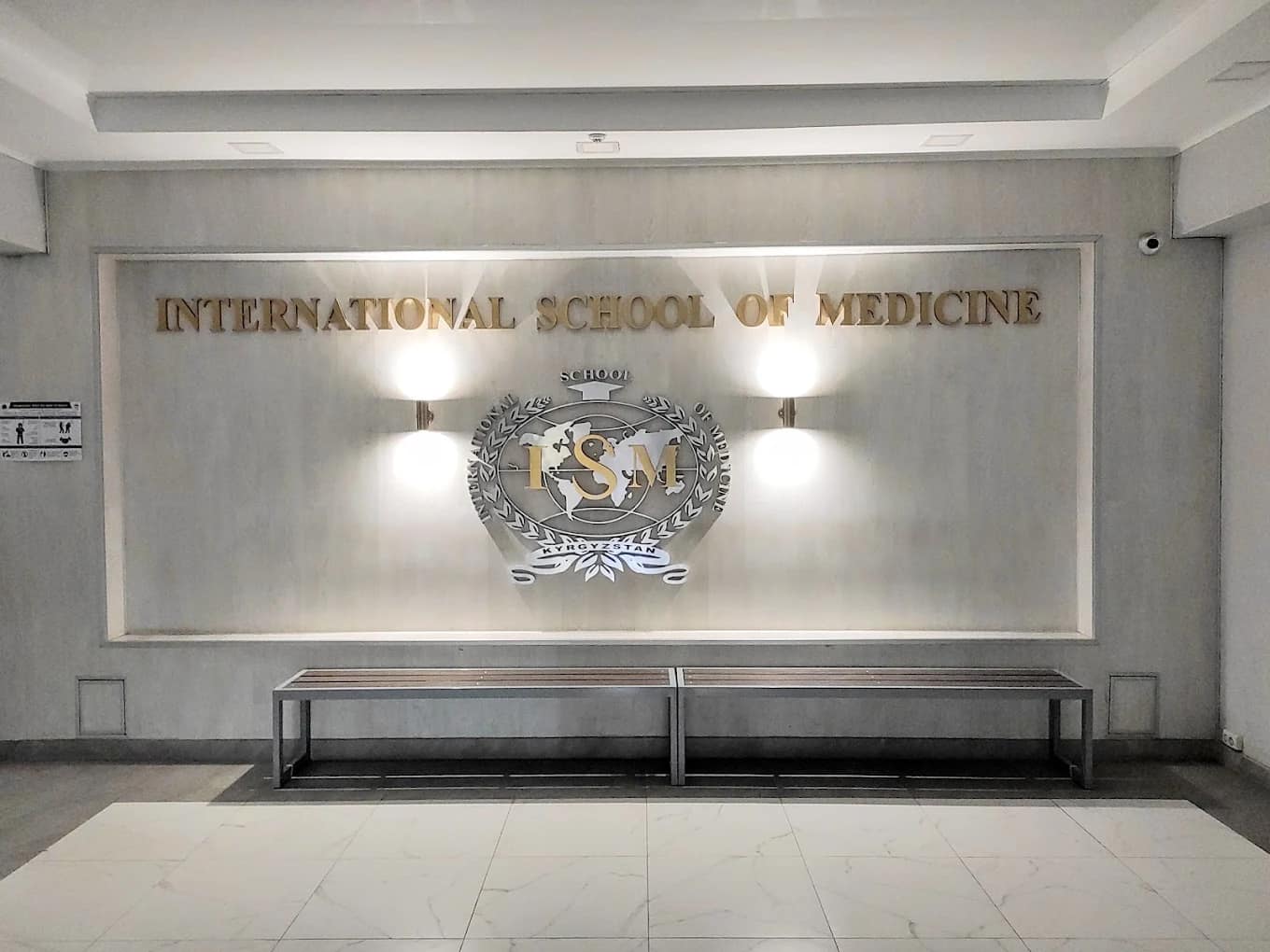
The 'International School of Medicine' signage and emblem inside the campus
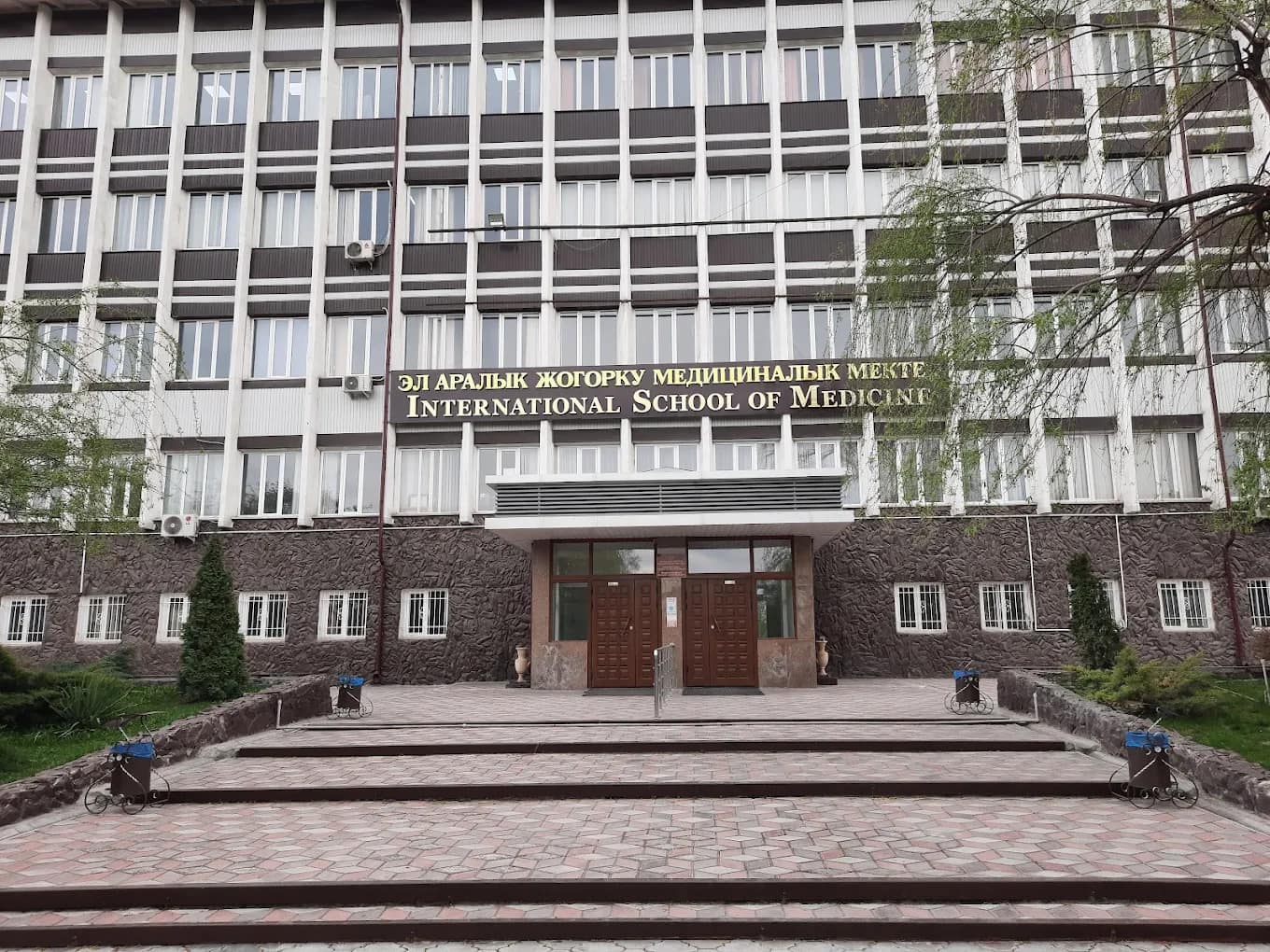
Facade of the International School of Medicine campus building in Bishkek

The International School of Medicine main building with the ISM globe monument in front

Find out all about your MBBS-abroad options at the International School of Medicine

Download our free brochure for immediate information, or get personalised professional counselling from our experts.

Recognition & Standing

Rankings & Recognition

The International School of Medicine is one of Kyrgyzstan's largest private medical schools and placed second in the country for General Medicine in the 2025 EdNet national ranking. It is listed in the World Directory of Medical Schools and recognised for the pathways Indian students use: NMC screening (FMGE/NExT) and the USMLE.

  • #2

    in Kyrgyzstan for General Medicine (EdNet 2025)

  • WDOMS

    Listed in the World Directory of Medical Schools

  • AAEPO / EdNet

    Accredited by WFME-recognised Kyrgyz agencies

The medical degree is recognised internationally. The International School of Medicine is listed in the World Directory of Medical Schools (WDOMS), accredited by WFME-recognised Kyrgyz agencies (AAEPO and EdNet), and Indian graduates are eligible to qualify for practice in India through the NMC screening/exit examination (FMGE, transitioning to NExT).

Accreditations and Recognition

  • National Medical Commission (NMC) of India emblem

    NMC (India)

    Graduates eligible to qualify for practice in India via the NMC screening exam

  • World Directory of Medical Schools emblem

    WDOMS

    Listed in the World Directory of Medical Schools

  • World Federation for Medical Education emblem

    AAEPO / EdNet

    Accredited by WFME-recognised Kyrgyz agencies

Complete Information About the International School of Medicine

Get complete information about the International School of Medicine, including tuition, living costs, admission, NEET rules, safety and recognition for Indian students.

Success stories

Student Success Stories

Hear directly from students who are studying medicine in Europe with futureMBBS.

Academic Excellence

Why Study Medicine at the International School of Medicine

ISM offers an English-taught, internationally oriented medical degree at a moderate cost, with more than two decades of experience teaching international students in Bishkek.

English-Medium Integrated Programme

The General Medicine programme is taught in English through an integrated, block-modular curriculum, so international students study the whole degree in English while learning enough Russian to work with patients during clinical training.

Over Two Decades of International Teaching

Founded in 2003, ISM has produced more than 4,000 graduates and teaches around 3,500 students, giving it long experience with international, and especially Indian, students.

Ranked Nationally for Medicine

ISM placed second in Kyrgyzstan for General Medicine in the 2025 EdNet national ranking, and is accredited by the WFME-recognised Kyrgyz agencies AAEPO and EdNet.

Own Teaching Clinics

Clinical training uses the school's own Vedanta medical clinics in Bishkek and at Issyk-Kul, along with city hospitals, giving students hands-on exposure from the clinical years.

Moderate, Predictable Cost

Tuition of about US$6,000 a year, with hostel and mess bundled into the fee from the second year, keeps the total cost of the degree far below Western Europe or the Caribbean, though it is higher than the cheapest Kyrgyz options.

Recognised for the Routes You Need

ISM is listed in the World Directory of Medical Schools and its graduates are eligible for India's NMC screening exam (FMGE, transitioning to NExT) and for the USMLE via ECFMG, with a documented Erasmus+ partnership network in Europe.

Honest on Safety

Bishkek is generally calm and sits at the lowest tier of Western travel advisories, but families should know that in May 2024 xenophobic mob violence briefly targeted South Asian students in the city. It was short-lived, arrests followed, and there has been no recurrence, and staying connected to the Indian Embassy and student community is the sensible approach.

Read all about MBBS abroad in our free brochure

Know exactly what options exist for your MBBS-abroad success.

How to Apply

Admission Process for MBBS

Admission to General Medicine at the International School of Medicine is based on Class 12 results, a valid NEET qualification for Indian students, and a short entrance interview with a verbal test in Biology, Chemistry and English. ISM runs two intakes a year, a Summer intake and a Winter intake, and Indian students apply through the school's admissions office or an authorised representative.

Admission Timeline

  1. 1
    1 Aug – 1 DecSummer Intake Window

    The main (summer) admission window runs from 1 August to 1 December for the autumn academic start.

  2. 2
    Before applyingQualify NEET

    Indian applicants must hold a valid NEET-UG qualification, both to enrol at ISM and for future licensing in India through the NMC.

  3. 3
    On applicationInterview & Verbal Test

    Applicants complete a short interview and a verbal test in Biology, Chemistry and English as part of admission.

  4. 4
    20 Dec – 20 MarWinter Intake Window

    A second (winter) admission window runs from 20 December to 20 March for the spring academic start.

  5. 5
    After selectionInvitation, Visa & Travel

    Admitted students receive an official invitation letter, arrange the Kyrgyz student visa and medical insurance, and travel to Bishkek.

  6. 6
    On arrivalRegistration & Medical Check

    Students complete university and residence registration and a medical check in Bishkek before classes begin.

Eligibility Criteria

Academic Qualification

Applicants must have completed twelve years of schooling (Class 12) with Physics, Chemistry and Biology and a minimum aggregate of 50% in these subjects (40% for reserved categories), together with English, in line with NMC rules for Indian students studying medicine abroad.

Subjects:

PhysicsChemistryBiologyEnglish

Age Requirement

Candidates must be at least 17 years old by 31 December of the admission year, as required by NMC rules for studying medicine abroad.

  • Minimum 17 yearsRequired age at the time of admission (NMC rule)

Requirements

Selection is based on academic record, a valid NEET result and a short entrance interview with a verbal test. Applications may be made through the ISM admissions office or an authorised representative.

  • Interview & Verbal Test

    A short admission interview with a verbal test in Biology, Chemistry and English, assessing readiness for an English-medium medical programme.

  • NEET Qualification

    A valid NEET-UG qualification is mandatory for Indian applicants, both for ISM admission and for future NMC licensing in India.

Entrance Examination

The International School of Medicine admits students through an interview and verbal test in the sciences rather than a large written entrance examination.

ComponentRequirement
Academic recordClass 12 with Physics, Chemistry and Biology; minimum 50% aggregate in PCB (40% for reserved categories)
NEET (Indian students)Valid NEET-UG qualification is mandatory before enrolment
Entrance interviewInterview plus a verbal test in Biology, Chemistry and English

Required Documents

To apply, students need to submit essential academic and identification documents:

  • Completed application form and ISM invitation request
  • Class 10 and 12 certificates and marksheets (Physics, Chemistry, Biology)
  • Valid NEET-UG scorecard
  • Valid passport
  • + More

Admission Guidance & Document Checklist

Get the complete document checklist or admission guidance from our experts.

Program Structure

MBBS Curriculum & Internship Structure

The International School of Medicine teaches an integrated, block-modular General Medicine programme that blends fundamental biomedical sciences with early clinical modules, taught in English for international students and leading to a Doctor of Medicine qualification equivalent to an MBBS.

Medicine (General Medicine) Course

  • Total Duration:

    5.5 Years (6-year track for NMC alignment)

  • Degree:

    MD (Doctor of Medicine, General Medicine — equivalent to MBBS)

Curriculum Phases at the International School of Medicine

  • Year 1

    Foundations (Horizontal Integration)

    The first year horizontally integrates the basic biomedical sciences, building the foundation of how the healthy human body works, with English and Russian language support:

    Human AnatomyHistologyMedical BiologyMedical Chemistry
    BiophysicsNormal PhysiologyBiochemistryLatinRussian LanguageIntroduction to Clinical PracticeCommunication Skills
  • Years 2–3

    Clinical Integration (Vertical Modules)

    The middle years vertically integrate basic and clinical sciences in system-based modules and introduce structured patient contact:

    Pathological AnatomyPathophysiologyPharmacologyMicrobiology
    ImmunologyPublic HealthPropaedeutics of Internal Medicine and SurgeryClinical SkillsSystem-based Clinical Modules
  • Years 4–5.5

    Clinical Disciplines & Internship

    The senior years are built around clinical disciplines and rotations in the teaching clinics and hospitals, concluding with the pre-internship and internship phase:

    Internal MedicineSurgeryObstetrics and GynaecologyPaediatrics
    NeurologyPsychiatryInfectious DiseasesOncologyENTOphthalmologyDermatologyTraumatologyAnaesthesiology and Intensive CareClinical Internship

Clinical Rotations

Clinical training uses the school's own Vedanta medical clinics in Bishkek (34 Fuchik Street) and at Issyk-Kul, together with Bishkek city hospitals as clinical bases. An indicative pattern:

PhaseFocus
Years 2–3Propaedeutics and clinical skills, with first patient contact in the teaching clinics
Year 4Rotations in internal medicine, surgery, paediatrics, obstetrics and gynaecology and specialties
Years 5–5.5Senior clinical disciplines and the pre-internship / internship phase

Get the full curriculum

Download a free brochure to see detailed subjects, the course structure and everything you need to plan your studies.

Global Exchange

Erasmus+ Partner Universities

The International School of Medicine has a documented Erasmus+ portfolio, taking part in European Capacity Building in Higher Education projects and credit-mobility exchanges with universities across the European Union and the United Kingdom. Because Kyrgyzstan is a non-EU partner country, this mobility runs through Erasmus+ partner-country projects and the school's own agreements.

CountryErasmus+ Partner Universities
ItalyUniversity of Milan; University of Florence
GermanyTechnical University of Berlin; Hamburg University of Applied Sciences; Otto-von-Guericke University Magdeburg; West Saxon University of Applied Sciences
LithuaniaVilnius University; Vilnius Gediminas Technical University
EstoniaUniversity of Tartu
NetherlandsUtrecht University
AustriaFH Joanneum University of Applied Sciences
United KingdomBrunel University London
TurkeyIstanbul Medipol University

Explore Your Exchange Options

The table above highlights the Erasmus+ partner universities of the International School of Medicine.

Leadership

Leadership & Faculty of the International School of Medicine

The International School of Medicine is led by an experienced team of Kyrgyz clinicians and academics who have built the school over more than twenty years.

Prof. Stalbek M. Akhunbaev (Rector)

Professor Stalbek M. Akhunbaev, Doctor of Medical Sciences, is the Rector of the International School of Medicine. He leads the school's academic and clinical work and its large international student body, building on the institution's more than two decades of medical teaching in Bishkek.
Prof. Shamil M. Chyngyshpaev (Founding Rector)

Professor Shamil M. Chyngyshpaev was the founding rector of the International School of Medicine in 2003. He established the school's integrated, internationally oriented medical programme, laying the foundation for an institution that has since graduated more than 4,000 doctors.

Prof. Asel A. Usenova (Vice-Rector, Academic & Clinical)

Professor Asel A. Usenova serves as Vice-Rector for academic and clinical affairs, overseeing the curriculum and the clinical training that students receive in the school's Vedanta clinics and Bishkek's hospitals.

Vladimir P. Alekseev (Vice-Rector, Administrative)

Vladimir P. Alekseev is Vice-Rector for administrative affairs, responsible for the school's campus, hostels and student services, including support for the large community of international students.

Prof. Orozaly J. Uzakov (Vice-Rector, Scientific)

Professor Orozaly J. Uzakov serves as Vice-Rector for scientific and language affairs, leading the school's research direction and the language preparation that international students need for clinical work in Kyrgyzstan.

Faculty

The International School of Medicine is led by Rector Professor Stalbek M. Akhunbaev, with vice-rectors for academic and clinical, administrative and scientific affairs. Teaching is delivered by Kyrgyz physicians, surgeons and scientists across departments spanning anatomy and the fundamental sciences, pathology, therapy, surgery, obstetrics and gynaecology, paediatrics and public health, combining classroom teaching with practice in the Vedanta clinics, which helps students build the clinical foundation they need for the FMGE and NExT and for practice in India.

Academic Expertise

  • Experienced physicians and surgeons

  • Integrated block-modular teaching

  • Kyrgyz medical scientists

  • Own Vedanta teaching clinics

Student Support & Mentorship

  • Dedicated international admissions support

  • FMGE preparation support

  • Clinical supervision during rotations

  • Large international student community

About University

History Information

Founded in 2003

The International School of Medicine was founded in Bishkek in 2003 as a private medical school, with an internationally oriented, English-medium programme aimed at students from around the world.

A Copyright Educational Model

The school developed its own integrated, block-modular educational model, registered in the Kyrgyz State Registry, blending the fundamentals of the Soviet medical system with modern international trends in medical education.

Growth into a Major School

Over two decades the school grew into one of Kyrgyzstan's largest private medical schools, with more than 4,000 graduates, around 3,500 current students, its own Vedanta clinics in Bishkek and at Issyk-Kul, and an Erasmus+ partnership network in Europe.

Nationally Ranked Today

Today the International School of Medicine is accredited by the WFME-recognised Kyrgyz agencies AAEPO and EdNet, and placed second in Kyrgyzstan for General Medicine in the 2025 EdNet national ranking.

Get all information about the International School of Medicine in our free brochure

Read on to find out how you can study medicine at the International School of Medicine in Bishkek.

Role in medicine

Role in medical education

Two Decades of International Medical Teaching

The International School of Medicine has taught internationally oriented medicine in Bishkek since 2003 and has become one of Kyrgyzstan's largest private medical schools. Its clinical teaching is built on its own Vedanta medical clinics in Bishkek and at Issyk-Kul together with city hospitals, so students train in real clinical settings through the senior years.

An Integrated, Internationally Aligned Model

The school teaches an integrated, block-modular curriculum in English and is accredited by the WFME-recognised Kyrgyz agencies AAEPO and EdNet, in which it placed second nationally for General Medicine in 2025. It also runs an Erasmus+ partnership network with universities across the European Union and the United Kingdom.

An International Medical Community

With around 3,500 students from many countries and a large Indian community, the International School of Medicine teaches medicine in English and supports students preparing for the USMLE and for India's FMGE and NExT screening examinations.

Get all information about the International School of Medicine in our free brochure

Read on to find out how you can study medicine at the International School of Medicine.

Affordable education

MBBS Living Cost in Bishkek

Bishkek is one of the most affordable cities in which to study medicine abroad, and at the International School of Medicine hostel and mess are bundled into the tuition fee from the second year, which simplifies budgeting. Here is the approximate monthly breakdown of remaining personal costs.

Monthly Living Cost

Cost ComponentApproximate Amount
Accommodation & messBundled into fees from Year 2 (~US$2,150/year)
Food (extra / eating out)₹6,000 – ₹12,000
Transportation₹1,000 – ₹1,500
Other Expenses (Internet, Leisure, Personal)₹4,000 – ₹8,000
Get Free MBBS Guide

Average monthly personal cost

₹12,000 – ₹22,000

Housing

Accommodation

The International School of Medicine provides student hostels in Bishkek, and from the second year hostel and mess are included in the tuition fee, so most students live in school accommodation.

ISM Student Hostels

The school operates student hostels in Bishkek, on streets including Bakaeva, Turusbekova, Deng Xiaoping and Intergelpo, giving international students secure accommodation close to the campus and clinics.

Hostel & Mess in the Fee

From the second year, hostel and mess are bundled into the tuition fee (about US$2,150 a year), so accommodation and daily meals are largely prepaid, which makes budgeting simpler for families.

Furnished Shared Rooms

Hostel rooms are furnished and typically shared between students, with common facilities and internet access, and the mess provides regular meals including options that suit Indian students.

A Supported First Year

First-year students, whose Year-1 fee does not include hostel and mess, arrange accommodation through the school on arrival, keeping them close to fellow students while they settle in.

How to Apply

Hostel places are arranged through the ISM admissions and student services office after admission; students should confirm their hostel allocation as early as possible.

Vegetarian-Friendly Mess

The hostel mess caters to international students, and with a large Indian community on campus, vegetarian and Indian-style meals are part of daily life.

Private Options

Students who prefer more independence can rent inexpensive private flats in Bishkek in later years, typically US$150–250 a month shared between students, though most stay in the bundled hostel.

Winter Readiness

Bishkek has a continental climate with cold, snowy winters that can fall to around minus 20°C, so students should budget for warm clothing, a real adjustment for students from most parts of India.

Need accommodation details?

Get a full overview of housing options with our university guide, or reach out to an expert.

Food & Dining

100% Veg Options and Indian Food, Always Available

Indian and vegetarian food is easily available in the hostel mess, in restaurants and in grocery markets across Bishkek.

The International School of Medicine hostels include a mess that provides daily meals for students, with vegetarian and Indian-style options given the large Indian community, and this mess is bundled into the fee from the second year.

Location

How to Reach the International School of Medicine

Address

International School of Medicine (International Higher School of Medicine), 1F Intergelpo Street, Bishkek, Kyrgyzstan

  • Nearest Airport

    Manas International Airport (FRU), about 25–30 km from campus; direct Delhi–Bishkek flights began in December 2025, with one-stop options via Almaty, Tashkent and Gulf hubs

  • Local Transport

    Bishkek has buses, trolleybuses and marshrutka minibuses with very low fares (a single ride is about US$0.20, a monthly pass around US$11), and the campus is within the city

Your Roadmap to Success

Career Pathways After Medicine at the International School of Medicine

Graduates earn a Doctor of Medicine (MD) in General Medicine, equivalent to an MBBS. As a WDOMS-listed school accredited by WFME-recognised Kyrgyz agencies, the International School of Medicine keeps international licensing pathways open, subject to each country's own requirements.

Understand the Medical Licensing Pathway

A clear overview of the exams and requirements after graduation.

Practising in India

FMGE & NExT Details

To practise medicine in India after graduating from the International School of Medicine, Indian students follow the licensing pathway set by the National Medical Commission (NMC). Because the school is WDOMS-listed and teaches an English-medium programme, it meets the NMC's core criteria, and students must have qualified NEET-UG before joining.

  1. Step 1

    National Exit Test (NExT)

    Graduates must clear the qualifying examination that licenses foreign medical graduates to practise in India. At present this is the Foreign Medical Graduate Examination (FMGE), which the NMC plans to replace with the National Exit Test (NExT). Kyrgyz schools' FMGE pass rates are modest, so serious, early preparation is essential.

  2. Step 2

    Clinical Internship (CRRI)

    After qualifying, students complete the required one-year Compulsory Rotatory Residential Internship (CRRI) in India, which builds hands-on experience in Indian clinical settings under the NMC's framework.

  3. Step 3

    Medical Registration

    The final step is registration with the National Medical Commission (NMC) or the relevant State Medical Council. Once registered, the graduate holds a full licence to practise medicine in India.

Student Life Style

Student life at the International School of Medicine

Life at the International School of Medicine combines an English-taught medical course with a large international student community in Bishkek, a green, walkable capital surrounded by the Tien Shan mountains.

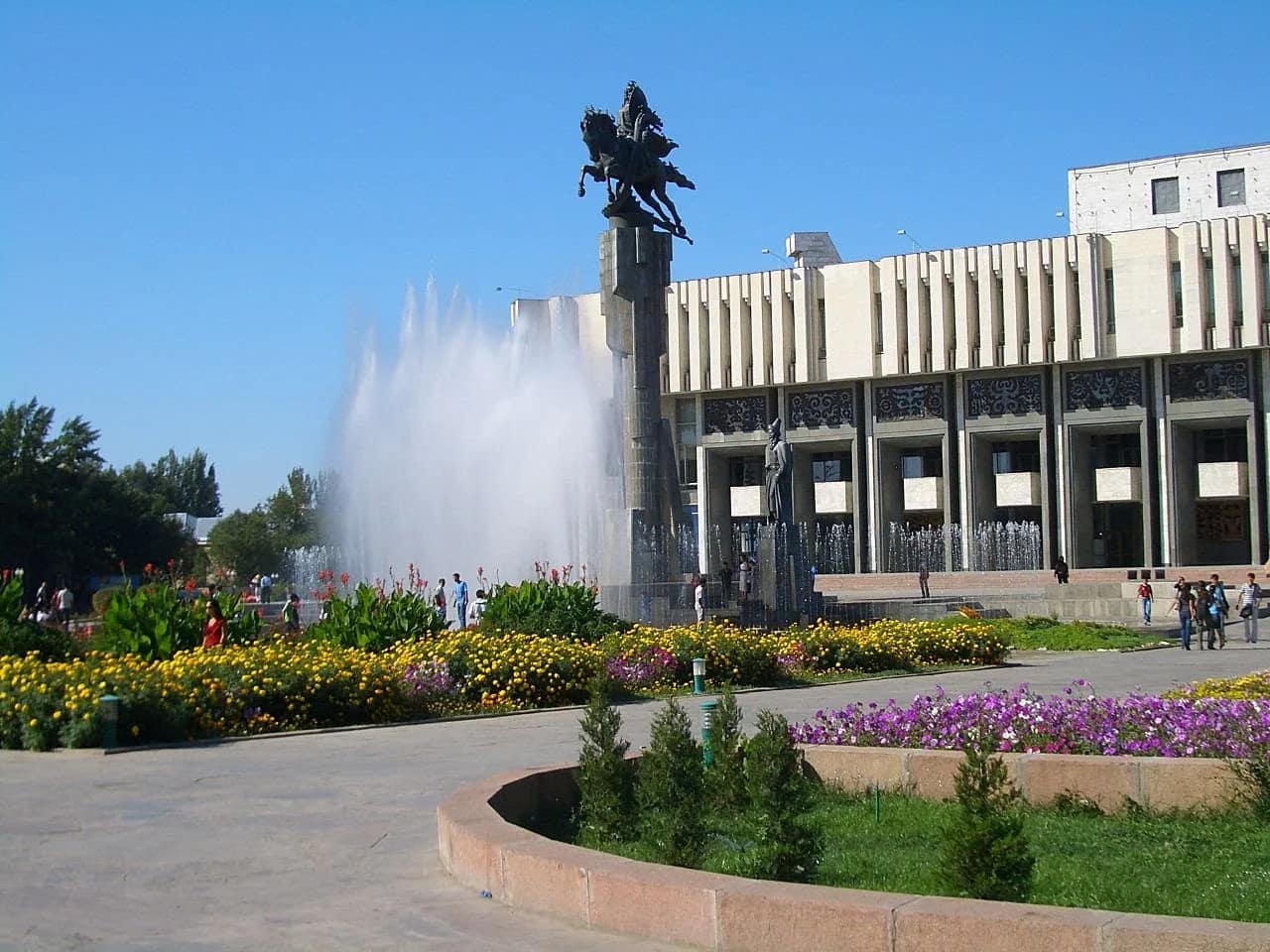
The monument and fountain in front of the International School of Medicine campus

The monument and fountain in front of the International School of Medicine campus

Academics

The programme is taught in English through an integrated, block-modular curriculum, moving from basic sciences to clinical modules and rotations in the school's Vedanta clinics and Bishkek's hospitals, with Russian taught alongside for clinical work.

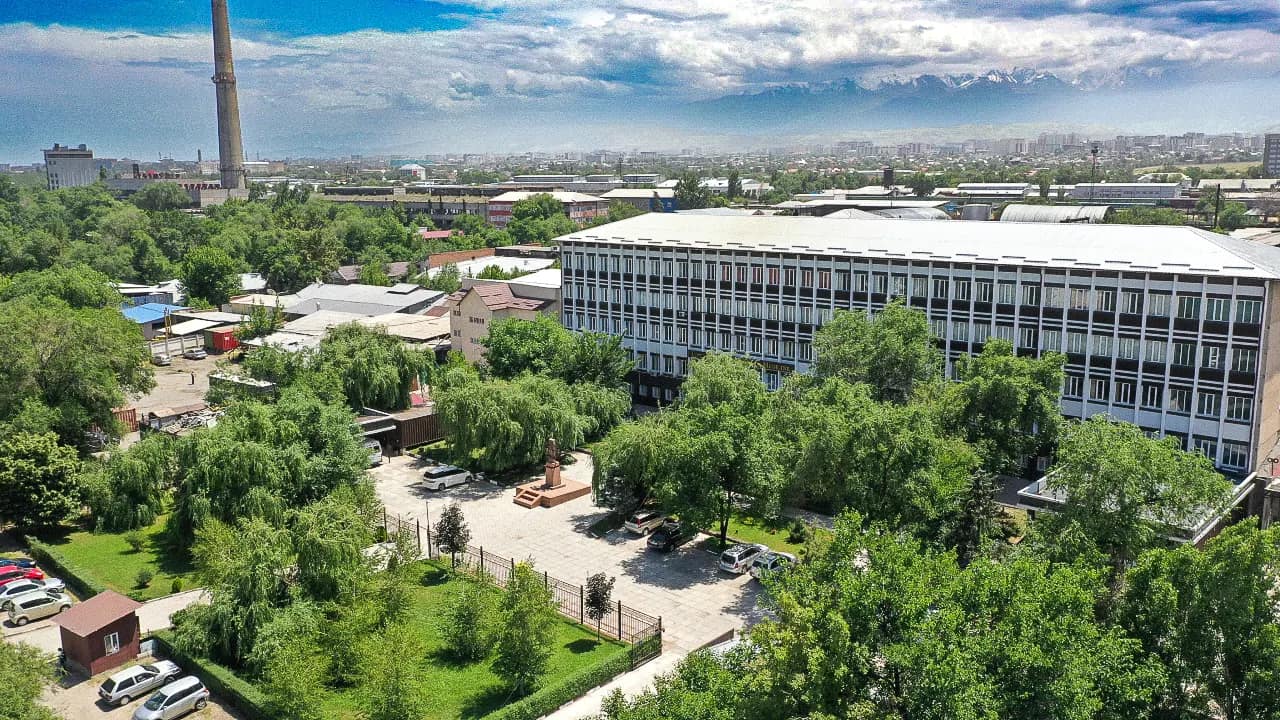
Aerial view of the International School of Medicine campus and Bishkek

Aerial view of the International School of Medicine campus and Bishkek

Campus and Facilities

The Bishkek campus has lecture halls, laboratories, a simulation and clinical-skills setup and the school's own Vedanta clinics, with student hostels nearby, and a second campus at Issyk-Kul for clinical training and summer study.

Challenges and Growth

Adjusting to a cold, continental climate and a new country takes time, and students should be realistic about the demands of the FMGE and NExT, but they gain independence and an international outlook alongside their medical training.

The gated entrance and grounds of the International School of Medicine campus

The gated entrance and grounds of the International School of Medicine campus

Social Life

With around 17,000 Indian students in Kyrgyzstan, Bishkek has an established Indian community, Indian restaurants and grocery options, and public Diwali and Holi celebrations supported by the Indian Embassy, so students find familiar festivals and food away from home.

Overall Experience

Studying medicine at the International School of Medicine is about earning a recognised degree affordably and growing as a person in a new culture, with the honest understanding that licensing back home depends on serious exam preparation and staying connected to the Indian Embassy and community.

Scholarship & Financial

Scholarship & Financial Aid

Honest note first: the International School of Medicine's main financial advantage is its moderate, all-inclusive fee rather than large scholarships, so families should plan as fully self-funded.

The biggest financial advantage at the International School of Medicine is its fee structure: tuition of about US$6,000 a year with hostel and mess bundled in from the second year keeps the total cost predictable and far below Western Europe, the Caribbean or Indian private medical colleges.

  • ≈ US$6,000/year tuition
  • Hostel & mess bundled from Year 2 (~US$2,150/year)
  • Predictable, all-inclusive budgeting

Ratings

Reviews & Ratings

Hear from students and alumni about their experience at the International School of Medicine.

4.1

156 reviews

Academics4.1
Infrastructure4
Hostel4.2
Campus Life4.2
Value for Money4.4
  • All-inclusive fee makes budgeting easy

    Student — General Medicine 2022

    Hostel and mess are included in the fee from second year, so the family knows the cost up front. It is a big, established school with lots of Indian students, which helped me settle in.

  • Good clinical exposure at the Vedanta clinic

    Student — General Medicine 2021

    Clinical years at the school's own clinic and Bishkek hospitals are hands-on, and learning some Russian really helps with patients. Winters are very cold, so come prepared.

Compare

Compare Colleges

Compare the International School of Medicine with a leading Indian medical college.

Quick Comparison:

International School of Medicine vs CMC Vellore

University
International School of MedicineBishkek, Kyrgyzstan
CMC VelloreTamil Nadu, India
University TypePrivatePrivate (minority)
MediumEnglishEnglish
Course Duration5.5 years (6-year NMC track)5.5 years (MBBS)
Tuition (per year)~₹5.2 lakh (≈US$6,000; hostel & mess bundled from Yr 2)~₹3–4 lakh
AdmissionNEET + interview & verbal testNEET-UG
RecognitionWDOMS-listed; AAEPO/EdNet accredited; NMC-eligible via FMGE/NExTNMC-recognised
Global RankingNot in QS/THE world rankings; #2 for General Medicine in Kyrgyzstan (EdNet 2025)Not in QS top 500

Compare Top MBBS Universities for Me

See key differences in fees, ranking, eligibility and recognition.

Our blog

Medical Education Insights

Articles that turn complex MBBS-abroad rules into simple, practical steps for students and parents.

FAQ

Frequently Asked Questions

Short answers to the questions students and parents ask most often about MBBS at the International School of Medicine.