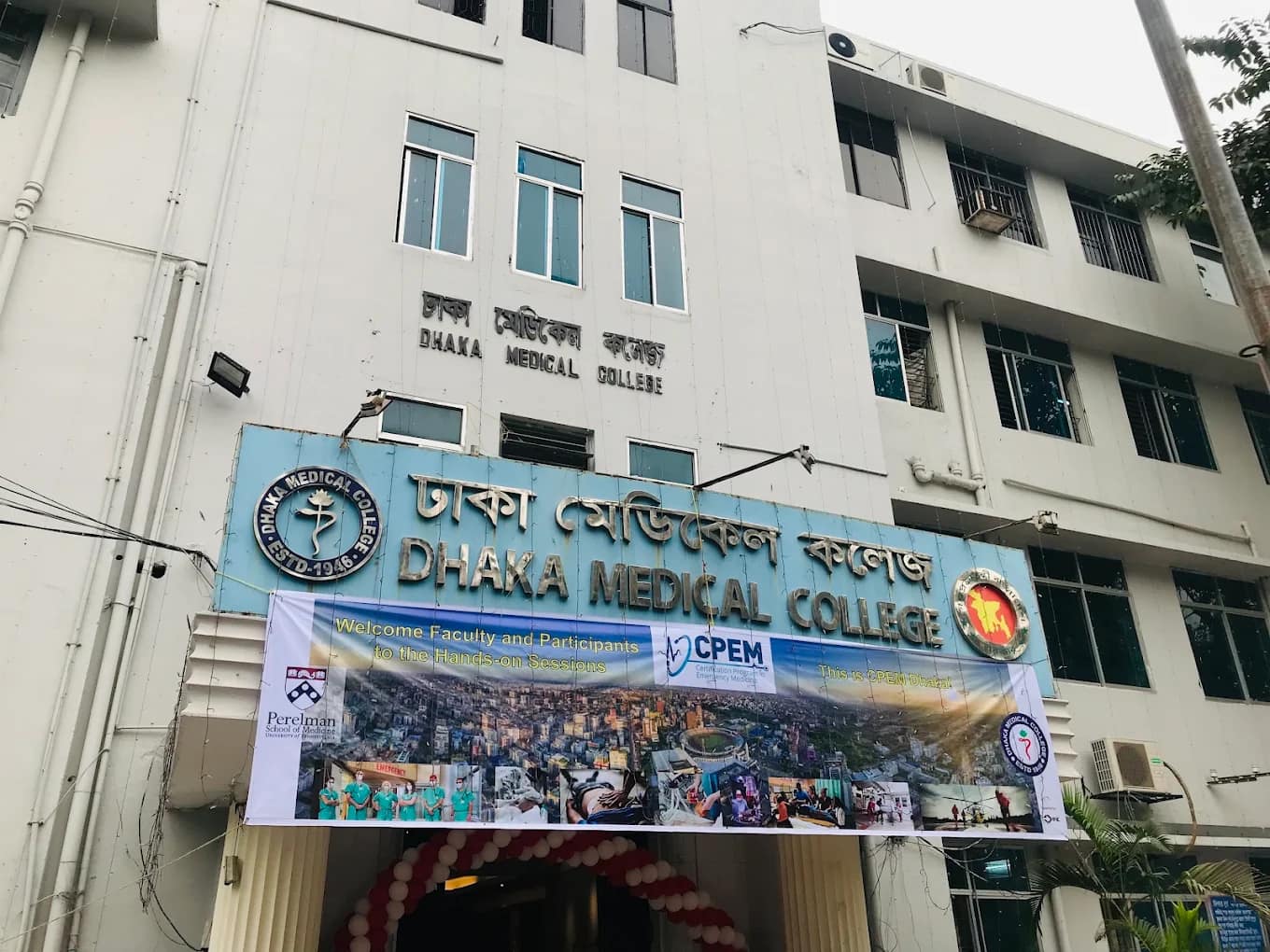
Dhaka Medical College, known across Bangladesh simply as DMC, was founded in 1946 and is the oldest and most prestigious government medical college in the country. Located in the heart of Dhaka in the Bakshibazar area, beside the University of Dhaka campus and the historic Shahbag and Ramna precinct, the college teaches its six-year MBBS programme (five academic years plus a one-year internship) fully in English and awards the MBBS degree under the affiliation of the University of Dhaka. Teaching is centred on Dhaka Medical College Hospital, the largest tertiary-care teaching hospital in Bangladesh with around 2,600 beds and more than 40 clinical and academic departments, giving students exceptional bedside exposure. With over 400 faculty members and more than 10,000 doctors trained since 1946, Dhaka Medical College is the flagship of medical education in Bangladesh and the college the country's top-scoring students choose first.
Study program:MBBS (General Medicine)
Language:English
Duration:5 Years + 1 Year Internship
University type:Government (public)
Per academic year fees:SAARC/Indian quota: nominal government rate (approx. ₹50,000/year); non-SAARC: US$5,000 · ₹4,30,000 (approx.)
Entrance examination:No entrance exam — merit-based on Class 10 + Class 12 grades
Application deadline:22 December 2025 (2025–26 foreign quota)
International seats:22 MBBS seats for India (2025–26 SAARC quota)
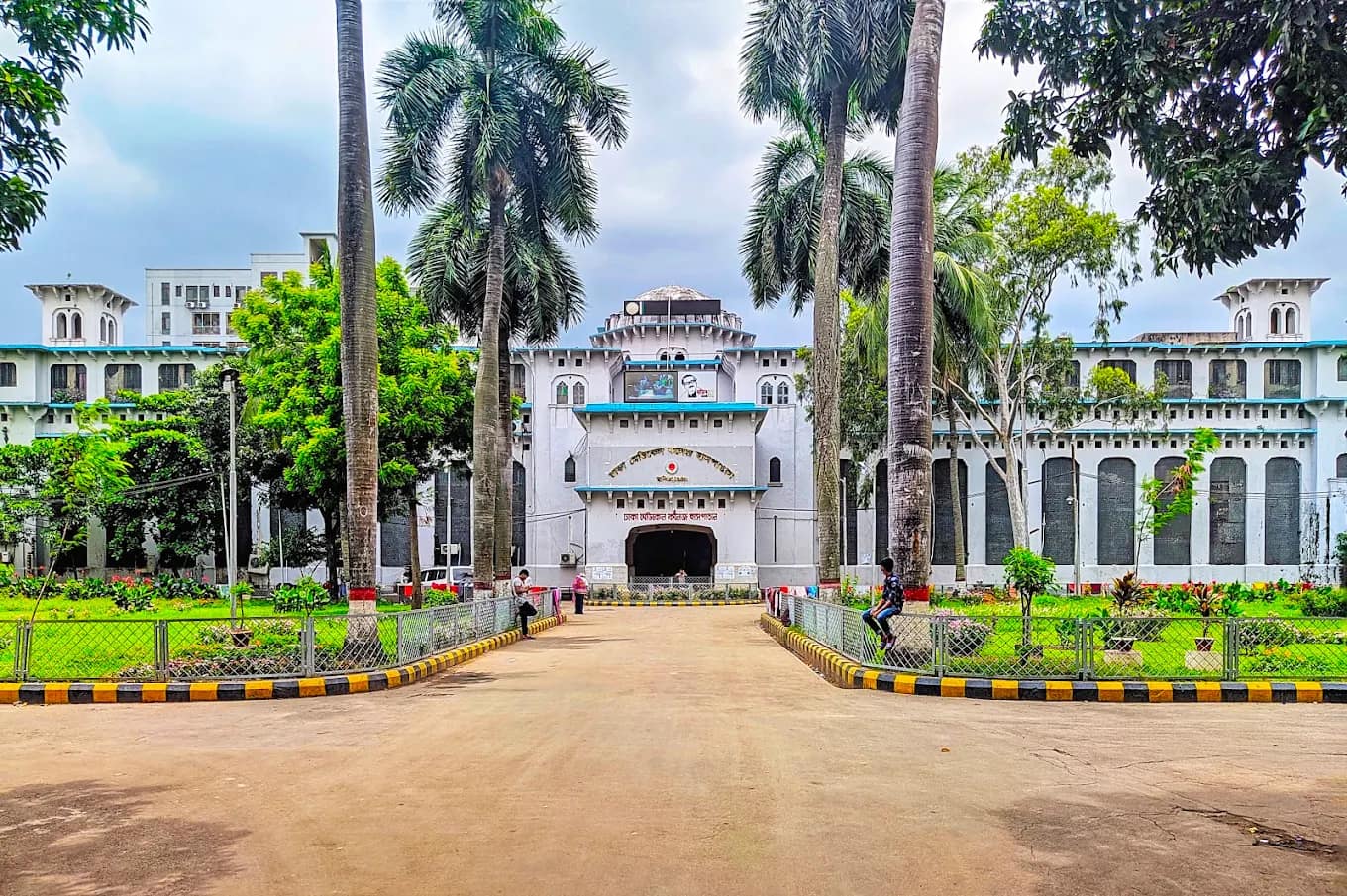
Main academic building of Dhaka Medical College behind a palm-lined driveway
Find out all about your MBBS-abroad options at Dhaka Medical College
Download our free brochure for immediate information, or get personalised professional counselling from our experts.
Dhaka Medical College is the oldest and most prestigious government medical college in Bangladesh. Its degree is awarded by the University of Dhaka, it is recognised by the Bangladesh Medical and Dental Council, and it is listed in the World Directory of Medical Schools, so its graduates are eligible to sit licensing examinations in India and several other countries.
#1
Government medical college in Bangladesh
Highest
FMGE pass-rate source country (Bangladesh)
2,600+ beds
Largest teaching hospital in the country
The MBBS degree is awarded by the University of Dhaka and is recognised by the Bangladesh Medical and Dental Council. Dhaka Medical College is listed in the World Directory of Medical Schools (WDOMS, FAIMER school ID F0001121), and its graduates are eligible to qualify for practice in India through the National Medical Commission screening/exit examination.
Complete Information About Dhaka Medical College
Get complete information about Dhaka Medical College, including fees, living costs, the foreign-quota admission process and recognition for Indian students.
Hear directly from students who are studying medicine in Europe with futureMBBS.
Academic Excellence
Why Study MBBS at Dhaka Medical College
Dhaka Medical College pairs the prestige of Bangladesh's oldest medical school with English-taught teaching, a very low cost of living and a culture close to home for Indian students.
Oldest & Most Prestigious
Founded in 1946, Dhaka Medical College is the oldest medical college in Bangladesh and the institution the country's top-scoring students choose first, giving it the strongest peer group and faculty in the nation.
English-Medium MBBS
The entire MBBS programme is taught in English, so Indian students study in a familiar academic language while the degree structure of five years plus a one-year internship mirrors the Indian pattern.
Largest Teaching Hospital
Clinical training is based at Dhaka Medical College Hospital, the largest tertiary-care hospital in Bangladesh with around 2,600 beds, giving students very high patient volume and bedside exposure from the clinical years onward.
Affordable Living
Dhaka is one of the most affordable capital cities in the region, with student monthly living costs of roughly ₹15,000 to ₹30,000 depending on lifestyle.
Culture Close to Home
Bengali cuisine and culture are close to Indian life, Hindi is widely understood, and Bollywood and Indian food are familiar, so Indian students settle in quickly.
Strong Licensing Record
Bangladesh has repeatedly recorded the highest country-wise FMGE pass percentage among major MBBS-abroad destinations, and the English-medium, India-aligned curriculum helps graduates prepare for the FMGE/NExT.
Recognised Degree
The MBBS is awarded by the University of Dhaka, recognised by the Bangladesh Medical and Dental Council, and listed in the World Directory of Medical Schools, keeping doors open in India and abroad.
Read all about MBBS abroad in our free brochure
Know exactly what options exist for your MBBS-abroad success.
Admission for foreign students to Dhaka Medical College is handled centrally by the Directorate General of Medical Education (DGME) of Bangladesh, not by a college entrance exam and not by NEET. Selection is purely merit-based on Class 10 and Class 12 (or equivalent) grades under the government foreign-student quota. Indian students apply through the SAARC quota, and NEET qualification is required on the Indian side for later licensing.
Admission Timeline
1
10 November 2025Circular Published
The DGME publishes the annual MBBS/BDS admission circular for foreign students for the 2025–26 session.
2
11 Nov – 22 Dec 2025Application Window
Government-quota applicants (including SAARC/Indian students) submit the application form and attested documents through their own country's Ministry of Foreign Affairs.
3
By 8 January 2026Verification & Forwarding
The applicant's foreign ministry verifies eligibility and sends the approved list to the Bangladesh Ministry of Foreign Affairs, which forwards it to DGME by 15 January 2026.
4
February 2026Merit List & Allocation
DGME prepares the merit list on combined Class 10 and Class 12 GPA and allocates colleges according to merit and the preference list submitted by each applicant.
5
22 Feb – 14 Mar 2026Admission at College
Selected students complete admission formalities at the allotted college and produce original documents at the principal's office.
6
After admissionClasses Begin
The new intake joins the MBBS programme once admission and enrolment are complete.
Eligibility Criteria
Academic Qualification
The student must have completed Class 12 (or equivalent) with Physics, Chemistry and Biology. For government medical colleges in the 2025–26 cycle, applicants need a combined GPA of at least 8.50 out of 10 across Class 10 and Class 12, with a minimum GPA of 4.00 in each and a minimum grade point of 3.50 in Biology. Class 10 must have been passed in 2022 or later and Class 12 in 2024 or 2025.
Subjects:
PhysicsChemistryBiology
Age Requirement
The DGME foreign-student circular sets no fixed minimum or maximum age; instead it requires that Class 12 be passed recently (2024 or 2025) and within three years of Class 10. Age is used only as a tie-breaker when merit scores are equal.
—
No fixed age limitRecency of qualifications applies instead of an age bar
Requirements
There is no entrance examination. Indian students apply through the SAARC foreign quota via the Directorate General of Medical Education, and a valid NEET qualification is required on the Indian side for later licensing.
Merit-Based Selection
Selection is on the combined Class 10 and Class 12 GPA; there is no separate written test or interview for foreign students.
NEET Qualification
Indian students must have qualified NEET-UG. It is not needed for Bangladeshi admission but is mandatory under NMC rules to later sit the FMGE/NExT and practise in India.
Selection Basis
Admission is based on academic merit under the government foreign-student quota rather than a college entrance examination.
Component
Requirement
Selection method
Merit-based on combined Class 10 + Class 12 GPA; no entrance exam and no interview for foreign students
Minimum eligibility
Combined GPA 8.50/10 across both exams, minimum 4.00 in each, and minimum GPA 3.50 in Biology (government colleges, 2025–26)
India-side requirement
Valid NEET-UG qualification, required by the National Medical Commission for later FMGE/NExT licensing
Required Documents
To apply, students submit essential academic and identification documents, attested by the home country's education and foreign ministries and authenticated by the Bangladesh mission:
Completed DGME foreign-student application form (with a preference list of colleges)
Valid passport and recent passport-size photographs
Class 10 and Class 12 certificates and mark sheets (attested and authenticated)
Declaration signed by the candidate and parents on financial arrangements
+ More
Admission Guidance & Document Checklist
Get the complete document checklist or admission guidance from our experts.
Students follow the Bangladesh Medical and Dental Council's MBBS curriculum: five academic years taught in four phases, each ending in a professional examination, followed by a compulsory one-year rotatory internship. The programme is taught entirely in English and leads to the MBBS degree awarded by the University of Dhaka.
MBBS (General Medicine) Course
Total Duration:
5 Years + 1 Year Internship
Degree:
MBBS (Bachelor of Medicine, Bachelor of Surgery)
Curriculum Phases at Dhaka Medical College
18 Months
Pre-Clinical Foundations
Basic medical sciences focused on the structure and function of the healthy human body, ending in the First Professional MBBS examination:
AnatomyPhysiologyBiochemistry
12 Months
Para-Clinical Sciences
Para-clinical subjects with introductory clinical exposure, ending in the Second Professional MBBS examination:
Pharmacology & TherapeuticsForensic Medicine & ToxicologyEarly clinical teaching in MedicineEarly clinical teaching in Surgery
12 Months
Pathology & Community Medicine
Disease mechanisms, laboratory medicine and public health, alongside continued clinical postings, ending in the Third Professional MBBS examination:
PathologyMicrobiologyCommunity Medicine & Public Health
18 Months
Clinical Training
Full clinical training across the major specialties at Dhaka Medical College Hospital, ending in the Final Professional MBBS examination:
Medicine & AlliedSurgery & AlliedObstetrics & Gynaecology
Clinical Rotations & Internship
Clinical training takes place at Dhaka Medical College Hospital, the largest teaching hospital in Bangladesh, and continues into a compulsory one-year internship after the final examination. An indicative pattern is:
Phase
Focus
Phases II–III
Early clinical exposure and ward teaching in Medicine, Surgery and Obstetrics & Gynaecology alongside para-clinical study
Phase IV
Full clinical postings in Internal Medicine, Surgery, Paediatrics, Obstetrics & Gynaecology and the allied specialties, ending in the Final Professional MBBS examination
Internship (1 year)
Paid, hospital-based rotatory internship through Medicine, Surgery, Gynaecology & Obstetrics and other core departments before independent practice
Get the full curriculum
Download a free brochure to see detailed subjects, the course structure and everything you need to plan your studies.
Dhaka Medical College has shaped many of the most influential figures in the medical, scientific and public life of Bangladesh.
Dr. Zafrullah Chowdhury
Graduated in medicine in 1964; ran the Bangladesh Field Hospital in the 1971 Liberation War, founded Gonoshasthaya Kendra and was chief architect of the 1982 National Drug Policy. Won the Ramon Magsaysay Award (1985) and the Right Livelihood Award (1992).
Prof. A. Q. M. Badruddoza Chowdhury
One of Bangladesh's best-known physicians and medical broadcasters; served as President of Bangladesh (2001–2002), the only DMC graduate to become head of state, and received the Independence Day Award.
Dr. Dipu Moni
Earned her MBBS from DMC before adding degrees in law and a Master of Public Health from Johns Hopkins; became the first woman Foreign Minister of Bangladesh (2009–2013) and later Education Minister.
Dr. Mohammed Fazle Rabbee
Graduated in 1955 topping the merit list with the University of Dhaka gold medal and became a leading professor of cardiology; a martyred intellectual of the 1971 war after whom the college's main student hall is named.
National Prof. Brig. (retd.) Abdul Malik
Graduated in 1954 and is regarded as the father of cardiology in Bangladesh; founded the National Institute of Cardiovascular Diseases and the National Heart Foundation, and was appointed National Professor in 2006.
Dr. Sayed Haider & Dr. Badrul Alam
DMC students who in 1952 designed and built the very first Shaheed Minar on the college hostel grounds during the Language Movement — the origin of International Mother Language Day, recognised by UNESCO. Both received the Ekushey Padak.
Faculty
Students are guided by more than 400 faculty members across over 40 departments, led by Principal Prof. Dr. Md. Mazharul Shaheen and Vice-Principal Prof. Dr. Musarrat Sultana, with academic departments headed by senior clinicians and scientists.
Academic Expertise
Experienced physicians and surgeons
Faculty active in national medical research
Senior clinicians at the country's largest teaching hospital
Involvement in postgraduate medical training
Student Support & Mentorship
Regular academic interaction
Personal mentorship
Clinical supervision during rotations
Continuous development of practical skills
About University
History Information
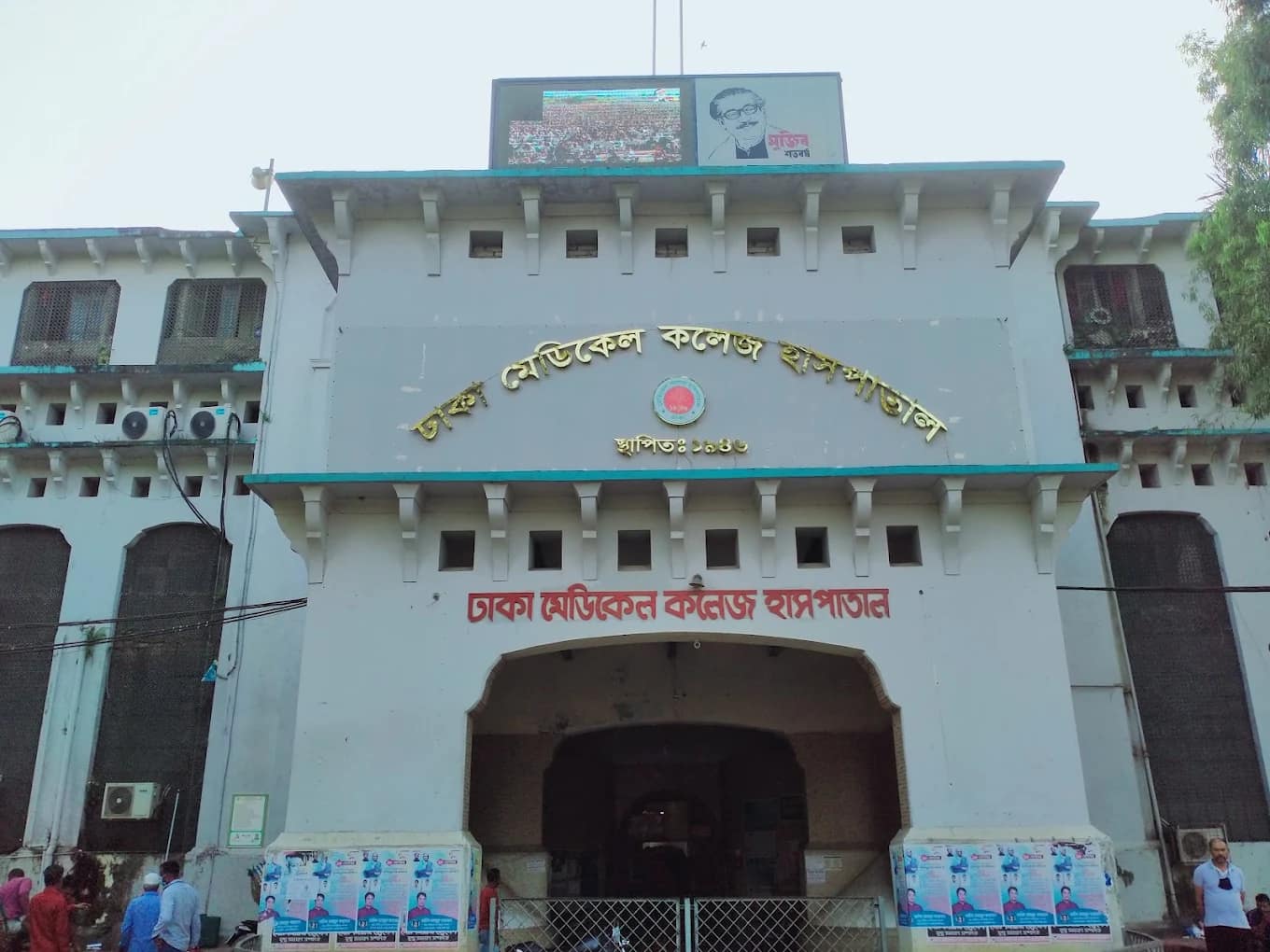
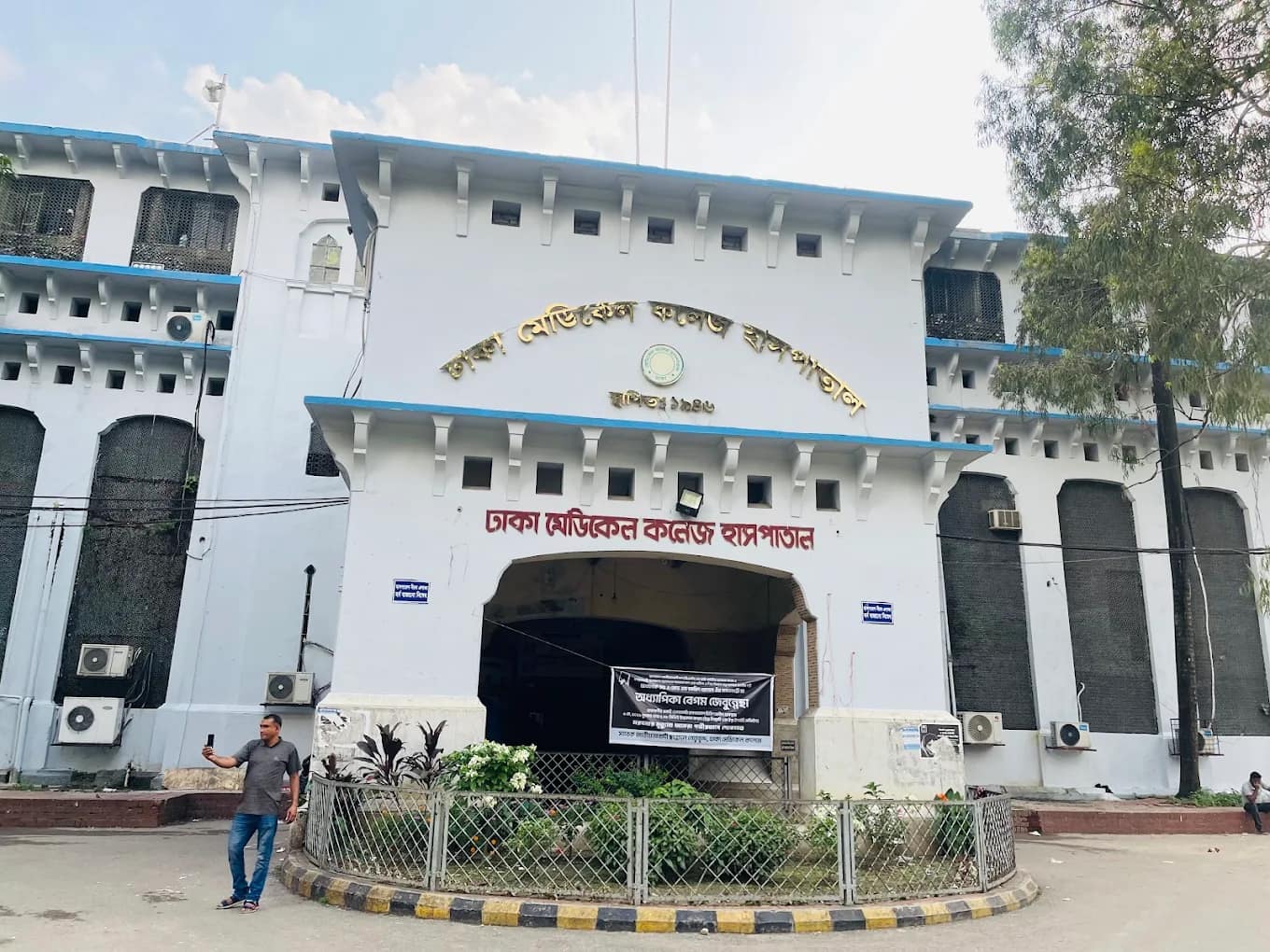
Historic gateway of Dhaka Medical College Hospital, established 1946
Founded in 1946
Dhaka Medical College opened on 10 July 1946 in a building that had earlier served as the Secretariat of the province of East Bengal and Assam and, during the Second World War, as a hospital for American armed forces. The college began with only four departments — Medicine, Surgery, Gynaecology and Otolaryngology — under its first principal, Major William John Virgin, with senior students and faculty transferred from Calcutta Medical College around the time of Partition.
Home of the Language Movement
The college hostel was at the heart of the 1952 Bengali Language Movement. On the night of 23 February 1952, Dhaka Medical College students built the very first Shaheed Minar on the hostel grounds to honour those killed on 21 February. That act gave rise to the monument and to International Mother Language Day, now recognised by UNESCO, binding the college permanently to the nation's identity.
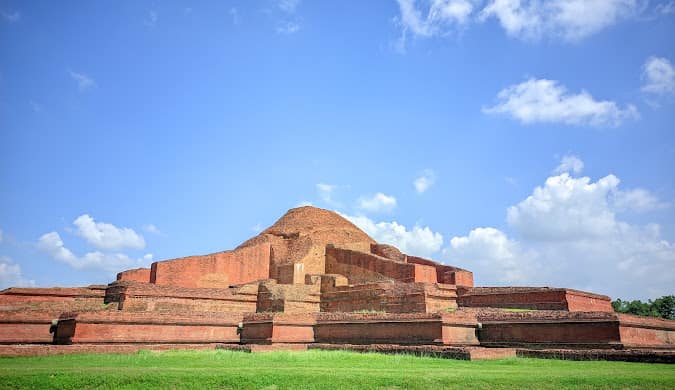
Ruins of the ancient Somapura Mahavihara at Paharpur, a UNESCO World Heritage Site in Bangladesh
The Liberation War and Beyond
Many students and doctors of Dhaka Medical College took part in the 1971 Liberation War, and several of its most distinguished teachers, including the cardiologist Dr. Mohammed Fazle Rabbee, were murdered as martyred intellectuals in the war's final days. The institution grew from 200 beds in 1946 into the nation's leading centre of medical education and care.
Bangladesh's Flagship Medical College Today
Today Dhaka Medical College teaches around 1,300 local and 100 foreign undergraduate students along with roughly 750 postgraduate students, supported by over 400 faculty and more than 40 departments. Its teaching hospital has grown to around 2,600 beds, and the college has produced more than 10,000 doctors, remaining the flagship of Bangladeshi medicine.
Get all information about Dhaka Medical College in our free brochure
Read on to find out how you can fulfil your dream of studying medicine at Dhaka Medical College.
Main entrance of Dhaka Medical College Hospital with a large public display screen
Bangladesh's Leading Teaching Hospital
Dhaka Medical College has trained doctors continuously since 1946, combining academic study with hands-on clinical training. Teaching is centred on Dhaka Medical College Hospital, the largest tertiary-care hospital in the country with around 2,600 beds and more than 40 departments, which handles a very high volume of patients every day and covers every major clinical field.
Home of National Medical Milestones
Dhaka Medical College Hospital has been the setting for many firsts in Bangladeshi medicine, including the country's first bone-marrow transplant centre and one of its largest burn and plastic-surgery services. Its faculty are among the most senior clinicians and researchers in the country, keeping the college at the centre of national medical advancement.
A Growing International Community
Alongside its Bangladeshi students, the college hosts around 100 foreign undergraduates, including students from India and other SAARC countries, creating an international learning environment. Foreign students study the same English-medium MBBS curriculum and train in the same wards as their Bangladeshi peers.
Get all information about Dhaka Medical College in our free brochure
Read on to find out how you can fulfil your dream of studying medicine at Dhaka Medical College.
Dhaka Medical College provides on-campus halls of residence close to the college in the Bakshibazar area, offering a safe and affordable base while students settle into life in Dhaka.
Dr. Fazle Rabbee Hall (Boys)
The main hall of residence for male students, named after the martyred cardiologist and alumnus Dr. Mohammed Fazle Rabbee. It sits on Bakshibazar Road, only a short walk from the college and hospital.
Dr. Alim Chowdhury Hall (Girls)
The hall of residence for female students, named after the martyred ophthalmologist Dr. AFM Alim Chowdhury. It is located within the college territory close to the teaching hospital.
Intern Doctors' Hostel
Separate hostel accommodation, named after the movement martyr Shaheed Dr. Shamsul Alam Khan Milon, is provided for intern doctors during their compulsory internship year.
Furnished Rooms
Rooms are shared, with each student given a bed, study space and storage. Halls have common rooms with indoor games and shared bathrooms along the floor.
Affordable Cost
Government-college hall accommodation is charged at nominal rates, far below the private rental market, making it the most economical option for students in Dhaka.
On-Campus Convenience
The halls are within walking distance of the college, the teaching hospital and the wider University of Dhaka precinct, so students save both time and transport costs.
Foreign Student Placement
Foreign undergraduates, including Indian students, are accommodated in the college halls alongside Bangladeshi students; places should be arranged with the college at admission.
Off-Campus and Private Housing
Students who prefer more independence can rent a room, a mess seat or a shared flat in the nearby Azimpur and Lalbagh areas through local rental websites and agents; these cost more than the halls and are arranged by the student.
Need accommodation details?
Get a full overview of housing options with our university guide, or reach out to an expert.
Bengali cuisine is close to Indian food, and Indian and vegetarian options are widely available across Dhaka.
Dhaka Medical College halls have cafeterias and dining messes serving affordable daily meals of rice, dal, vegetables, fish and meat at cost price, so students can eat cheaply on campus.
Location
How to Reach Dhaka Medical College
Address
Dhaka Medical College, Secretariat Road, Bakshibazar, Dhaka 1000, Bangladesh
Nearest Airport
Hazrat Shahjalal International Airport (DAC), about 16 km away
Local Transport
The Dhaka University metro station on MRT Line-6 is close by, alongside rickshaws, buses and ride-sharing services such as Uber and Pathao across the city
Your Roadmap to Success
Career Pathways After MBBS at Dhaka Medical College
On completing the programme, graduates of Dhaka Medical College earn an MBBS degree awarded by the University of Dhaka that is recognised in Bangladesh, India and many other countries. It gives graduates a genuine choice of where to build their medical career.
Understand the Medical Licensing Pathway
A clear overview of the exams and requirements after graduation.
To practise medicine in India after graduating from Dhaka Medical College, Indian students follow a clear licensing pathway set by the National Medical Commission (NMC). It has three stages: clearing the NMC screening examination (currently the FMGE, transitioning to the NExT), completing a one-year internship, and registering with the medical council. None of these steps are unusual or specific to this college; every Indian student who studies medicine abroad follows the same route, and thousands do so successfully each year.
Step 1
National Exit Test (NExT)
Graduates must clear the qualifying examination that licenses foreign medical graduates to practise in India. At present this is the Foreign Medical Graduate Examination (FMGE), which India is in the process of replacing with the National Exit Test (NExT). The NExT is designed as a single unified exam that both licenses medical graduates and serves as the entrance test for postgraduate (MD/MS) seats in India. Preparing steadily through all six years, rather than only at the end, is the approach that consistently produces strong results, and Bangladesh's English-medium, India-aligned curriculum helps.
Step 2
Clinical Internship (CRRI)
After qualifying, students complete a one-year Compulsory Rotatory Residential Internship (CRRI) in India. This is a paid, hospital-based internship that rotates through core departments such as medicine, surgery, paediatrics, and obstetrics and gynaecology, giving graduates supervised, hands-on clinical experience within the Indian healthcare system before they practise independently.
Step 3
Medical Registration
The final step is registration with the National Medical Commission (NMC) or the relevant State Medical Council. Once registered, the graduate holds a permanent medical registration number and is fully licensed to practise medicine as a doctor anywhere in India.
Student Life Style
Student life at Dhaka Medical College
Being an MBBS student is a mix of academics, cultural exposure and personal growth. Sitting in the historic heart of Dhaka beside the University of Dhaka campus, Dhaka Medical College gives students a rich and lively base for their studies.
Sunset over the sea at Cox's Bazar beach in Bangladesh
Academics
The curriculum is intensive and well-structured, taught in English and aligned with international standards. Students learn through lectures, laboratory work and clinical rotations at Dhaka Medical College Hospital, the largest teaching hospital in the country, which gives them high patient volume and strong practical exposure.
Clouds settling over the hills of Sajek Valley in the Chittagong Hill Tracts
City and Surroundings
The college sits beside the University of Dhaka precinct, close to Curzon Hall, the TSC, Ramna Park, Suhrawardy Udyan and the original Shaheed Minar. Landmark cultural events such as the Amar Ekushey Book Fair in February and the Pohela Boishakh new-year procession happen right on the doorstep, and weekends open up trips to Cox's Bazar, Sajek Valley and the Srimangal tea gardens.
Challenges and Growth
The course can be demanding, but it teaches important life skills such as time management, resilience and teamwork.
Social Life
Student life is about more than books and exams. Dhaka Medical College is the birthplace of Sandhani, the pioneering voluntary blood-donation organisation founded by its students in 1977, and student clubs and sports at the halls of residence add to campus life. Living in Dhaka, with its familiar food, Hindi-friendly culture and warm hospitality, helps Indian students form close-knit groups while settling into a new country.
Overall Experience
Studying MBBS at Dhaka Medical College is about growing as a professional and as a person, building lifelong friendships and gaining strong clinical exposure in the heart of Bangladesh.
Scholarship & Financial
Scholarship & Financial Aid
Indian and other SAARC students benefit from concessional government seats, and further routes exist for postgraduate study.
Under the Directorate General of Medical Education's foreign-student programme, SAARC students, including Indians, are admitted to government medical colleges such as Dhaka Medical College at the same nominal fees paid by Bangladeshi students. This concessional seat is effectively the main scholarship: it makes an MBBS at a top government college remarkably affordable compared with private colleges.
Same nominal tuition as Bangladeshi students
22 MBBS seats allotted to India (2025–26)
Merit-based selection on Class 10 and Class 12 grades
Applied for through the DGME foreign-student quota
Hear from students and alumni about their experience at Dhaka Medical College.
4.8
110 reviews
Academics4.9
Infrastructure4.7
Hostel4.6
Campus Life4.8
Value for Money4.9
S
Studying at Bangladesh's top medical college
Student — MBBS 2022
Studying in English at the oldest and most respected medical college in Bangladesh, with this much clinical exposure at Dhaka Medical College Hospital, is incredible. Dhaka is affordable and the culture feels close to home.
S
Strong clinical training
Student — MBBS 2021
The patient volume at the teaching hospital gives real hands-on experience from the clinical years onward, and the degree is recognised for FMGE and licensing back in India.
Compare
Compare Colleges
Compare Dhaka Medical College with a leading Indian medical college.
Quick Comparison:
Dhaka Medical College vs CMC Vellore
University
Dhaka Medical CollegeDhaka, Bangladesh
CMC VelloreTamil Nadu, India
University Type
Government
Private (minority)
Medium
English
English
Course Duration
5 years + 1 year internship (MBBS)
4.5 years + 1 year internship (MBBS)
Tuition (per year)
Nominal for SAARC/Indian quota (~₹50,000)
~₹3–4 lakh
Admission
Merit-based foreign quota (Class 10 + 12 GPA)
NEET-UG
Recognition
University of Dhaka / BM&DC / WDOMS; NMC-eligible via screening
NMC-recognised
National Standing
#1 government medical college in Bangladesh
Among India's top private medical colleges
Compare Top MBBS Universities for Me
See key differences in fees, recognition, eligibility and standing.