NEET
MBBS in Croatia 2026: Fees, Universities & NMC Guide
23 Sept 2026
12 min read
MBBS in Croatia for Indian students in 2026: real Split and Zagreb tuition fees, NMC recognition and the EU route to Germany. Book a free consultation today.

MBBS in Croatia 2026: Fees, Universities and the EU Route to Germany
MBBS in Croatia gives Indian students two English-taught, EU-recognised medical schools inside futureMBBS's 9-country partner network: the University of Split, School of Medicine, and the Zagreb School of Medicine. Both run a six-year "Medical Studies in English" programme on the Adriatic coast, both are recognised for licensing back home, and one of them offers a route into paid clinical training in Germany that very few destinations can match. Below you'll find the real tuition fees in rupees, who is eligible, what NMC recognition means for you, and, honestly, where the 2026 application windows now stand as of 30 July 2026.
Key Takeaways
- Croatia has two futureMBBS partner universities: the University of Split (6-year English MD, roughly ₹6.55 lakh per semester / ₹78.6 lakh total) and the Zagreb School of Medicine (6-year English MD, roughly ₹81.25 lakh total), per futureMBBS's own university pages.
- Both universities' 2026 application windows have already closed (Split's stated deadline was 1 July 2026, Zagreb's 20 June 2026), so realistic planning for a fresh Croatia application now means the 2027 intake, while other EU partner universities still have later 2026 deadlines.
- Croatian medical degrees are recognised for practice across the EU and by India's National Medical Commission (NMC) provided you meet the NEET and FMGE/NExT conditions.
- The University of Split has a distinctive clinical-training partnership with German hospitals in Upper Franconia and Southern Thuringia, a genuine gateway into Germany's medical system.
- Croatia has used the euro and been part of Schengen since 1 January 2023, so tuition is billed in euros and student mobility across Europe is visa-free.
Why do Indian students consider MBBS in Croatia?
Every year, far more NEET-qualified students exist than there are seats to absorb them. NEET UG 2026 results, declared on 16 July 2026, saw roughly 11.21 lakh candidates qualify out of about 20 lakh who appeared, against only around one lakh government MBBS seats nationwide. That gap is the single biggest reason Indian families look at Europe, and Croatia sits in a useful middle position: cheaper than Cyprus or the Czech Republic, taught entirely in English, inside the European Union, and with a genuinely unusual pathway into German hospitals.
Croatia joined the EU in 2013 and adopted both the euro and the Schengen area on 1 January 2023. For a medical student that has practical consequences: your degree is an EU medical qualification, you can move freely across Schengen for electives or clerkships, and your fees are quoted in euros rather than a separate national currency.
Which universities in Croatia can Indian students apply to?
futureMBBS works with two Croatian medical schools, both offering the six-year, English-medium "Medical Studies" programme that Indian families refer to as MBBS.
University of Split, School of Medicine (USSM)
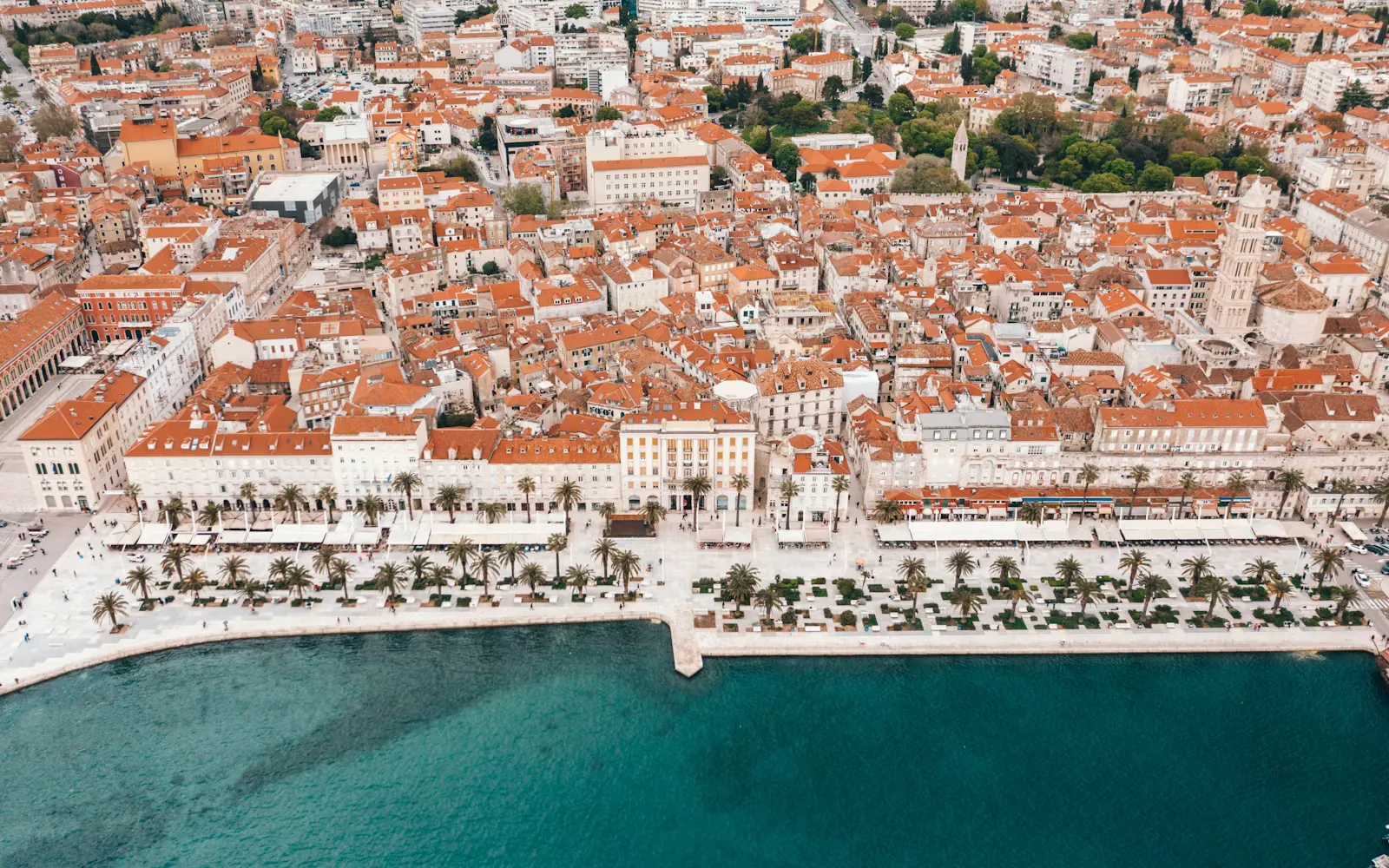
Founded in 1974 and an independent faculty of the University of Split since 1997, USSM launched its fully English-taught programme in 2011. It sits in Split, the largest city in Dalmatia, on the Adriatic coast. Teaching is organised in block courses, so you study and examine one subject at a time, and clinical work happens in small groups of five to six students. Per futureMBBS's Split page, tuition is around ₹6.55 lakh per semester (about ₹78.6 lakh across the full six years), and admission is by an individual selection procedure (documents, an English proficiency certificate at B2 level, and an interview that includes a short presentation) rather than a standardised multiple-choice entrance exam.
Zagreb School of Medicine
The University of Zagreb School of Medicine is Croatia's oldest and most established medical faculty, located in the capital. Its Medical Studies in English programme is also six years, with tuition around ₹81.25 lakh in total per futureMBBS's figures, commonly quoted by international sources at roughly €12,000 per year. Selection is individual, based on academic record and documents.
What is the eligibility for MBBS in Croatia?
The core requirements Indian students should plan around are consistent across both universities:
- Completion of Class 12 (10+2) with Physics, Chemistry and Biology, meeting the university's minimum marks.
- A qualifying NEET UG score: not a Croatian entry rule, but an NMC requirement for any Indian student who wants their foreign degree recognised back home.
- Proof of English proficiency at roughly B2 level (for example IELTS/TOEFL or an accepted equivalent), since the entire programme is taught in English.
- Passing the university's individual selection: an interview and document review rather than a standardised exam at either school.
Because Croatia's universities do not run a heavy multiple-choice entrance test, the individual interview and your academic record carry more weight than at some other EU destinations. That can suit students who present well and have consistent science grades.
What does the University of Split's German route actually offer?
This is the feature that makes Split stand out. USSM has a long-running partnership linked to German hospitals in Upper Franconia and Southern Thuringia. In practice, students can continue clinical training in Germany, and there are financing arrangements in which the hospital association covers tuition in exchange for completing specialist training in one of their clinics after graduation. For an Indian student who ultimately wants to work in Germany, one of Europe's largest markets for doctors, starting in an English-taught EU programme with a built-in German clinical bridge is a meaningfully different proposition from a standalone degree.
It also means Split can be attractive even though the headline tuition is not the cheapest in the network: the scholarship and specialist-training pathways can change the real cost picture substantially. Any student weighing this should confirm the current terms directly, because these arrangements are set by the German hospital partners, not by the university alone.
Is an MBBS from Croatia valid in India?
Yes, subject to the usual conditions that apply to every foreign medical graduate. Croatian medical degrees are EU-recognised and accepted by India's National Medical Commission (NMC), but recognition on paper is not the same as a licence to practise. To work as a doctor in India after graduating in Croatia, you must:
- Have a valid NEET UG qualification (and, since 2022, comply with NMC's Foreign Medical Graduate Licentiate rules on course duration, medium of instruction and internship).
- Clear the Foreign Medical Graduate Examination (FMGE), which is being transitioned into the National Exit Test (NExT).
- Complete the required internship and register with a state medical council or the NMC.
The FMGE remains a demanding screening test. The June 2026 session had a pass rate of about 12.77%, so treat Indian licensing preparation as something you build from your first year abroad, not something you cram at the end. A strong European clinical education helps, but it does not remove the exam.
Where do Croatia's 2026 deadlines stand right now?
Be clear-eyed about the calendar. As of 30 July 2026, both Croatian partner universities' stated 2026 application windows have already closed. Split's listed deadline was 1 July 2026 and Zagreb's was 20 June 2026. That means a brand-new Croatia application today is realistically aimed at the 2027 intake, and the smart move now is to start that preparation early (documents, English certification, and a genuinely competitive NEET attempt).
If your priority is starting this September, Croatia is not your fastest option. The wider network still has doors open, though. Within futureMBBS's EU partners, universities such as Medical University of Łódź (listed deadline 7 September 2026) and Medical University of Białystok (listed 31 August 2026, October start) sit later in the cycle. For the full, live picture, see the MBBS in Europe September 2026 intake guide and the official application deadlines page, and cross-check anything time-sensitive with an advisor, since universities update dates during the season.
You can also compare Croatia directly with the rest of the network on the universities hub, read the country-specific detail on the MBBS in Croatia pillar, or look at neighbouring value options like MBBS in Romania. If you are still deciding whether to reattempt NEET or move abroad, the on-site NEET hub and the NEETsheet preparation app are the places to start.
Croatia vs other EU options: how should you choose?
Croatia is rarely the single cheapest or the single most famous name, but it is a strong all-rounder. Use three filters:
- Budget: if minimising tuition is the priority, Romania's Cluj (≈₹65.4 lakh) undercuts both Croatian schools; if you want the German clinical bridge, Split's real cost can look very different once scholarships are considered.
- Admissions style: Croatia's individual-interview selection suits students who interview well and have steady science marks, rather than those chasing a high entrance-exam score.
- Career geography: if Germany is the long-term goal, Split's partnership is a rare structural advantage; if you want maximum flexibility across the EU, any Croatian degree already gives you that mobility.
Sources
- futureMBBS, "University of Split, School of Medicine" university page (tuition, seats, admission procedure, German hospital partnership), page last modified 30 June 2026. future-mbbs.com
- futureMBBS, "MBBS in Croatia" country page and university comparison data (Split, Zagreb, Cluj, Latvia, Nicosia fee totals and deadlines), accessed 30 July 2026. future-mbbs.com
- Medical Doctor International Academy / Kadamb Overseas, University of Zagreb School of Medicine English MD tuition (≈€12,000 per year), accessed 30 July 2026. medicaldoctor-studies.com
- National Testing Agency, results widely reported via Business Standard, "NEET-UG 2026 results declared; 11.21 lakh candidates qualify," 16 July 2026. business-standard.com
- National Board of Examinations, reported via NewsX, "FMGE June 2026 Result Declared: 12.77% Students Pass," July 2026. newsx.com
- European Commission, Croatia's adoption of the euro and accession to the Schengen area from 1 January 2023. commission.europa.eu
on publish -->
Related Topics
- MBBS in Croatia
- University of Split
- Zagreb School of Medicine
- MBBS in Europe
- NEET 2026
- Study MBBS abroad
Related Articles
 NEET23 Sept 20266 min read
MBBS in Hungary: Fees, Top Universities & Admission 2026
MBBS in Hungary 2026: real tuition fees at Semmelweis, Debrecen and Pécs, NEET-UG eligibility, six-year duration, and how the degree is recognised in India.
 NEET23 Sept 20266 min read
MBBS in Romania 2026: Fees, Top Universities & Eligibility
MBBS in Romania 2026: real tuition at Carol Davila, Iuliu Hațieganu Cluj and Victor Babeș Timișoara, NEET-UG eligibility, six-year duration and EU recognition.
 NEET23 Sept 20267 min read
NEETsheet: Making NEET Preparation Affordable in India
NEETsheet is making NEET preparation affordable in India: complete online courses from just ₹99, with mock tests, PYQs, and performance analytics for NEET UG.