Guides & Tips
How to Become an Orthopedic Doctor: Career Guide 2026
3 Aug 2026
10 min read
Want to become an orthopedic doctor in India? This guide explains the full MBBS, NEET-PG, and MS or DNB Orthopaedics pathway, timeline, and career options.
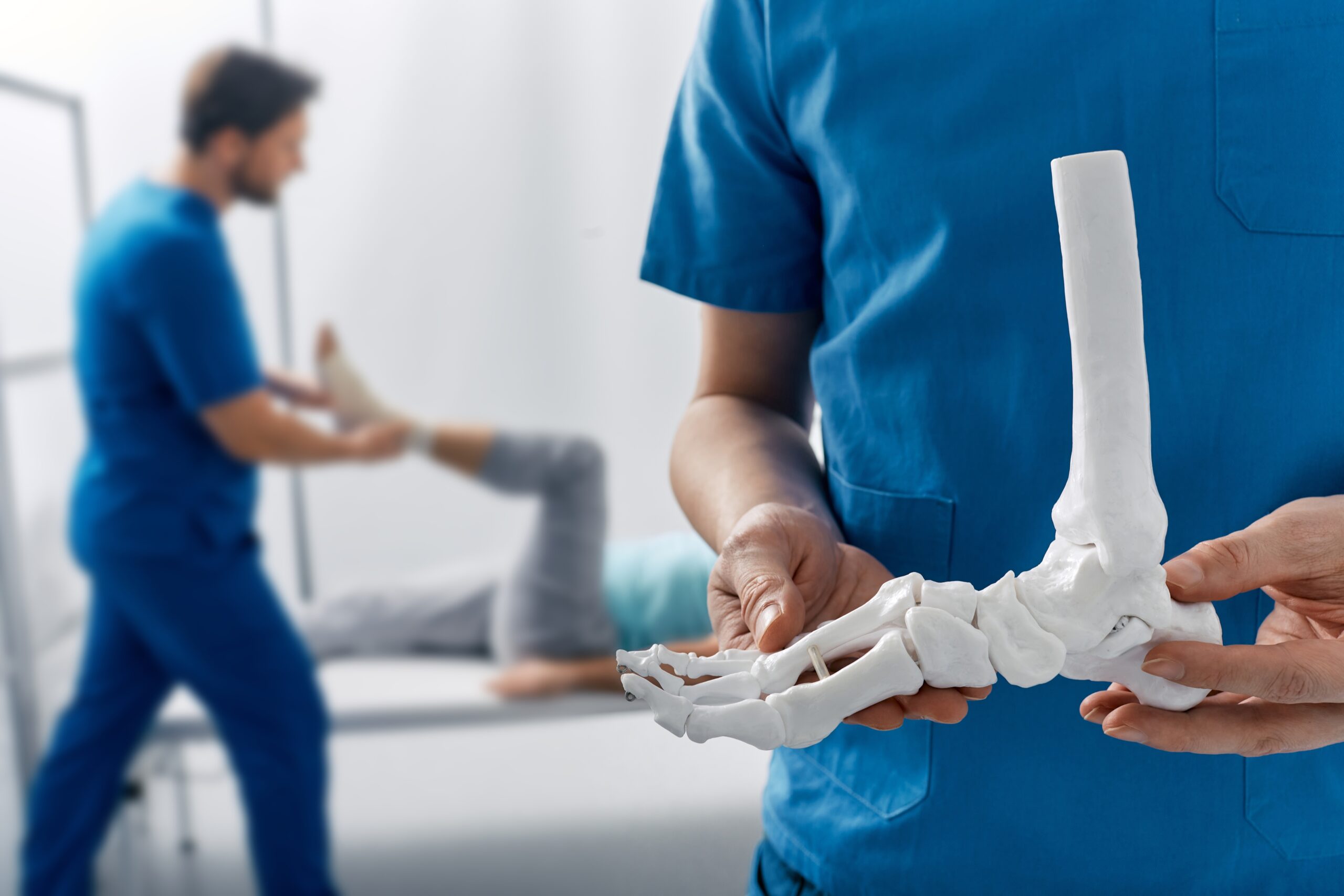
An orthopedic doctor is a medical specialist trained to diagnose, treat, and manage disorders of the bones, joints, muscles, ligaments, and tendons, from a childhood fracture to age-related joint pain. If you are wondering how to become an orthopedic doctor in India, the path runs through MBBS, NEET-PG, and a three-year postgraduate residency in MS or DNB Orthopaedics. This guide walks through the full timeline, the exams involved, and the journey for Indian students planning a global medical education.
Key Takeaways
An orthopedic doctor needs MBBS for 5.5 years, including a compulsory internship) followed by a 3-year MS or DNB in Orthopaedics, cleared through NEET-PG.
India has roughly 20,000 practicing orthopedic surgeons for a population of more than 1.4 billion, about one for every 62,500 people, per a study indexed on PMC/NIH.
Musculoskeletal conditions affect an estimated 1.71 billion people worldwide, making orthopedics one of the largest specialty demand areas in medicine, according to the WHO.
MS Orthopaedics and DNB Orthopaedics are both 3-year postgraduate routes and NBEMS treats them as equivalent qualifications for practice.
Who Is an Orthopedic Doctor?
An orthopedic doctor treats around 150 different conditions of the musculoskeletal system, more than any other organ system in the body, according to the World Health Organization's musculoskeletal conditions fact sheet. That single fact explains why demand for this specialty keeps climbing across both rural and urban India.
Orthopedic doctors, also called orthopedic surgeons or orthopaedists, diagnose and manage fractures, arthritis, spinal disorders, sports injuries, and joint problems using both surgical and non-surgical techniques. They work in general hospitals, trauma centers, sports medicine clinics, and increasingly in dedicated joint-replacement and spine units. Some orthopedic doctors focus on general practice, while others train further into a subspecialty such as pediatric orthopedics or hand surgery.
Why Choose an Orthopedic Doctor Career in India?
Low back pain alone is the single leading cause of disability in 160 countries, and musculoskeletal conditions overall are the top contributor to disability worldwide, per the WHO. That scale of need is exactly why an orthopedic doctor career offers strong long-term demand, steady patient volume, and room to specialize further.
Beyond the clinical demand, orthopedics rewards people who like working with their hands as much as their heads. Surgeons in this field combine mechanical problem-solving (realigning a fracture, replacing a joint) with long-term patient relationships, since rehabilitation after surgery often continues for months. The field also supports varied career paths: private practice, teaching hospitals, research, and sports medicine with professional or college athletic teams all fall under the same core training.
How Big Is the Demand for Orthopedic Doctors in India?
India has around 20,000 registered orthopedic surgeons for a population of more than 1.4 billion, which works out to roughly one orthopedic doctor per 62,500 people, a ratio documented in a peer-reviewed overview of orthopedic education in India, hosted on PMC (a U.S. National Library of Medicine archive). That shortage is even sharper outside major cities.
Most orthopedic doctors in India are concentrated in metropolitan and Tier-1 cities. Since 72% of the country's population lives in rural areas, rural India carries a disproportionate share of the shortage, per the same study. This geographic gap is a major reason government hospitals, district health missions, and NGOs continue to recruit orthopedic specialists aggressively, and why the specialty tends to offer strong job security regardless of where a graduate eventually chooses to practice.
What Is the Path to Becoming an Orthopedic Doctor in India?
Becoming an orthopedic doctor in India takes about 8.5 to 9.5 years after Class 12: 5.5 years for MBBS, including the mandatory rotatory internship, plus 3 years of postgraduate residency in MS or DNB Orthopaedics, cleared through NEET-PG. Optional fellowship training in a subspecialty can add another 1 to 2 years on top of that.
The route is regulated end to end by two national bodies, the National Medical Commission (NMC) for MBBS and medical registration, and the National Board of Examinations in Medical Sciences (NBEMS) for postgraduate and DNB training. The full sequence looks like this:
Complete MBBS (5.5 years total: 4.5 years of academic phases plus a compulsory 1-year rotatory internship) at an NMC-recognized medical college in India or abroad.
Register with the State Medical Council or NMC, then appear for NEET-PG, the national entrance test that NBEMS conducts for admission to MD, MS, and DNB programs.
Secure an MS or DNB seat in Orthopaedics through NEET-PG counseling and complete the 3-year postgraduate residency, which includes clinical rotations, operative training, and a thesis.
Pass the final MS or DNB examination and obtain postgraduate registration to begin practicing as a qualified orthopedic doctor.
Optionally pursue fellowship (FNB) or super-specialty training in a focus area such as joint replacement, spine surgery, or pediatric orthopedics.
Graduates who studied MBBS abroad, including at futureMBBS's partner universities in the Czech Republic, Hungary, Poland, and six other EU countries, follow the same NEET-PG route back into MS or DNB Orthopaedics once their foreign degree is recognized by the NMC.

MS Orthopaedics vs DNB Orthopaedics: What Is the Difference?
MS Orthopaedics and DNB Orthopaedics are both 3-year postgraduate surgical programs that qualify a doctor to practice as an orthopedic surgeon, and NBEMS formally treats a DNB as equivalent to an MD, MS, DM, or MCh for all practical purposes. The main difference is who awards the degree and where the training happens.
Aspect | MS Orthopaedics | DNB Orthopaedics |
|---|---|---|
Awarding body | A medical college or university, NMC-recognized | National Board of Examinations (NBEMS) |
Duration | 3 years after MBBS | 3 years after MBBS |
Entry route | NEET-PG | NEET-PG (DNB seats) |
Training site | University teaching hospital | NBEMS-accredited hospital, often a large non-university center |
Recognition for practice | Recognized postgraduate medical degree | Recognized as equivalent to MS/MD by NBEMS |
Because DNB seats often sit in large non-university hospitals with high patient volumes, some graduates get broader hands-on surgical exposure than they would in a smaller university department, though both routes lead to the same registered qualification.
Certification and Licensing for Orthopedic Doctors
Every orthopedic doctor in India must clear NEET-PG for postgraduate admission and then register their MS or DNB qualification with the State Medical Council or NMC before independent practice. Doctors aiming to work internationally instead sit for that country's licensing exam, such as the USMLE for the United States.
The National Board of Examinations in Medical Sciences (NBEMS) publishes the official competency-based curriculum for DNB training in Orthopaedics, covering trauma management, arthroplasty, spine care, and pediatric orthopedics, and administers the exit exam that confirms a candidate is ready for independent practice.

Become a global doctor with MBBS abroad!
Studying abroad can be affordable and stress-free with futureMBBS:
World-recognized universities with English-taught programs
On-site support in partner university cities
Guaranteed placements & internships for hands-on experience
From selecting a university and supporting your application to orientation and finding accommodation, futureMBBS stays with you at every step. futureMBBS has already helped place 2,000+ students across its 22 partner universities over more than 10 years.
Book a free consultation Explore top universities
Why Consider MBBS in Europe Before Orthopedic Specialization?
Studying MBBS in Europe means English-taught curricula, hands-on clinical exposure from early years, and degrees recognized for NEET-PG and NMC registration. futureMBBS place students into MBBS, which is the foundation itself, at Charles University in the Czech Republic, Semmelweis University in Hungary, and other top european universities.
Students preparing for this path should also start NEET preparation early, since a strong NEET-UG score widens MBBS options and a strong NEET-PG score later widens access to Orthopaedics seats specifically. NEETsheet, futureMBBS's sister platform, supports that preparation with structured practice content.
Subspecialty and Career Options for Orthopedic Doctors
An orthopedic doctor is not limited to one kind of practice. After the core MS or DNB, many surgeons pursue an additional 1-2-year fellowship to focus on a specific subspecialty, each with a distinct patient population and skill set:
Joint replacement (arthroplasty) surgery, for advanced arthritis and worn-out hips and knees
Sports medicine and arthroscopy, for ligament and cartilage injuries in athletes
Spine surgery, for disc disease, deformity, and spinal trauma
Pediatric orthopedics, for congenital conditions and growth-related deformities in children
Trauma and orthopedic emergency care, for fractures and polytrauma cases
Hand and upper-limb surgery, for complex hand, wrist, and nerve injuries
Career settings range as widely as the subspecialties: government hospitals, private hospitals and clinics, teaching institutions, sports teams, and research organizations all employ orthopedic doctors, and many senior surgeons combine clinical practice with teaching or hospital administration over time.
Conclusion: Is Becoming an Orthopedic Doctor Right for You?
Becoming an orthopedic doctor is a long but well-defined path: MBBS, NEET-PG, and a 3-year MS or DNB in Orthopaedics, with fellowship options afterward for anyone who wants to subspecialize. Given India's roughly 1-per-62,500 surgeon-to-population ratio and the WHO's estimate that musculoskeletal conditions affect 1.71 billion people worldwide, demand for this specialty is unlikely to shrink any time soon.
With affordable fees, English-taught programs, and NMC-recognized degrees, countries like the Czech Republic, Hungary, and Poland offer a practical MBBS starting point for the same orthopedic career path. futureMBBS helps students find the right-fit program and navigate the application process from application deadlines to arrival. Book a free consultation to talk it through.
Related career guides
Related Topics
- career guide
- futureMBBS
- how to become orthopedic doctor
- MBBS
- Orthopaedic doctor
- NEET-PG
Related Articles
 Guides & Tips24 Aug 202615 min read
Erasmus Exchange for MBBS Students in Europe: 2026 Guide
An Erasmus exchange lets medical students in the EU study up to 24 months in another country, with no extra tuition and an EU grant of 225-674 EUR a month.
 Guides & Tips19 Aug 202613 min read
Education Remittance for MBBS in Europe: 2026 Rules
Planning an education remittance for MBBS in Europe? Check the LRS limit, the 5% TCS rule above Rs 10 lakh and the bank steps before you send any fees.
 Guides & Tips17 Aug 202613 min read
Apostille for MBBS in Europe 2026: Document Checklist
Getting an apostille for MBBS in Europe? Follow the exact MEA steps, the Rs 50 fee, nostrification rules and the timeline Indian students must start now.