NEET
MBBS in Hungary for Indian Students 2026: Full Guide
23 Sept 2026
12 min read
Study MBBS in Hungary in 2026: tuition at Semmelweis, Debrecen, Pécs & Szeged, entrance exams, NMC/FMGE rules and fees for Indian students. Book free advice.


MBBS in Hungary for Indian Students 2026: The Complete Guide
For Indian students who cleared NEET but missed a government seat, MBBS in Hungary is one of the most established English-taught routes into European medicine. Hungary joined the European Union in 2004, its medical degrees are recognised across the EU, and four of its universities (Semmelweis in Budapest, plus Debrecen, Pécs and Szeged) have taught international students in English for decades. With NEET UG 2026 results out (declared 16 July 2026) and MCC counselling opening this month, this is exactly the moment thousands of families start comparing an Indian private seat against a European one. Here's what the 2026 fees, entrance exams, NMC/FMGE rules and application timeline actually look like, in plain terms.
Hungary is one of the nine EU countries into which futureMBBS places students. For the full list of partner universities across Europe, see our partner universities hub; for the wider regional picture, our MBBS in Europe guide sets the context.

Why do Indian students choose MBBS in Hungary?
The core reason is structural. In 2026, NEET UG drew roughly 22.09 lakh registrations and about 11.21 lakh qualified candidates, but India has only around 1.37 lakh total MBBS seats, of which roughly 63,000 are government seats (NMC 2026 seat matrix). Qualifying NEET isn't the bottleneck. Securing an affordable seat is. A private or NRI seat in India can cost far more than a European degree, which is why families look outward.
Hungary answers that squeeze with a genuinely European alternative. Its medical faculties are old, research-active and firmly inside the EU system, so the degree carries automatic recognition across member states under EU Directive 2005/36/EC. English-taught programmes aren't an afterthought here. Semmelweis, Debrecen, Pécs and Szeged have run them for 30-plus years and enrol students from dozens of countries. For an Indian applicant, that means an English classroom, a globally listed degree, and a clear path back to India through the FMGE, all in a Schengen-area country in the middle of Europe.
Which universities in Hungary offer MBBS in English?
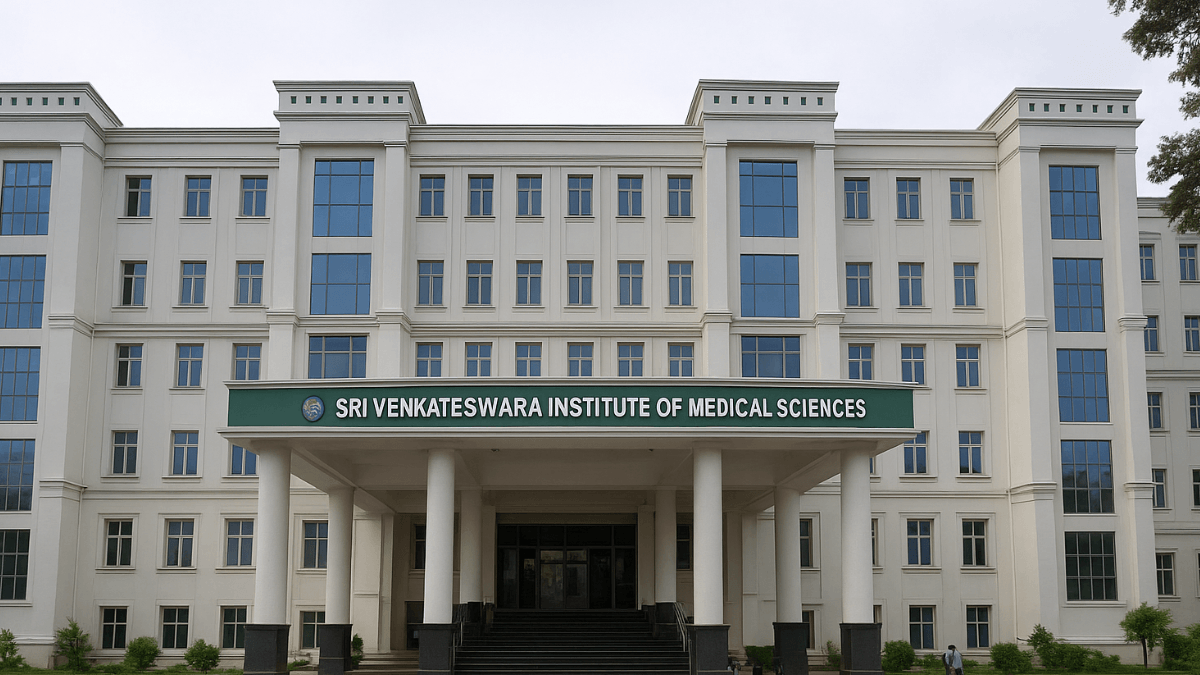
Hungary has four state medical faculties that teach the six-year General Medicine (MD) degree in English and sit within futureMBBS's EU partner network. Here are the core 2026/27 facts side by side:
| University (City) | Annual tuition 2026/27 | Admission | Duration |
|---|---|---|---|
| Semmelweis University (Budapest) | ~USD 20,900 (USD 10,450/semester) | Written entrance exam (Biology + Chemistry) + interview, via SEMAPHOR | 6 years (MD) |
| University of Debrecen | ~USD 16,900/year | Entrance exam (Biology + Chemistry); pre-med/foundation option available | 6 years (MD) |
| University of Pécs | ~USD 16,750/year | Entrance exam (Biology + Chemistry) + interview | 6 years (MD) |
| University of Szeged | ~EUR 15,800/year (≈ USD 17,100) | Entrance exam (Biology + Chemistry) + interview | 6 years (MD) |
All figures are for the 2026/27 intake, are rounded, and exclude one-time application/entrance fees (for example, Debrecen lists a USD 350 entrance fee). Confirm the exact amount on each university's own admissions page before applying, because fees are revised yearly and move with the exchange rate.
One thing to know: Hungarian medical schools award a degree titled "Doctor of Medicine (MD)", not one literally called "MBBS". Under the NMC's Foreign Medical Graduate Licentiate (FMGL) Regulations 2021, this MD is treated as MBBS-equivalent for Indian licensing purposes, provided the course meets the FMGL criteria and you clear the FMGE (or the NExT once it is implemented).
How much does MBBS in Hungary cost for Indian students?
Tuition is the largest single line item, and among the four Hungarian universities it clusters between about USD 16,750 and USD 20,900 per year for 2026/27. Pécs and Debrecen sit at the affordable end; Semmelweis, the country's most prestigious and research-heavy school, is the most expensive.
Beyond tuition, budget for living costs. Hungary is more affordable than Western Europe: students commonly report EUR 600 to 900 per month (roughly USD 650 to 970) for accommodation, food and transport, so plan for around USD 8,000 to 11,000 per year on top of fees. Over six years, a realistic all-in estimate lands somewhere around USD 150,000 to 190,000 (indicatively ₹1.3 to 1.6 crore at a July 2026 rate of about ₹86 to the dollar). That's meaningfully less than most Indian private/NRI MBBS seats, and it's payable in stages rather than as a lump-sum donation. Exact numbers depend on your city and lifestyle, so treat these as planning ranges, not quotes. For a structured way to budget tuition, living costs and loans, see our financial planning guide for MBBS abroad.
What is the entrance exam and eligibility for MBBS in Hungary?
You don't get in on your NEET rank alone. Qualifying NEET is what makes you eligible to apply, though, and NEET is mandatory for any Indian citizen who wants to study medicine abroad and practise in India. Each Hungarian university then runs its own admission process, typically an entrance exam in Biology and Chemistry (some also test Physics or English), often followed by an interview.
A realistic application path for the September 2026 intake looks like this:
- Qualify NEET UG 2026 and keep your scorecard ready, since it's the eligibility gate for practising in India later.
- Shortlist universities (for example, Semmelweis for prestige, Debrecen/Pécs/Szeged for value) and check each one's current entrance-exam syllabus and deadline.
- Register and submit documents: passport, Class 10 and 12 marksheets, NEET result and, where required, a medical certificate.
- Sit the entrance exam (usually Biology + Chemistry) and attend the interview where the university requires one.
- Accept your offer and pay the deposit/first-semester tuition to secure the seat.
- Apply for your student visa/residence permit and arrange accommodation before the September start.
Semmelweis, the most competitive, typically opens applications in January with a deadline around late May and holds entrance exams from spring into June. Other universities often keep application windows open later into the summer. Because the exact dates and syllabus shift each year, confirm them on the university's admissions page and on our application deadlines resource before you commit. If you are still working on your fundamentals, our NEET preparation guide and the NEETsheet app cover the same Biology and Chemistry that these entrance exams test.
Is a Hungarian MBBS valid in India?
Yes, with one important condition that applies to every foreign medical degree. A Hungarian MD from a university that meets the NMC's FMGL 2021 criteria is recognised in India once you clear the Foreign Medical Graduate Examination (FMGE), the screening test that will eventually be replaced by the National Exit Test (NExT). The NMC does not "approve" or endorse individual foreign universities; what matters is that your specific course meets the FMGL rules (including a single, continuous course at one university and a minimum duration) and that you pass the licensing exam.
That exam is hard, and the numbers make the point that your choice of university and your own effort decide the outcome, not the country on the certificate.
The lesson is simple: pick a well-established university with strong teaching and clinical exposure, and prepare seriously for the FMGE/NExT from early in the course. Hungary's four faculties are long-standing, research-active institutions, which is a good starting point. The exam still rewards the students who plan for it.
How does Hungary compare with other EU study destinations?
Within futureMBBS's nine EU partner countries, Hungary sits in the mid-to-upper tuition band. Countries like Romania and Latvia tend to be cheaper per year, while Hungary and Cyprus sit higher. Hungary offers something specific, though: four separate universities (giving you options on price and city), a very long track record with international students, and Budapest itself, a major European capital with a large existing Indian and international student community. If your priority is the lowest possible sticker price, another partner country may edge it; if you want depth of choice, reputation and a big-city experience inside the EU, Hungary is hard to beat. Our best countries to study MBBS comparison lays out the trade-offs across all nine.
Sources
- National Testing Agency, NEET UG 2026 result (declared 16 July 2026): registrations ~22.09 lakh, qualified ~11.21 lakh. neet.nta.nic.in
- National Medical Commission, 2026 MBBS seat matrix (~1.37 lakh total / ~63,000 government seats). nmc.org.in
- National Board of Examinations in Medical Sciences, FMGE pass rates, December 2025 (~23.9%) and June 2026 (~12.4%). natboard.edu.in
- Semmelweis University, Faculty of Medicine, English programme tuition and admission (2026/27). semmelweis.hu
- University of Debrecen, Tuition, application and entrance fees (2026/27). edu.unideb.hu
- University of Szeged, Faculty of Medicine, tuition fees 2026/2027. med.u-szeged.hu
- European Union, Directive 2005/36/EC on the recognition of professional qualifications. eur-lex.europa.eu
- National Medical Commission, Foreign Medical Graduate Licentiate (FMGL) Regulations, 2021. nmc.org.in
Related Topics
- MBBS in Hungary
- MBBS abroad
- Study in Europe
- Semmelweis University
- MBBS after NEET 2026
- MBBS fees
Related Articles
 NEET23 Sept 20266 min read
MBBS in Hungary: Fees, Top Universities & Admission 2026
MBBS in Hungary 2026: real tuition fees at Semmelweis, Debrecen and Pécs, NEET-UG eligibility, six-year duration, and how the degree is recognised in India.
 NEET23 Sept 20266 min read
MBBS in Romania 2026: Fees, Top Universities & Eligibility
MBBS in Romania 2026: real tuition at Carol Davila, Iuliu Hațieganu Cluj and Victor Babeș Timișoara, NEET-UG eligibility, six-year duration and EU recognition.
 NEET23 Sept 20267 min read
NEETsheet: Making NEET Preparation Affordable in India
NEETsheet is making NEET preparation affordable in India: complete online courses from just ₹99, with mock tests, PYQs, and performance analytics for NEET UG.