Guides & Tips
How to Become a Veterinary Doctor in India: 2026 Guide
3 Aug 2026
5 min read
Learn how to become a veterinary doctor in India: NEET-UG eligibility, the B.V.Sc & A.H. course, VCI registration rules, career paths, and real salary data.


A veterinary doctor in India holds a B.V.Sc & A.H. (Bachelor of Veterinary Science and Animal Husbandry) degree and is registered with the Veterinary Council of India (VCI), the statutory body created under the Indian Veterinary Council Act, 1984. Admission runs entirely through NEET-UG — the same exam used for MBBS and BDS — since the older All-India Pre-Veterinary Test (AIPVT) was discontinued in 2017.
Key Takeaways
A veterinary doctor needs a B.V.Sc & A.H. degree (5.5 years, including a compulsory internship) and registration with the Veterinary Council of India (VCI).
NEET-UG has been the sole entrance exam for veterinary admission since 2017, when it replaced the older All-India Pre-Veterinary Test (AIPVT).
The VCI runs online counselling for the 15% All India Quota; the remaining 85% of seats are filled through state-level counselling.
Global veterinary workforce shortages are a real, documented problem: per the World Organisation for Animal Health (WOAH), 73% of surveyed member countries in Asia and the Pacific report a general shortage of veterinary personnel.
Entry-level veterinary doctors in India typically earn ₹1,00,000–₹8,00,000 a year, with senior clinicians reaching ₹15,00,000+ depending on specialisation and setting.
What Is a Veterinary Doctor and Who Regulates the Profession?
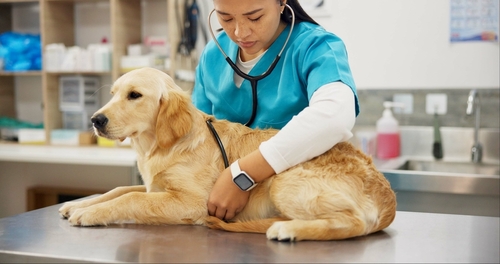
A veterinary doctor diagnoses, treats, and prevents disease in animals, from household pets to livestock and wildlife. In India, the profession is regulated by the Veterinary Council of India (VCI), a statutory body under the Indian Veterinary Council Act, 1984, functioning under the Department of Animal Husbandry and Dairying. The VCI maintains the Indian Veterinary Practitioners' Register, recognises B.V.Sc & A.H. degrees, and runs national counselling for the All India Quota — a role similar to what the NMC does for MBBS, but entirely separate from it.
Veterinary Doctor Course Overview
Particulars | Details |
|---|---|
Course | Bachelor of Veterinary Science and Animal Husbandry (B.V.Sc & A.H.) |
Duration | 5.5 years (academic study plus a compulsory internship) |
Regulator | Veterinary Council of India (VCI), under the Indian Veterinary Council Act, 1984 |
Admission exam | NEET-UG (replaced AIPVT in 2017) |
Counselling | VCI (15% All India Quota) plus state veterinary counselling authorities (85% state quota) |
Eligibility | Class 12 with Physics, Chemistry, Biology; qualifying NEET-UG score |
Typical starting salary | ₹1,00,000–₹8,00,000 a year (junior veterinarian) |
How Do You Become a Veterinary Doctor in India?
Since AIPVT's discontinuation, the path into veterinary medicine mirrors the MBBS route in structure, if not in exam. The steps are:
Complete Class 12 with Physics, Chemistry, and Biology as core subjects.
Qualify NEET-UG, the sole entrance exam for veterinary admission since 2017.
Register for VCI counselling (All India Quota) or your state's veterinary counselling authority (state quota).
Complete the 5.5-year B.V.Sc & A.H. degree, including clinical rotations in medicine, surgery, and animal husbandry.
Complete the compulsory rotatory internship required to finish the degree.
Register with the VCI or your State Veterinary Council to practise.
What Does a Veterinary Doctor Do?
Day-to-day work varies enormously by specialisation — companion-animal, livestock, equine, wildlife, or public-health veterinary medicine. Core responsibilities include:
Examining, diagnosing, and treating illness or injury across species, using physical exams, lab tests, and imaging.
Administering vaccinations and running preventive-care programmes for pets and farm animals alike.
Performing surgeries, from routine spaying/neutering to emergency and orthopaedic procedures.
Advising farmers, pet owners, and public-health authorities on nutrition, breeding, and zoonotic-disease control.
Working in food-safety inspection, wildlife conservation, or laboratory-animal welfare roles.
Where Can You Study Veterinary Science in India?
Government veterinary colleges include the Indian Veterinary Research Institute (Bareilly), Madras Veterinary College (Chennai), College of Veterinary Science (Guwahati under Assam Agricultural University), and Govind Ballabh Pant University of Agriculture and Technology (Pantnagar), all offering VCI-recognised B.V.Sc & A.H. degrees admitted through NEET-UG. Always confirm current VCI recognition status before applying, since accreditation is reviewed periodically.
What Is the Salary of a Veterinary Doctor in India?
Pay depends heavily on setting: government service, private practice, corporate animal-health companies, or research. Entry-level veterinary doctors typically start around ₹1,00,000–₹8,00,000 a year with an average near ₹5,20,000, while senior clinicians with 10+ years of experience, or those in specialised surgical or corporate roles, can earn ₹10,00,000–₹15,00,000 or more. Demand for vets is rising alongside India's pet-care and livestock sectors, though starting pay in this field still lags several other medical professions.
If MBBS and human medicine are more your goal than veterinary science, futureMBBS helps Indian students study MBBS at EU countries, all offering NMC-recognised degrees. Book a free consultation to compare your options.
Related Topics
- veterinary doctor
- B.V.Sc
- futureMBBS
- VCI
- NEET UG
Related Articles
 Guides & Tips24 Aug 202615 min read
Erasmus Exchange for MBBS Students in Europe: 2026 Guide
An Erasmus exchange lets medical students in the EU study up to 24 months in another country, with no extra tuition and an EU grant of 225-674 EUR a month.
 Guides & Tips19 Aug 202613 min read
Education Remittance for MBBS in Europe: 2026 Rules
Planning an education remittance for MBBS in Europe? Check the LRS limit, the 5% TCS rule above Rs 10 lakh and the bank steps before you send any fees.
 Guides & Tips17 Aug 202613 min read
Apostille for MBBS in Europe 2026: Document Checklist
Getting an apostille for MBBS in Europe? Follow the exact MEA steps, the Rs 50 fee, nostrification rules and the timeline Indian students must start now.