
Guides & Tips
Doctor vs IAS: Which Pays More? Full 2026 Comparison
4 Aug 2026
7 min read
Doctor vs IAS compared in detail: entry pay, UPSC exam stages, age limits, and long-term earnings for MBBS graduates weighing medicine against civil services.

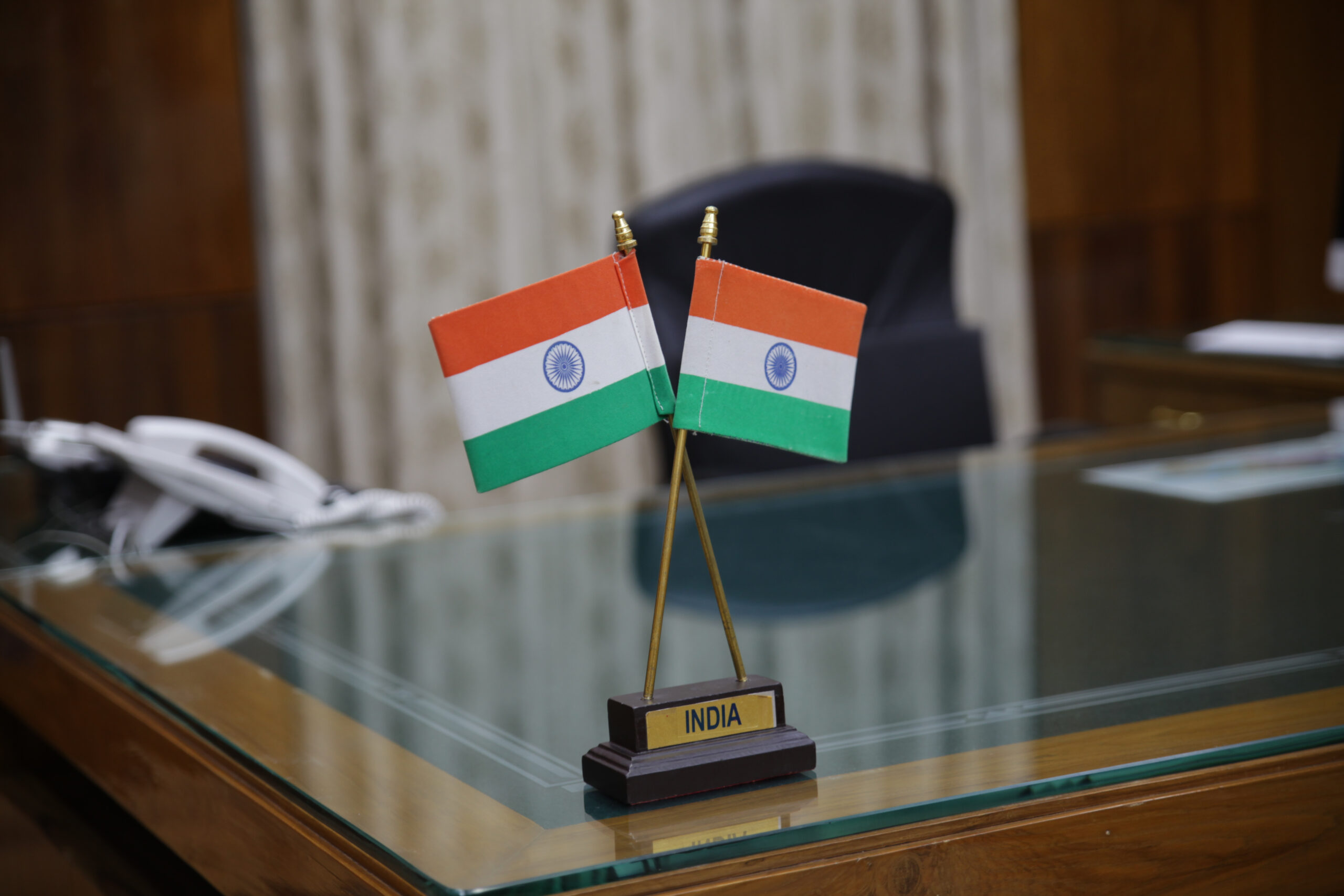
Doctor vs IAS is really a choice between two different reward structures. An MBBS leads to a clinical or specialist career with an uncapped private-sector ceiling, while IAS is a fixed administrative service. Both actually start at the same government basic pay: Pay Level-10 (₹56,100 under the 7th Central Pay Commission) for a fresh IAS officer and for an MBBS graduate entering through UPSC CMS. From that identical starting point, the two careers diverge sharply.
Key Takeaways
Identical entry pay: both a fresh IAS officer and a UPSC CMS doctor start at Pay Level-10 (₹56,100 to ₹1,77,500), per the 7th Central Pay Commission matrix.
Different exams: IAS requires clearing the UPSC Civil Services Exam (prelims, mains, interview); a doctor only needs UPSC CMS or a state PSC exam for a government post, or none at all for private practice.
Age limits: UPSC CSE allows up to 32 (General), 35 (OBC), or 37 (SC/ST), with 6, 9, or unlimited attempts respectively; UPSC CMS uses a similar 32/35 cutoff.
A doctor can become an IAS officer: MBBS graduates face no eligibility restriction in the UPSC CSE, since it only requires a bachelor's degree in any subject.
No income ceiling for doctors: an IAS officer's pay is fixed by the pay commission regardless of hours worked; a private-practice specialist's income has no such cap.
What does an MBBS career actually involve?
Before comparing doctor vs IAS pay and prospects, it helps to know what each career path actually looks like day to day. An MBBS is a five-and-a-half-year medical degree (five years of study plus a compulsory one-year internship) that qualifies graduates to diagnose and treat patients as licensed physicians. From there, doctors can go into general practice, specialise through MD/MS, join government service, or build a private practice, each with a very different income and lifestyle profile.
Medicine is also one of the more portable qualifications internationally: the WHO Global Health Observatory tracks physician density as a core health-system indicator worldwide, which is one reason doctors can often practise abroad after clearing a country's licensing exam, an option IAS, being India-specific by design, doesn't offer. We cover the full range of options in detail in our career options after MBBS guide, and the specific government-service route in our government jobs after MBBS guide, so this article focuses on the direct comparison with IAS rather than repeating that ground.
What does an IAS officer actually do?
The other half of the doctor vs IAS equation is the civil service itself. An IAS (Indian Administrative Service) officer is a career civil servant who implements government policy, runs district administration, and manages public services, recruited through the UPSC Civil Services Exam. IAS, along with the Indian Police Service (IPS) and Indian Forest Service (IFS), makes up the three All India Services.
Officers start in roles like Sub-Divisional Magistrate or Assistant Collector and rise through Deputy Commissioner, Joint Secretary, and Secretary, up to Cabinet Secretary at the top of the pay matrix (Level-17, a fixed ₹2,50,000). Postings span districts to central ministries, covering everything from law and order to finance, education, and health administration.
How do you qualify to become an IAS officer?
Qualifying for IAS means clearing the UPSC Civil Services Exam, a three-stage process that runs across roughly a year and accepts only a few hundred candidates nationally out of several lakh applicants each cycle.
Preliminary exam: two objective papers, General Studies and the CSAT aptitude paper (CSAT is only qualifying, not counted for merit).
Main exam: nine written papers covering an essay, four General Studies papers, two optional-subject papers, and two qualifying language papers.
Personality test (interview): a board interview assessing communication, judgment, and suitability for administrative service.
Cadre allocation: candidates who clear all three stages are ranked and allotted a service (IAS, IPS, IFS, or others) and state cadre based on merit and preference.
What are the age limit and attempt rules for UPSC?
Age and attempt limits for the UPSC Civil Services Exam vary by category and are strictly enforced. Once a candidate crosses the age ceiling or exhausts their attempts, they can't sit the exam again, regardless of preparation level.
Category | Age limit | Maximum attempts |
|---|---|---|
General / EWS | 21 to 32 years | 6 |
OBC | 21 to 35 years | 9 |
SC/ST | 21 to 37 years | Unlimited (up to age limit) |
UPSC CMS, the equivalent exam for government doctor posts, uses a comparable ceiling: under 32 for most posts, under 35 for Central Health Service positions.
Doctor vs IAS: who earns more?
Doctor vs IAS pay depends entirely on which side of medicine you're comparing. At entry level the two are identical, both start at Pay Level-10, but a private-practice specialist's income has no ceiling, while an IAS officer's pay is fixed by rank regardless of workload.
Career path | Entry monthly pay | Ceiling |
|---|---|---|
IAS officer (Level-10 entry) |
| ~₹2,50,000 fixed (Cabinet Secretary) |
Government doctor (UPSC CMS, Level-10) | ~₹56,100 basic + 20% NPA + allowances | Level-13 Specialist Grade (~₹1,23,100 to ₹2,15,900) |
Private-practice doctor/specialist | Highly variable, commonly ₹40,000 to ₹90,000+ for freshers | No fixed ceiling; senior specialists can far exceed IAS pay |
For a full breakdown of private and government doctor pay across cities and specialisations, see our doctor salary in India guide.
Can a doctor become an IAS officer?
Yes, a doctor can become an IAS officer, since the UPSC Civil Services Exam has no restriction based on prior profession or educational background beyond holding a bachelor's degree in any discipline. Several MBBS graduates have cleared the CSE and gone on to serve as IAS or IPS officers, using their medical background in health-administration postings.
The catch is timing: an MBBS graduate who wants to attempt the CSE has to prepare for it as a completely separate exam alongside or after finishing their medical degree, since medical training itself carries no exemption or head start in the UPSC process.
Doctor vs IAS: key differences at a glance
The table below summarises the doctor vs IAS comparison across the factors that matter most when choosing between the two paths.
Factor | MBBS / Doctor | IAS Officer |
|---|---|---|
Entry exam | NEET-UG (admission), then MBBS degree | UPSC Civil Services Exam |
Core work | Diagnosing and treating patients | Implementing policy, running administration |
Specialisation path | MD/MS/DM/MCh over 3 to 6 more years | Postings across ministries/departments, no separate specialisation |
Income structure | Fixed in government service, uncapped in private practice | Fixed by pay level regardless of posting |
Sector flexibility | Government, private, research, abroad | Government only |
Related Topics
- Doctor vs IAS
- UPSC Civil Services
- MBBS career
- futureMBBS
Related Articles
 Guides & Tips24 Aug 202615 min read
Erasmus Exchange for MBBS Students in Europe: 2026 Guide
An Erasmus exchange lets medical students in the EU study up to 24 months in another country, with no extra tuition and an EU grant of 225-674 EUR a month.
 Guides & Tips19 Aug 202613 min read
Education Remittance for MBBS in Europe: 2026 Rules
Planning an education remittance for MBBS in Europe? Check the LRS limit, the 5% TCS rule above Rs 10 lakh and the bank steps before you send any fees.
 Guides & Tips17 Aug 202613 min read
Apostille for MBBS in Europe 2026: Document Checklist
Getting an apostille for MBBS in Europe? Follow the exact MEA steps, the Rs 50 fee, nostrification rules and the timeline Indian students must start now.